While Uruguay is one of South America’s smallest countries, it is still slightly larger than England. But whereas England has almost 60 million people, Uruguay only has 3.5 million. About half of those 3.5 million live in the capital city of Montevideo.
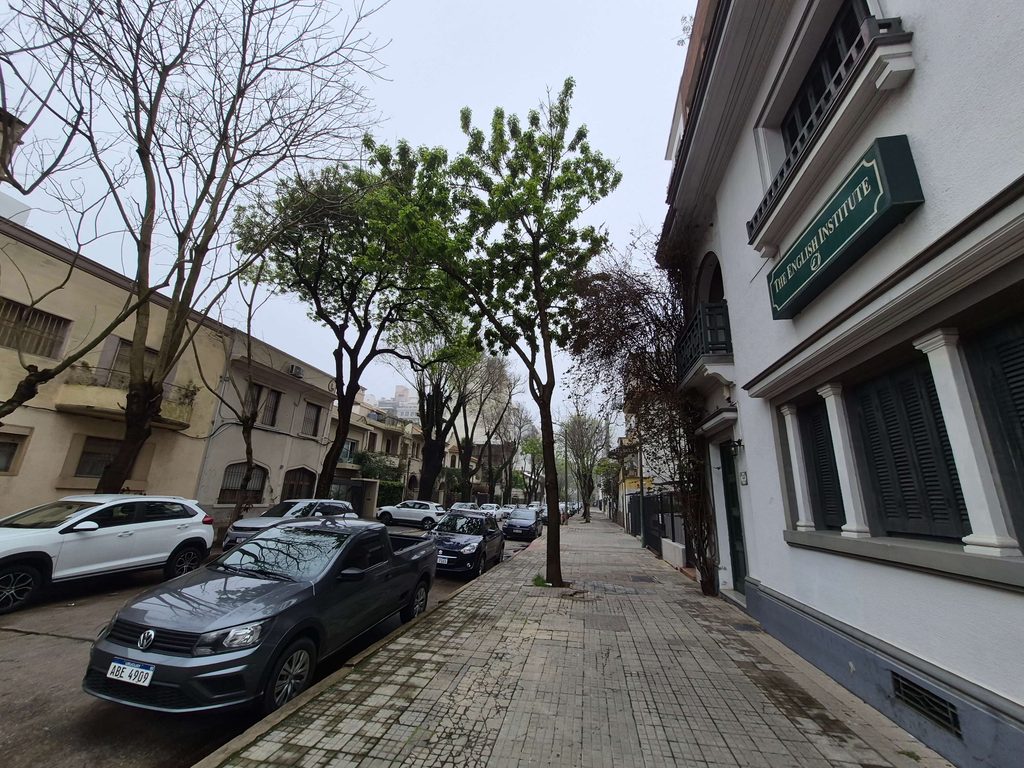
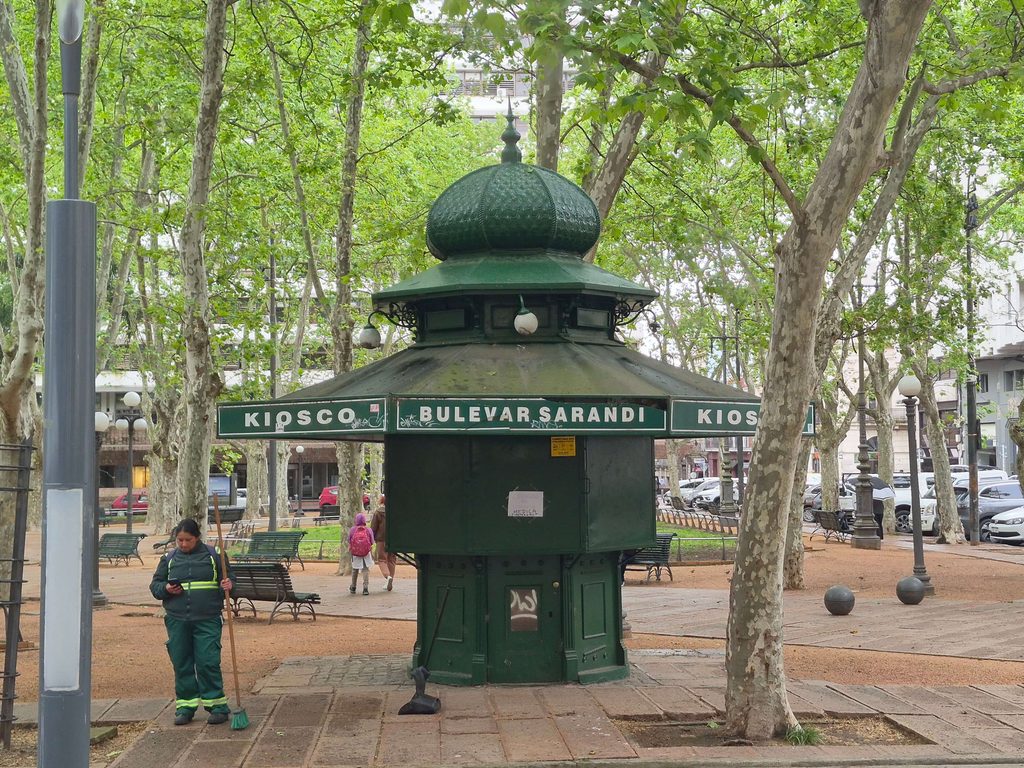
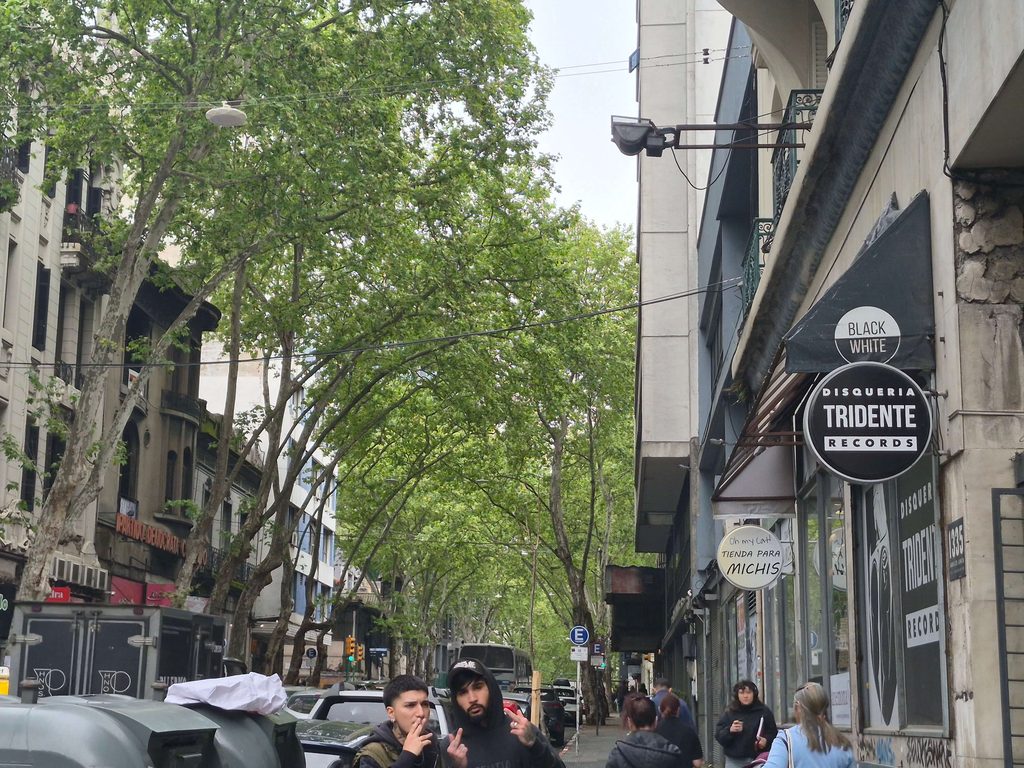
Montevideo is a relaxed capital city. The city’s main boulevards have a lot of high rise apartments, but most of the quieter streets have single family homes. The city feels both very urban and yet not very dense. It seems like a wonderfully livable large city. You can get a sense of it from these general street scenes.

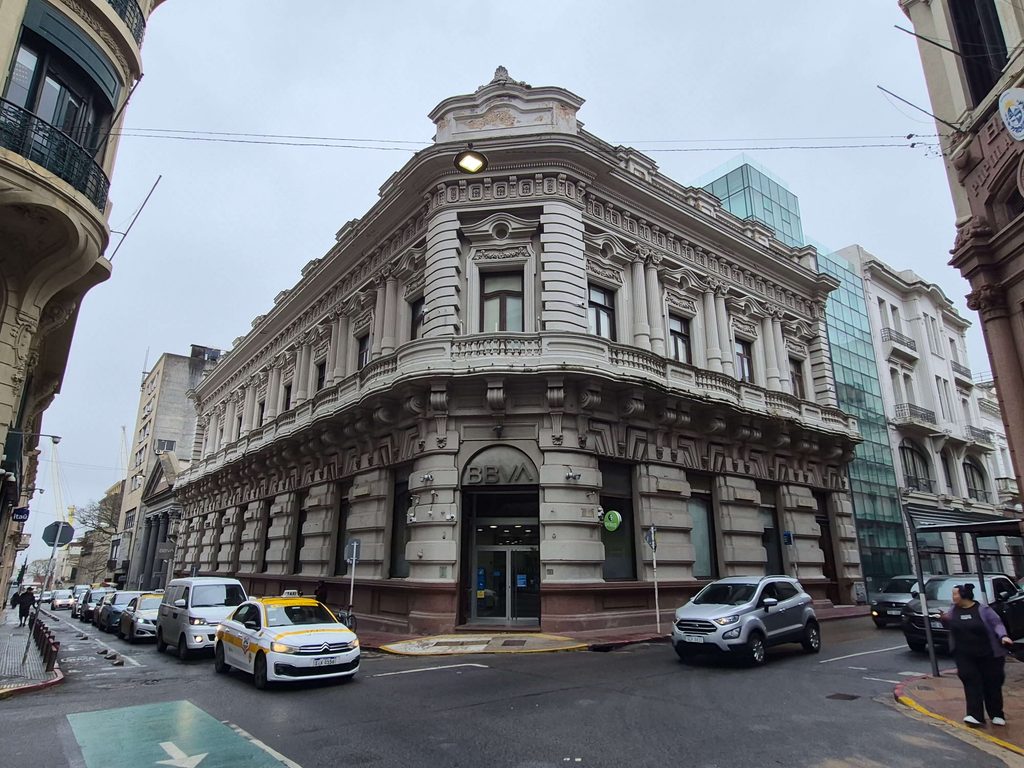
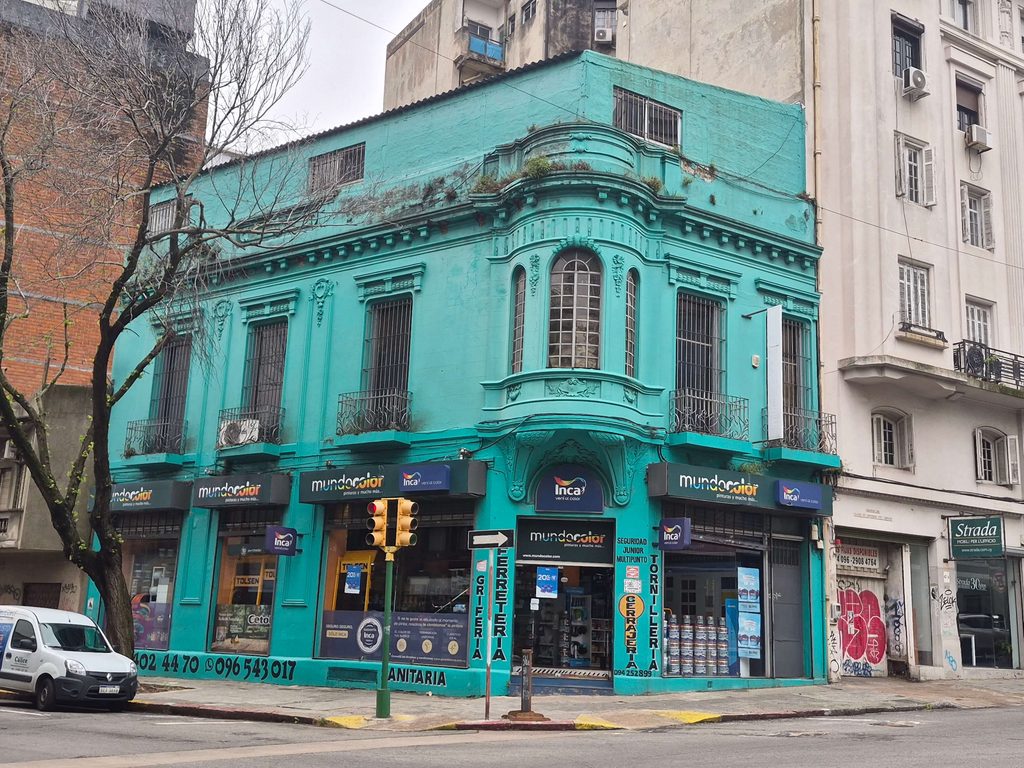
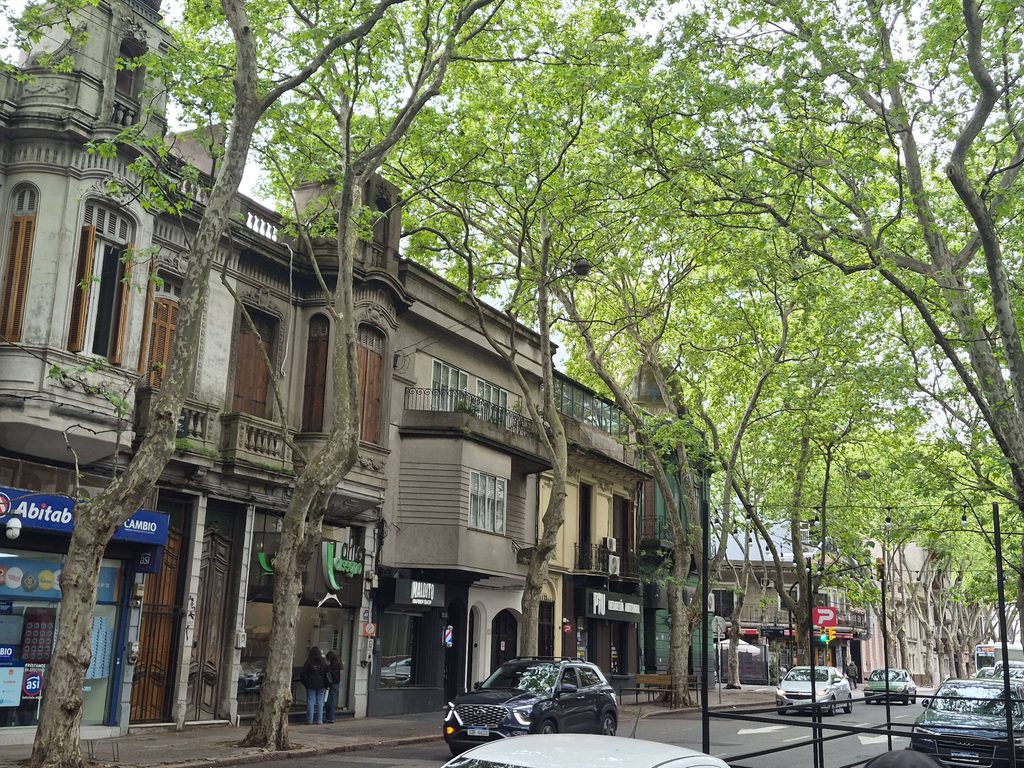
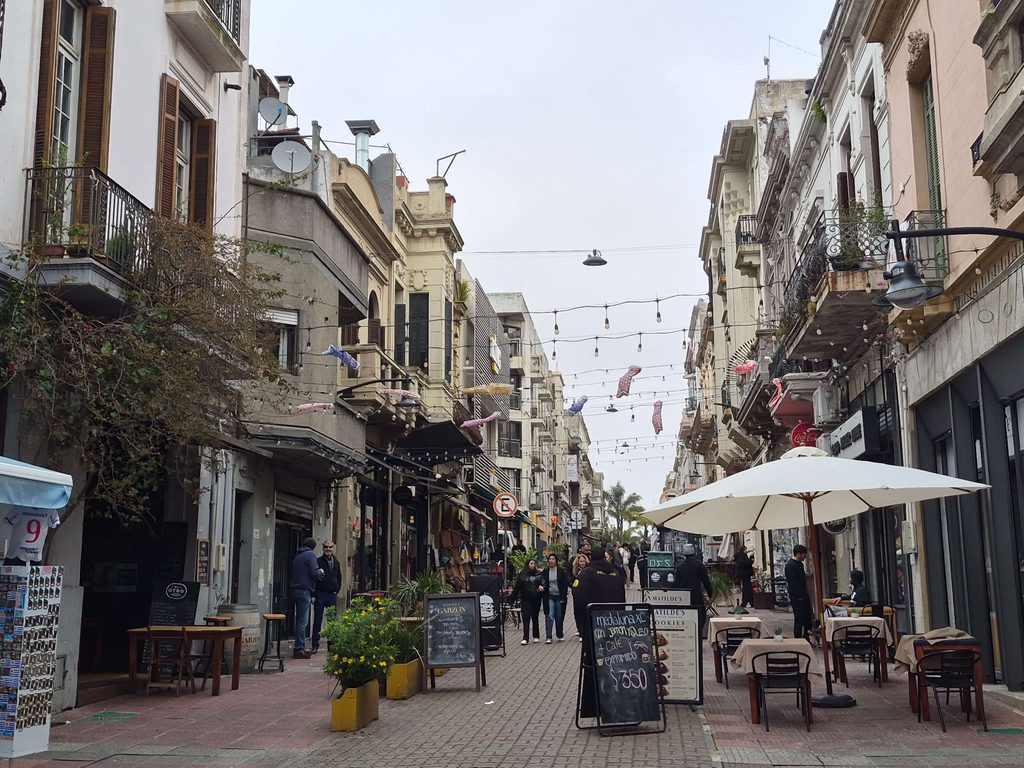
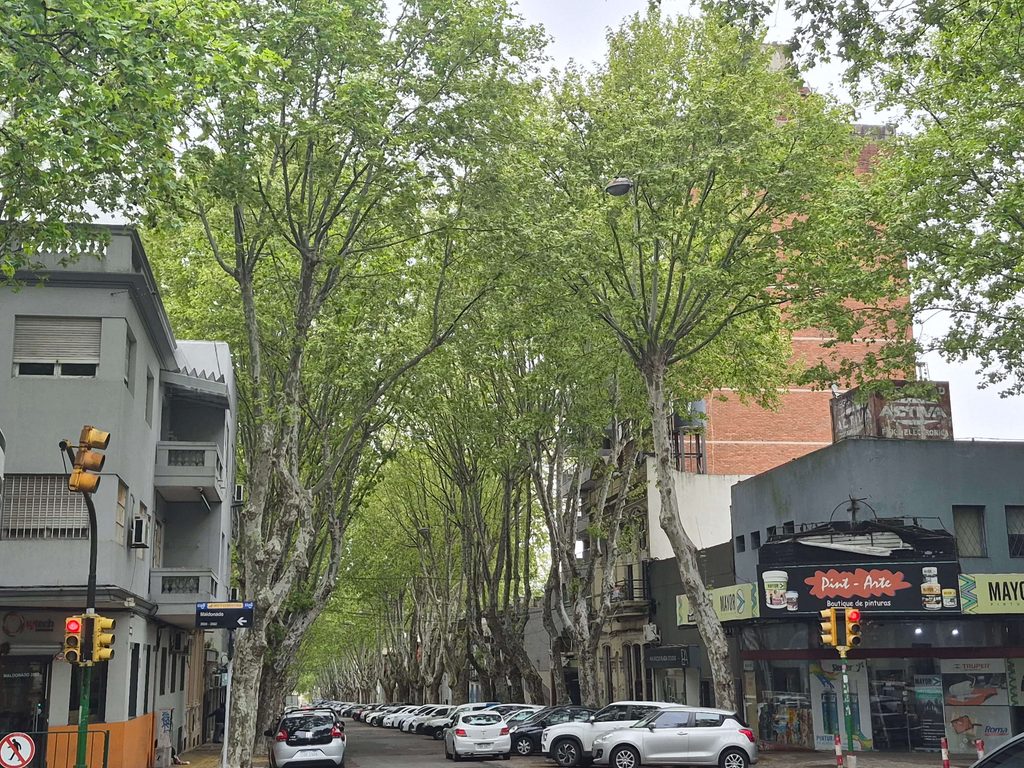
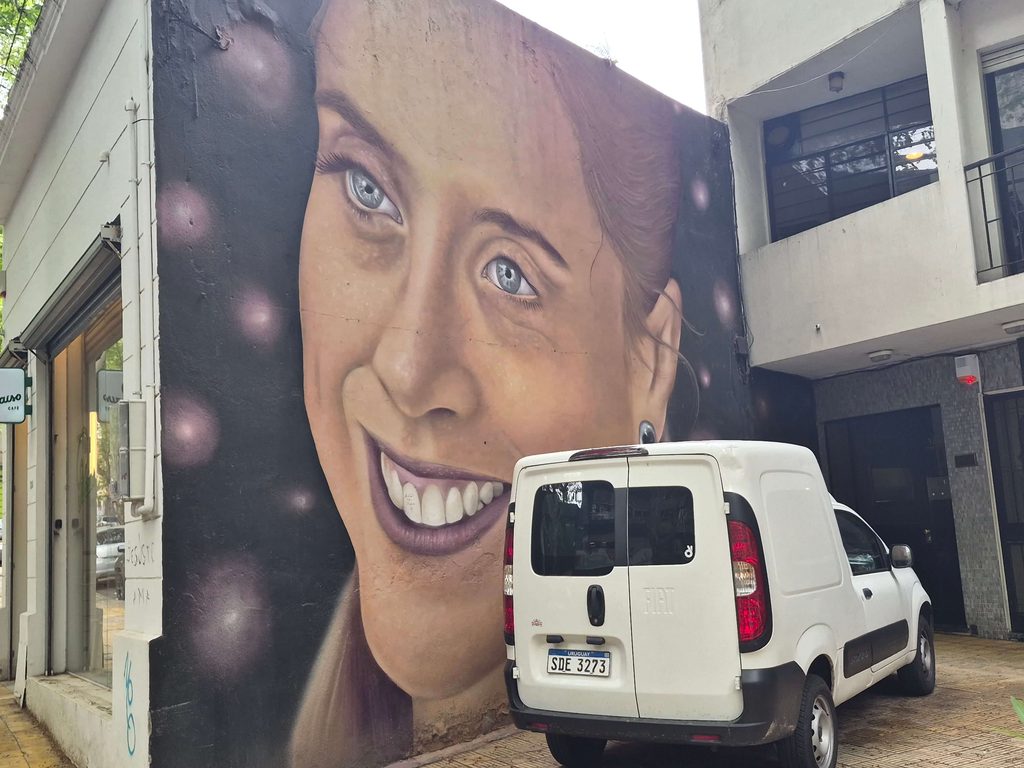
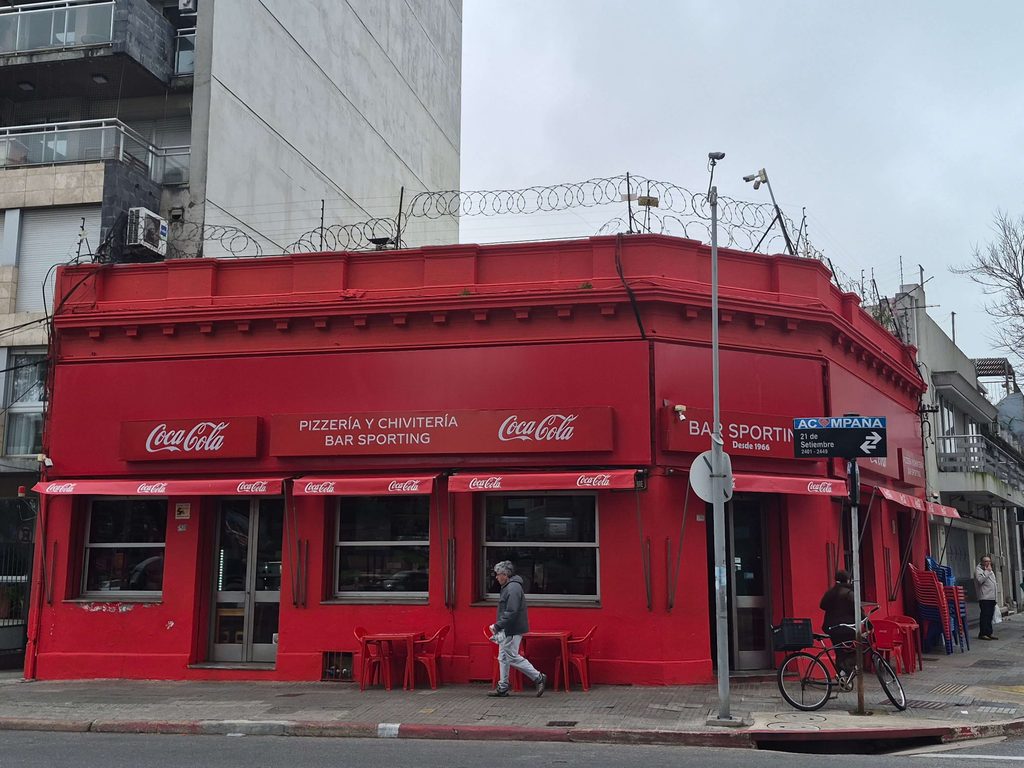
One of the defining characteristics of the city is The Río de la Plata. This river is a wide estuary and freshwater-saltwater transition zone that empties into the Atlantic Ocean. At its widest point, it measures about 220 kilometers (140 miles) across. The Rambla de Montevideo is a continuous 22-kilometer coastal promenade lined with sandy and rocky beaches. It’s very hard to think of this as a river as you walk down the Rambla.
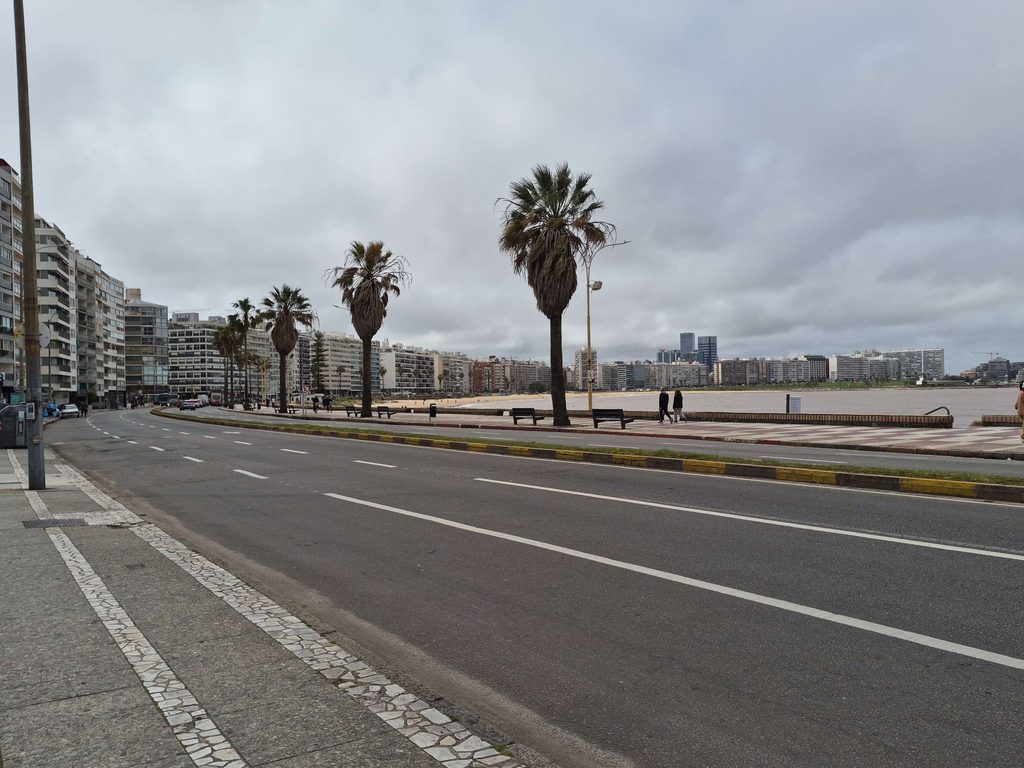
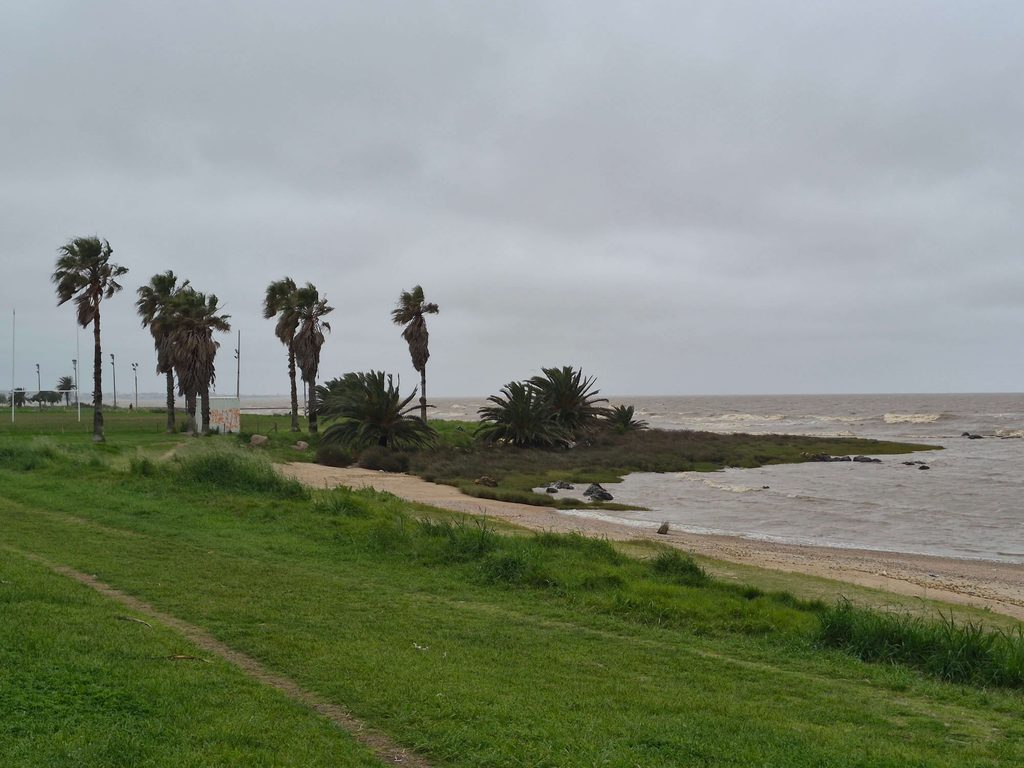
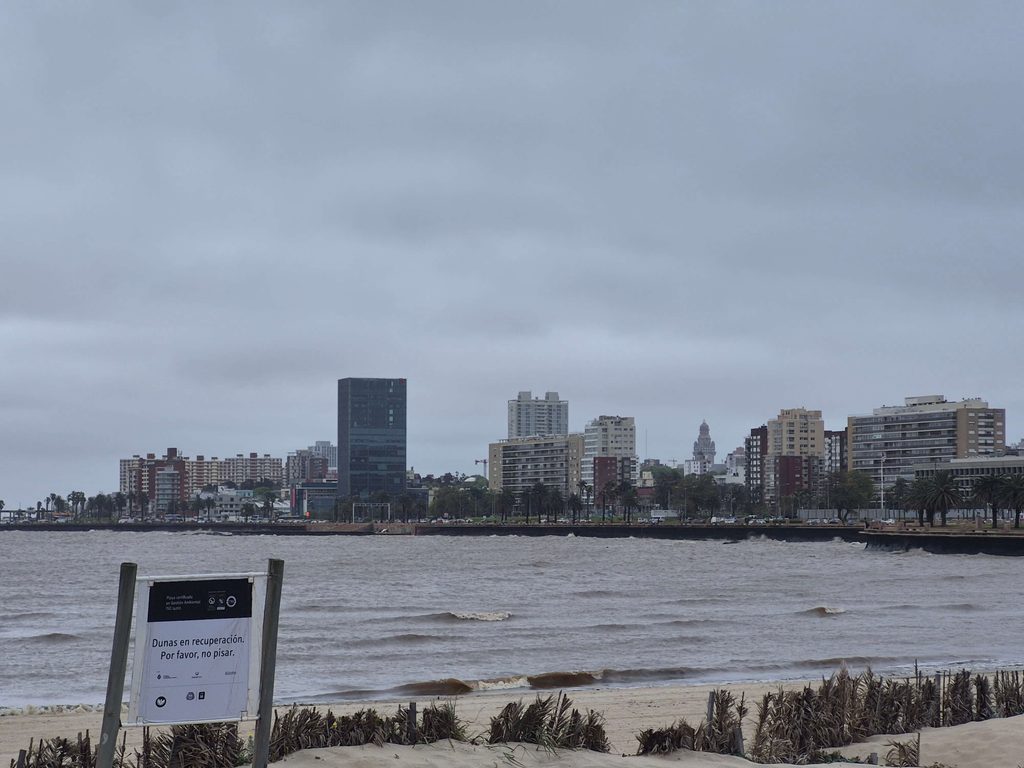
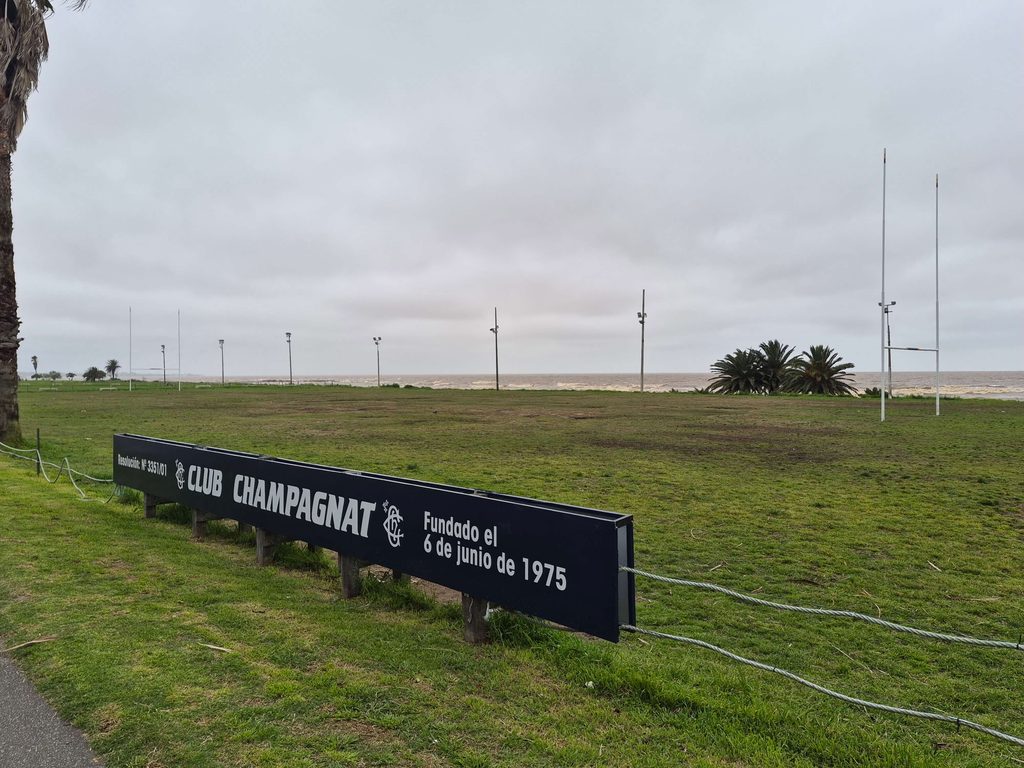
There’s all kinds of soccer fields, basketball courts, and even a rugby pitch along this waterfront.
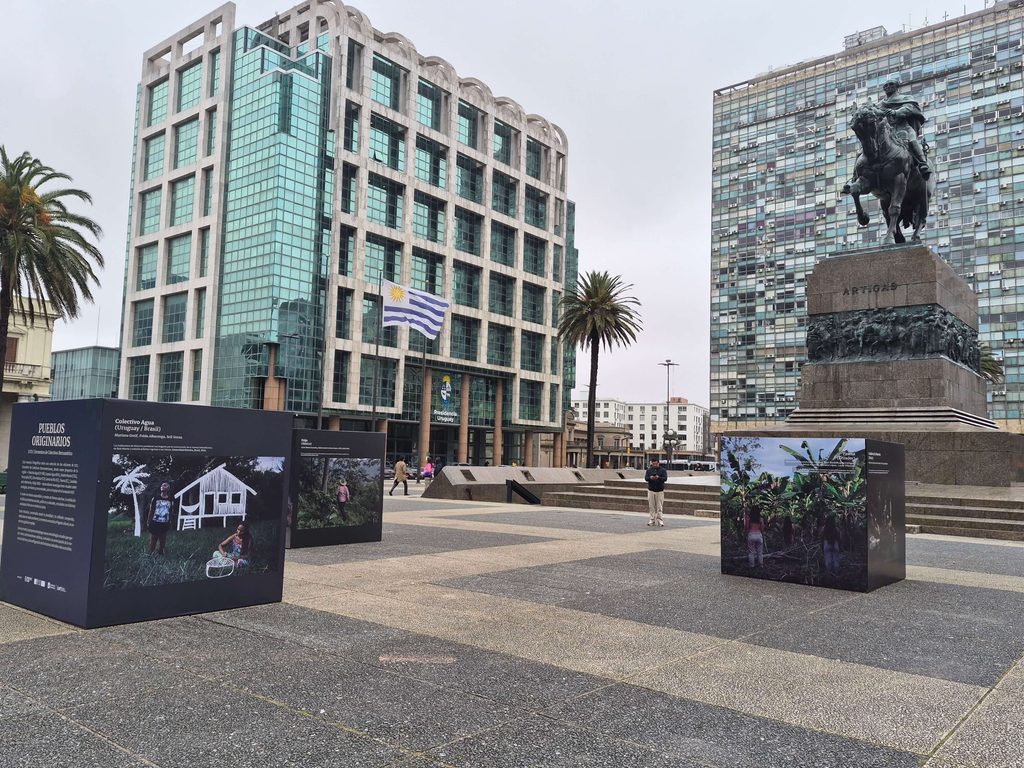
The heart of the city is the Plaza Independencia. In the center the 30-ton equestrian bronze statue of national hero General José Gervasio Artigas.
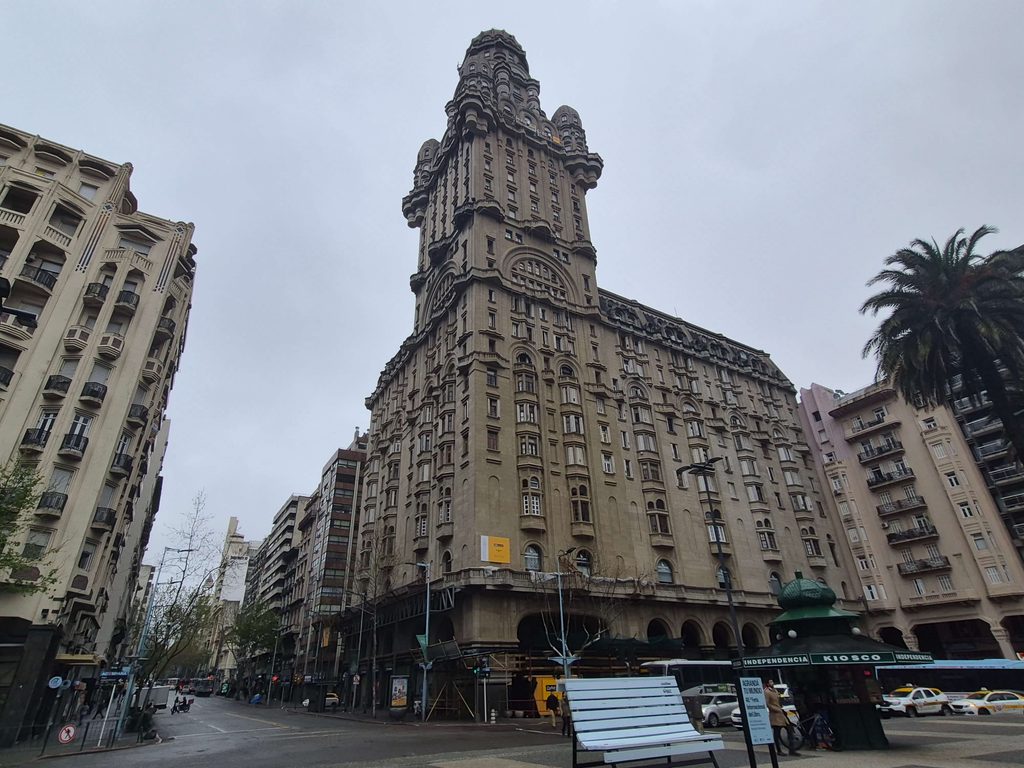
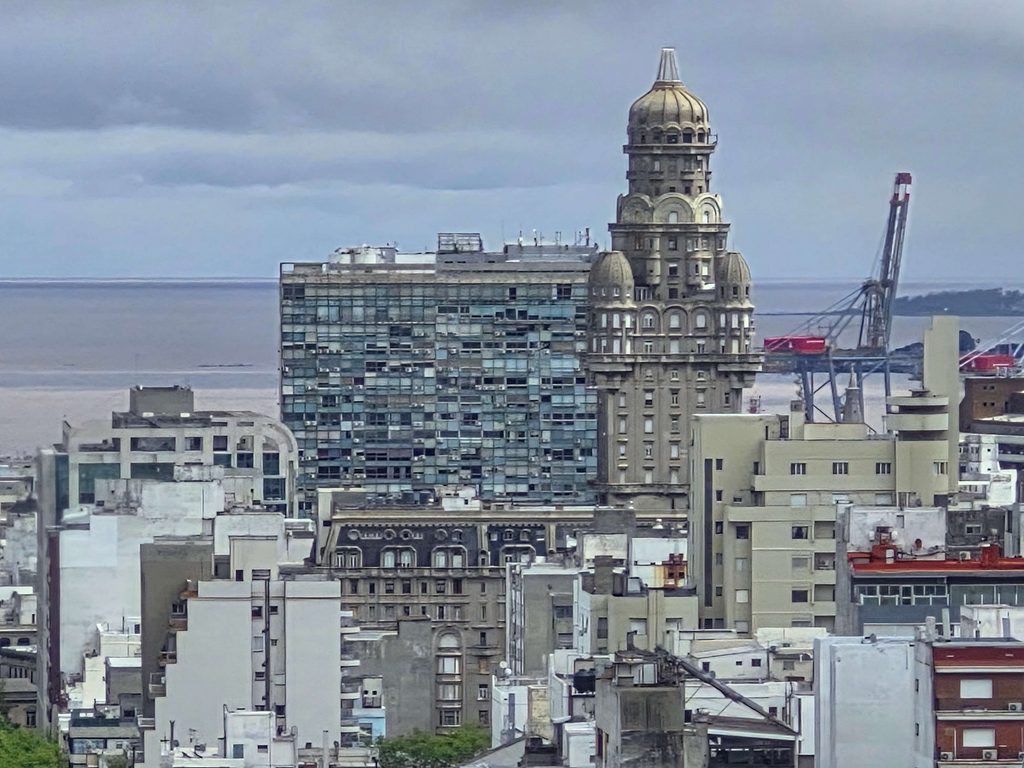
On one corner is the Palacio Salvo which is an iconic 27-story Art Deco and Gothic-influenced skyscraper that opened in 1927 and was once the tallest building in South America.
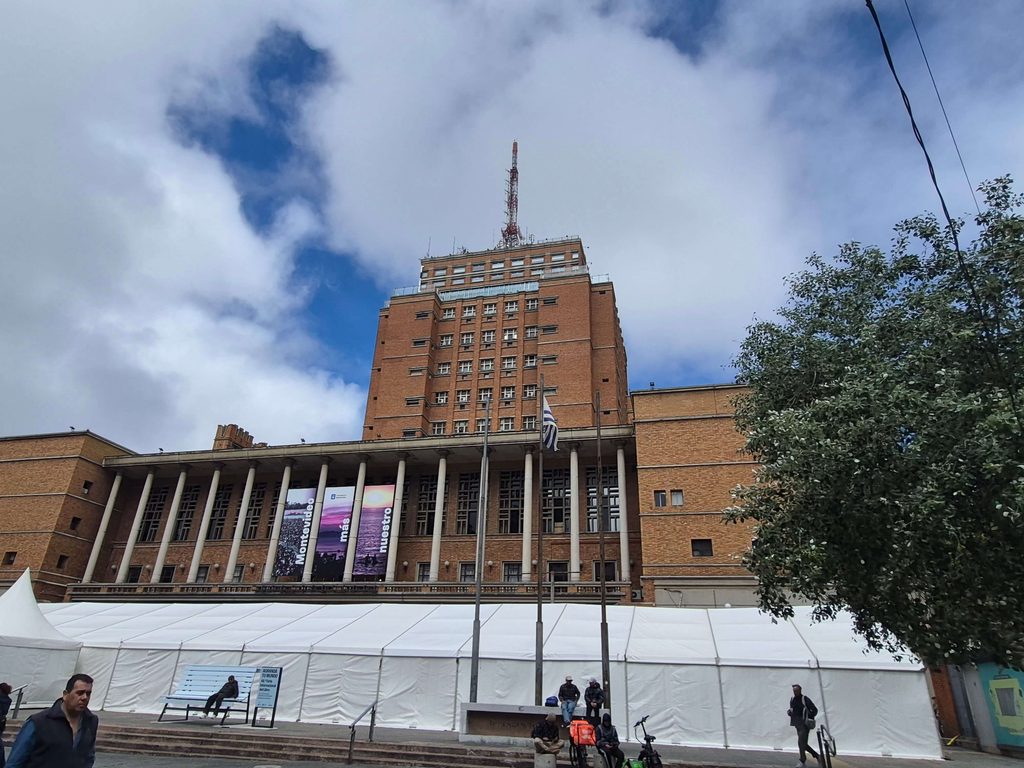
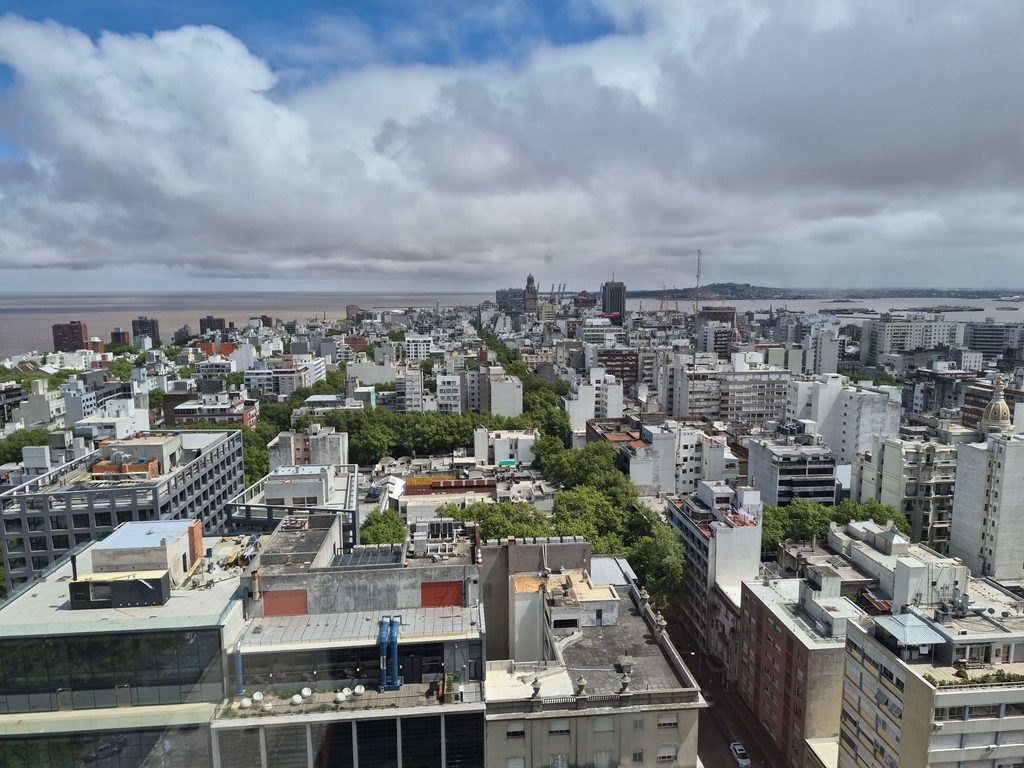
The Mirador Panaoramico sits on the 22nd floor of the city’s municipal building and offers a nice 360 degree view of Montevideo.
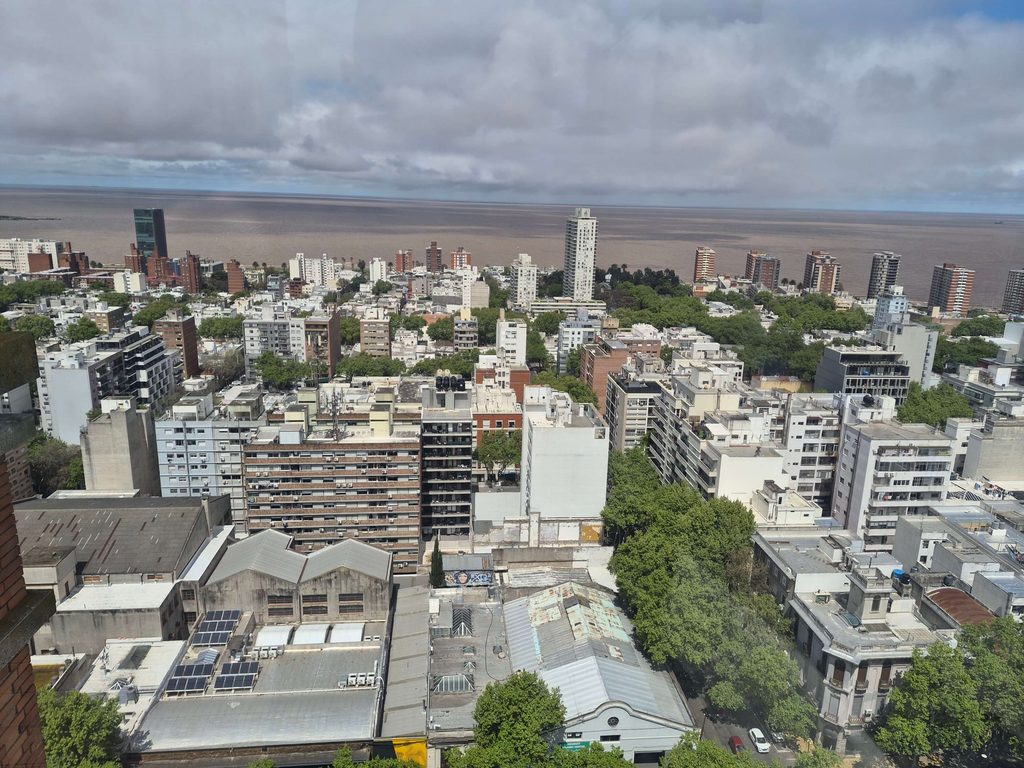
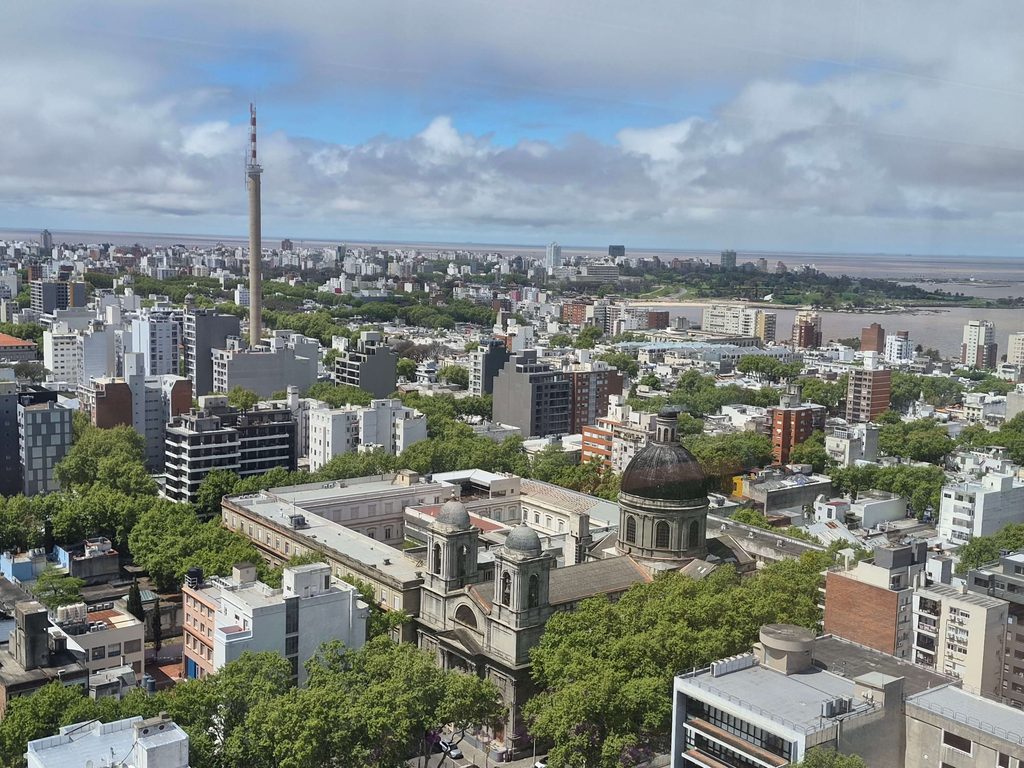
From one side you can see the Plaza Independencia.
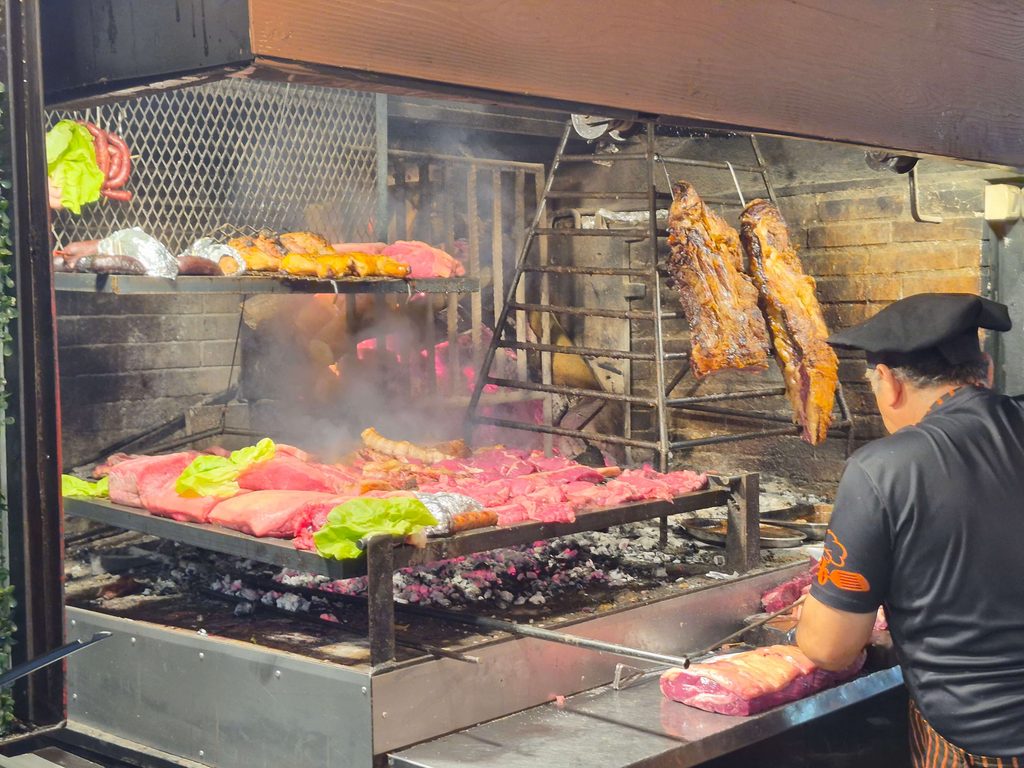
The Bermuda Triangle is known as a place where ships and planes mysteriously disappear. The steak triangle of Paraguay, Uruguay and Argentina, is a place where vegetarians not so mysteriously disappear. Meat restaurants are everywhere in Montevideo and they take pride in the quality of their dishes. It can be seen in the open flames of El Palenque in the Port Market.
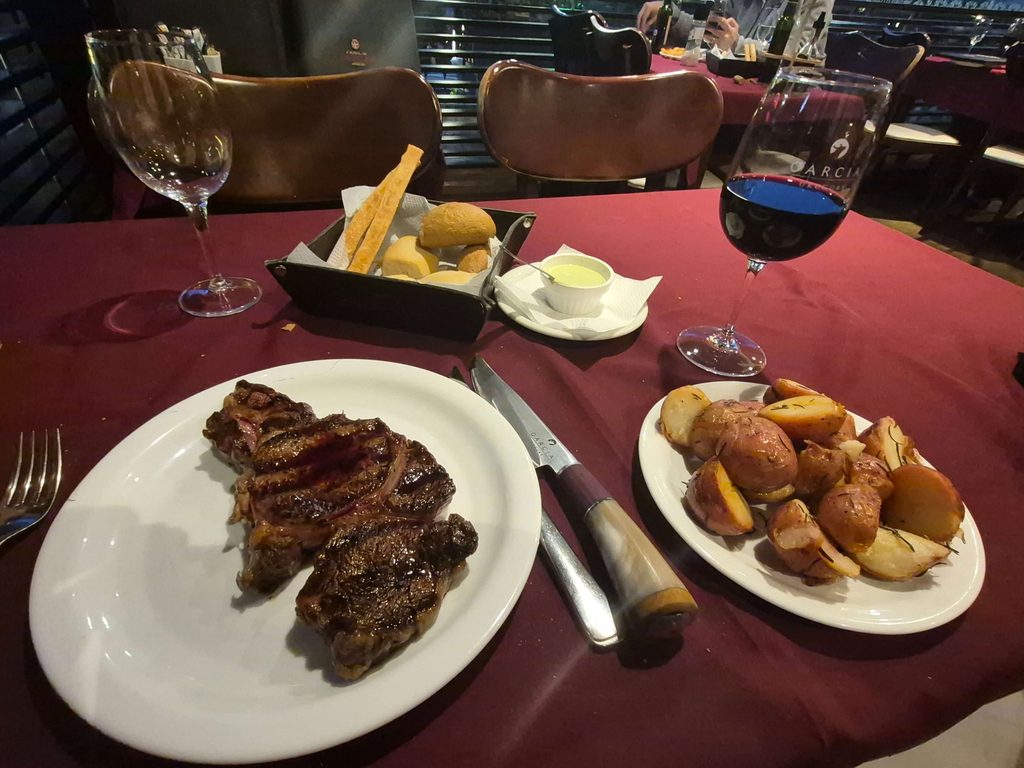
Or in a nice sit down meal of “Baby Beef Premium” at Garcia, near my apartment. I also had a nice glass of tannate, which is Uruguay’s most popular local wine.
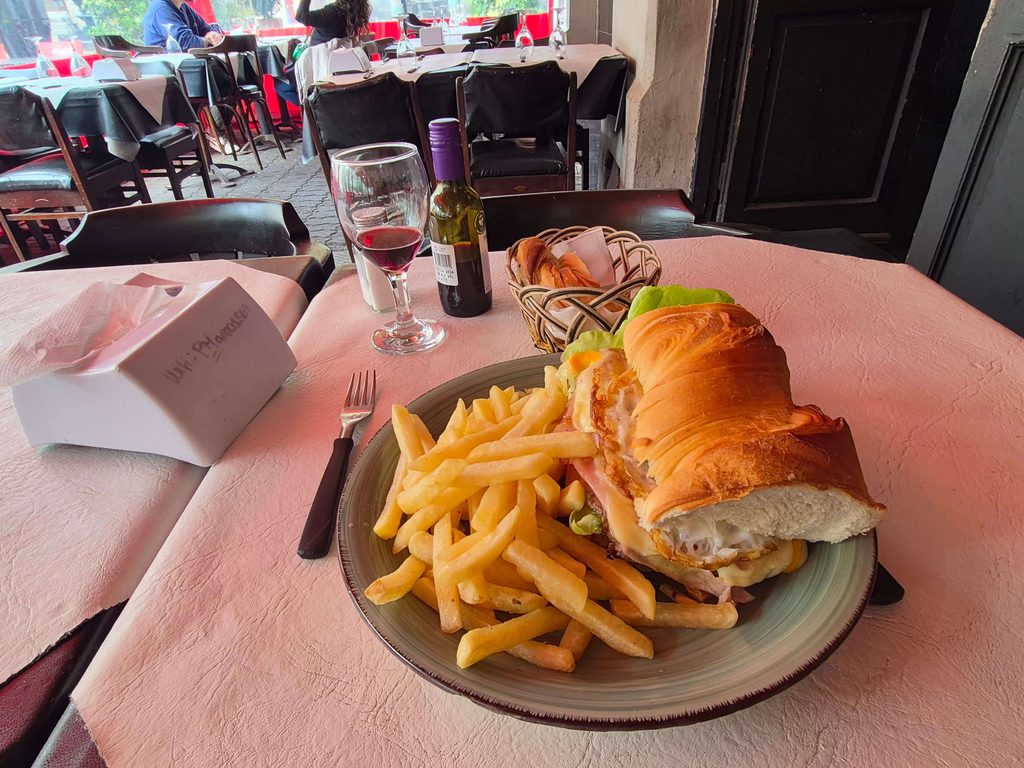
There is also the national sandwich called the chivito, which is overloaded with thinly sliced grilled beef (churrasco), melted mozzarella, ham, bacon, a fried or hard-boiled egg, lettuce, tomatoes, mayonnaise, and olives. I tried these twice and, for some reason, it sounded so much better than the actual taste. I think because both times the meat was a bit tough.
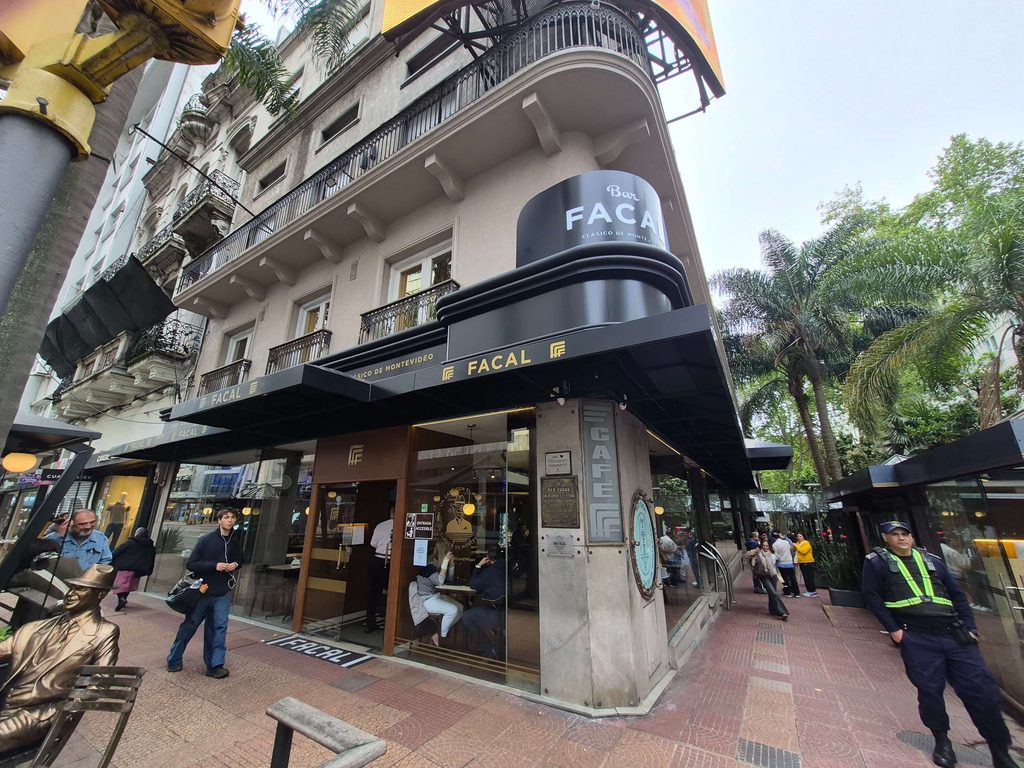
Not only could you call Paraguay, Uruguay and Argentina the steak triangle, but also the mate triangle. All three countries love their thermoses of mate tea. The challenge in Montevideo is that most coffee shops don’t serve mate. People make their own and carry it around. But thankfully there is Bar Facal, which has been a Montevideo institution since 1882.

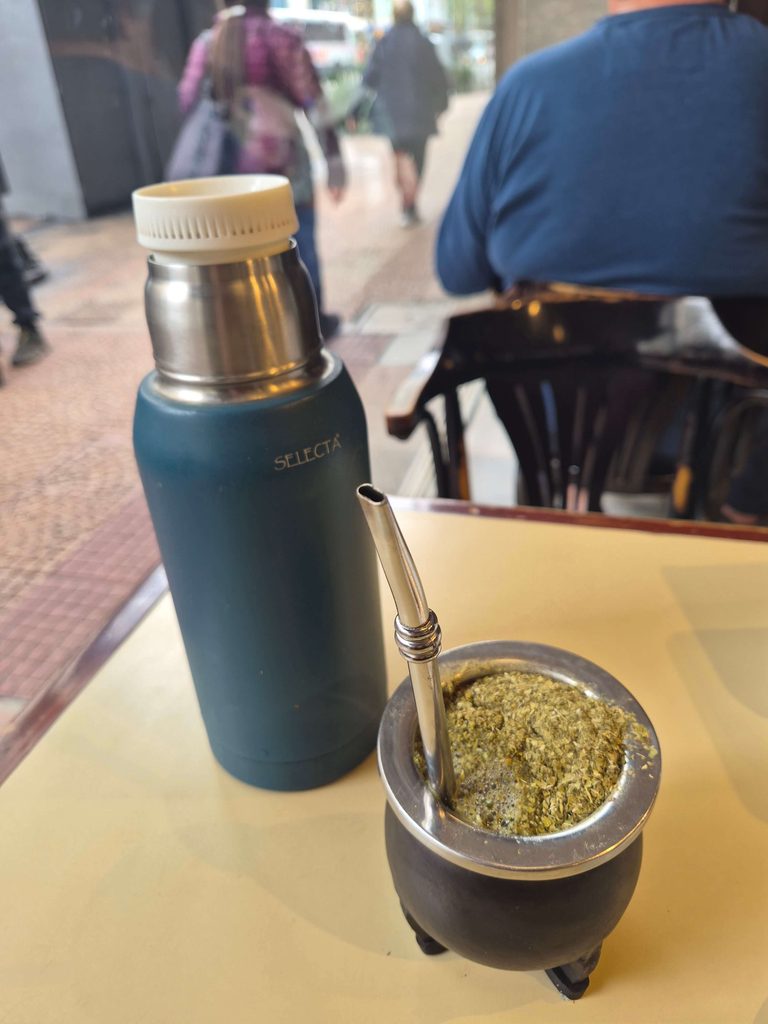
When I asked for the Uruguay mate, the waiter spent a bunch of time with me making sure everything was perfect. First he turned the tea so that the dry leaves were at a 45 degree angle in the cup (gourd). Then he poured a bit of cool water in the base at the bottom of the angle to firm things up for the metal straw (bombillla), which he placed in the exact place the water firmed up the tea. Then he told me I could only pour the hot water from the thermos into the section he created. I could not get the other dry sections of the leaves wet. Otherwise I would be drinking it like an Argentinian. I ended up spending a couple of hours there reading and ultimately going through two thermoses of hot water.
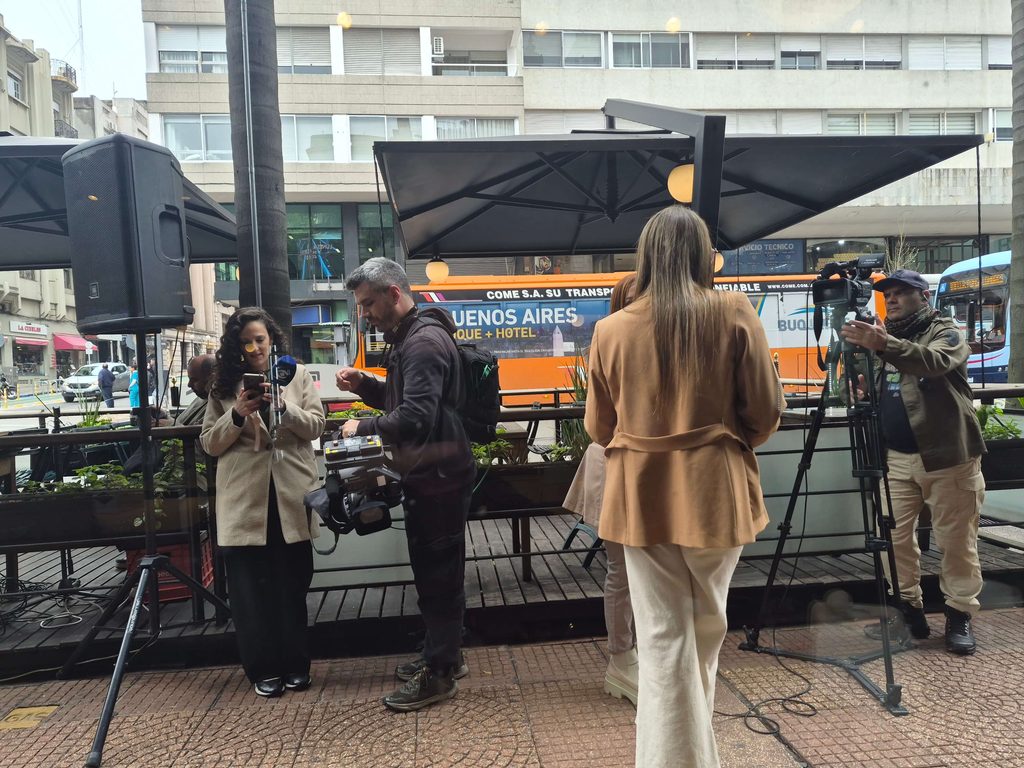
The funny thing there was some kind of anniversary celebration going on at Bar Facal. Right after I got there people started showing up in front and a guitarist started playing. A couple of news crews showed up and did some broadcasts. The brunette reporter and the camera man in this picture saw me through the window getting my instructions from the waiter and wanted to interview me live on my impression of mate. When they realized my Spanish wasn’t good, they asked if they could do a taped version. I don’t think it came out very good, but it was a fun experience to be filmed drinking their national obsession.
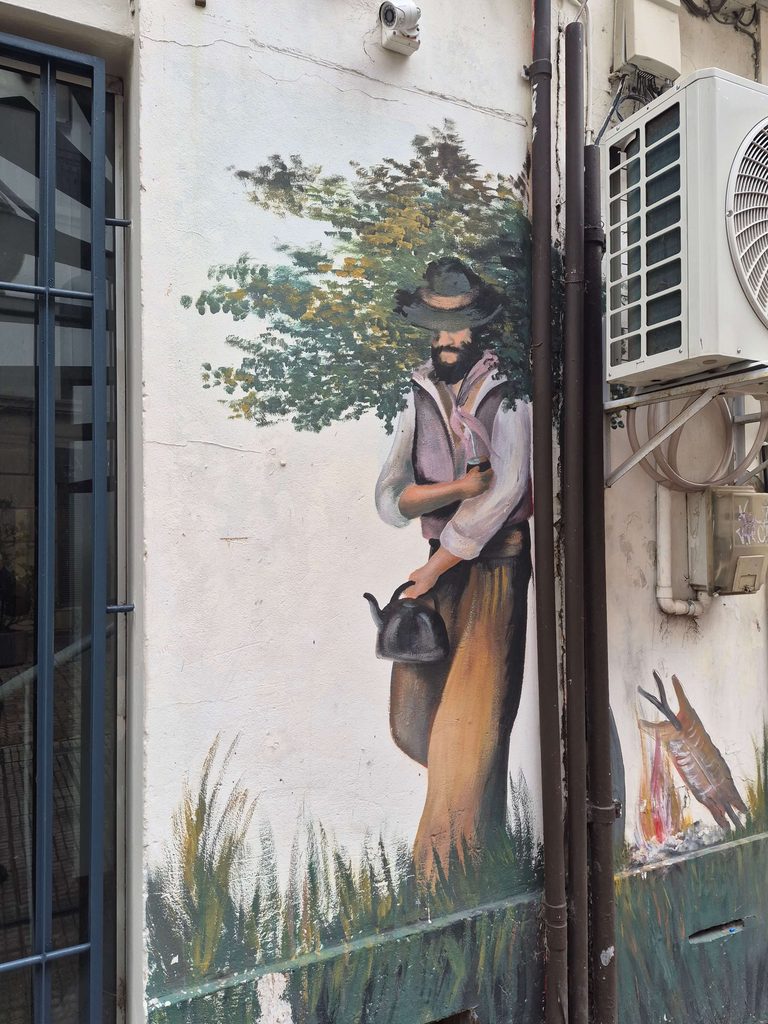
Here is a gaucho drinking his mate in this building painting.
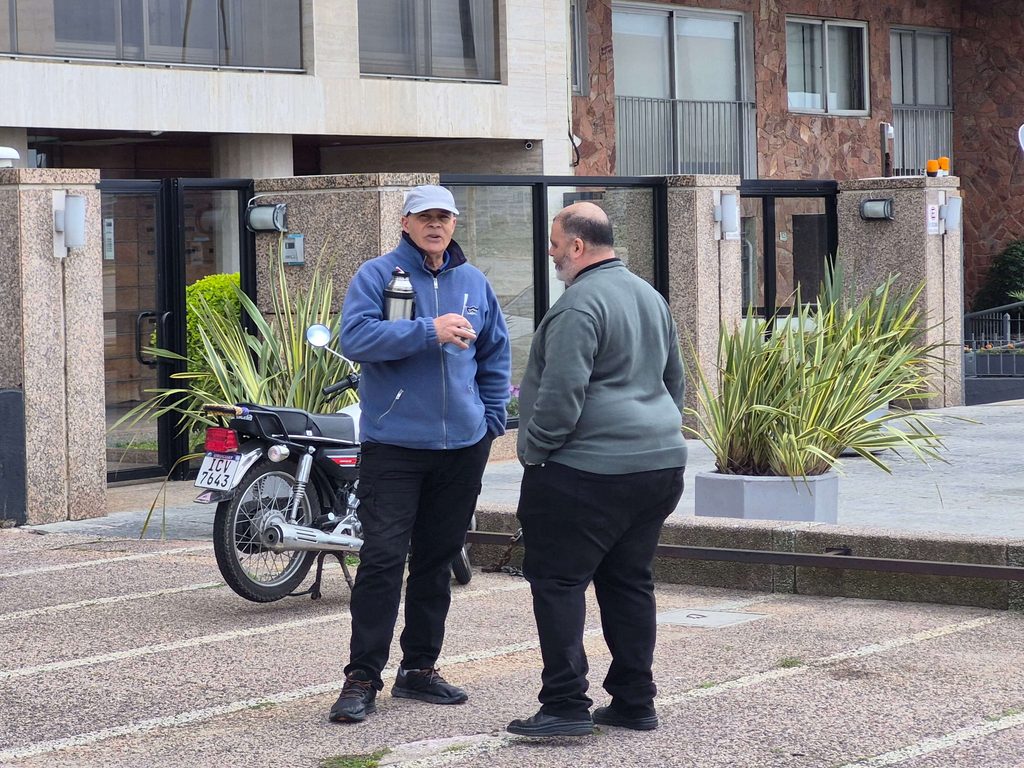
And here is a modern day gaucho with his tea.
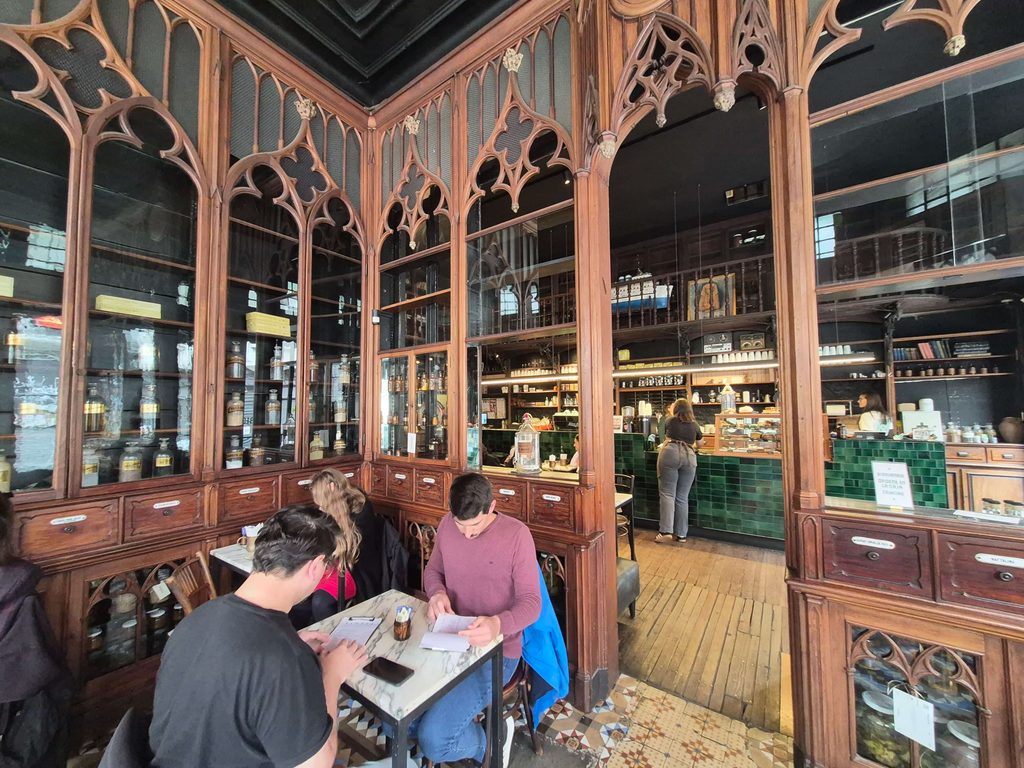
A unique place is Cafe La Farmacia which is a relaxed cafe in a converted old pharmacy.
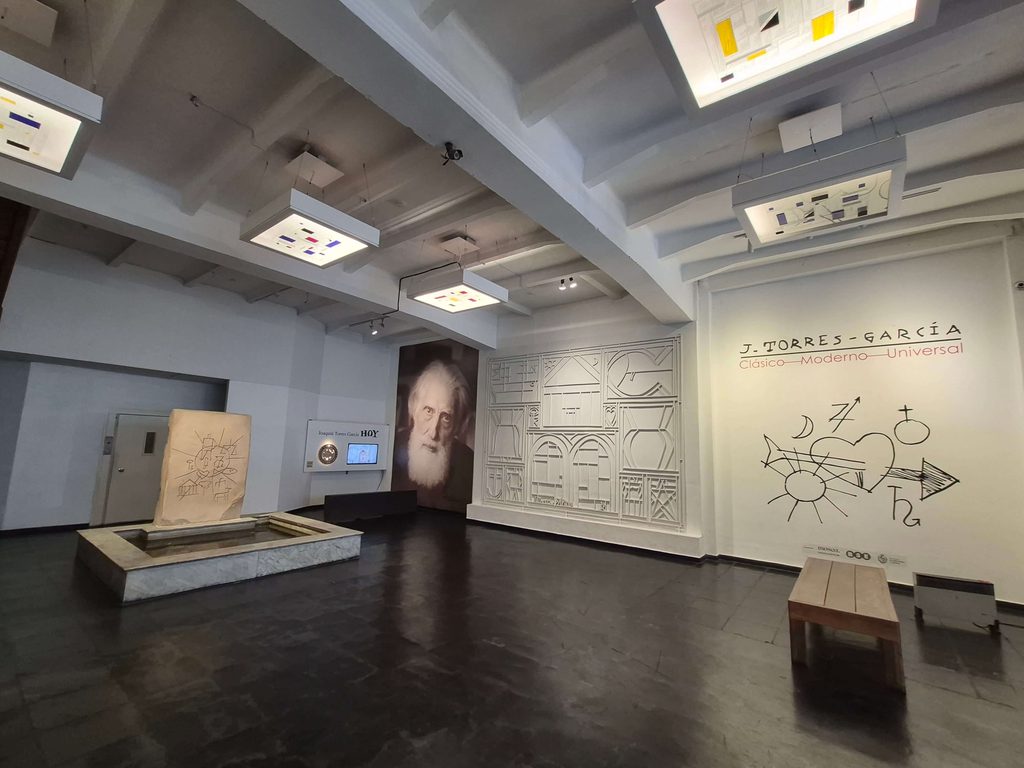
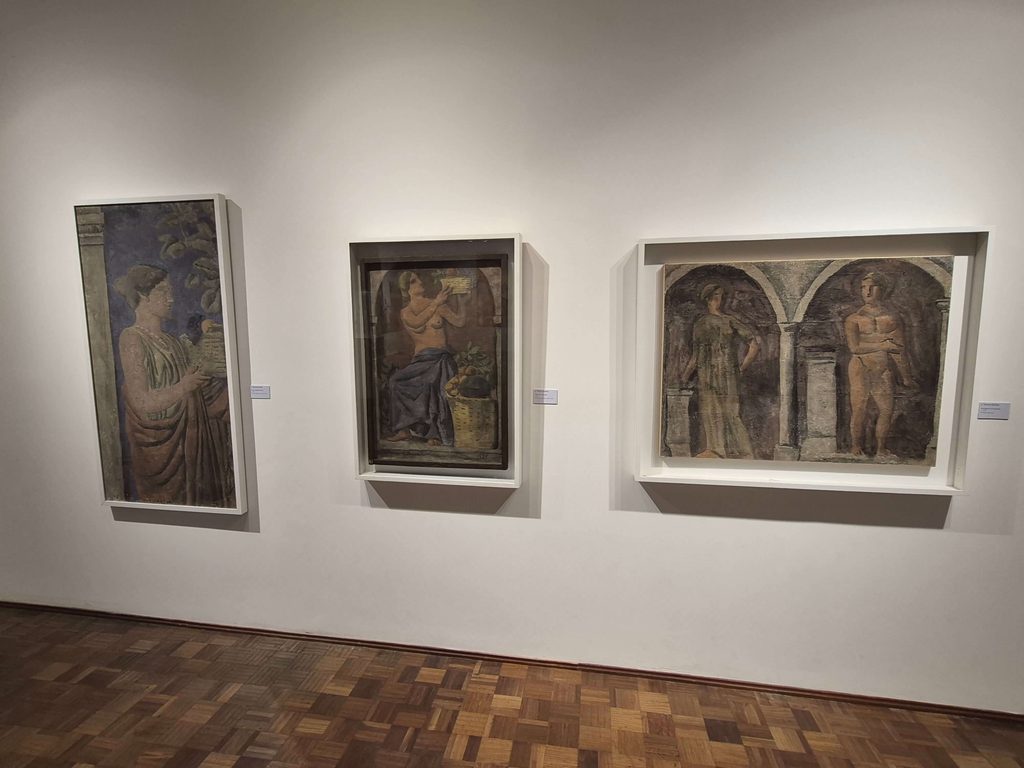
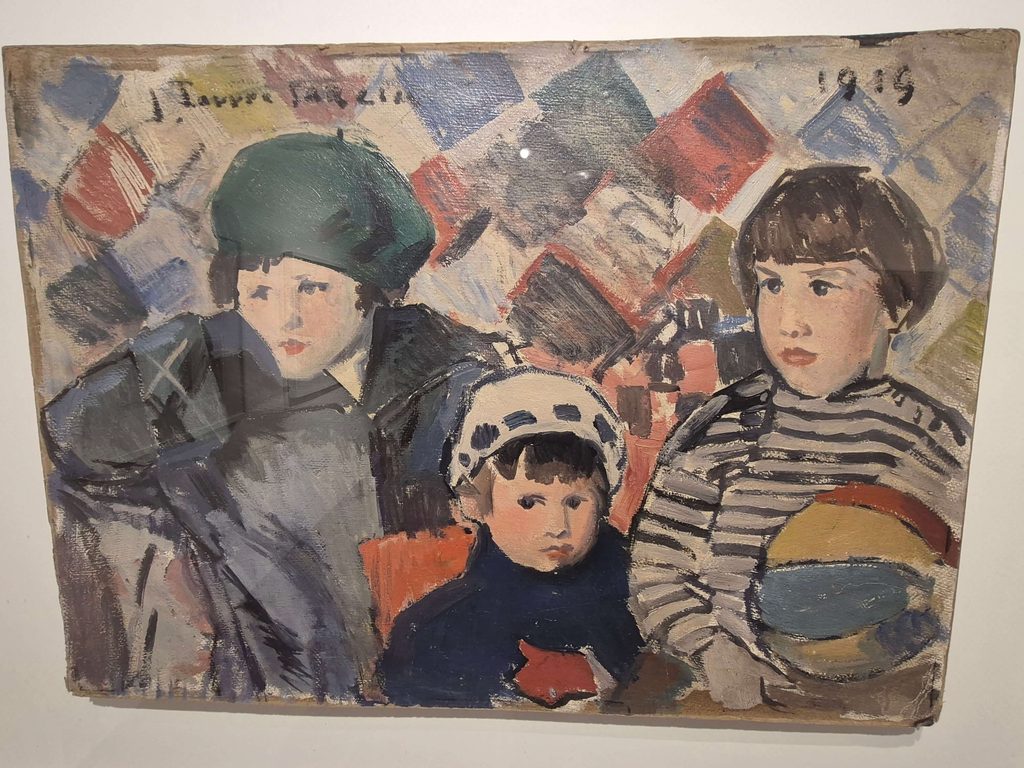
The Uruguayan artist Joaquín Torres-García was a central figure in early twentieth-century transatlantic modernism. He is widely known today as a pioneer of geometric abstraction and as the inventor of Universal Constructivism, a style that integrates geometric shapes and figurative pictograms legible across the visual cultures of different civilizations. He is revered in Uruguay and there is a nice, small museum in the city of some of his work.
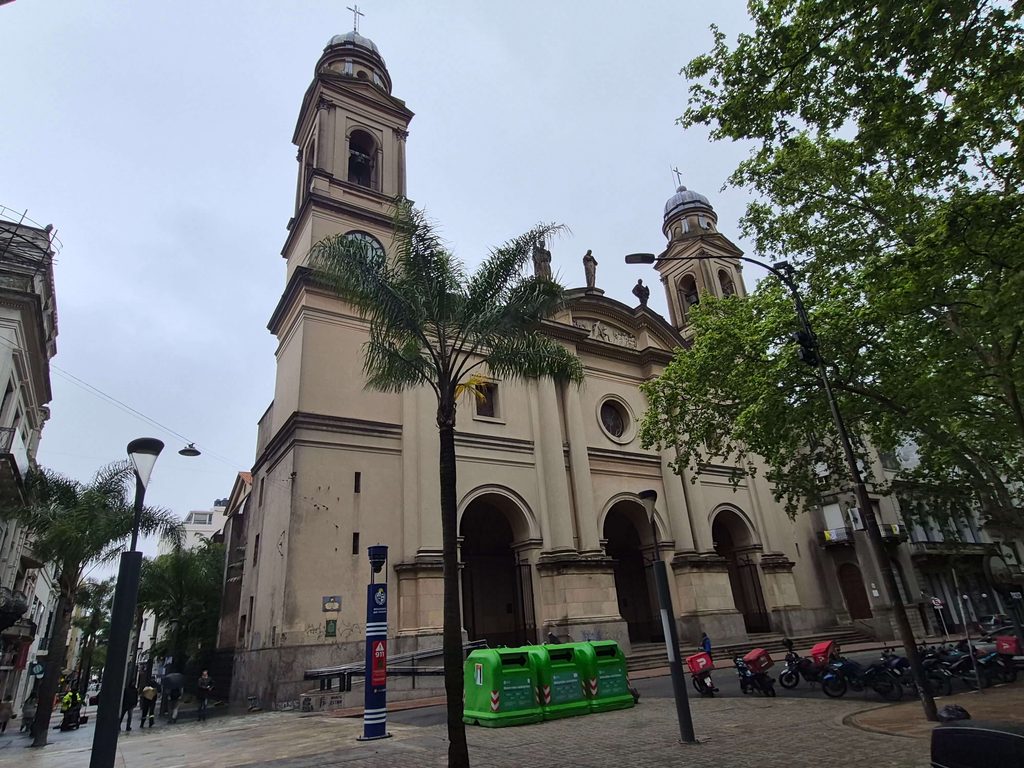
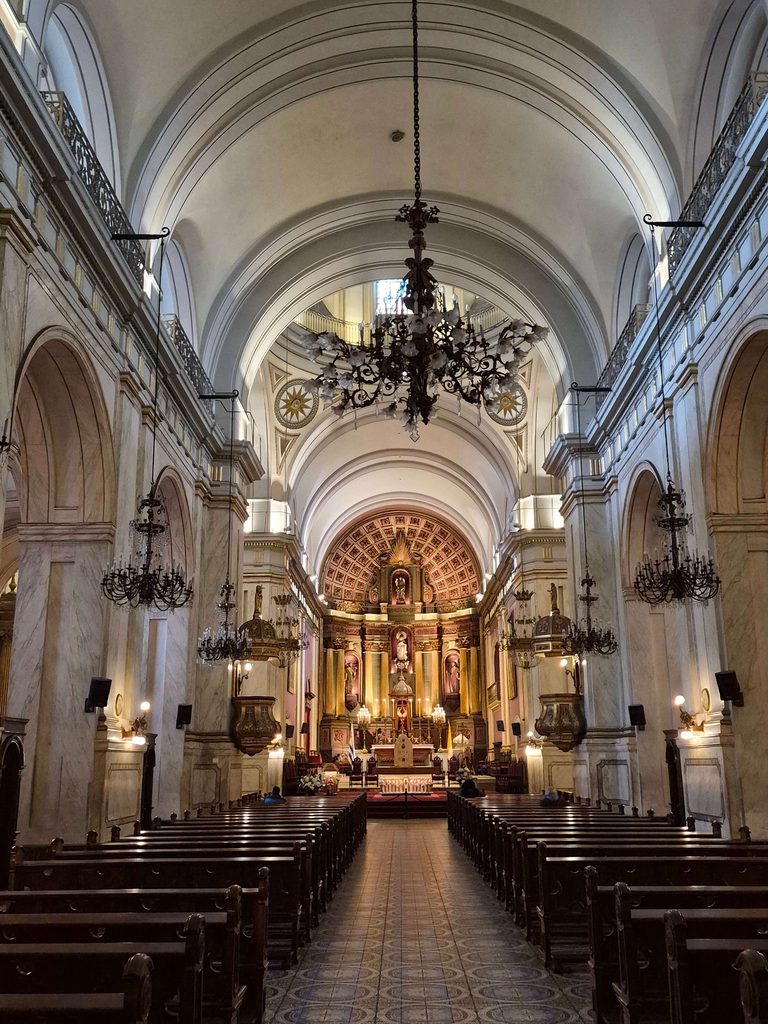
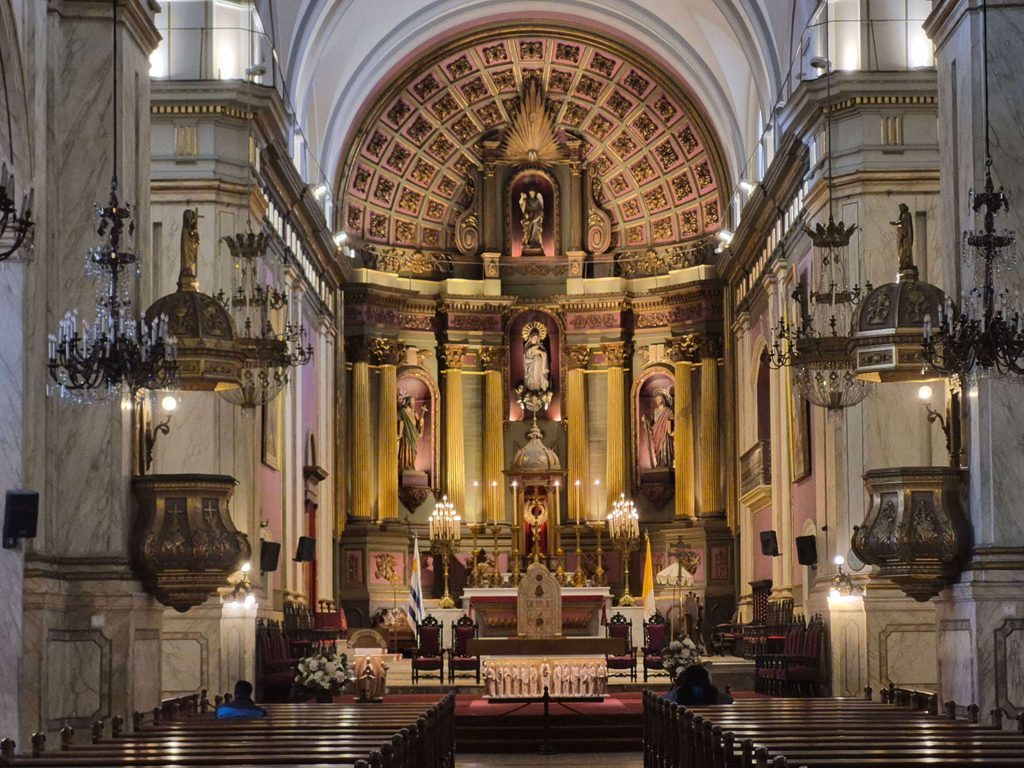
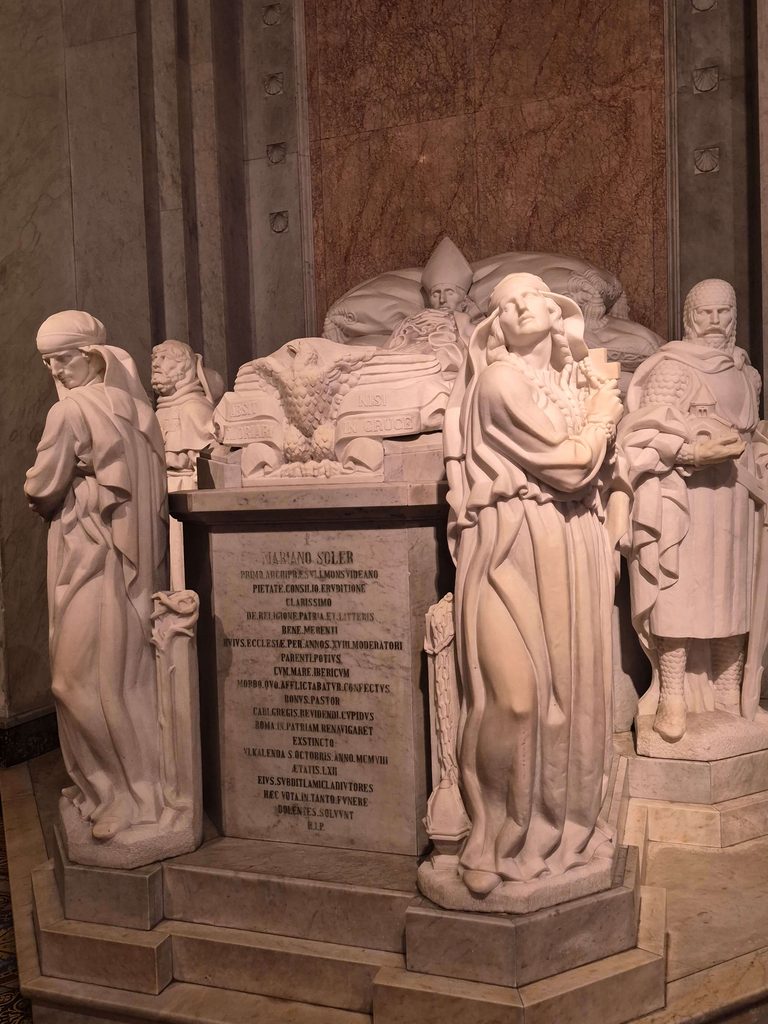
The Catedral Metropolitana de Montevideo is the primary Catholic cathedral in the city and was completed in 1804.
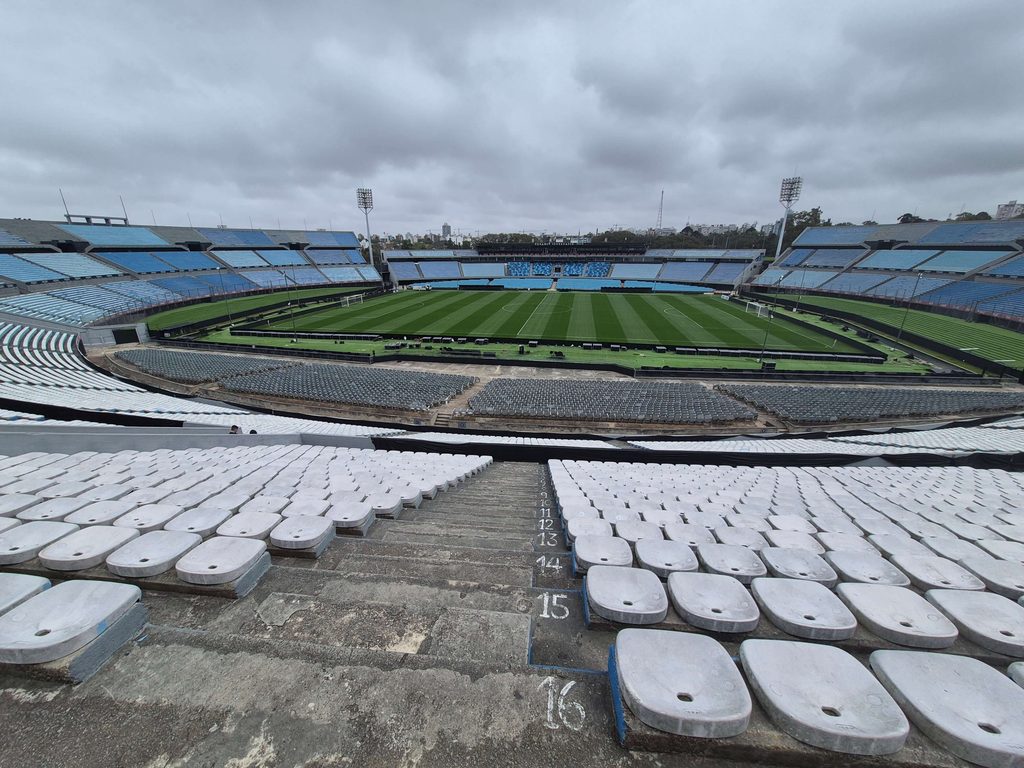
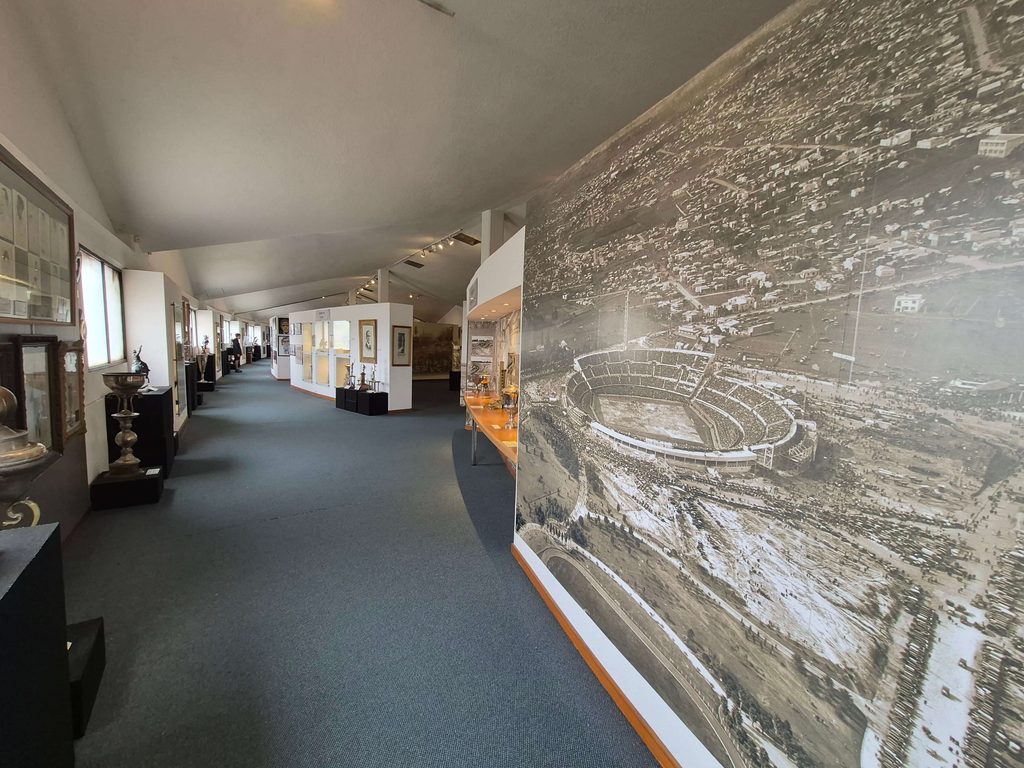
Another “cathedral” in the city is the Estadio Centenario, which hosted the very first FIFA World Cup in 1930, which Uruguay won. It’s a modest stadium with a modest museum, but a nice place to visit since I’ve been to eight World Cups.
The Museum of Visual Arts is in an interesting block type building built in 1911.
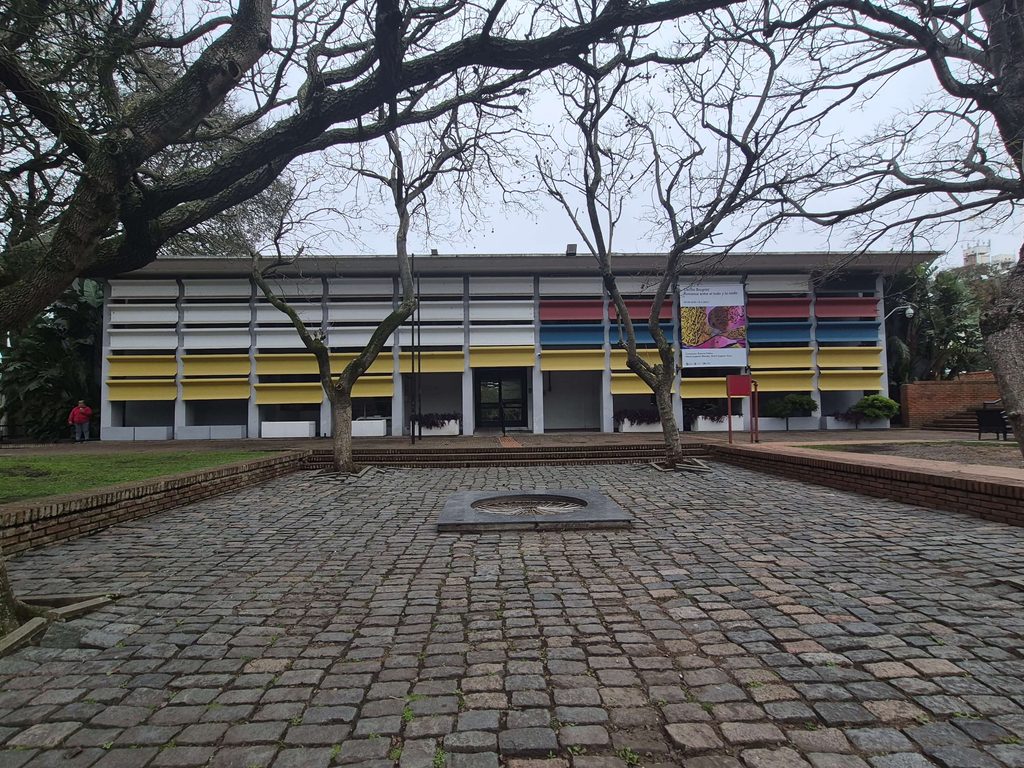
It has a nice collection of unique pieces.
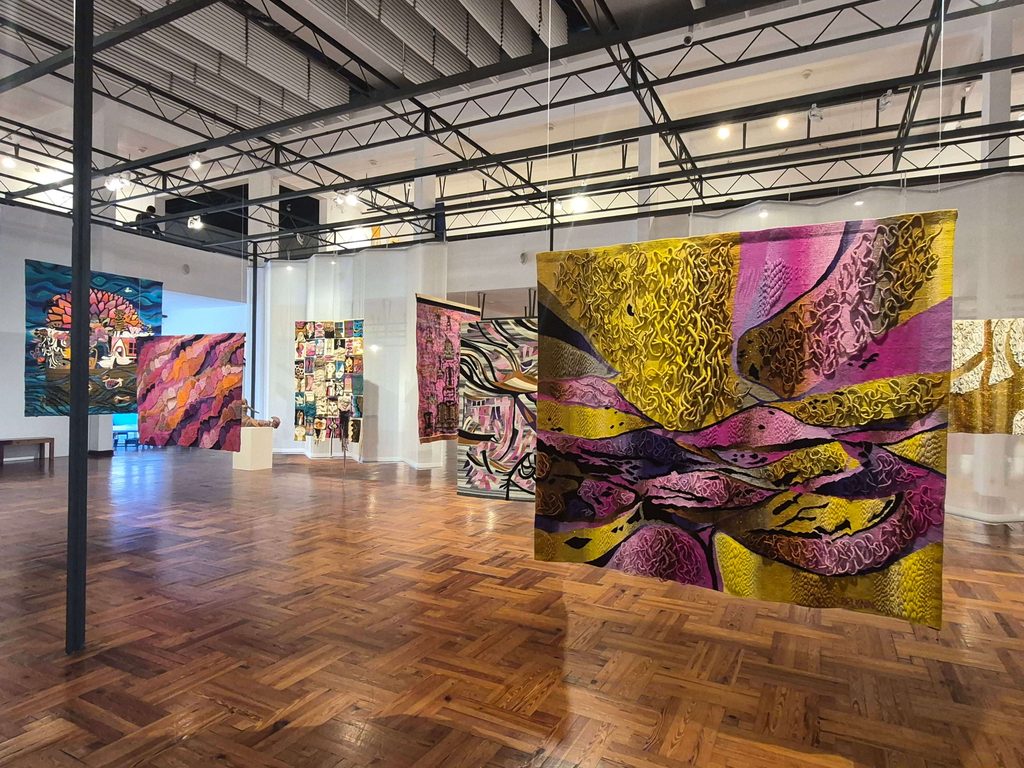
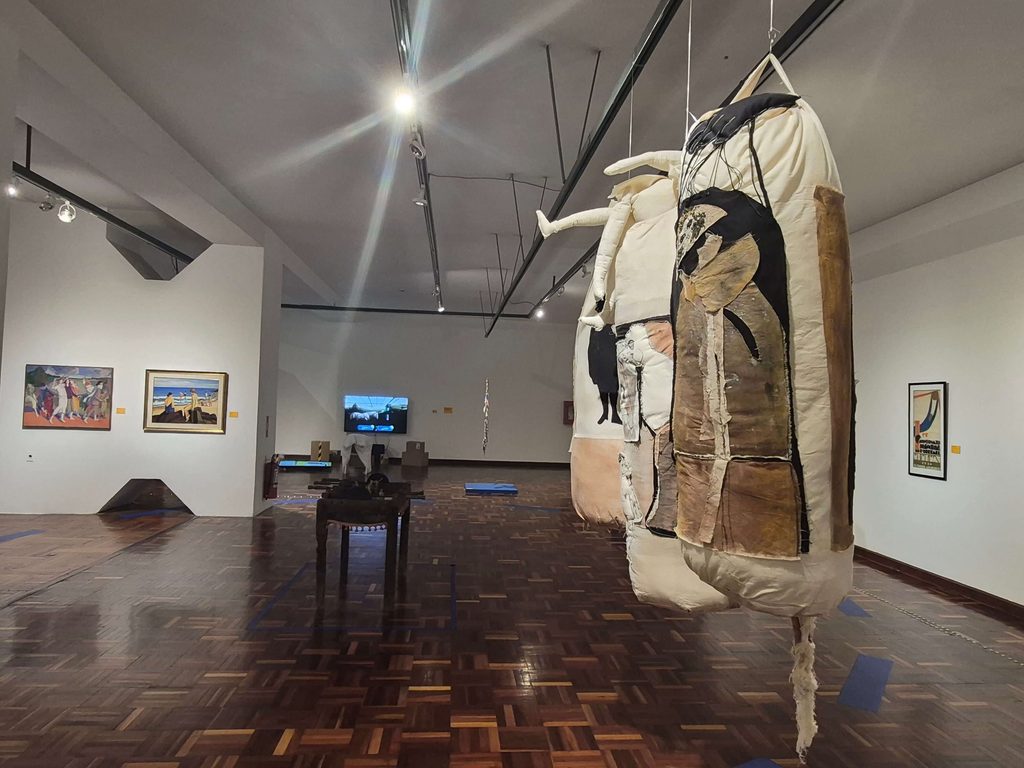
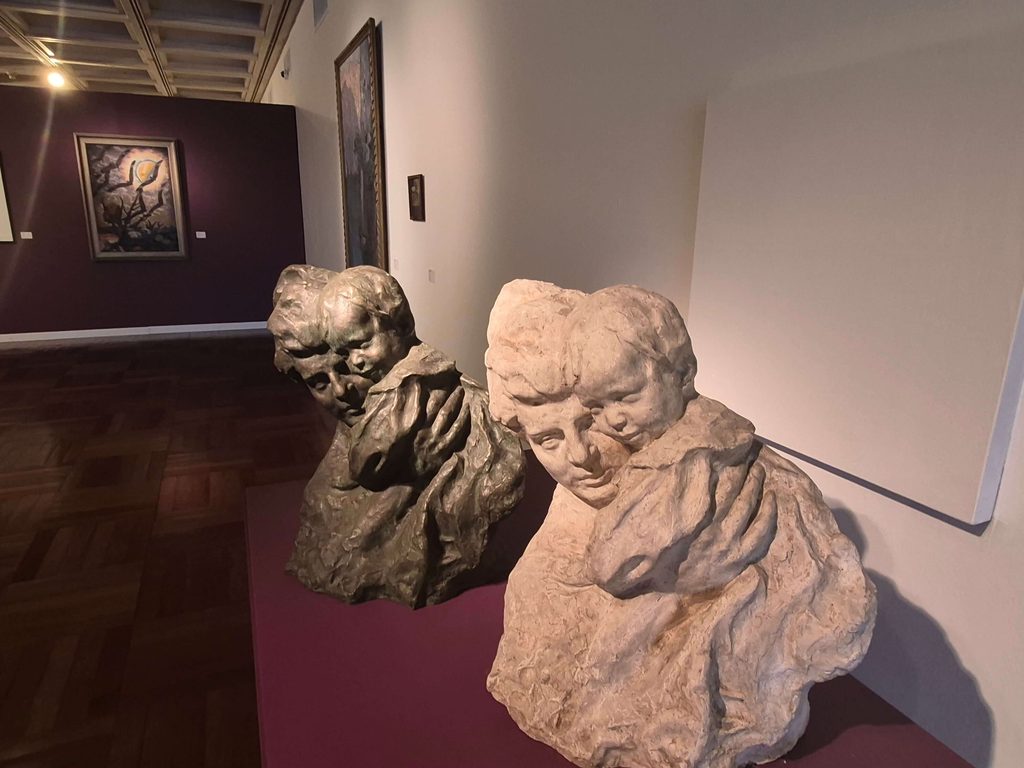
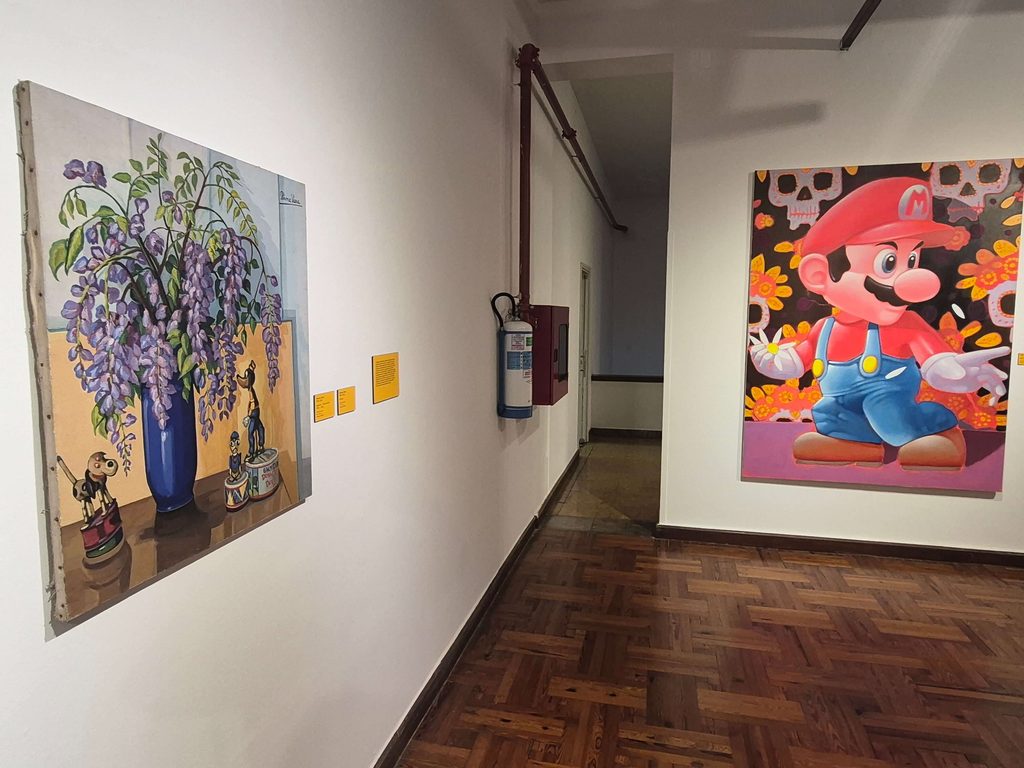
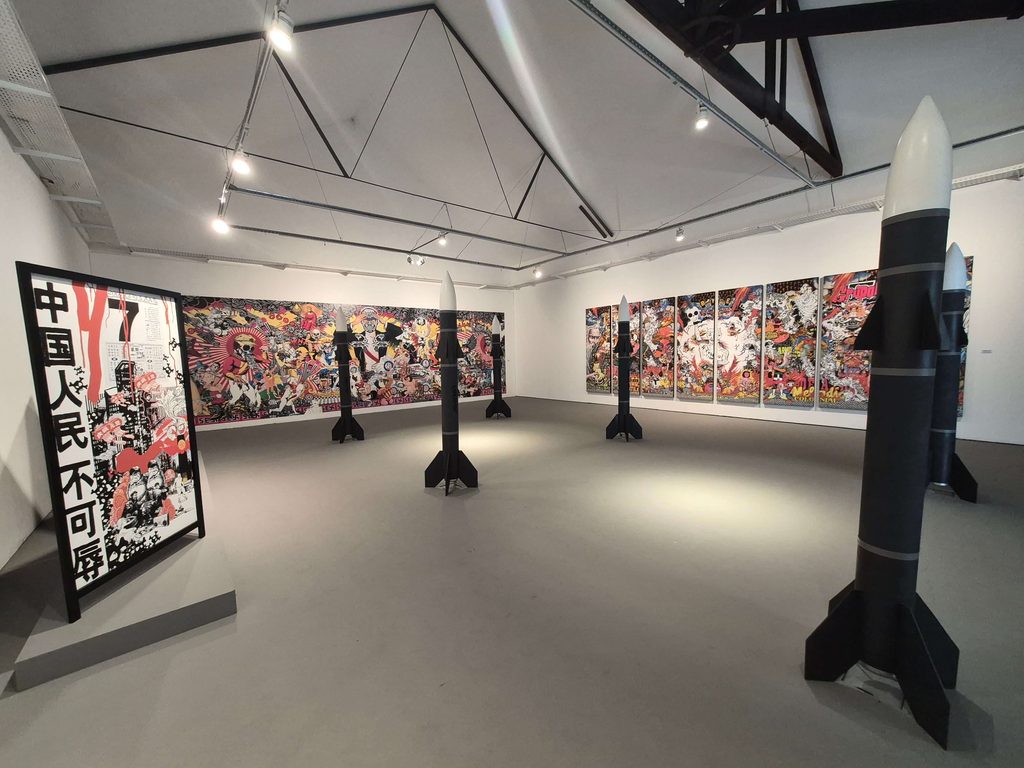
The most fascinating museum is the tiny Contemporary Art Museum which is located inside the former Miguelete Prison where original 19th-century cells with iron bars serve as unique gallery spaces.
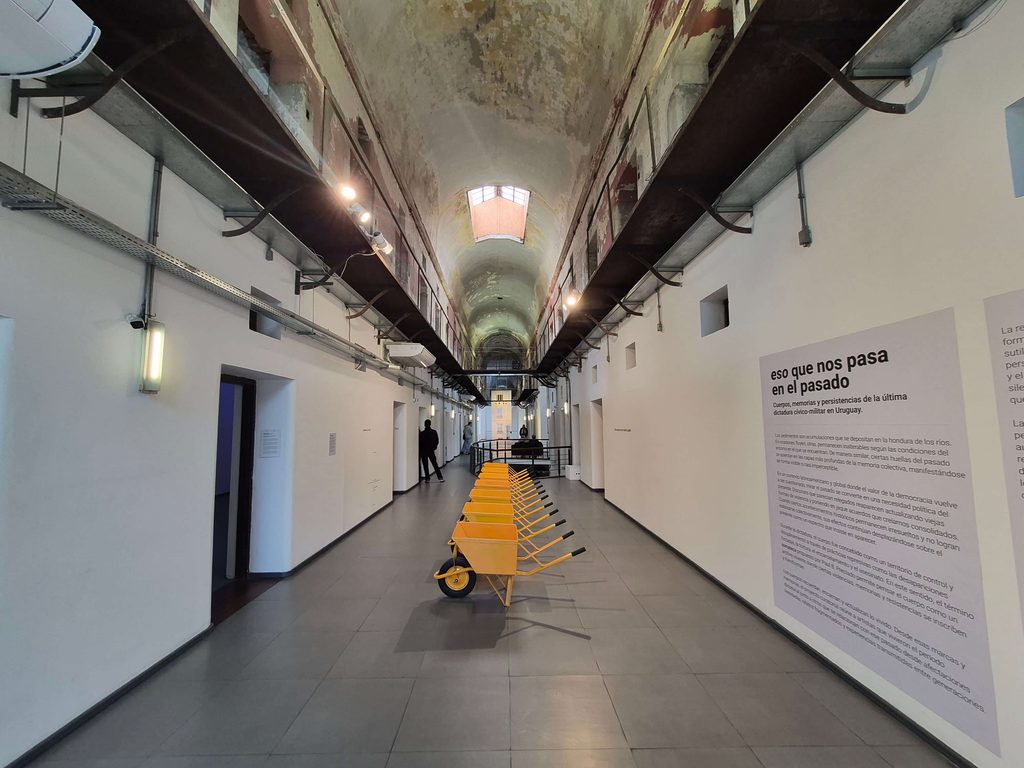
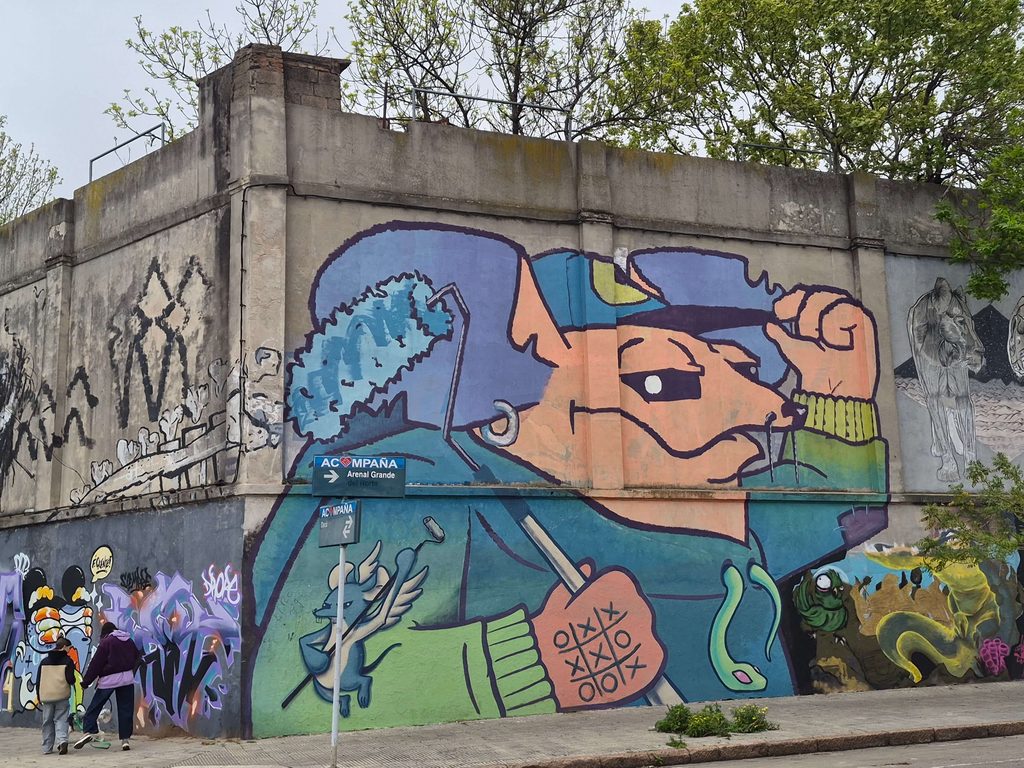
There’s even some nice artwork on the outside walls of the former prison.
One of the most unusual places to see is the Castillo Pittamiglio which was the residence of the architect and engineer Humberto Pittamiglio. Its most striking feature is the entrance from which a replica of the iconic Greek sculpture the Winged Victory of Samothrace emerges from a round brick tower, crowned by a coat of arms.
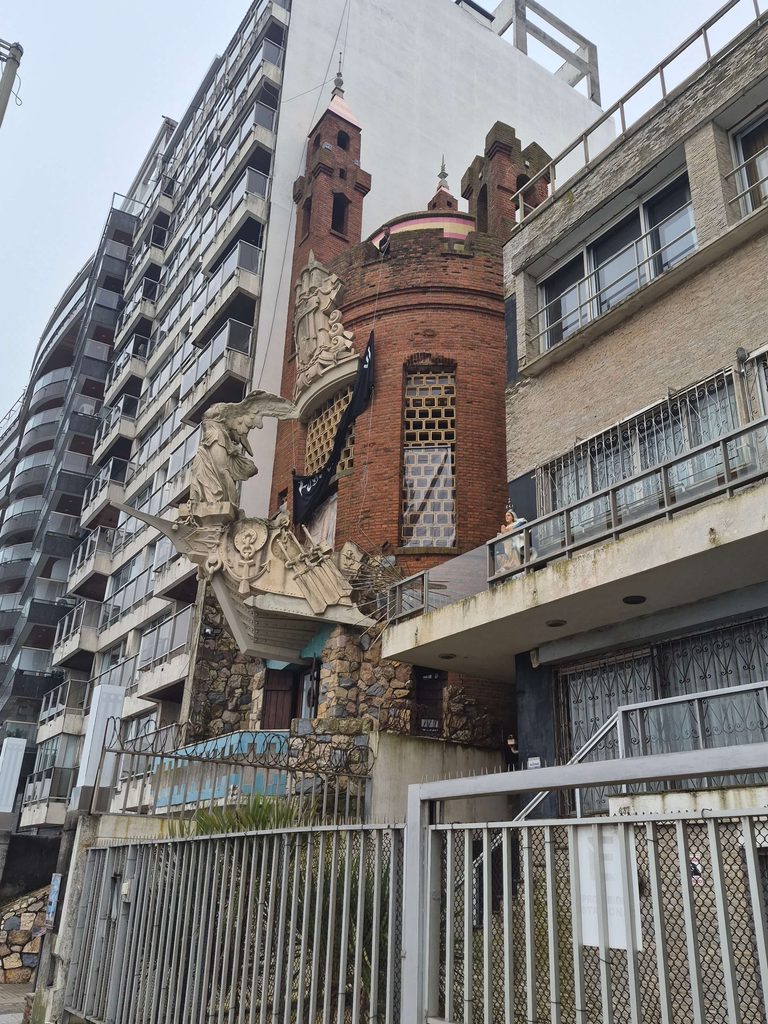
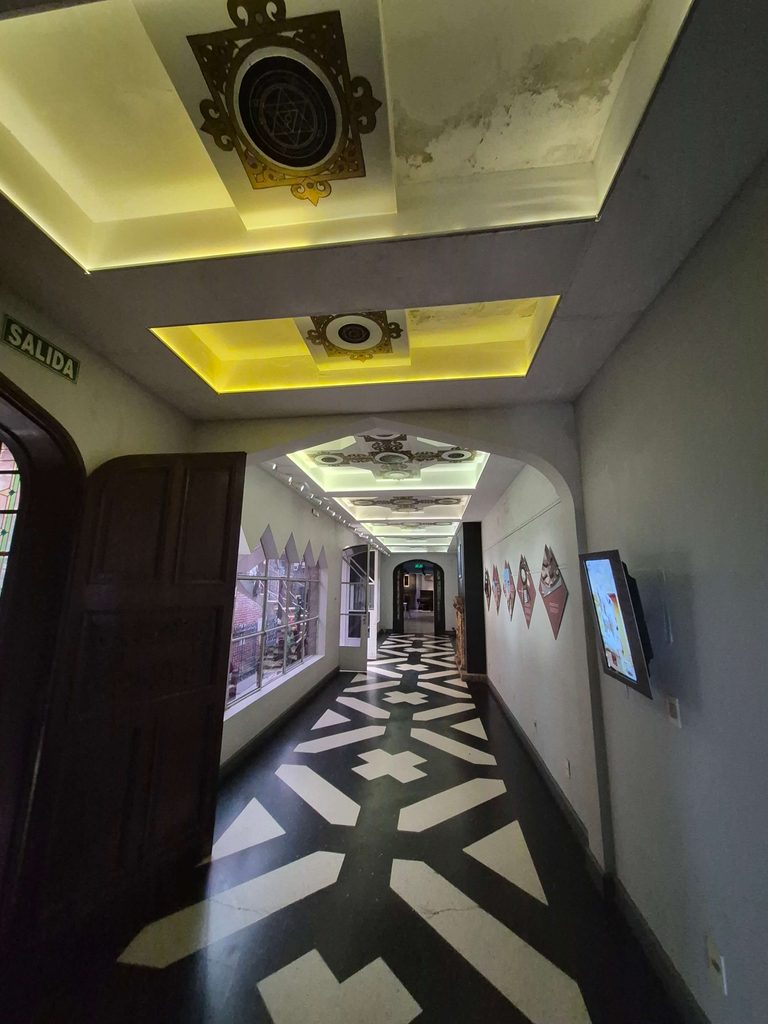
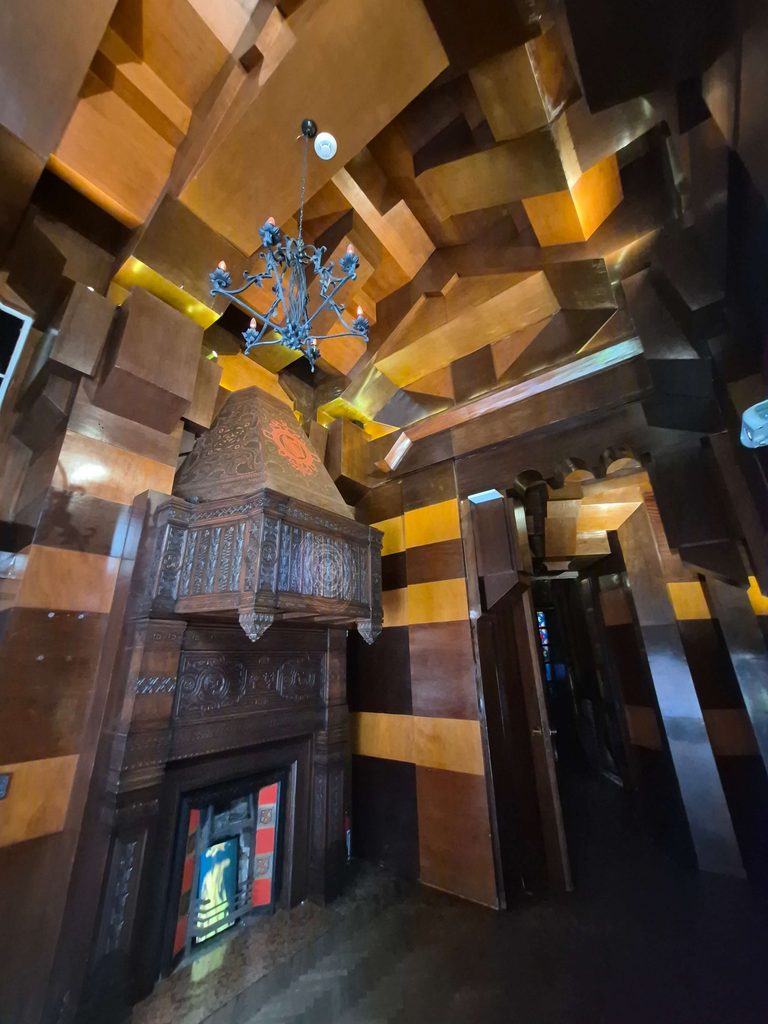
He built this house in 1910-1911. Inside are a hodgepodge of rooms with esoteric symbols, Masonic signs, alchemical allegories, and architectural oddities. Legend has it he was fascinated by alchemy and encrypted ancient secrets into the castle’s construction, such as the search for the “Philosopher’s Stone” and the Holy Grail. Whatever his intent was, it was a fun little diversion on a cool, cloudy day.
This was a small room of musty books surrounded by mirrors.
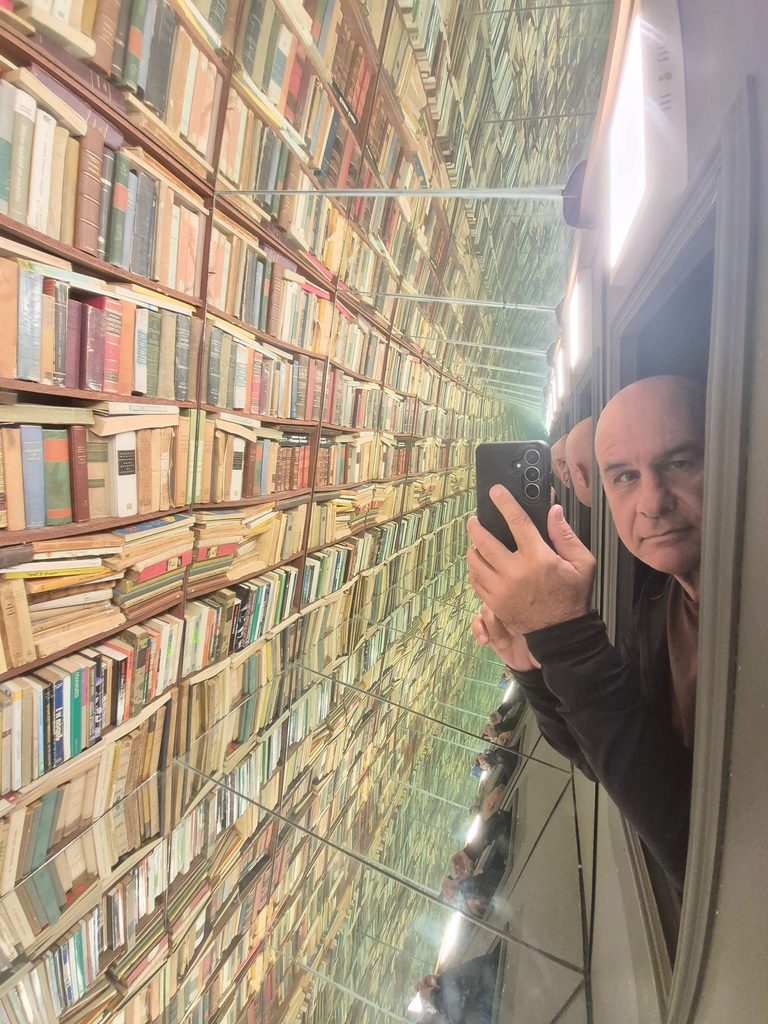
Some more fun with mirrors.
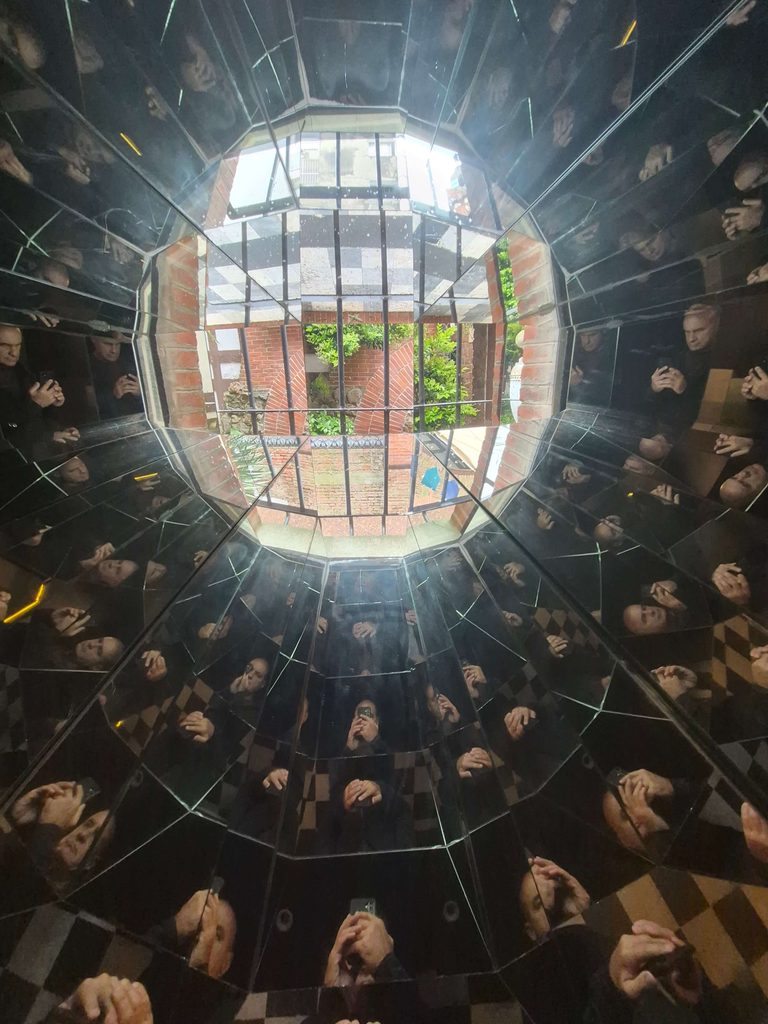
The Vortex room had an interesting vortex video running in a loop on the ceiling.
Every Sunday the Tristan Narvaja neighborhood is turned into the Montevidean equivalent of a flea market. Furniture, antique items, pets, books, as well as food, fruit and vegetables, are to be found there. It stretches for blocks and blocks and is a fascinating look into Montevideo society.
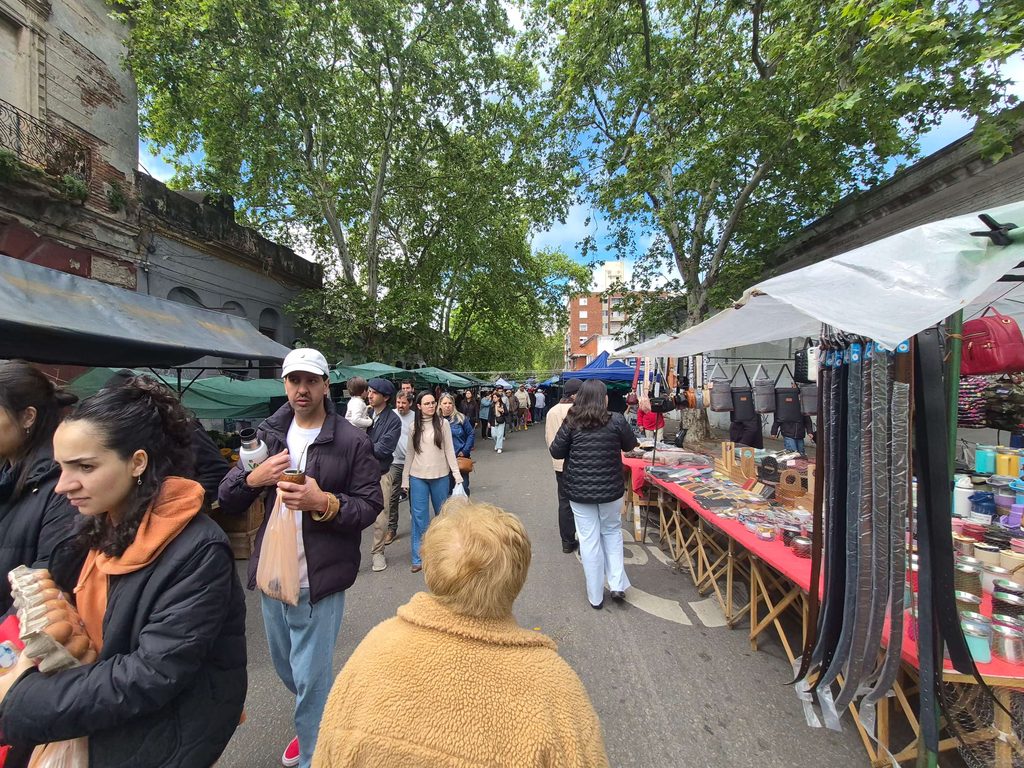
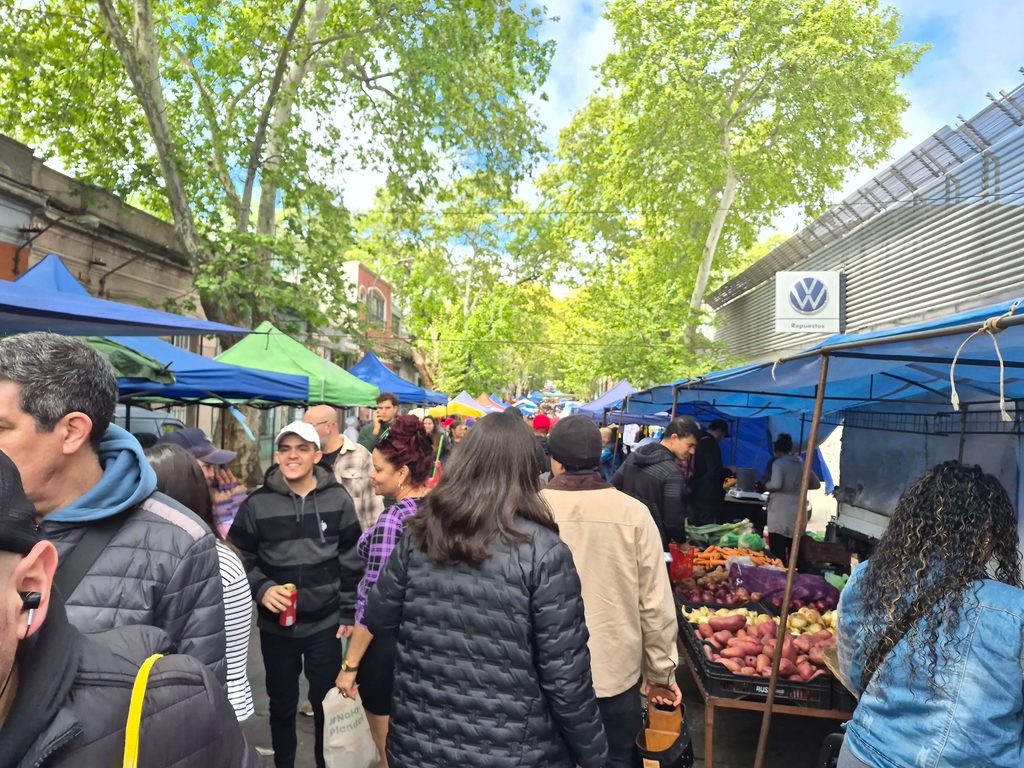
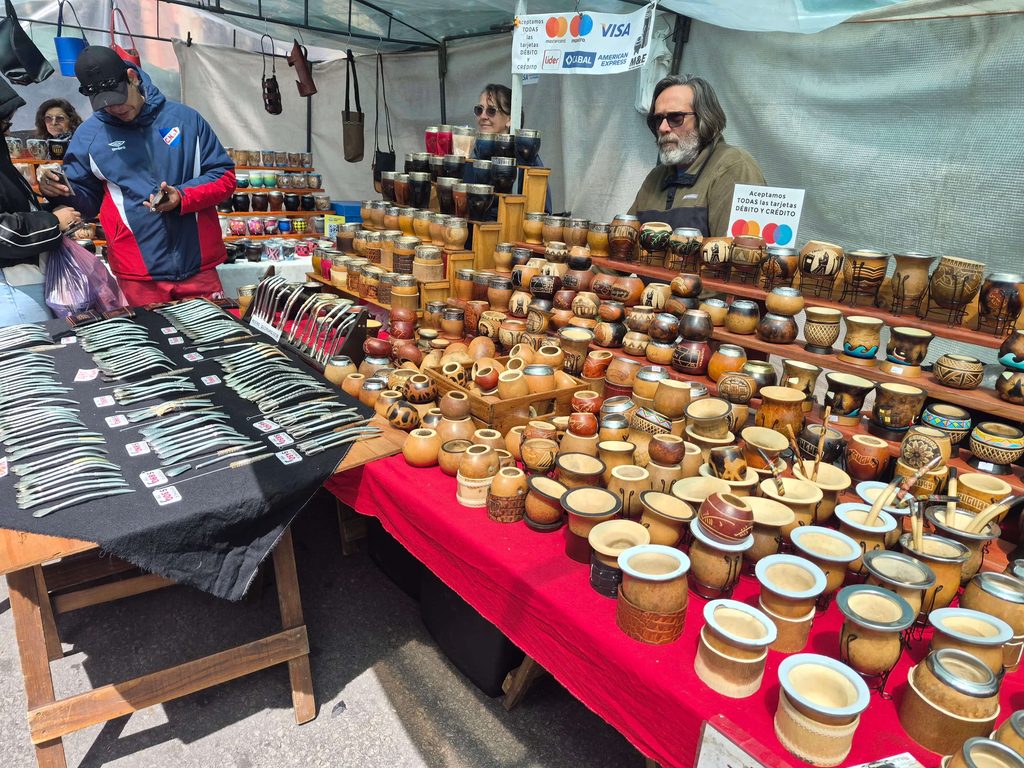
You can even buy all your mate accessories here.
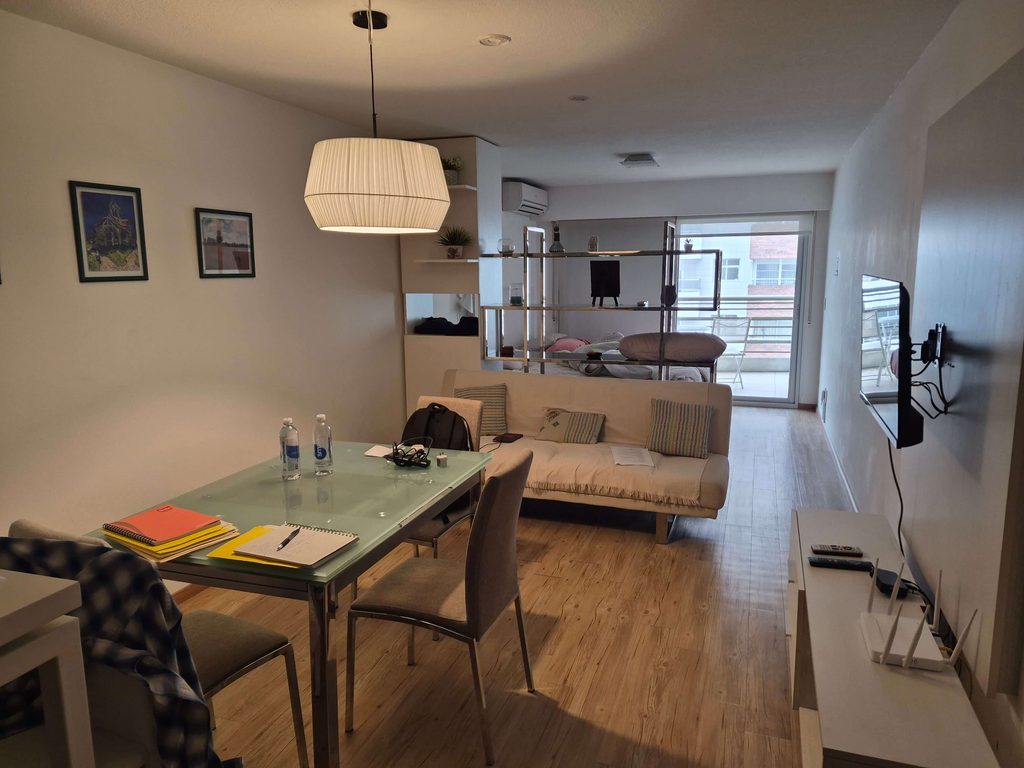
I stayed in a very comfortable Airbnb studio apartment while I was there.