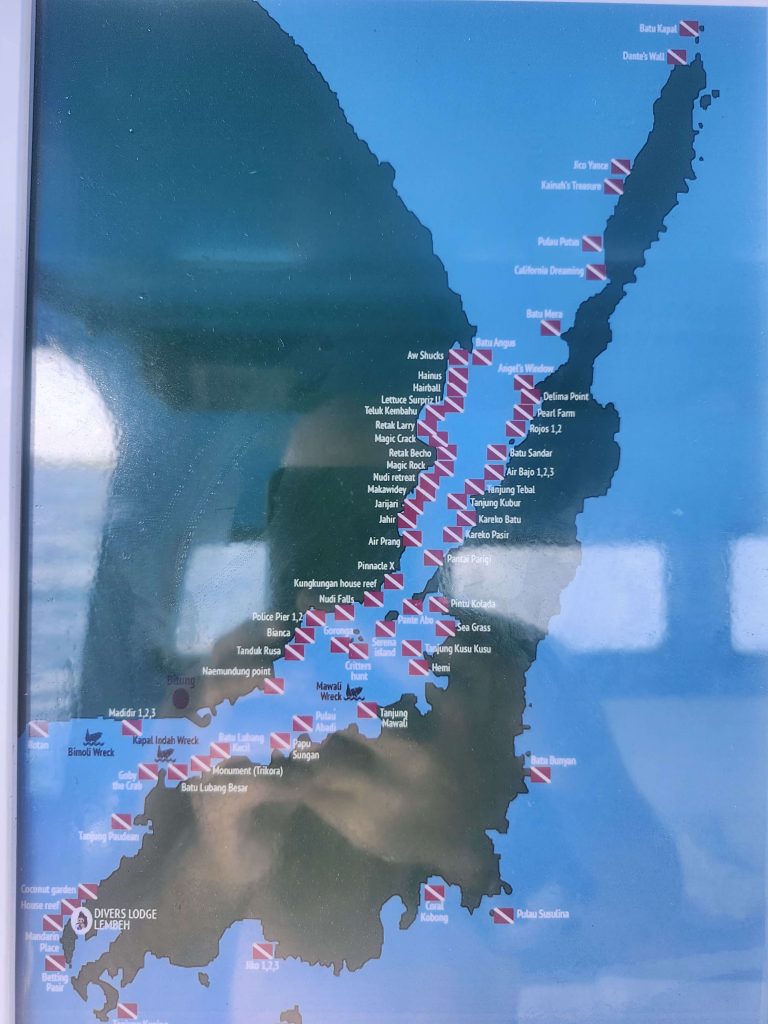
The Lembeh Strait in North Sulawesi, Indonesia, is the world’s premier “muck diving” destination, famous for volcanic black sand slopes teeming with rare, bizarre macro marine life. I had spent time in Northeast Sulawesi in late 2023: https://theperennialpilgrim.com/the-land-and-sea-critters-of-north-sulawesi
On that trip I dove on Bangka Island and at Bundaken. This time I wanted to spend a few days mucking around and seeing what kind of cool critters show up. I was not disappointed. There were dozens of dives sites to choose from in Lembeh and I ended up going to eleven of them in my three days there.
Octopus and Cuttlefish
Coconut octopuses are one of the few invertebrates that use tools for cover; they gather coconut shells and seashells and use these for shelter. Or in some cases, discarded bottles. Here are some divers filming a coconut octopus in a bottle.
A few minutes later, once they were done, we swam by for a look ourselves.
Algae octopuses get their name from their typical resting camouflage, which resembles a gastropod shell overgrown with algae.
The mimic octopus is a fascinating animal. They have been observed mimicking numerous different species of animals. Among the animals mimicked are lionfish (the octopus holds its arms out radially to mimic the fish’s spines), sea snake (hiding 6 of its arms, it holds the remaining 2 parallel to each other), jellyfish (by inflating its mantle and trailing its arms behind it), and zebra sole (holding all 8 arms behind it as it uses its siphon to swim). The octopus’ mimicry of flatfish may be its preferred guise; a 2008 study showed that over a period of 5 days, nearly 500 instances of flatfish mimicry were seen by a single individual. Not only does the mimic octopus use its ability to defend against predators, it also uses aggressive mimicry to approach wary prey, for example by mimicking a crab as an apparent mate.
And, of course, we saw a number of ordinary octopuses.
We also saw a lot of cuttlefish, which are of the same class as octopus.
The most beautiful cuttlefish are the flamboyant cuttlefish. Unlike other cuttlefish species, they don’t dart away when threatened. They remains stationary, flashing their hypnotic color scheme and pulsing their fins. This bold coloration and behavior may be a warning sign to predators, as flamboyant cuttlefishes are highly poisonous to eat.
Crabs
One of the most fascinating creatures living in the muck are decorator crabs. They are crabs of several different species that use materials from their environment to hide from, or ward off, predators. They decorate themselves by sticking mostly sedentary animals and plants to their bodies as camouflage, or if the attached organisms are noxious, to ward off predators through warnings that they are poisonous.
Here’s one that mixed a bunch of shells together.
Another one stuck huge branches of a sponge on itself.
I have no idea what kind of life this one had thrown on its back, but it was fascinating to watch it pulsate.
The orangatang crab has a remarkable resemblance to an orangatang, as you can see in the videos below.
Furry crabs are the teddy-bear of crabs, as they fluff up in the water and look as cuddlesome as a crab can look.
Then there is the hermit crab who constantly has to find new shells to fit into as they grow.
And just a fairly normal crab hanging out by a rock.
Frogfish and Friends
Frogfishes come in all sizes and colors and some can even change colors. Frogfishes typically move slowly, lying in wait for prey, and then striking extremely rapidly, in as little as 6 milliseconds.
These are easily two of the largest frogfish I’ve ever seen. It’s fascinating to see how the smaller one is frozen with one fin raised.
Another, unrelated fish that camoflages itself and lays in wait for prey are scorpionfish. Unlike frogfish, they can be highly venomous. They have a type of “sting” in the form of sharp spines coated with venomous mucus.
A close relative to scorpionfish are stonefish. Stonefish are the most venomous fish known; stings can even be fatal to humans.
Seahorses and Their Unique Relatives
Who doesn’t love a seahorse? So, of course I had to include a few videos of them.
Ghost pipefish are relatives of seahorses and are incredibly unique and beautiful animals.
Seadragons are also relatives of seahorses that look like dragons. Here’s a very tiny one swimming under some coral.
Another relative of seahorses are razorfish. While they look like razors, thankfully they are not as sharp as razors. This school started following our lights and swarmed around us.
One of the strangest relatives to seahorses are the flying gernard fish. They don’t actually fly, but use their wings to glide across the water.
A distant relative of the seahorse is the pegasus fish. They are also called mothfish. You can see the resemblance to moths in the video below. They have modified pelvic fins that allow them to “walk” across the sea bottom where they live.
Shrimp
Coral banded shrimp are cleaning shrimp and advertise this to passing fish by slowly waving their long, white antennae.
The emperor shrimp is renowned as a hitchhiker. It lives on sea cucumbers and nudibranchs, enjoying protection and transportation while feeding on detritus and potentially cleaning parasites from its host. These two decided to hang out on some remnant bouy ropes.
Here’s one hitching a ride on a feather starfish.
Glass anemone shrimp live symbiotically with sea anemones, corals and jellyfish.
Nudibranches
For many people, nudibranches are the stars of muck diving. There are over 3,000 species and they come in a wonderful range of shapes, colors and sizes.
One of the most unique nudibranches is the Spanish dancer. If the animal is disturbed, it unfolds its edges and can swim through contractions and undulations of the body to move away from the disturbing element. When I started filming this one I didn’t initially realize what it was and I wasn’t ready for it to turn into an action video. But at least you can see how fun it is to watch it dancing.
OK, there are a lot of nudibranch videos coming up below. But this gives you a sense of how diverse their various shapes are and why diving photographers love them so much. Enjoy!
Other Sealife
The mandarinfish’s name comes from its extremely vivid coloration, evoking the robes of an Imperial Chinese mandarin. They are most active in the late afternoon. Here there are a few sleeping between some rocks. You can’t see much of the fish, but you can get an idea of their vibrant colors.
I’m actually not sure what this fish is, but it looks like a leaf with legs floating on the bottom.
For some reason the clownfish here are very aggressive. Maybe it’s because of how isolated each sea anenome is and how exposed they are. Each time we’d come near a group, they’d really go after us. It was pretty entertaining.
And who can resist the big doe eyes of a cowfish?
Above the Sea
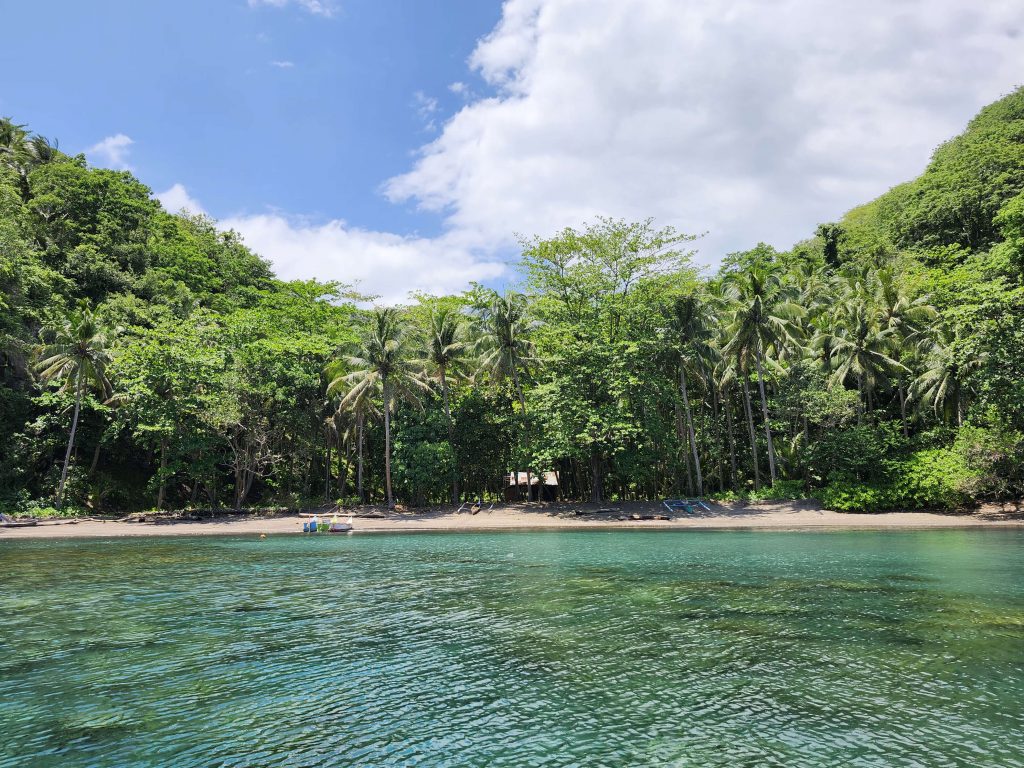
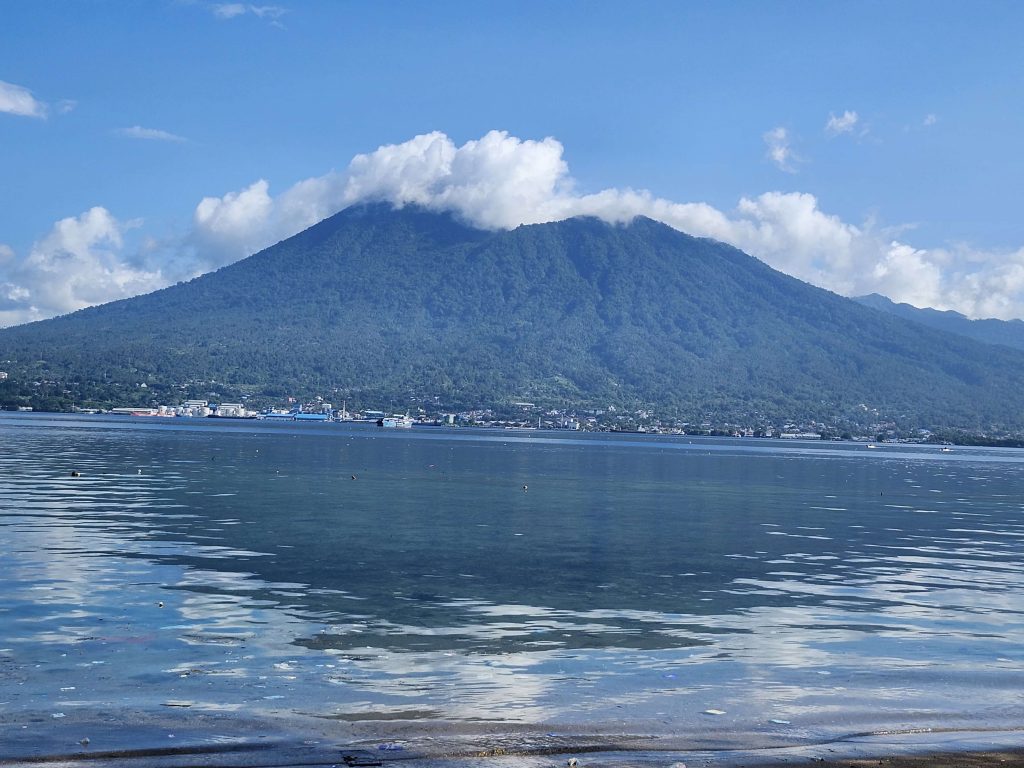
The landscapes where we dived were also very beautiful. We hung out on this beach between dives one day.
One of the many volcanoes in the area.
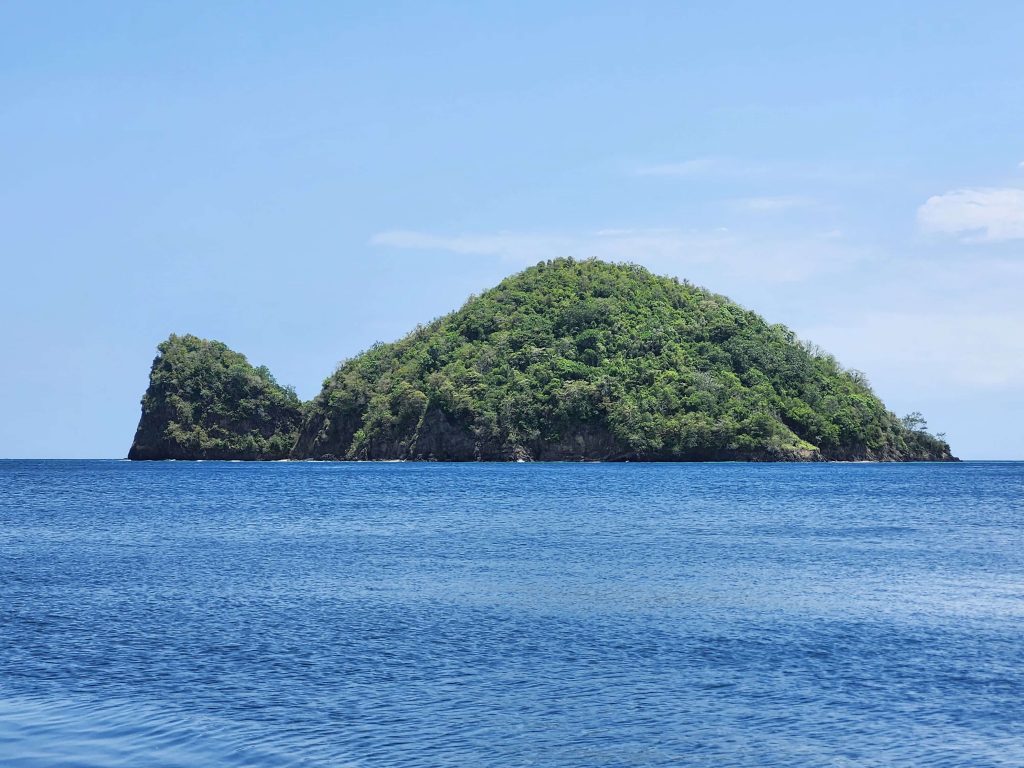
One of our dive sites where we dove around these two tiny islands.
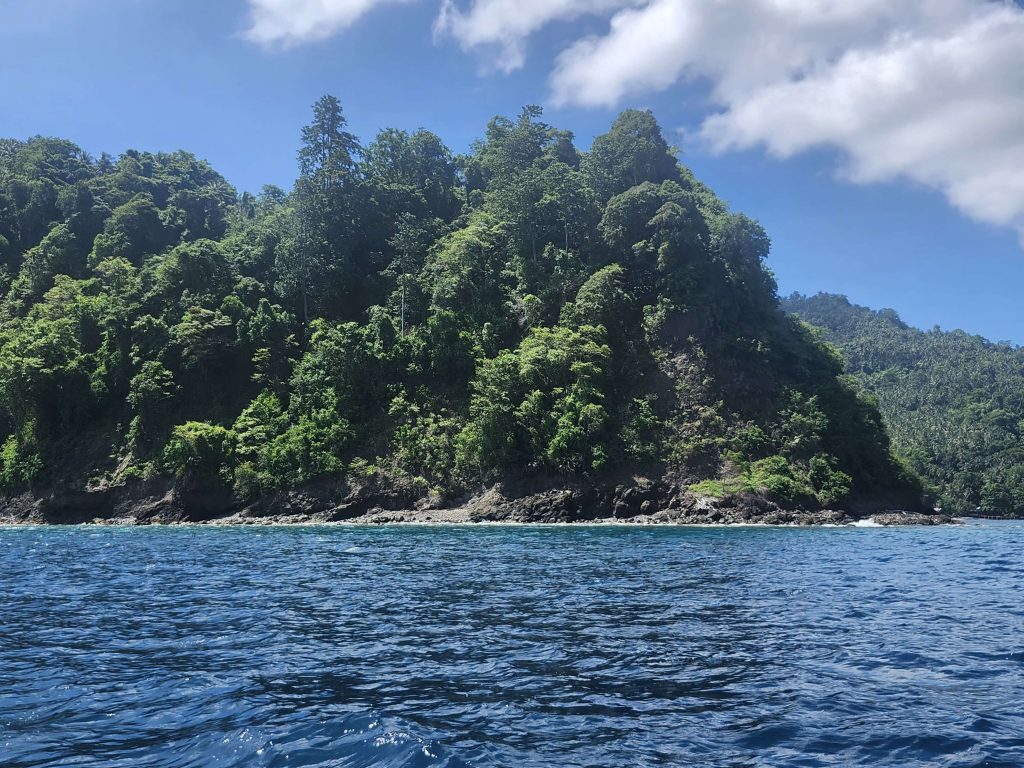
Another dive site we explored.
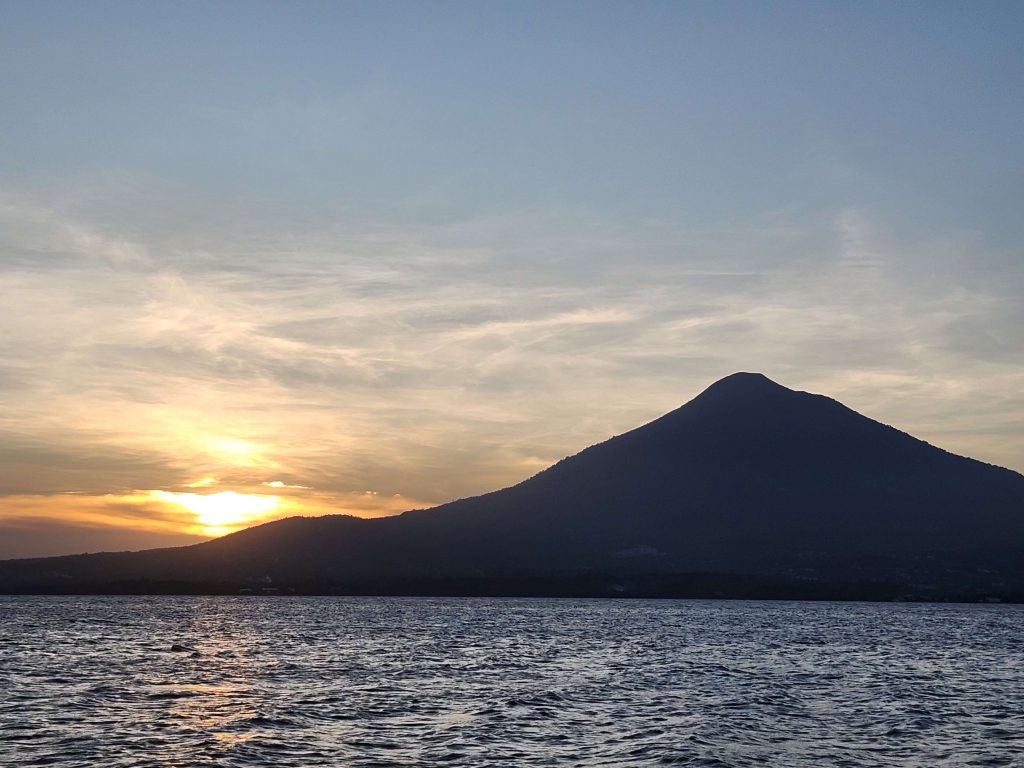
The sun setting behind another volcano as we sailed to one of our night dives.
Divers Lodge Lembeh
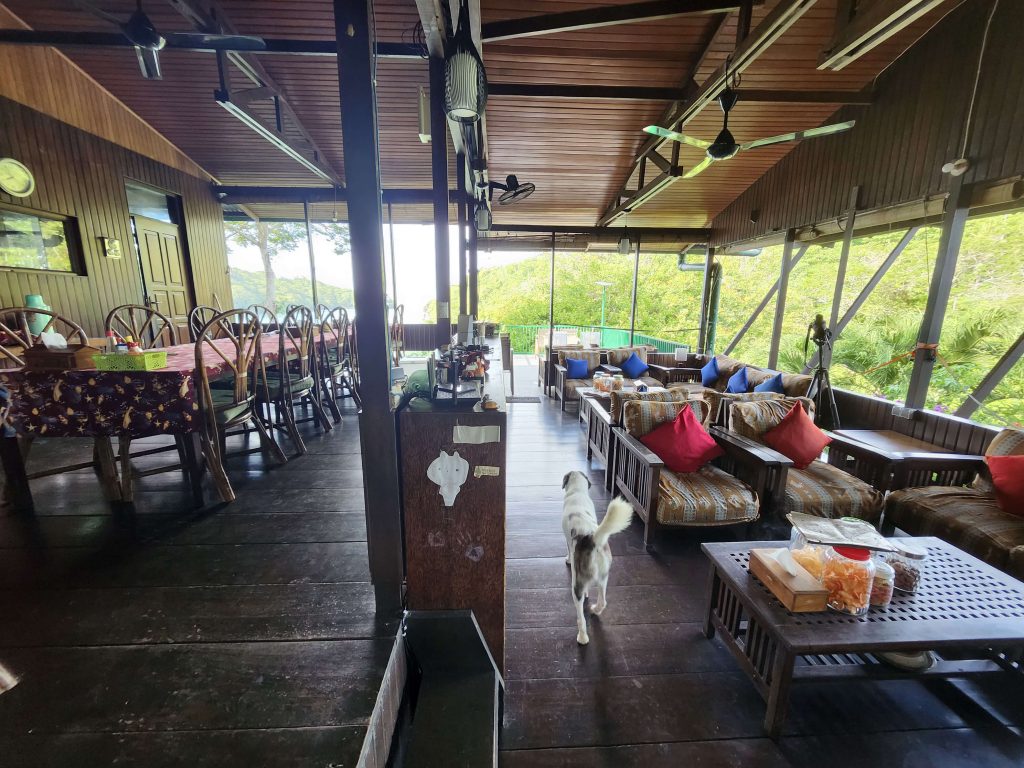
I stayed at the peaceful Divers Lodge Lembeh. It was nesteled into a small bay at the bottom of Lembeh Island. Rob Sinke came to Indonesia from the Netherlands in the 1990s and eventually opened this lodge with his wife. He now has Indonesian citizenship and hasn’t been back to Holland in 25 years. He discovered some of the dive sites in the area. He and his family were wonderful hosts.
My bungalow had an amazing view of the bay.
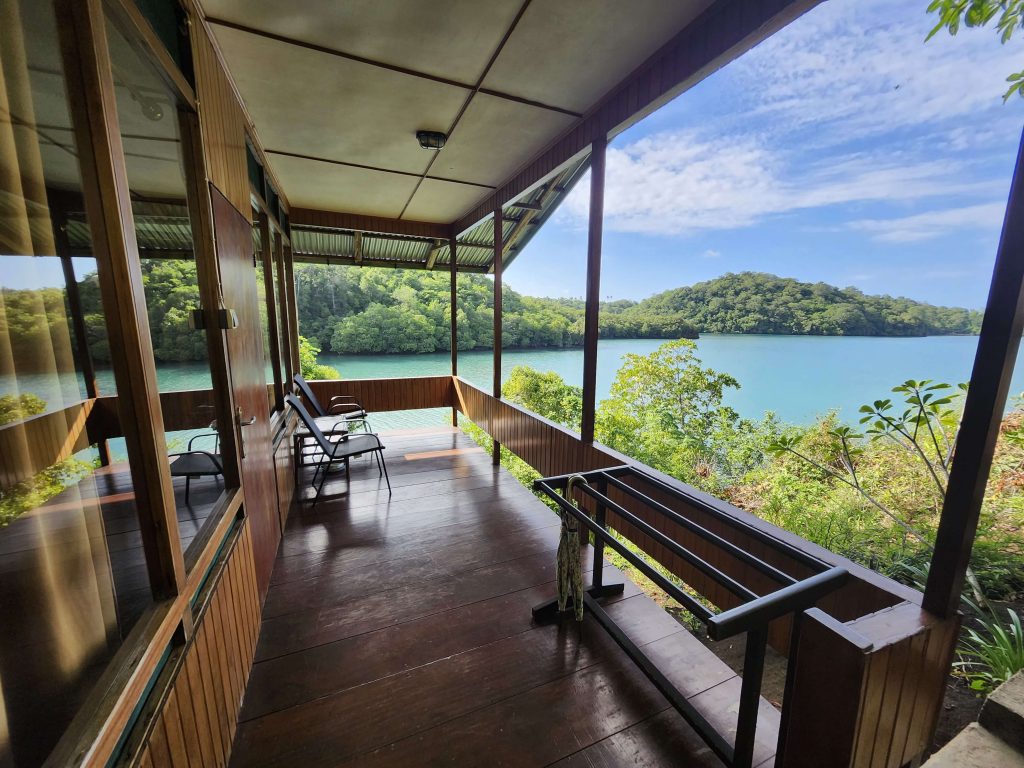
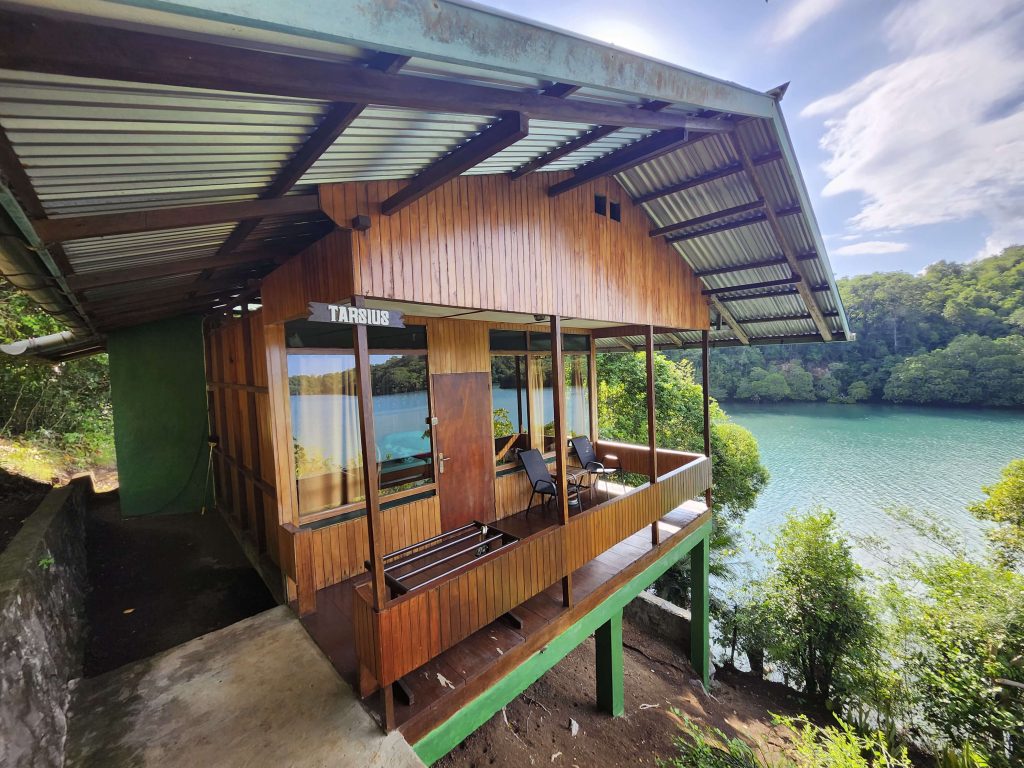
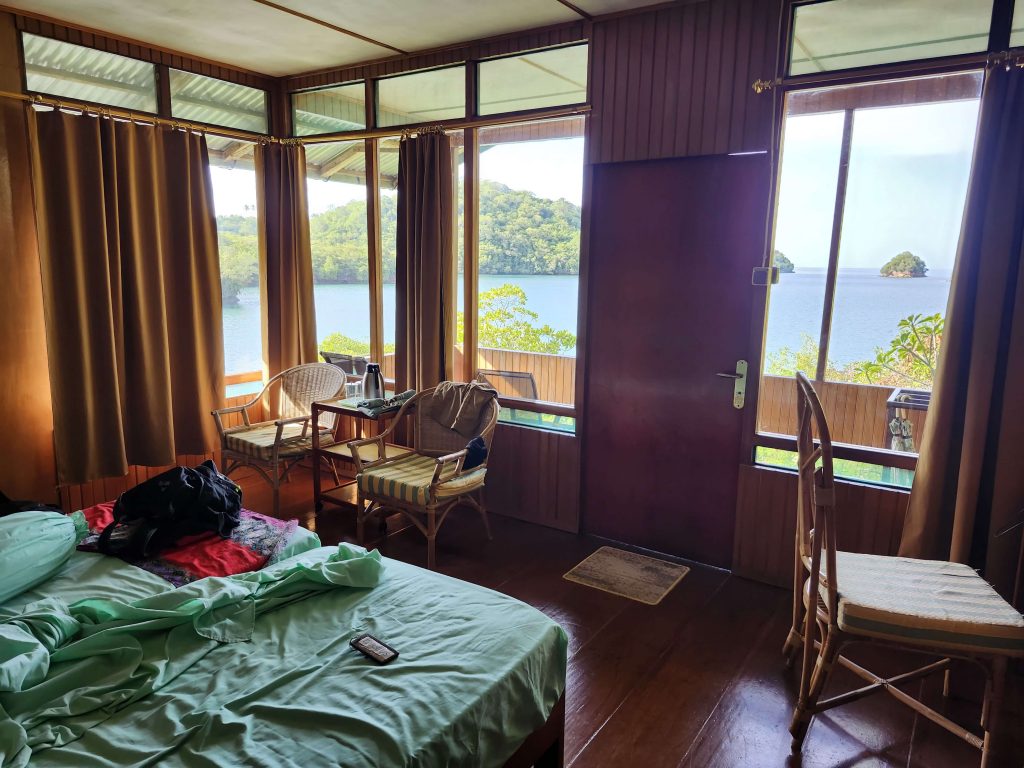
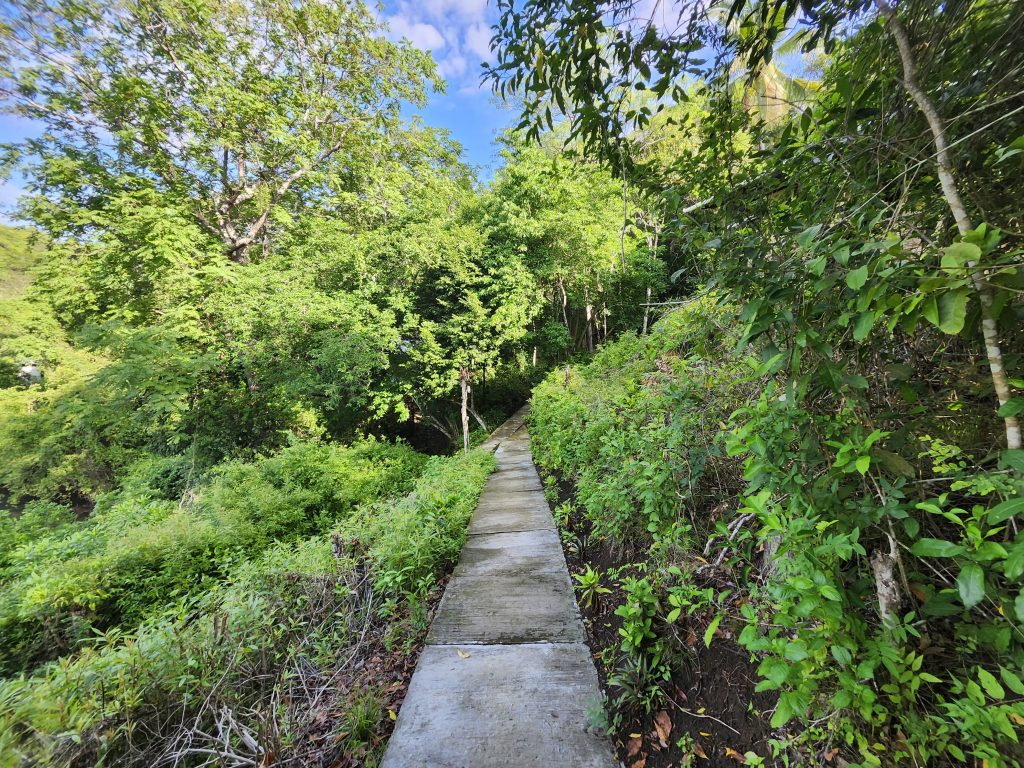
The path to my bungalow.
The dining and social area.
Which had a wonderful backdrop.
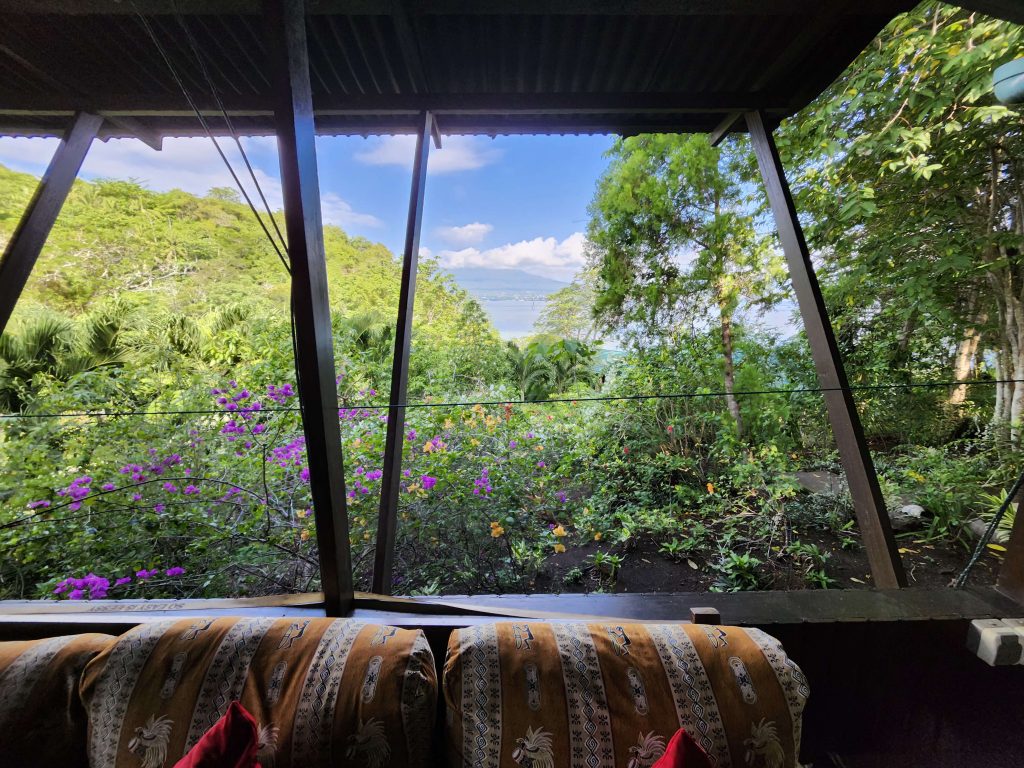
The view from the backside of the lodge.
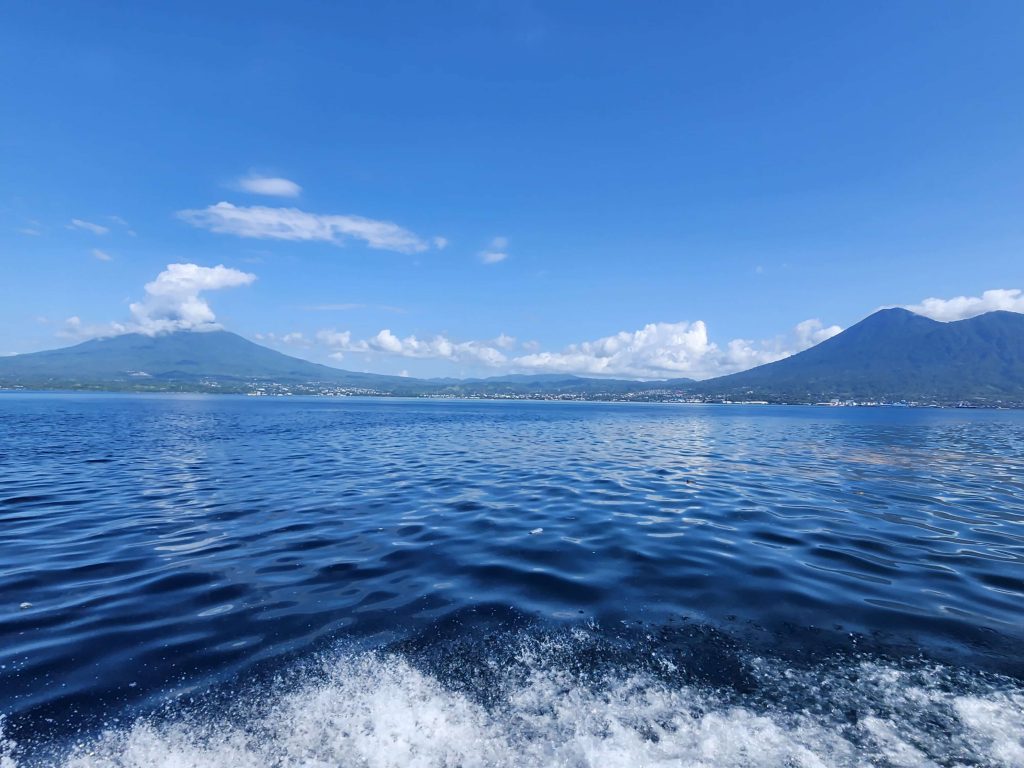
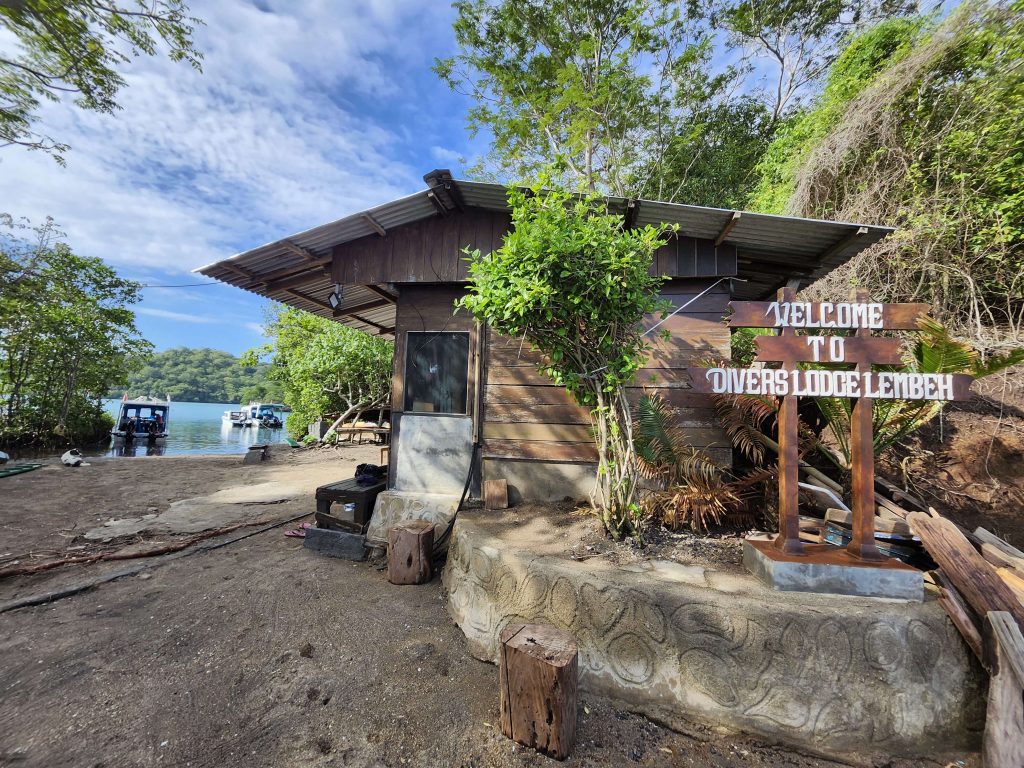
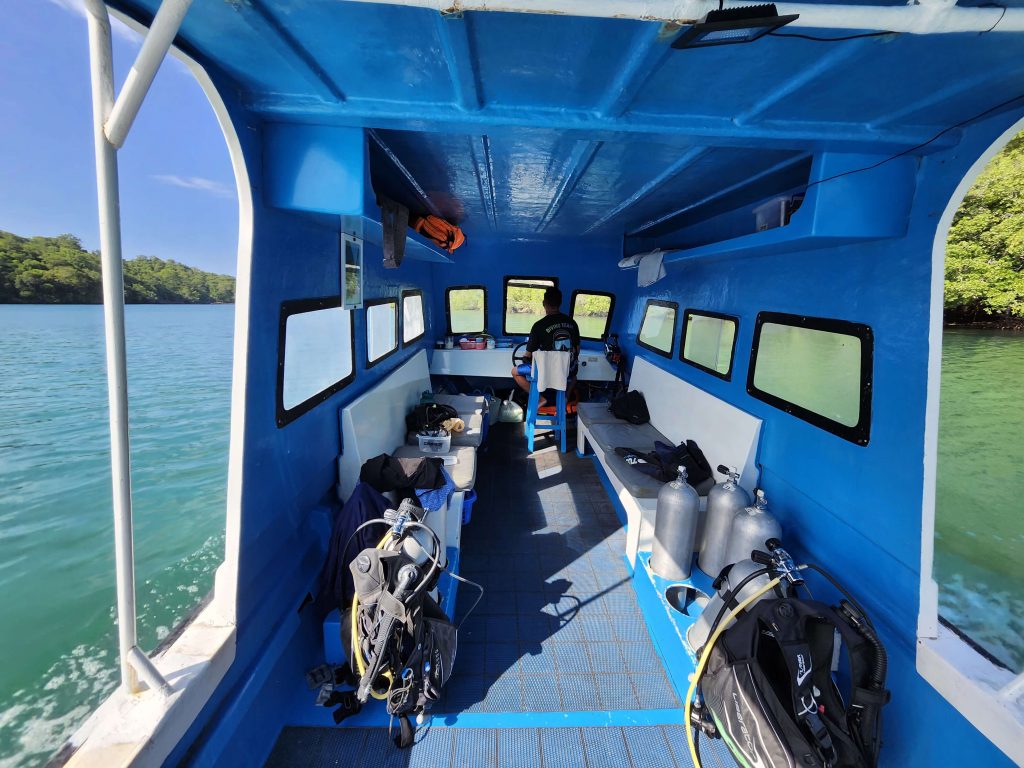
The boat I went out on every day. It was just me, the dive guide, the captain and a crew member.
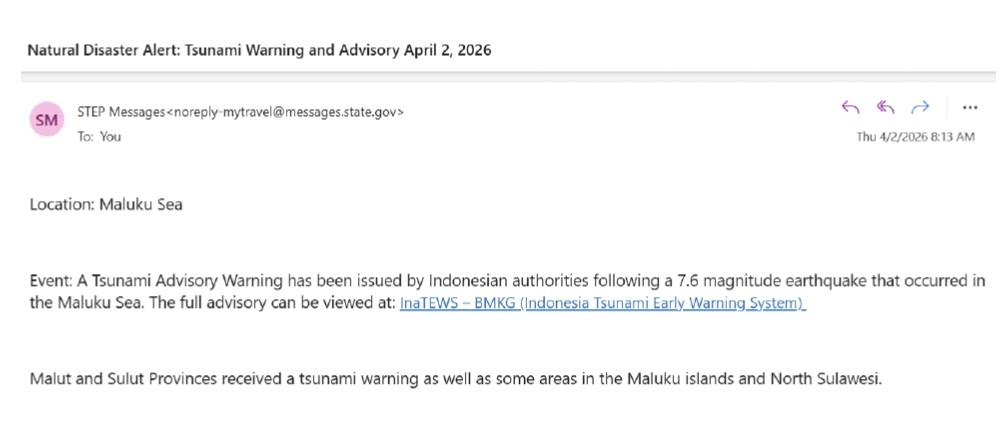
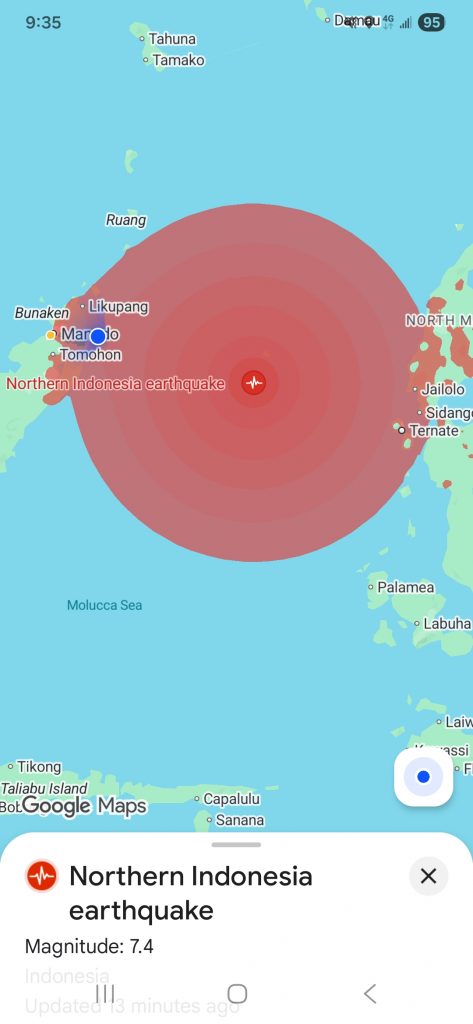
Earthquake!
The last morning I was there I got woken up by a nice sized earthquake. There was a lot of shaking but no one was hurt and there were no damages at the lodge. It was all part of the adventure of traveling through in the Ring of Fire.