
Two years ago I embarked on a three day liveaboard to dive around the Similan Islands in the Andaman Sea in Western Thailand: https://theperennialpilgrim.com/the-underwater-abundance-of-the-similan-islands
I was really impressed with the quality of the diving so I decided to come back again and go to many of the same sites, but to do so more slowly from shore based diving. So I set myself down in the small tourist town of Khao Lak and did 7 days of diving with the same company (Big Blue) I used for the liveaboard two years ago.
Khao Lak is a basic Thai tourist town with restaurants, bars, resorts, massage palours, clothing shops, and a number of long, tranquil beaches. It’s just north of Phuket Island, but a lot more relaxed and less crowded than that more traditional tourist destination.
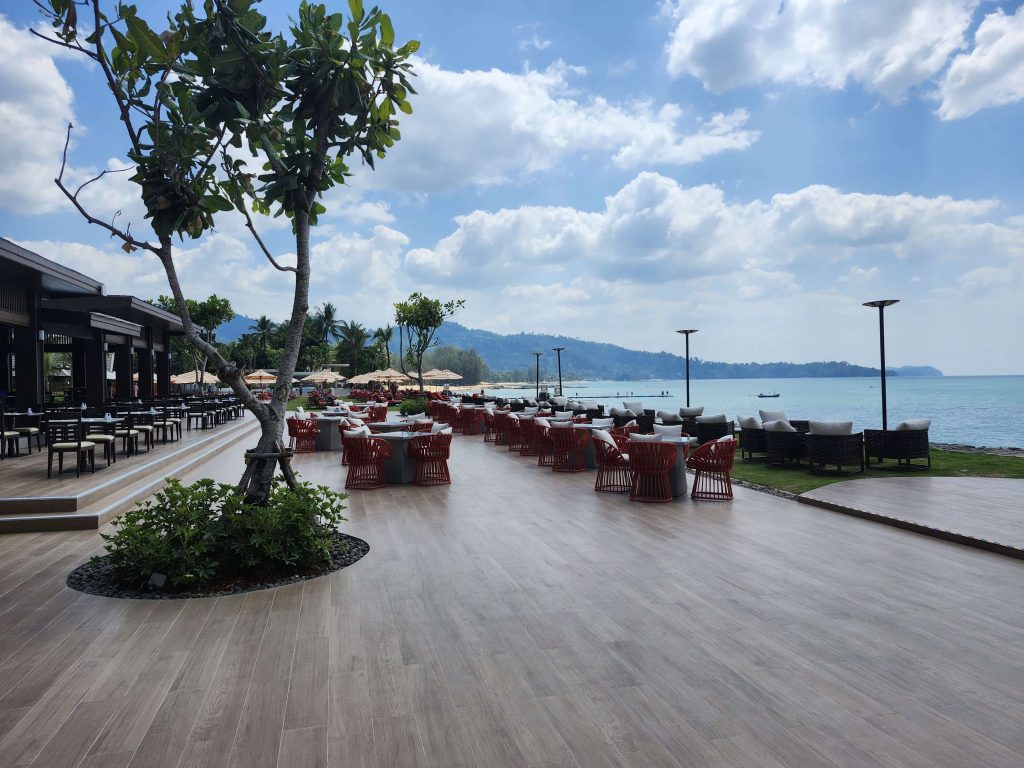
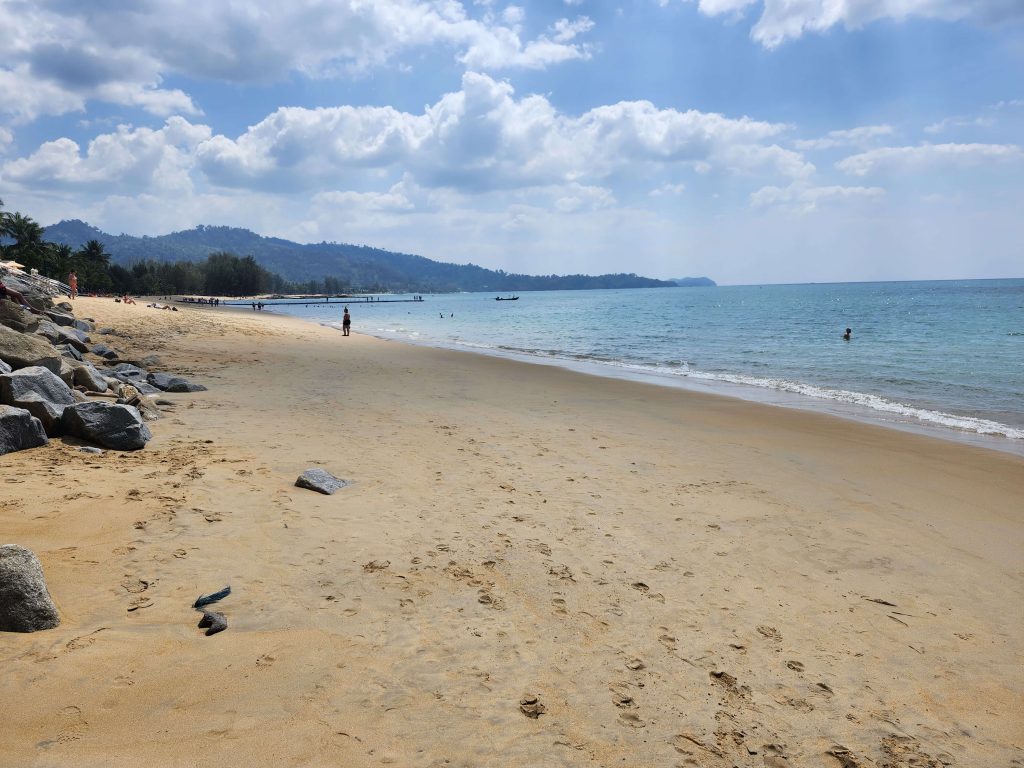
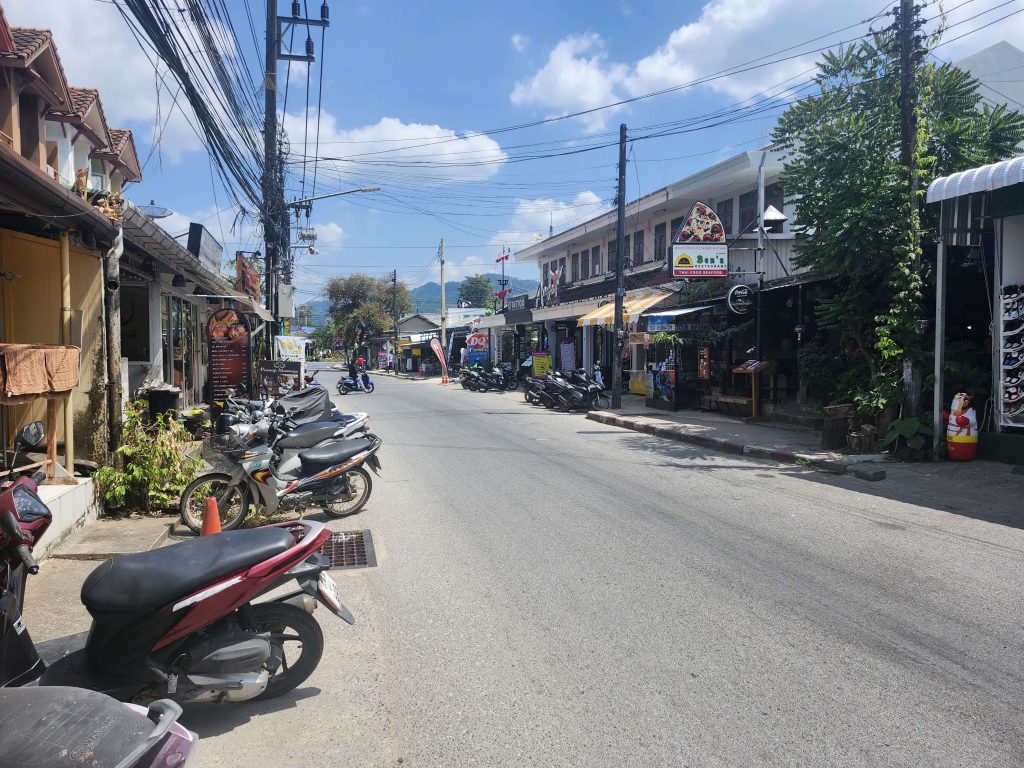
There seemed to be a lot of older Germans in Khao Lak. There were a number of menus in German and I paid 20 baht extra for some tasty German bread at the breakfast place I went to when I wasn’t diving.

Khao Lak is also known for being the area hit hardest in Thailand by the infamous tsunami of December, 2004. The tsunami killed around 225,000 people in 14 countries, especially in Aceh (Indonesia), Sri Lanka, Tamil Nadu in India, and Khao Lak. The official death toll in Khao Lak was 4,000, but there are informal estimates that over 10,000 people died because of census challenges and the fact that a large number of unregistered Burmese were living there then. My hotel owner and his local wife were living in Bangkok then. Because her village was in the foothills, only one member of her extended family died in that tragedy.
The Diving
Every day I got picked up at my hotel around 8:15am in a local pickup taxi with a handful of other divers.
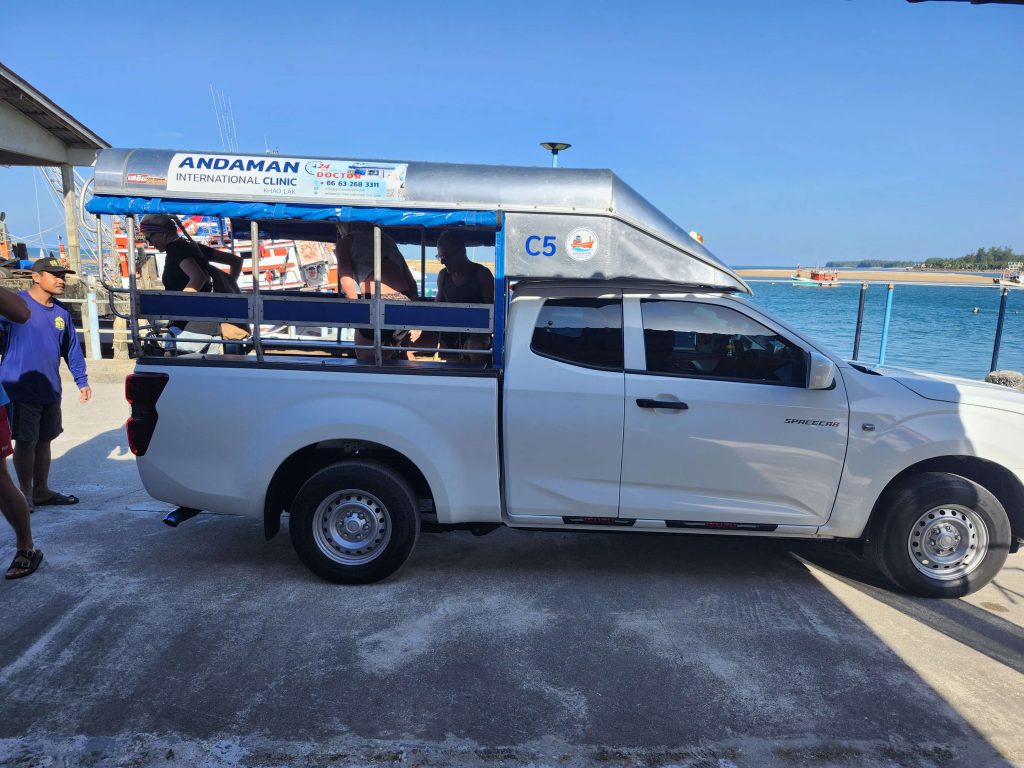
We’d arrive at the port, do our paperwork and board the company’s speed boat.
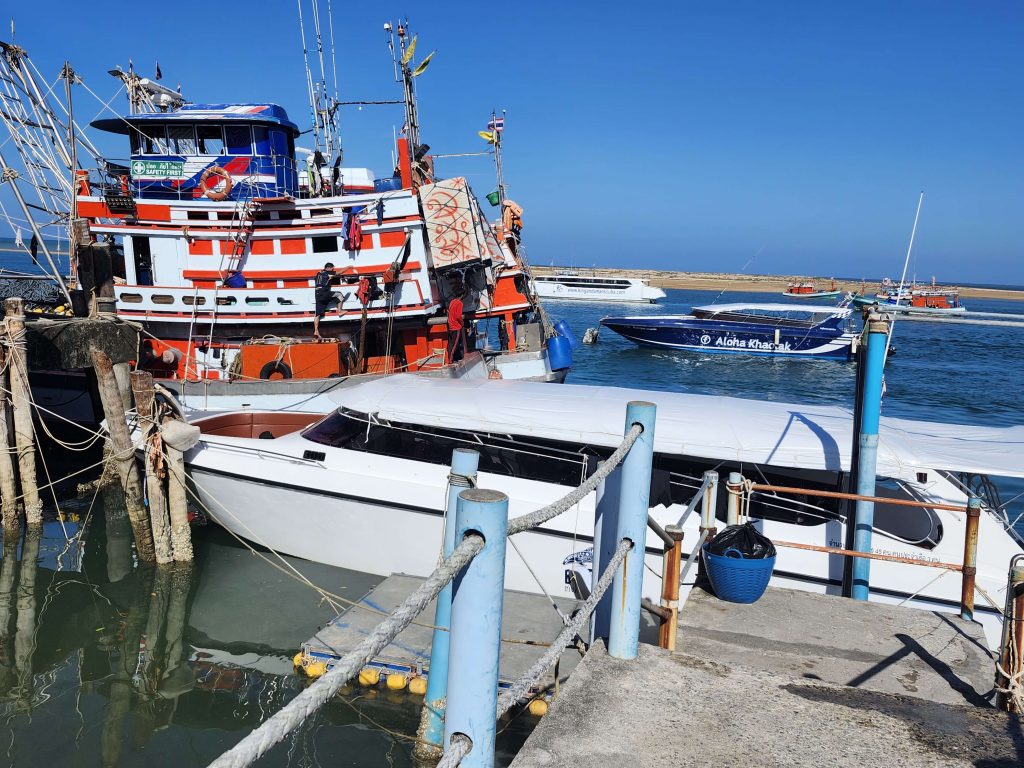
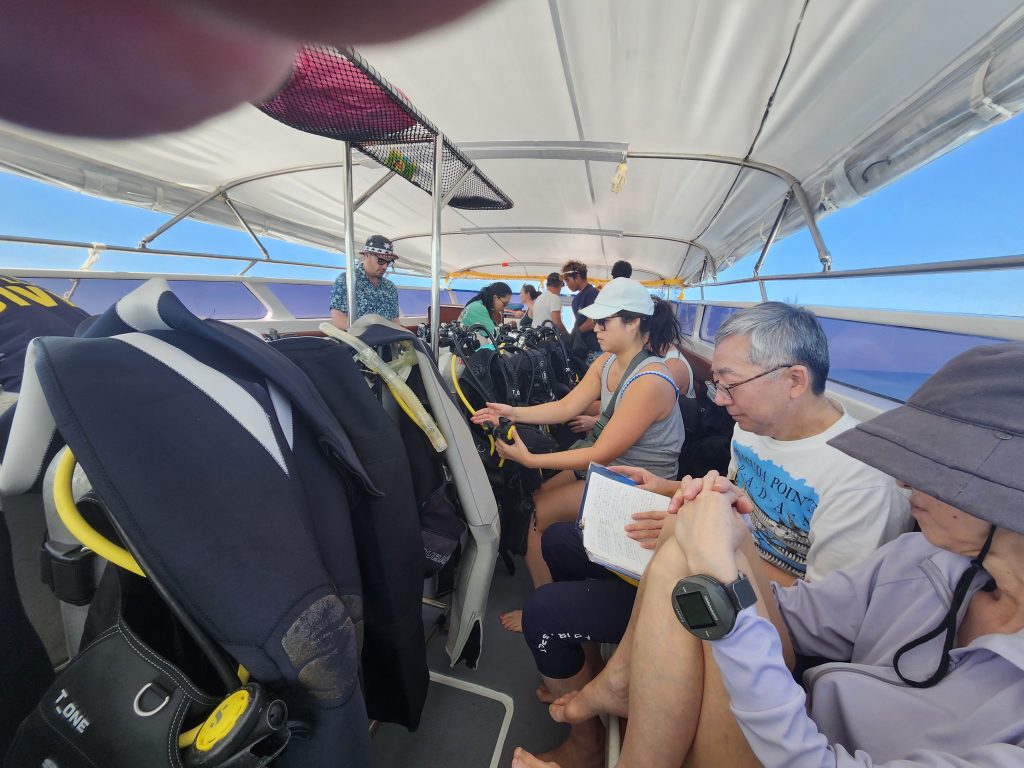
And then spend 60-90 minutes motoring out to one of the dive sites.
While I was there I dove in Surin, Richelieu Rock, Koh Tachai, Koh Bon and one of the Similan Islands.
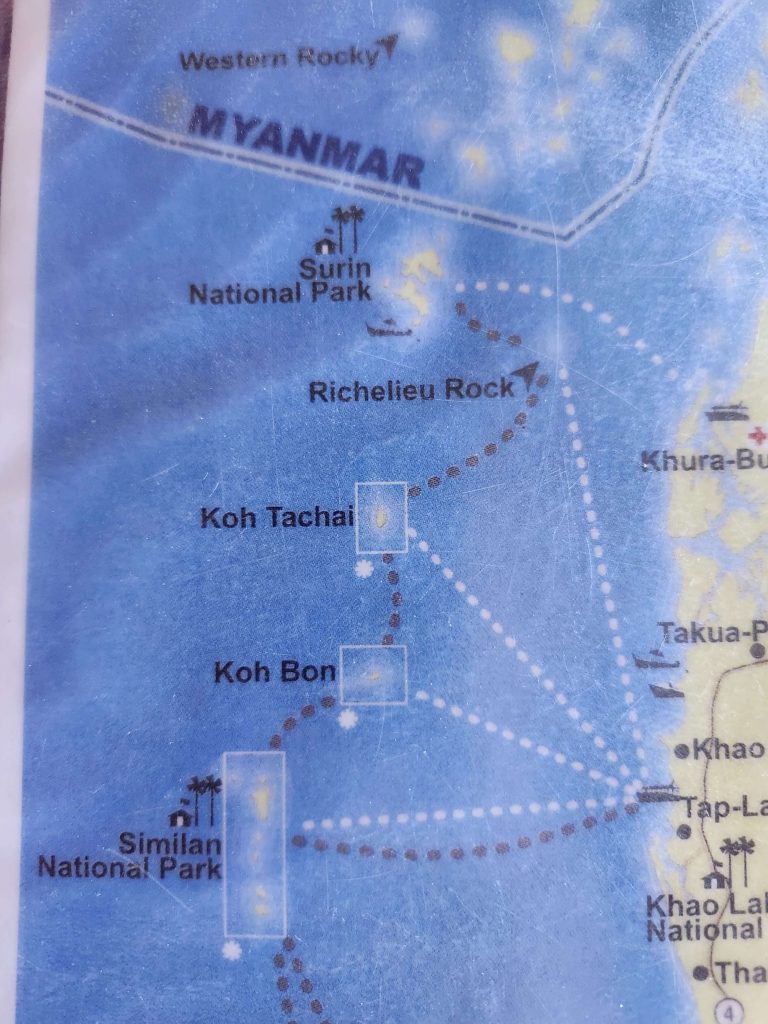
The unparalleled star of this experience was Richelieu Rock. It’s an atoll covered in purple coral with scores of sealife swimming amongst its various underwater peaks. With good reason, it’s considered one of the world’s top dive sites. The vast majority of the dive videos below are from the five dives I did at Richelieu.
It has an interesting real history and a fun legend to it’s naming. The truth was it was named after Admiral Richelieu, a Danish commander in the Royal Thai Navy, supported by the existence of official Navy maps mentioning Richelieu Rock from the early 1900s. He was the first person to complete a hydrographic survey of the Andaman Sea.
The legend is that Richelieu Rock was discovered as a recreational diving site by Jacques Cousteau with the help of local fishermen and was named by him after the red colour of Cardinal Richelieu’s robe due to the red to purple colours of the soft corals on the reef. However, on his Andaman expedition in 1989 he came only as far north as Koh Bon in the Similan Islands while waiting on a permit for Myanmar, which was never granted.
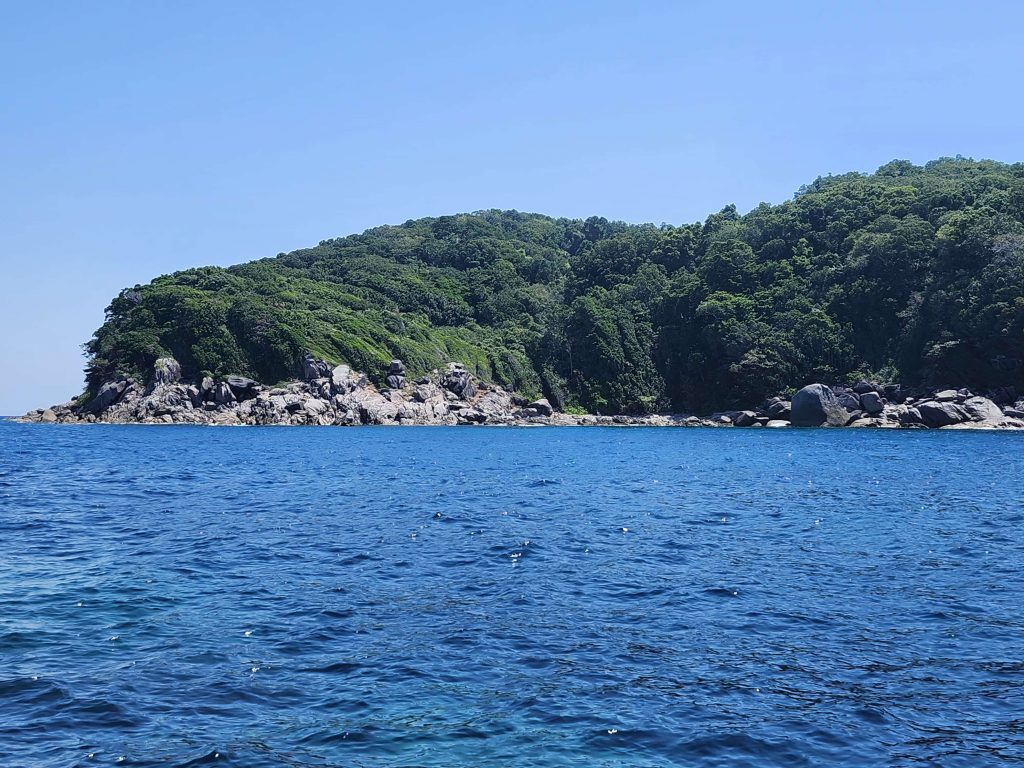
Many of these other dive sites were surrounding beautiful, small tropical islands that provided us with a nice backdrop as we rested between dives.
One of the best parts of these dives was the large schools of predators, mainly barracudas and trevallies.
Emperor fish are normally silver in color, but they become dark and speckled when they are hunting, as you can see below.
There are also an abundance of small sea life here to focus on if the larger fish aren’t around.
The ghost pipefish is related to seahorses and you can see the resemblance as this one hangs upside down.
Nearby we saw a very shy seahorse trying to hide its head in the sand.
There was a lot of other interesting sea life on these dives as well.
Here’s a great example of how abundant the fish can be in some of these areas.
Here’s a large moray eel framed by the luxurious purple coral of Richelieu.
At certain times of the day there can be a unique water surge at Koh Bon that can resemble an underwater waterfall.
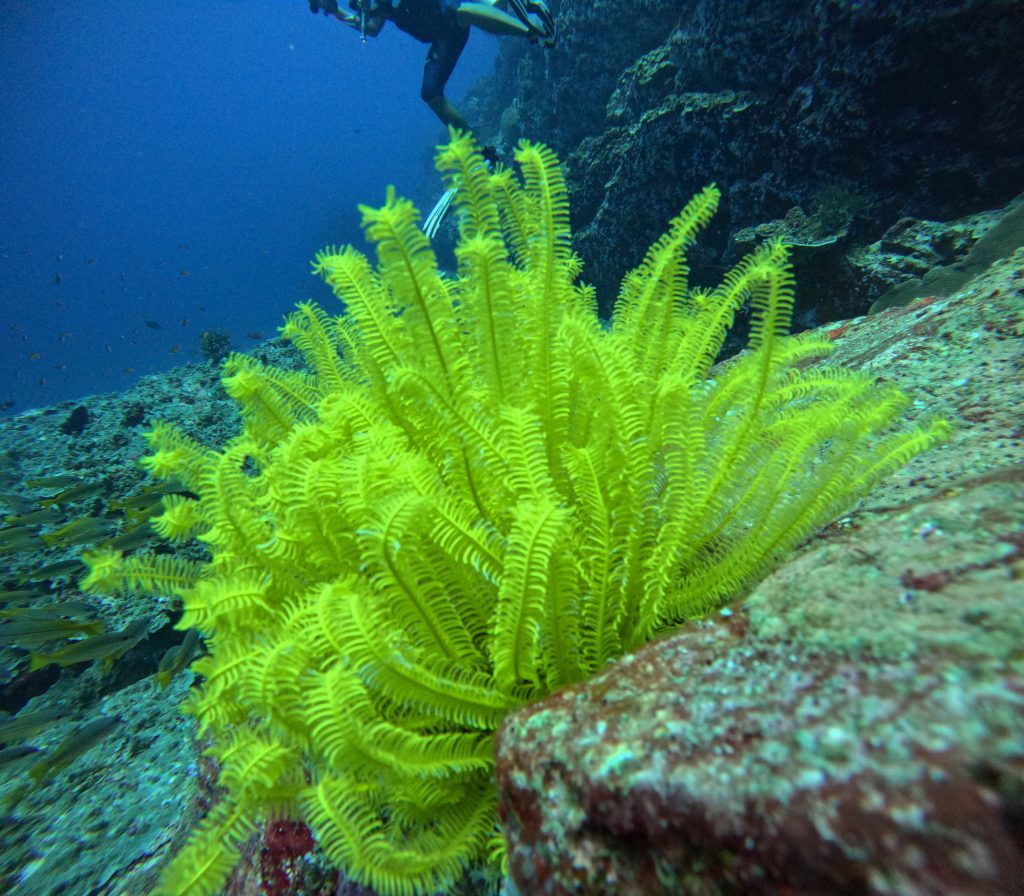
There were abundant sections of healthy coral at all these dive spots. As usual, I’ve included an extensive number of coral videos as a record of what it’s like now. Hopefully, someone diving here 20 years from now can get this same beautiful experience.
Here you can see some of the lush purple coral that makes Richelieu such a picturesque dive site.