
When most people die they go to heaven. When avid scuba divers die they go to Triton Bay.
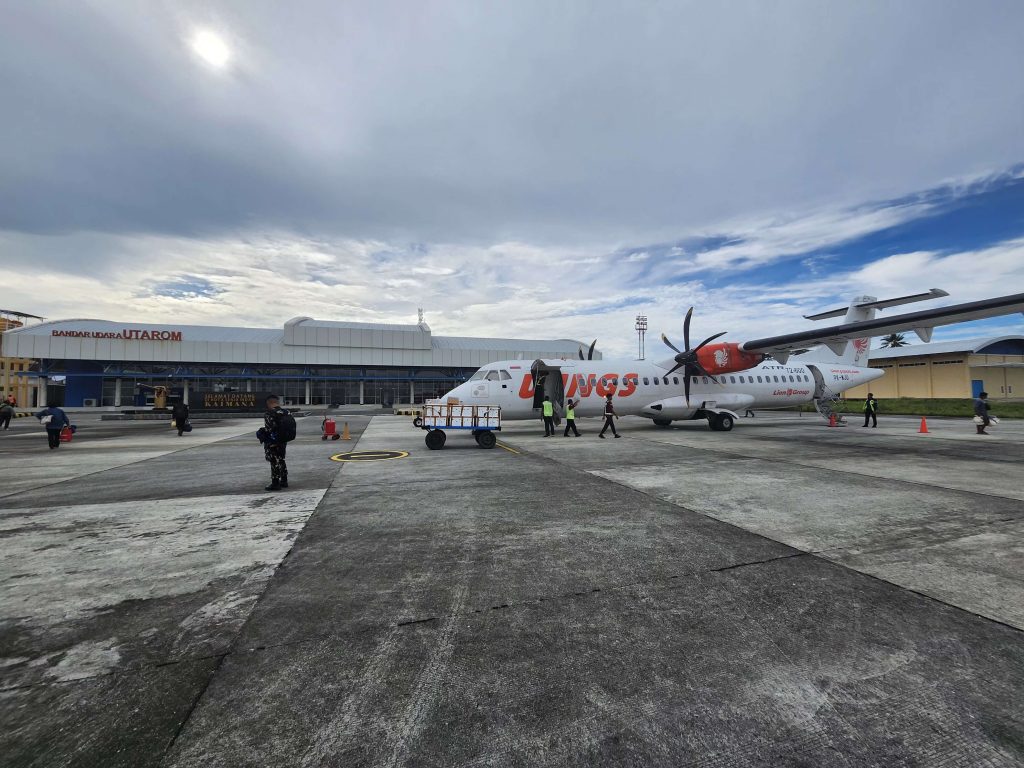
Why is Triton Bay so incredible? Could it be the fact that it’s really remote? You need to fly into Sorong in Northwest Papua, Indonesia and then take a prop plane to the small town of Kaimana. From there it’s a 90 minute boat ride to Triton Bay.
The tiny airport in Kaimana.
Could it be because it’s part of the coral triangle, the most abundant area in the world for coral and sea life? Could it be because there are no other dive operators anywhere near this area? Could it be because there are no large populations nearby overfishing the waters? Could it be because there are only eight bungalows at the resort and so even if full, there are few divers on each dive? Could it be because you are able to spend up to three hours diving and swimming with whale sharks and dolphins each week you are there? Could it be because the coral and sea life are unparalleled in their abundance and diversity?
Yes, to all of the above!! I was with nine other divers from Ireland, each with well over 30 years of diving experience. One of whom has had an underwater photography book published. Another spends every November filming orcas in Norway and recently filmed a calf being born. They all said this was the best coral and the richest coral based sea life they had seen in all their diving. On the last day the entire group booked a two week trip back in February 2028. They only waited that long because most of their major trips for 2027 had already been planned.
The Resort
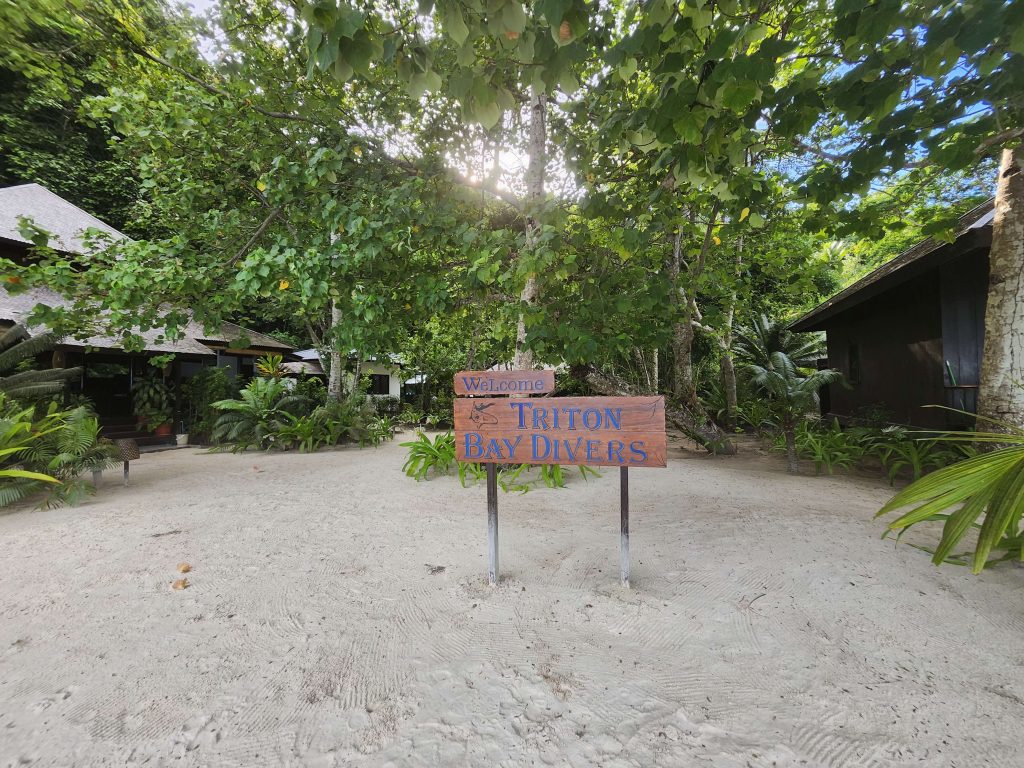
Triton Bay Divers resort was completed in March 2015: https://tritonbaydivers.com/
It consists of six bungalows, a large dive center, a very comfortable common area for meals and relaxing, and staff quarters. Small, simple, remote, and wonderful
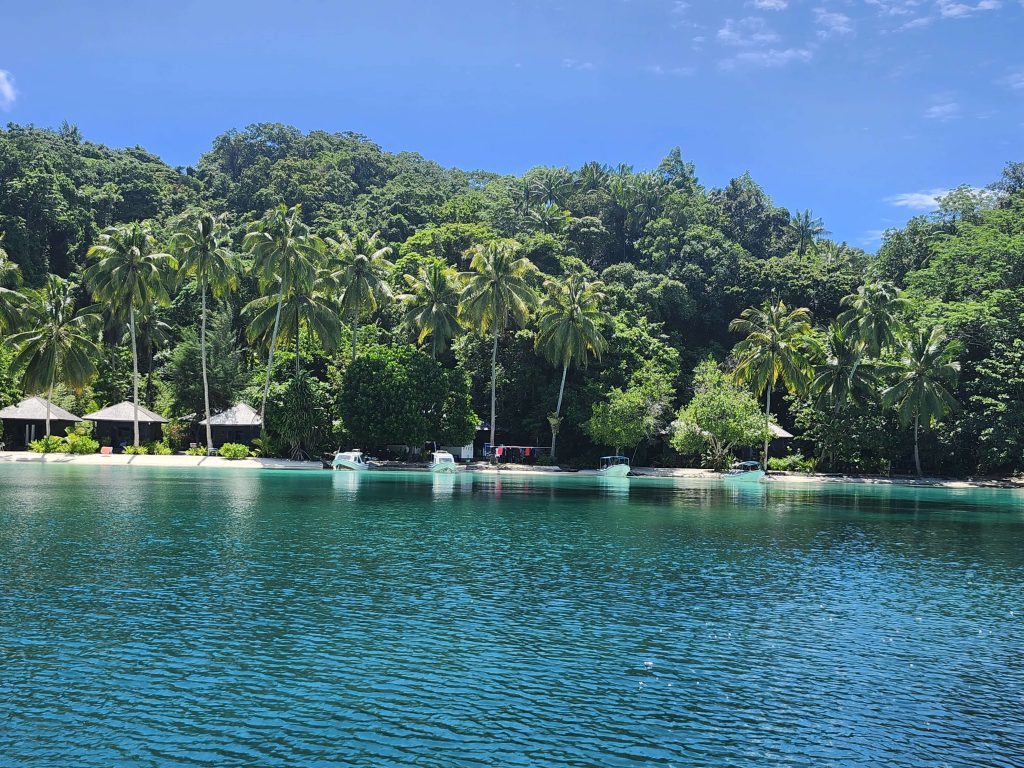
The resort nestled into the palm trees.
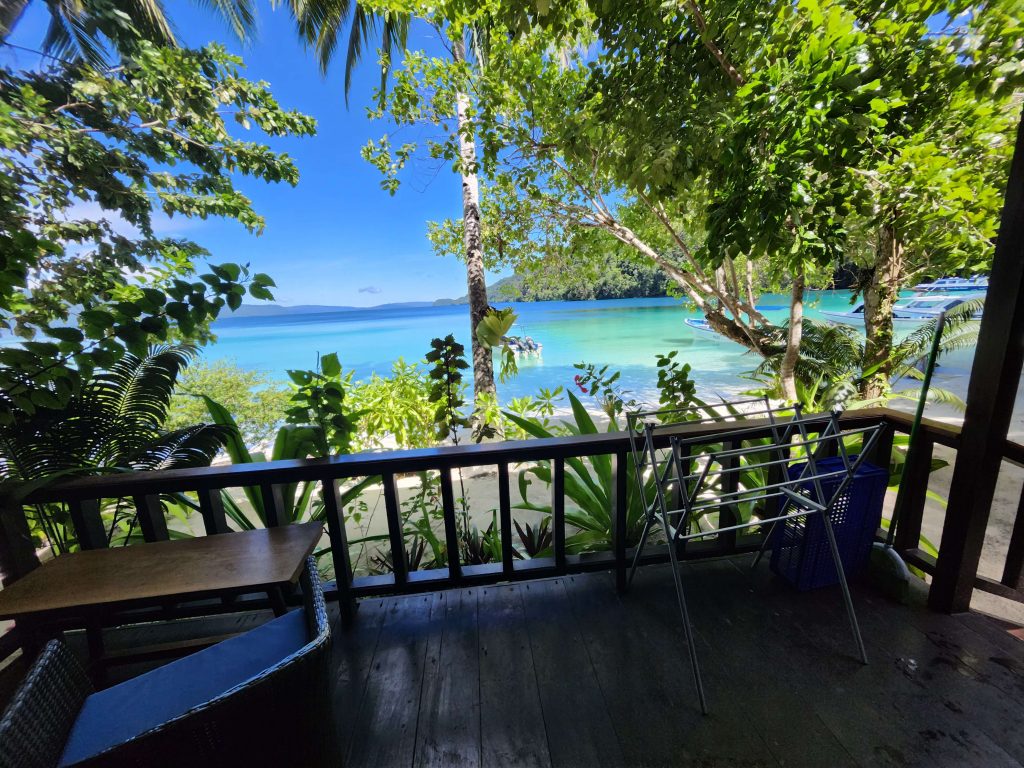
The view from my porch.
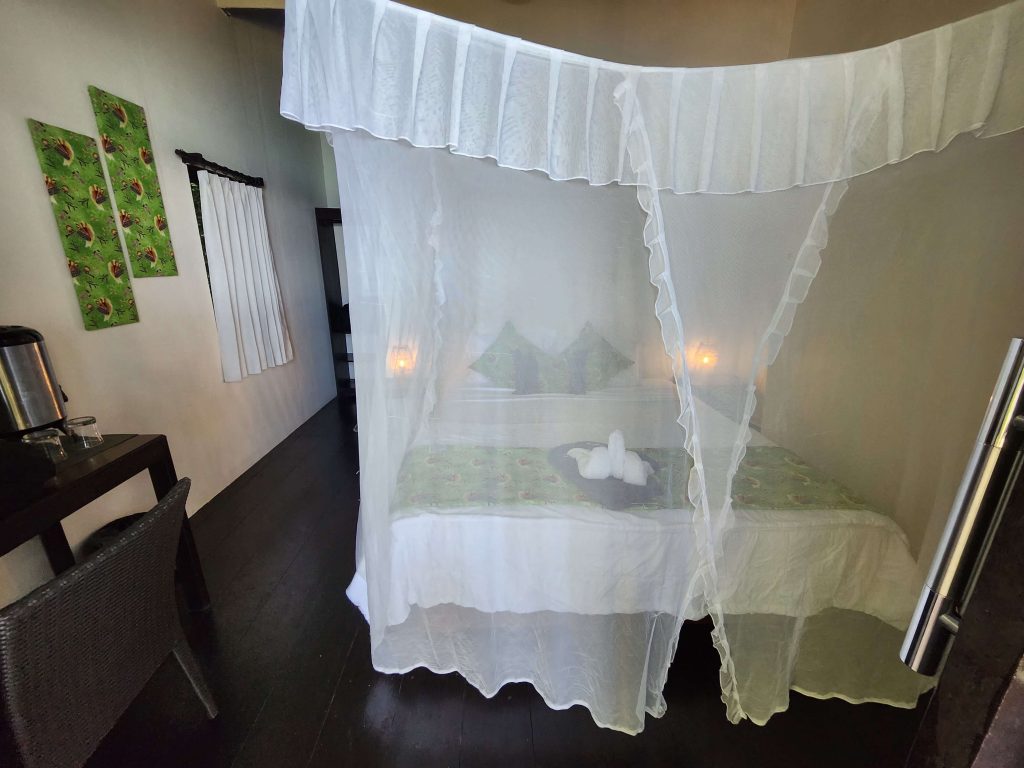
My simple and very comfortable bungalow.
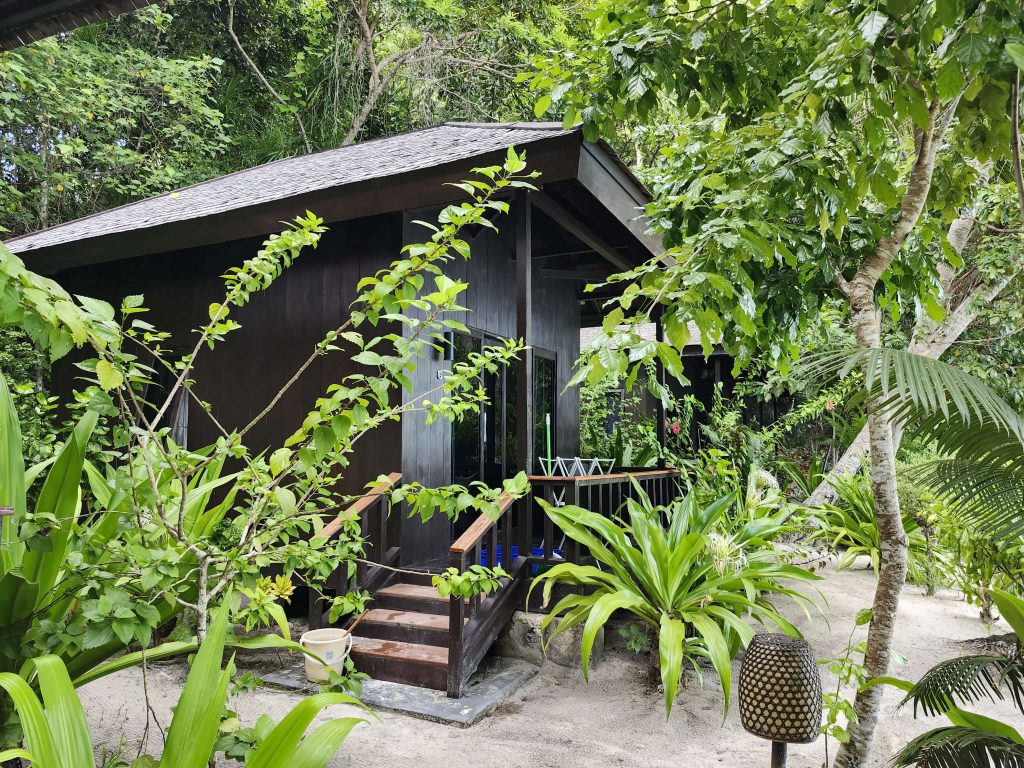
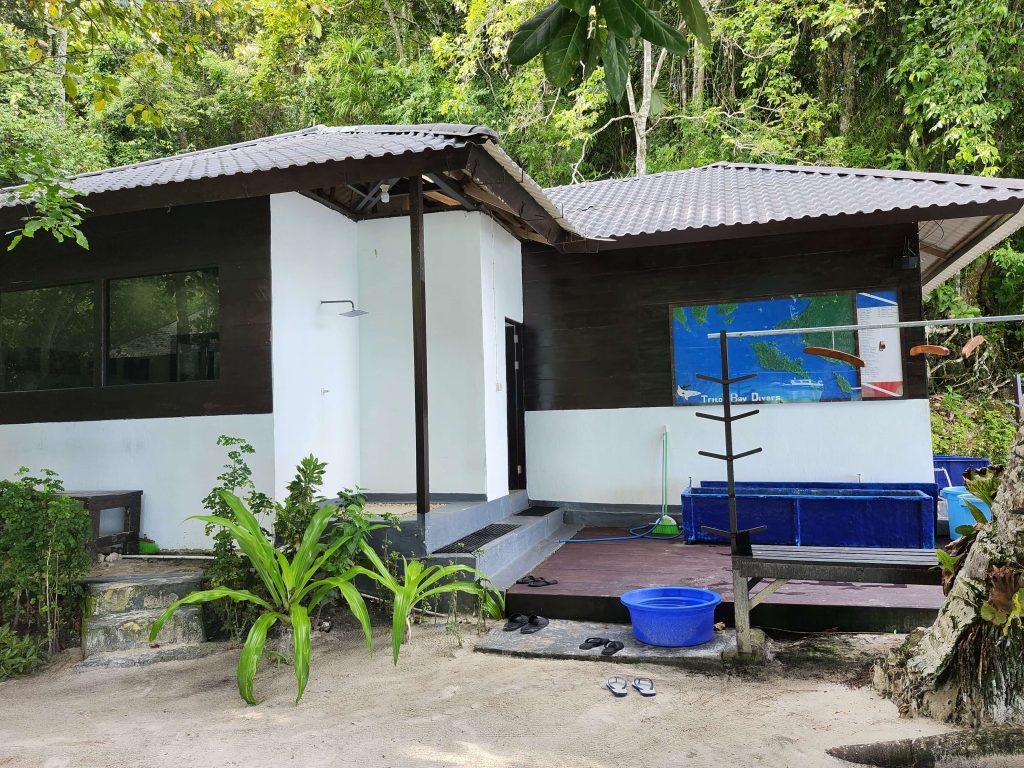
The outside of my bungalow.
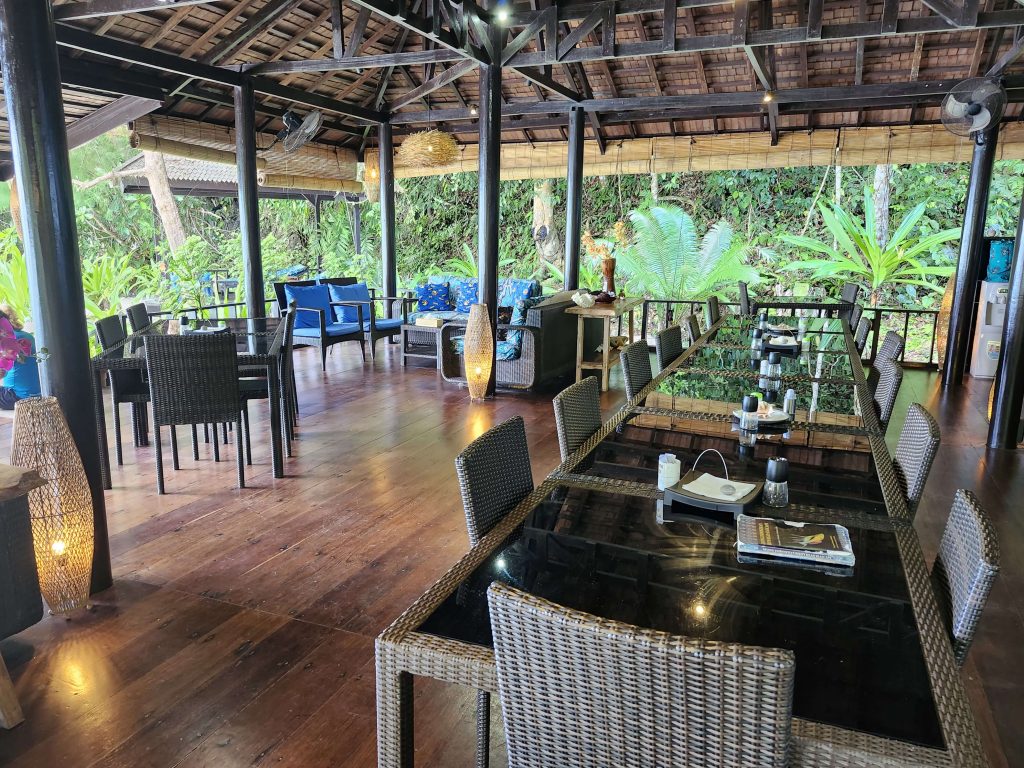
The relaxed dining and common area.
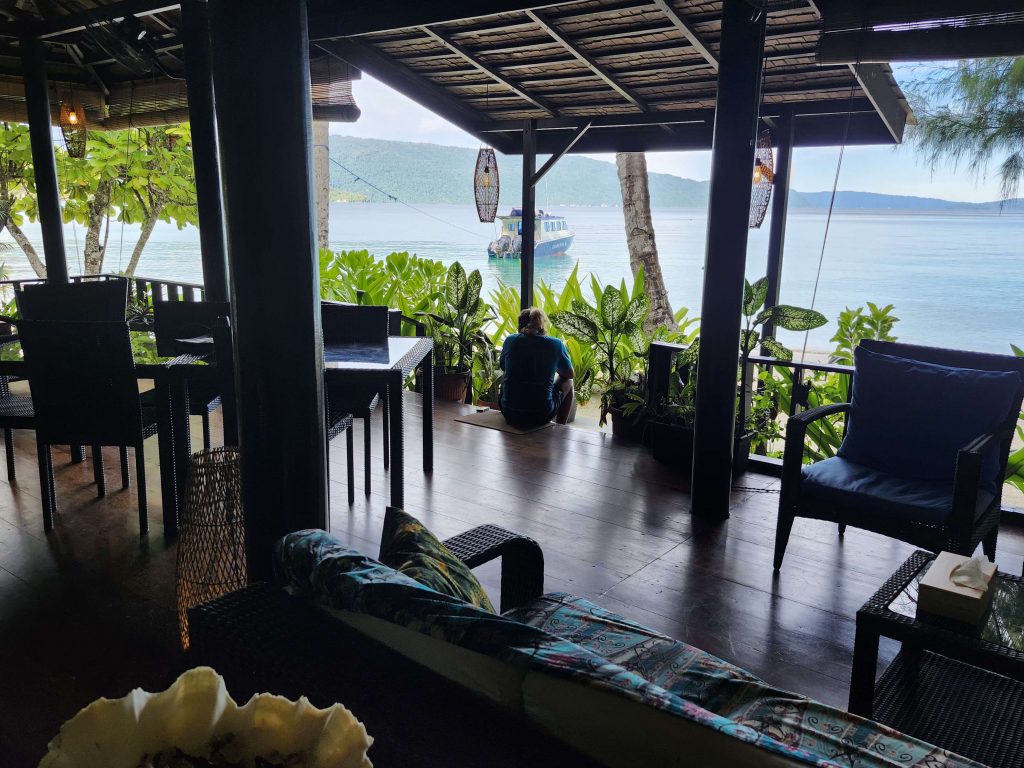
The view of the bay from the common area.
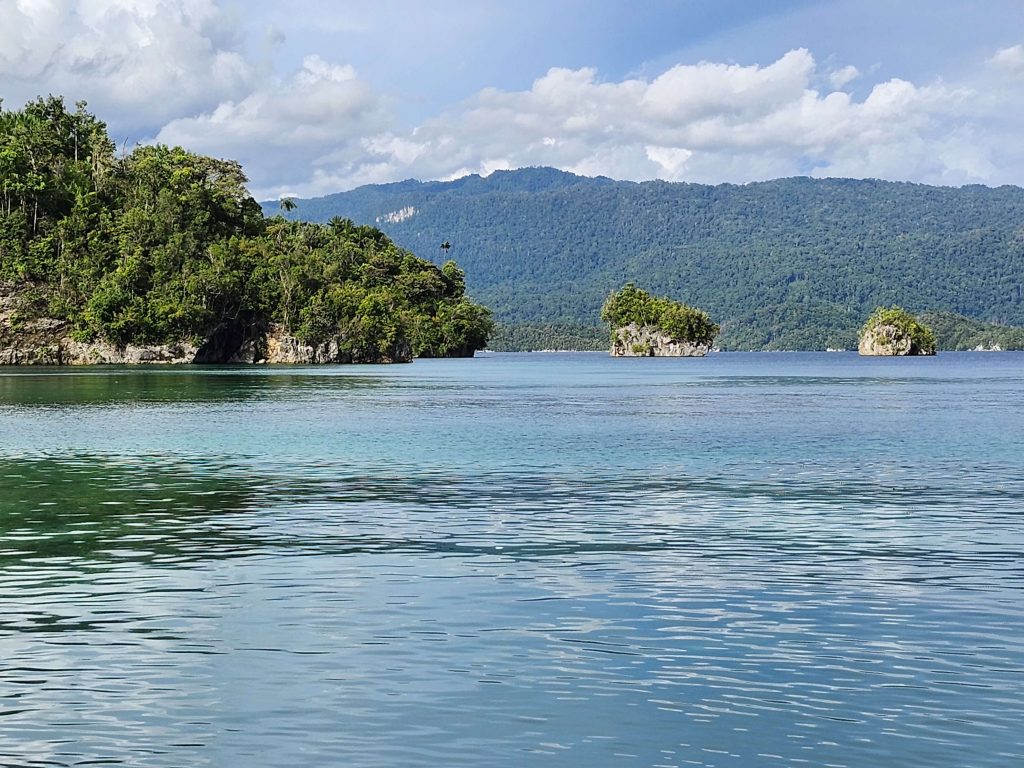
Looking out to the small rocks that frame the bay.
The large, convenient dive facility.
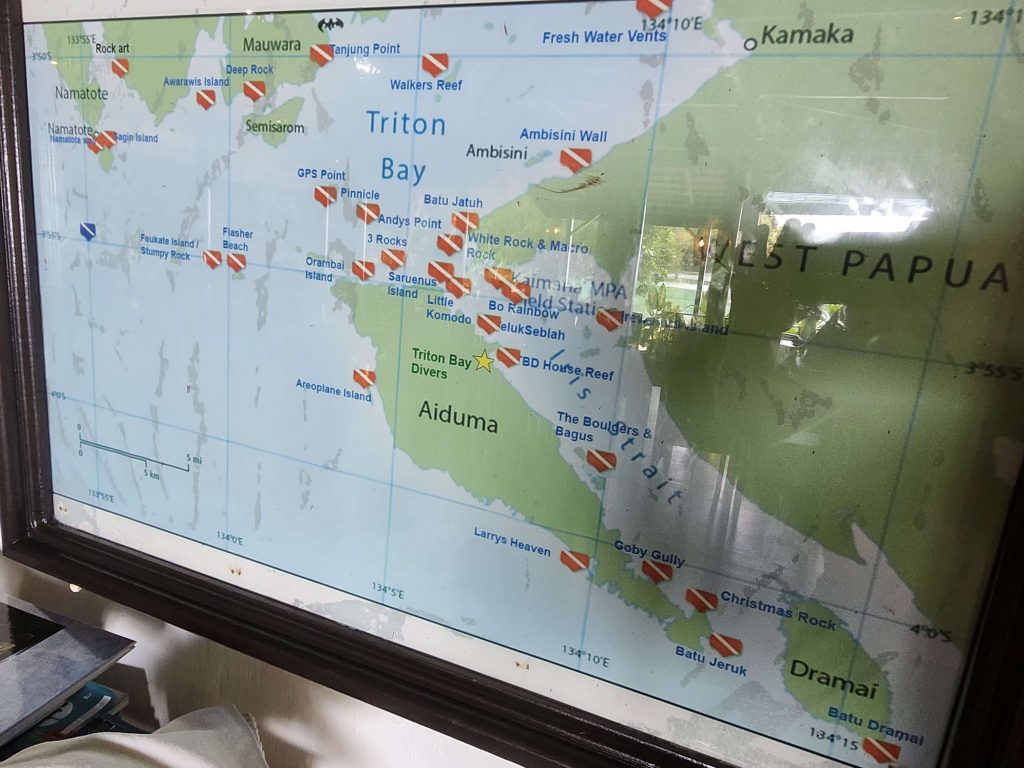
A map of the abundant dive sites in the area. They are still discovering new ones each year.
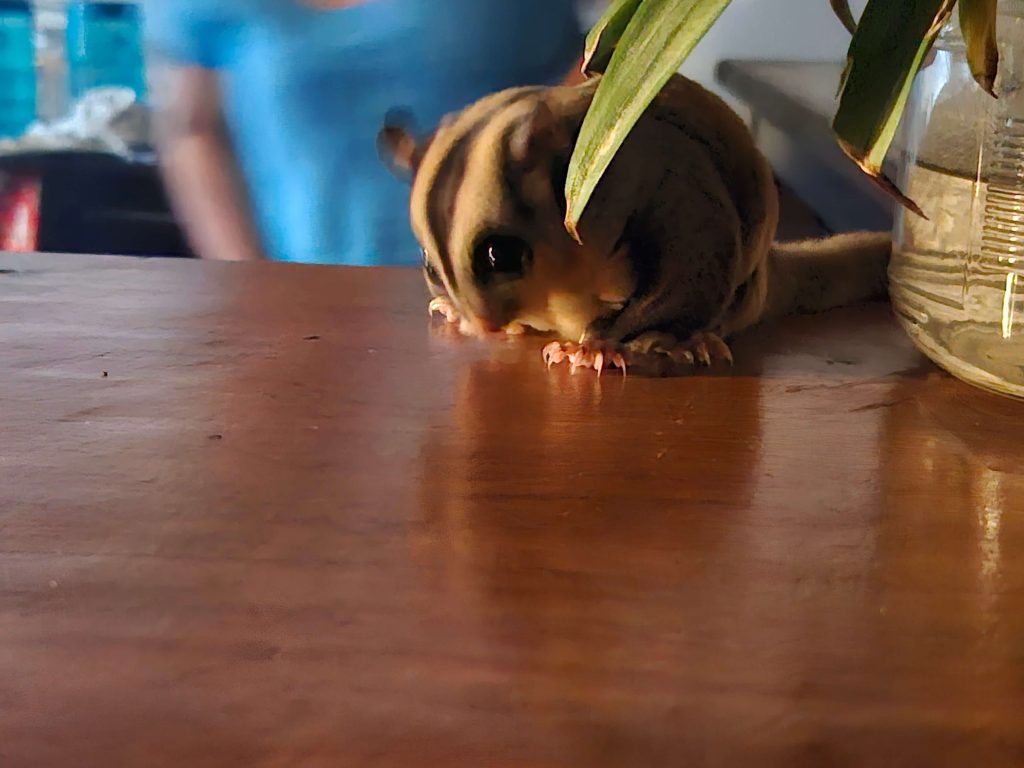
The sugar glider is a small nocturnal gliding possum. The name refers to its predilection for sugary foods such as sap and nectar and its ability to glide through the air, much like a flying squirrel. The resort found an abandoned baby one and, since it wasn’t able to live on its own in the wild, adopted it as a cute little pet.
On a walk to dinner after a night dive.
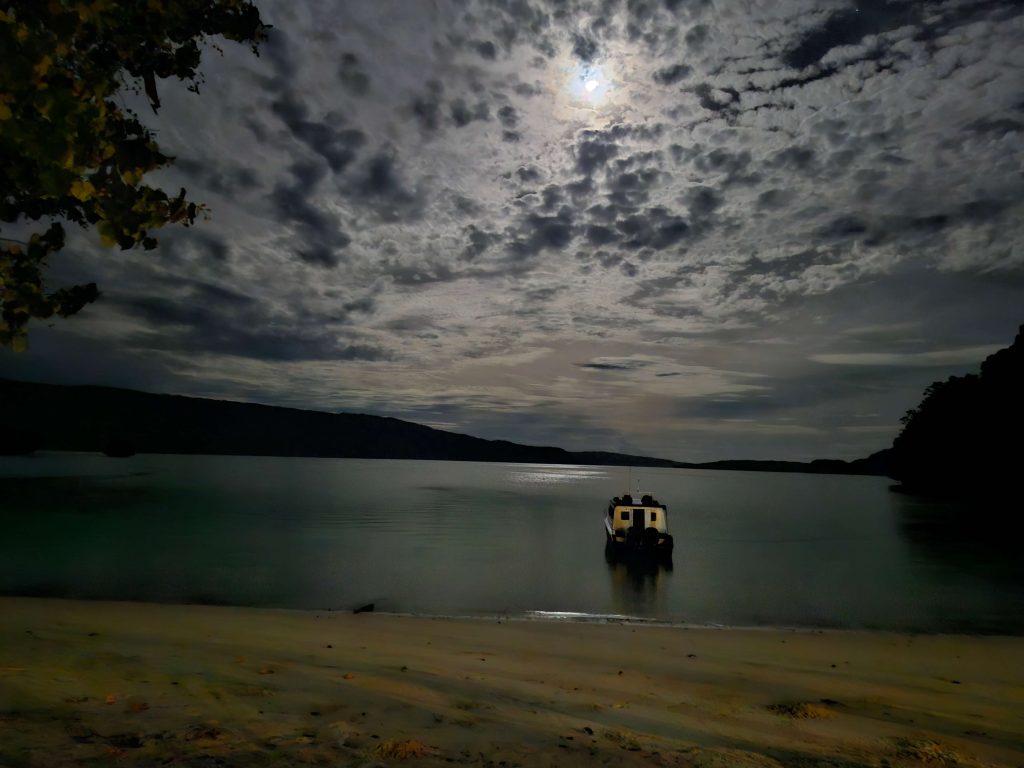
The scenery around the dive sites was green, lush and unspoiled.
Whale Sharks and Dolphins
Bagans are floating fishing platforms popular in this part of the world. They use lights to fish anchovies and other baitfish at night. In the mornings they raise their nets to collect the fish. Whale sharks and dolphins are attracted to this and feed off any scraps that fall out of the nets as they are raised. Triton Bay coordinates with these bagans to create an amazing experience where guests get to do two one hour dives with an hour of snorkeling between these dives.
When we went we did the one hour dive. Then we started the one hour snorkeling session. We loved the snorkeling so much we canceled our second dive and ended up spending over two hours snorkeling among these wonderful gentle giants and their frisky dolphin friends.
They would go up to the bagan and feed then circle around to get water through their gills. If we were in the water they’d come by and check us out and get right up next to us. At first it was pretty disconcerting but after a while it got really relaxing. They were like big friendly puppies just enjoying the attention. And the dolphins would be frolicking among the whale sharks and swooping around us.
It was the most amazing experience I’ve ever had in the water. The videos below give just a taste of how incredible this experience was.
We also got to spend an hour at the beginning diving here. Normally, that would have been the highlight of the day, and probably of the trip. The videos below give a taste of how great that experience was. But it paled in comparison to the intimacy of the snorkeling experience.
The Coral
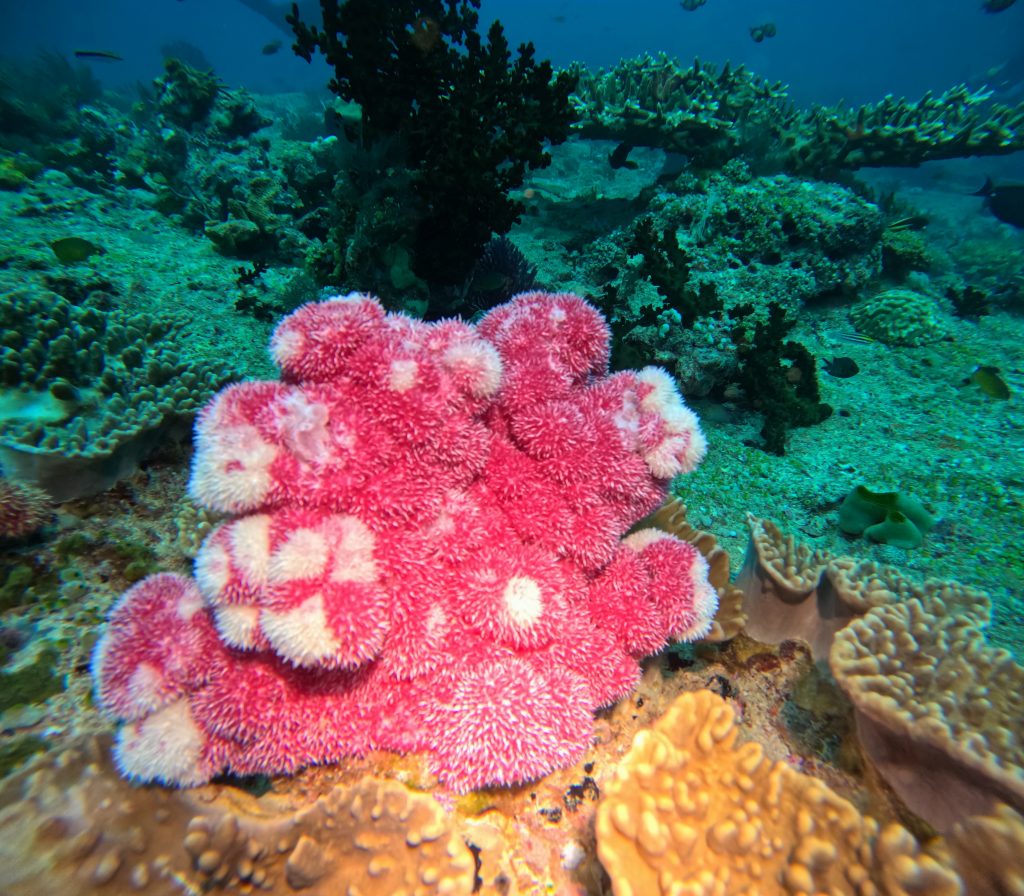
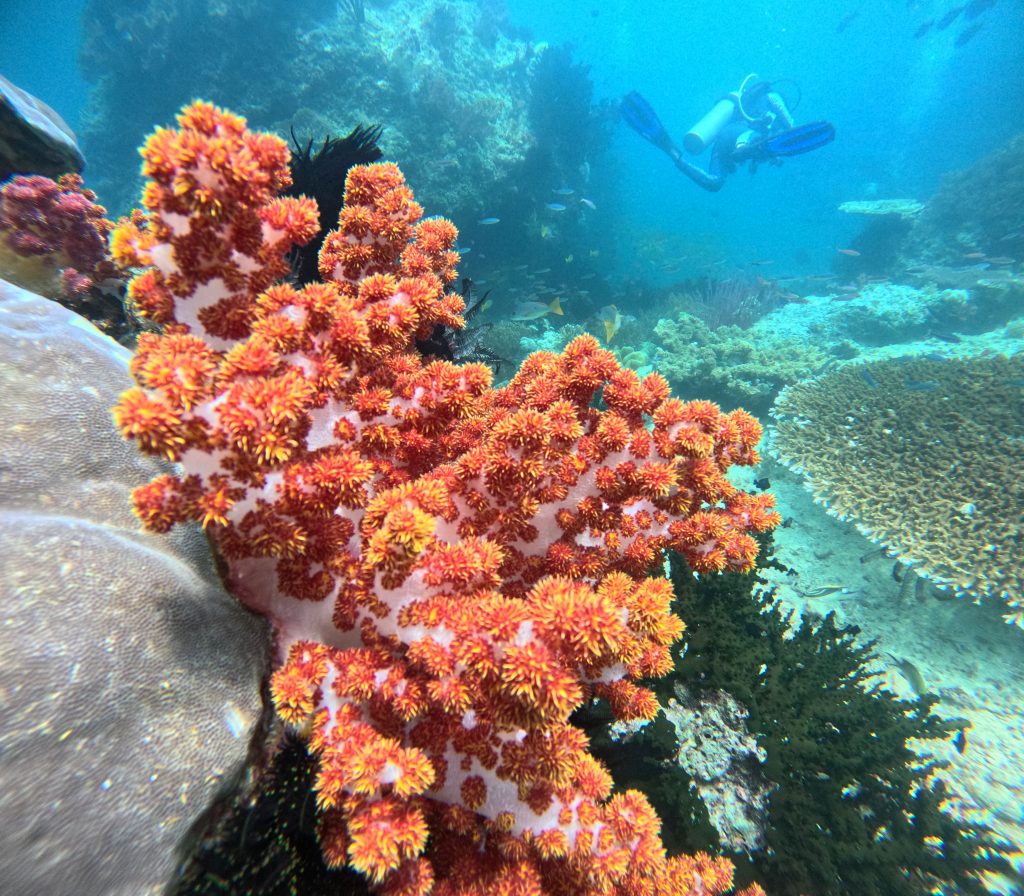
The coral around Triton Bay was incredible. There’s a profuse amount of soft and hard coral species and they were all in excellent health. There are many places I’ve dove where sections can look this good, but nowhere I’ve been to matches this abundance and diversity. Even my little GoPro pictures looked good.
This one looks like a mushed up, pink underwater teddy bear.
One of the many types of orange coral here. None of us had ever seen so much orange coral before. It was a really unique color for coral.
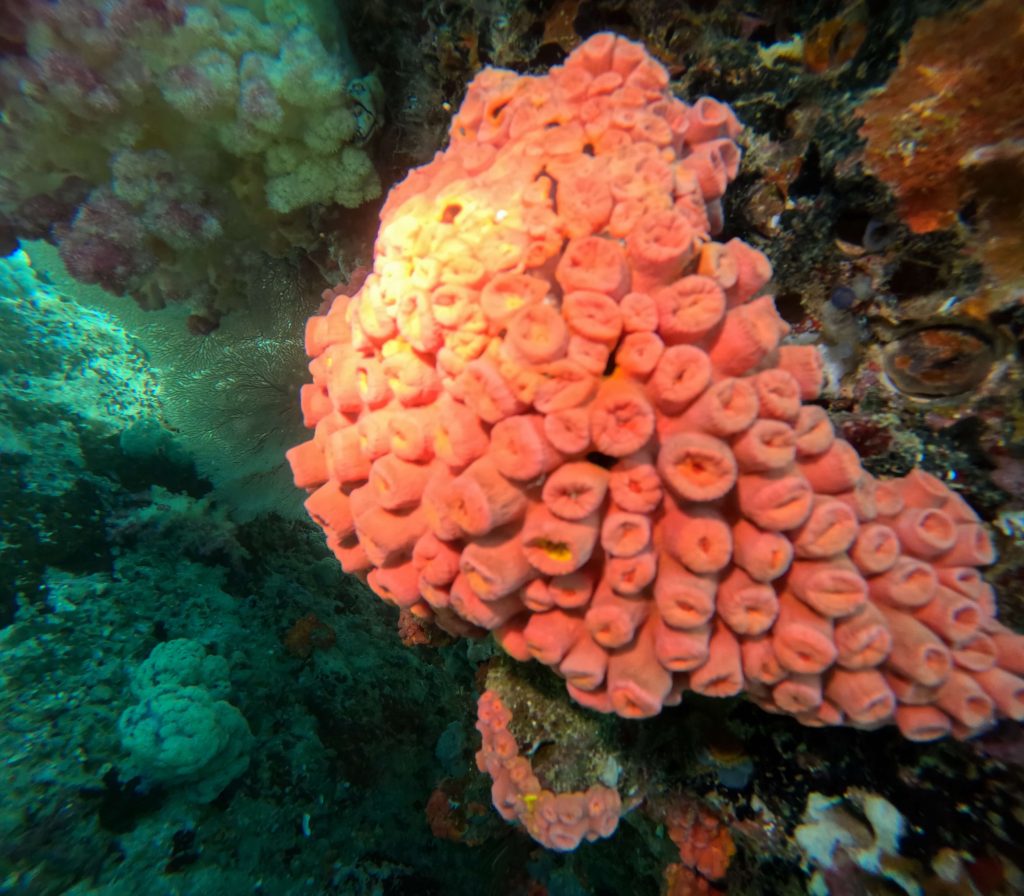
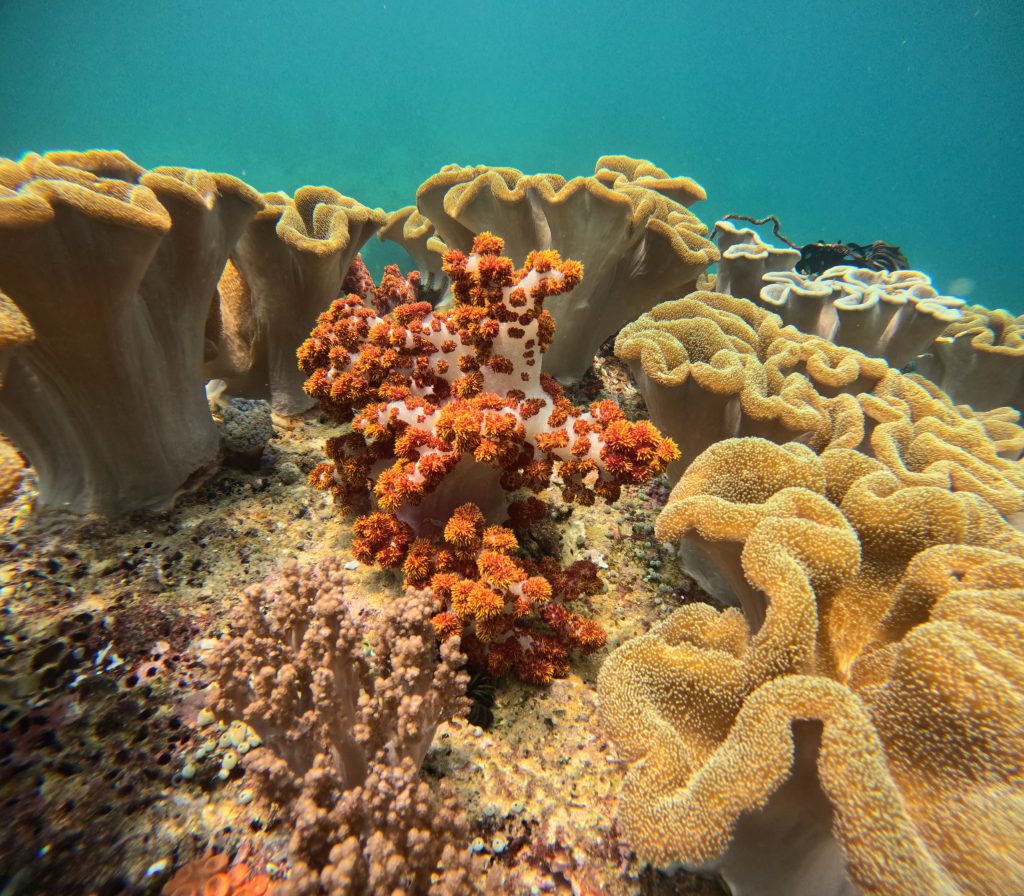
These looked like some type of underwater sunflowers.
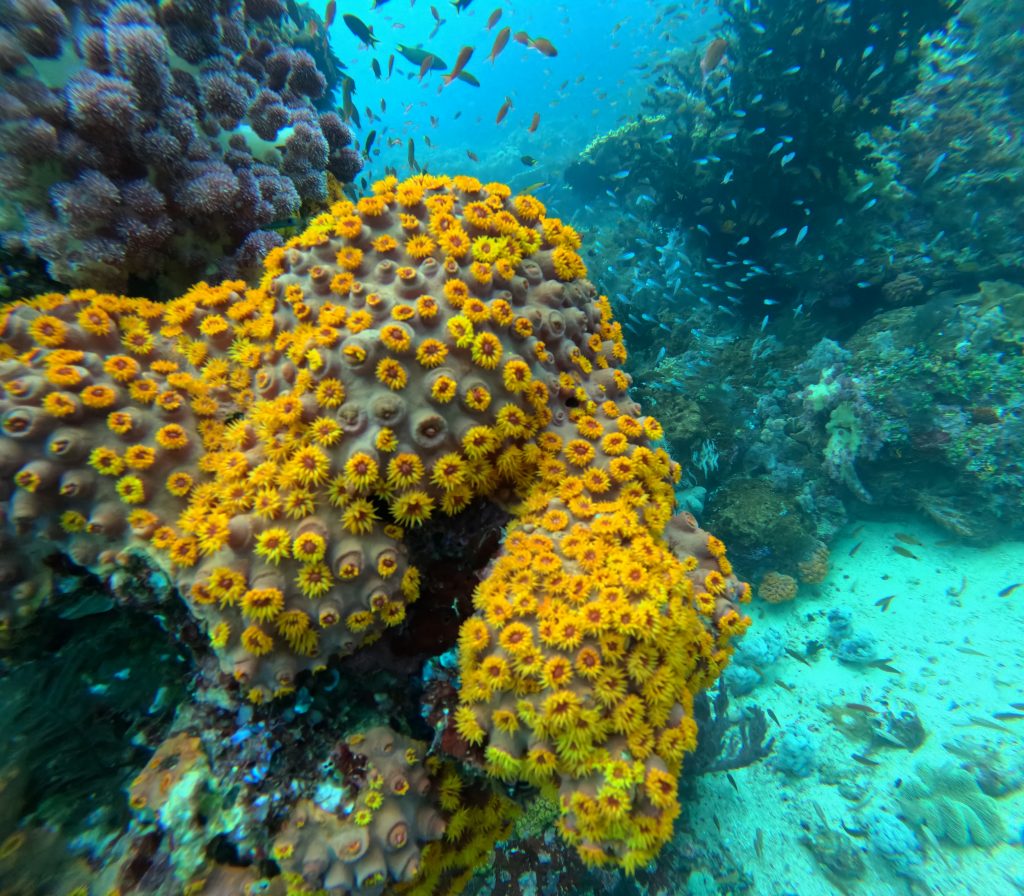
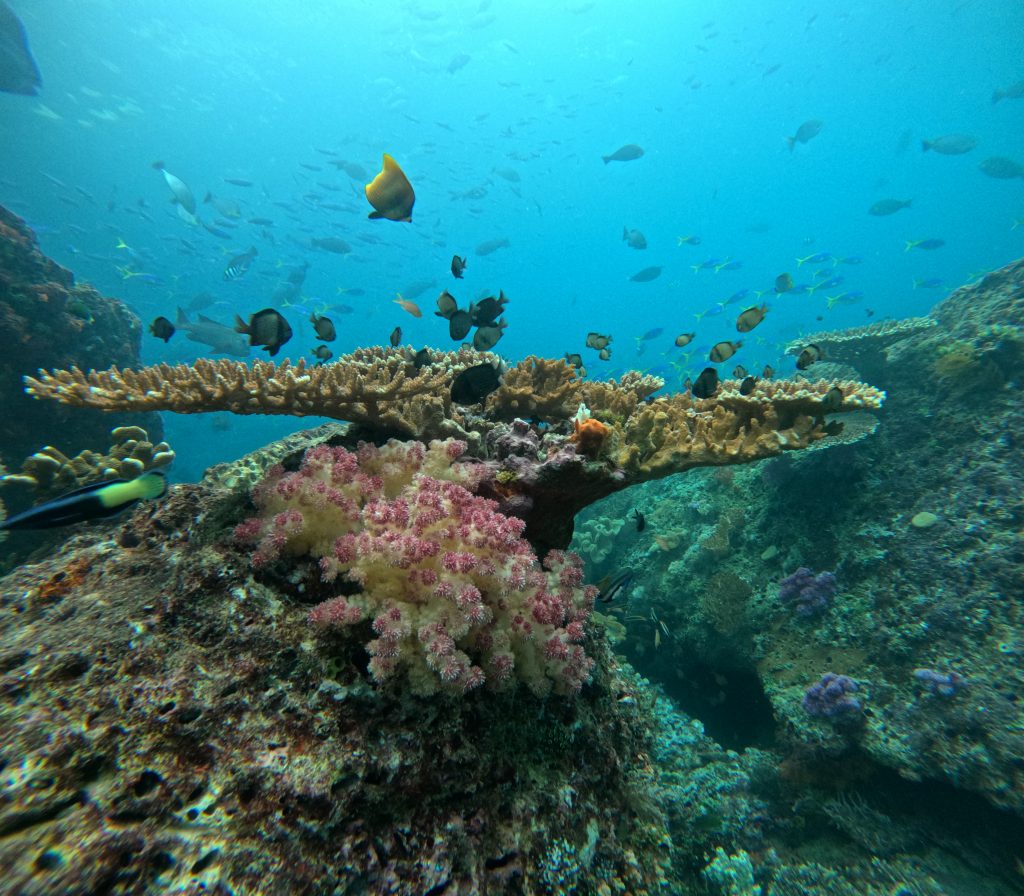
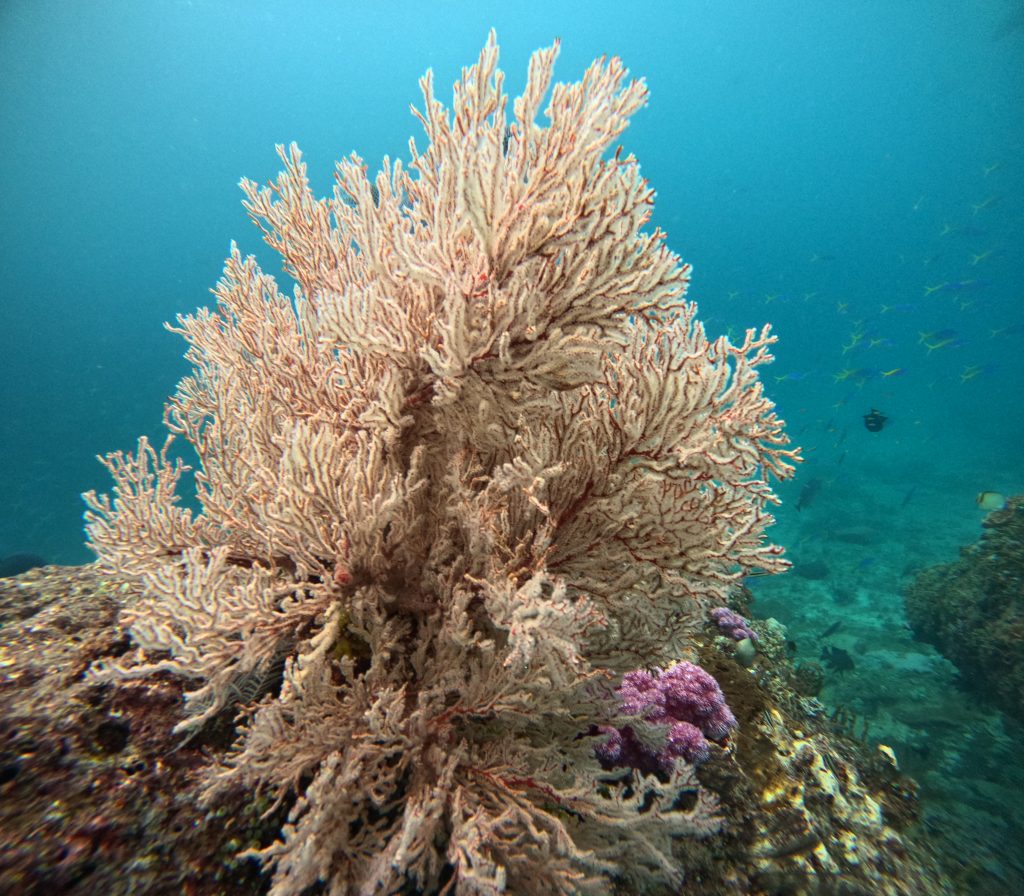
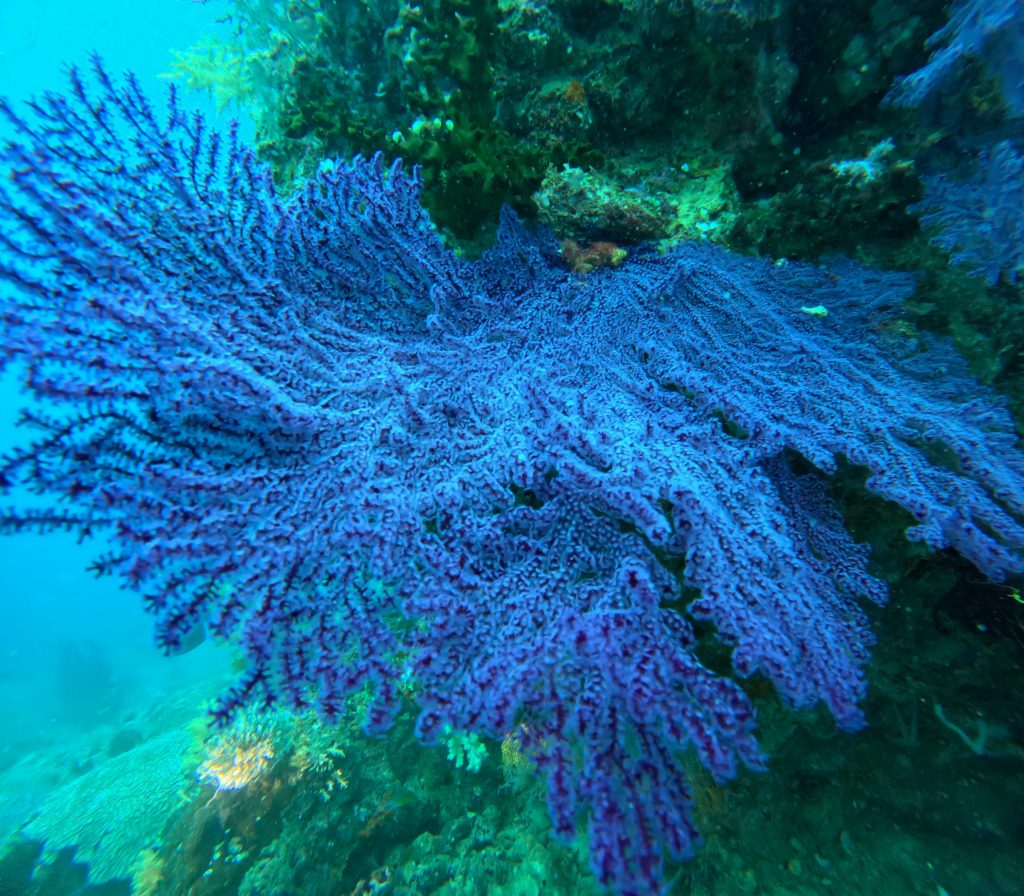
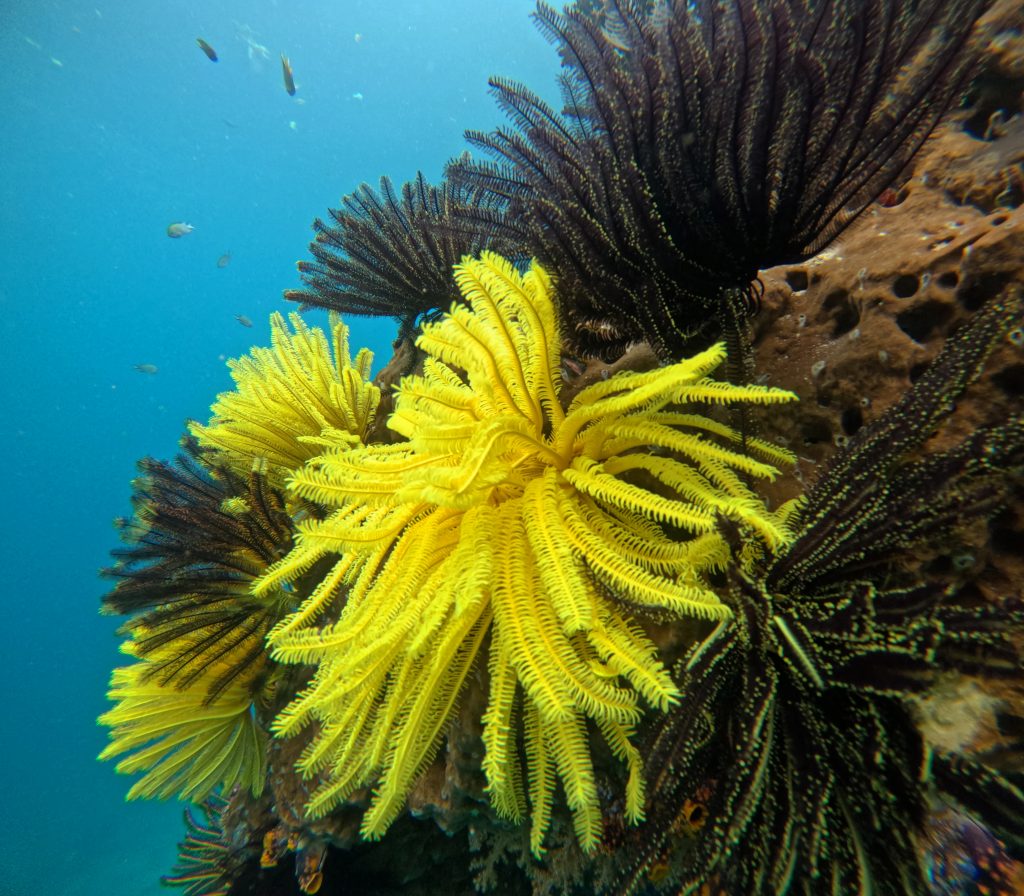
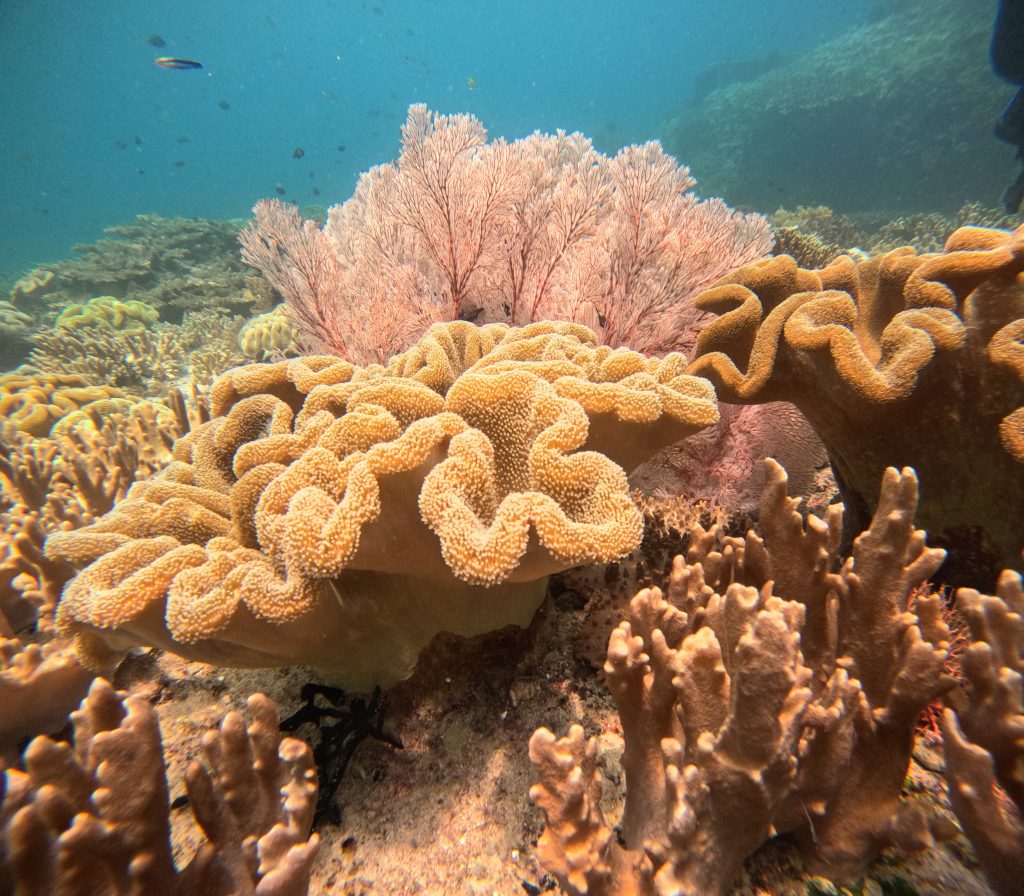
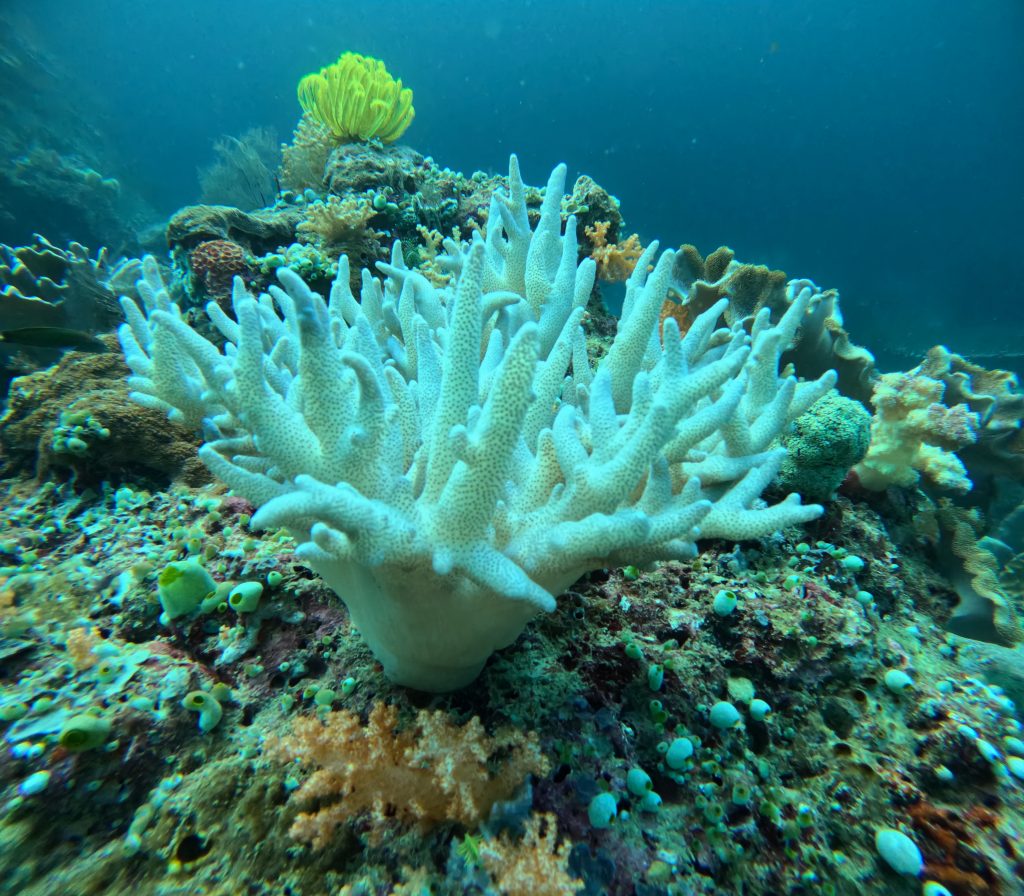
The videos give an even better illustration of this remarkable coral cornucopia.
General Sea Life
The overall sea life swimming around and through the coral was also enjoyable. The visibility wasn’t always the best (I guess even scuba diving heaven isn’t perfect), but the variety was still wonderful to experience.
Wobbogong sharks are very unique creatures. The word wobbegong is thought to come from an Australian Aboriginal language and means shaggy beard, referring to the growths around the mouth of the shark. The camouflage is improved by the presence of small, weed-like whisker lobes surrounding the wobbegong’s jaw, which help to camouflage it and act as sensory barbs. Wobbegongs make use of their camouflage to hide among rocks and catch smaller fish that swim too close.
Triton Bay is the only place I’d ever seen flasher wrasse before. They earn their name from their “flashing” behavior which entails vibrant color displays by male wrasse while also flaring their fins.
Sea Critters
To add to the fun, Triton Bay also had some of the same cool sea critters that you’d see in more traditional muck diving locations.
Flamboyant cuttlefish flash their colors when they are under threat and this serves as a warning to any possible predators that their flesh is toxic.
There were also a number of more traditional cuttlefish about as well.
You can see this one stick out its tongue a couple of times to snatch up some small critters drifting by.
Electric clams’ display is primarily a defensive mechanism to confuse or warn predators. They increase the speed of the flashes when threatened.
I’m usually not able to film pygmy seahorses even with my GoPro macro lense. They are just too small and blend too well with the coral. However, I was able to get some videos on this trip that show just how cute these tiny things are.
Two fish that masquerade as leaves.
And of course there were scores of very diverse nudibranches crawling about.
One of the most unique nudibranches I saw was the solar powered nudibranch. It’s name comes from the fact that, like coral, it contains photosynthetic zooxanthellae (single celled organisms), which allow it to draw energy from sunlight.
There were a range of other, more “traditional” shaped nudibranches (if you can call any of their unique and colorful shapes traditional).