Buenos Aires is a large, lively European city dropped right into the middle of a vibrant Latin American culture.
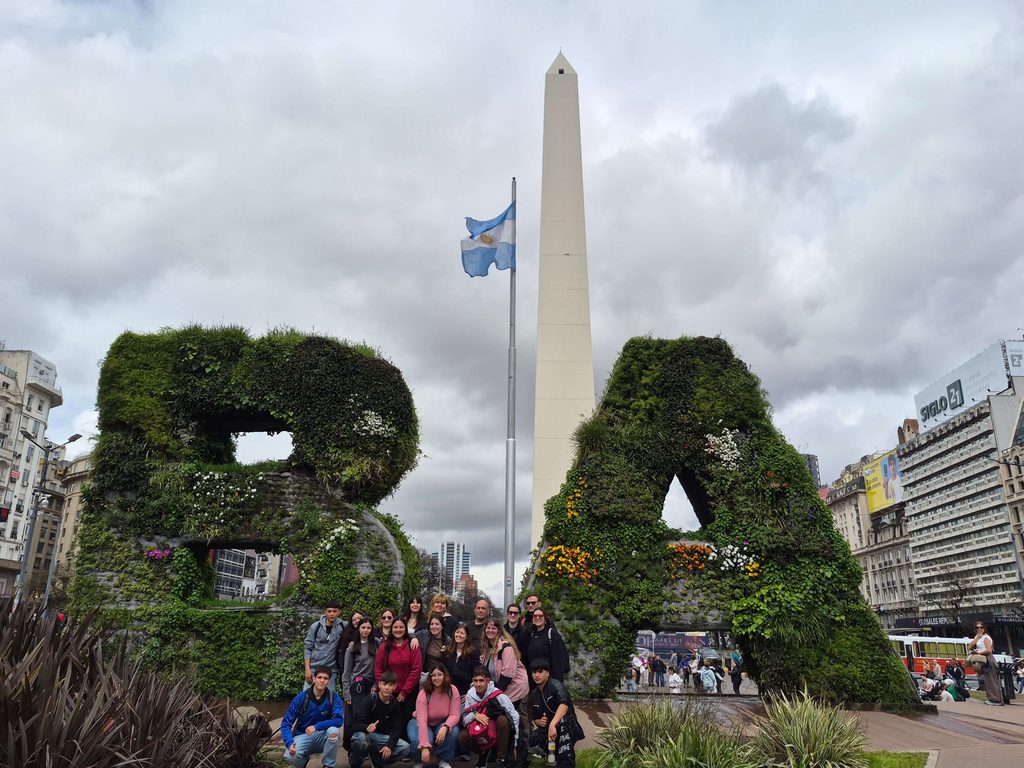
It’s one of the world’s great cities. It has wonderful architecture, a dynamic culture, distinct food, lush parks, and a nice overall ambience. Despite Argentina’s crazy politics and economic gyrations, Buenos Aires has a functional calmness about it relative to other Latin American large cities. It may just be the all the serene European architecture that masks any underlying cultural tensions.
Specifically, what makes Buenos Aires what it is are some very definitive things: futbol, tango, landmarks, music, gaucho culture, street scenes, parks, museums, and food and mate. In my two weeks there, I got to discover all of these.
Futbol!
To ask if Argentinians are passionate about football (soccer) is like asking if the pope is Catholic. And of course, the preceding pope, Pope Francis, was Argentinian. Not only that, he was a huge fan of the Buenos Aires club, San Lorenzo. So is Argentinian raised actor Viggo Mortensen. So who am I to go against the previous pope or Aragorn (Mortensen’s role in The Lord of the Rings)? I decided to attend a San Lorenzo match.
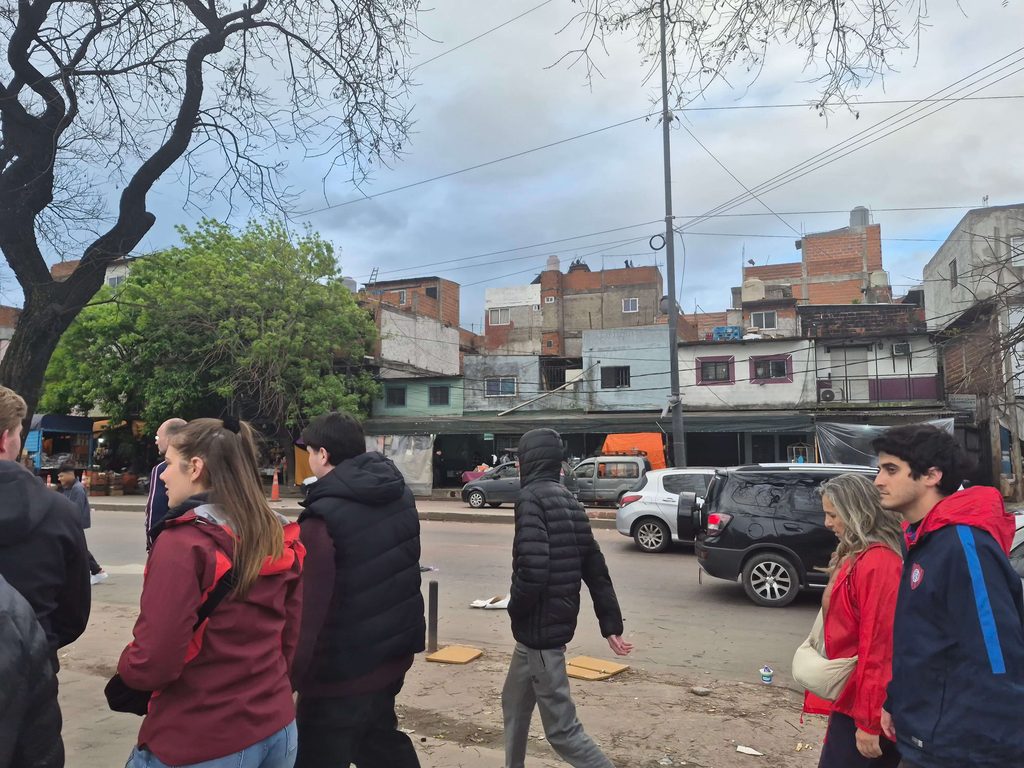
San Lorenzo is considered one of the Big Five of Argentine football, along with Independiente, River Plate, Boca Juniors, and Racing Club. Their biggest challenge was in 1979 when their historic Estadio Gasómetro in Boedo (at the time the largest stadium in Argentina), was forced to be sold in 1979 under pressure from Argentina’s military junta. This led to a severe institutional crisis and the club’s first-ever relegation in 1981. The club eventually built a new home, Estadio Pedro Bidegain, located in the Bajo Flores neighborhood. While it’s only about a kilometer away from their old home, it’s in a much tougher neighborhood and doesn’t have the same charm as their original area. So in recent years, fans successfully campaigned to recover the historic land on Avenida La Plata in Boedo with the goal of building a stadium back in their spiritual home. The challenge will be find the financing for this construction.
Bajo Flores is not the type of place most tourists see in Buenos Aires.
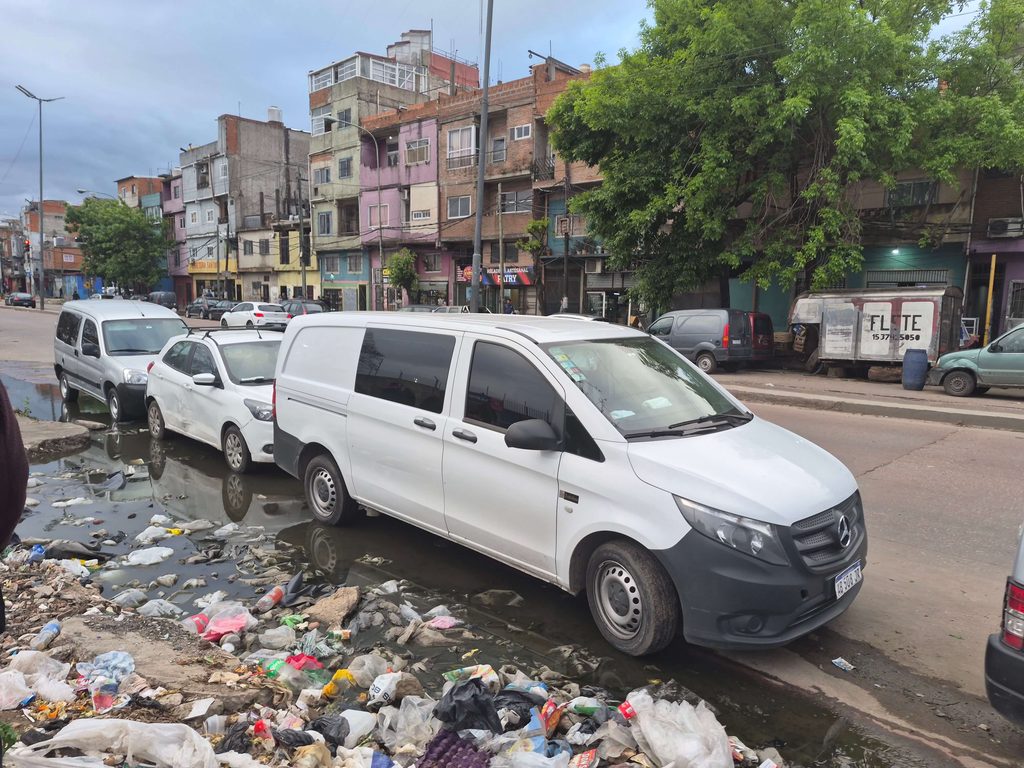
I also picked San Lorenzo because they have incredibly ardent and creative fans. They are famous for rewriting mainstream pop, rock, and international hit songs into passionate stadium anthems. Melodies originated in the Boedo stands have frequently gone viral and been adopted by fan bases across Argentina and the rest of the world.
The match I saw pitted San Lorenzo (in white jerseys) against Newell’s Old Boys (in dark jerseys). Newell’s is in Rosaria and is known for it’s outstanding youth development program. Both of these teams are having very poor seasons and the match reflected that. It was a 0-0 draw and not very exciting. It was also a cold and windy night.
But the fans in the La Gloriosa section of the stadium more than made up for it! Those 20,000 fans in that standing room only part of the stadium were incredible throughout the entire match. I can’t even imagine what they would have sounded like if San Lorenzo actually won.
You can get a 6 minute taste of it in this video I strung together.
And the guy with his shirt off is called “Gordo” (which means fat in Spanish). He is a club icon as he dances throughout the match exposing his beer belly to the world.
Tango
When you think of Buenos Aires you think of tango. And when you think of tango you think of Buenos Aires. While Montevideo is officially the co-creator of tango, it was the wave of dancers and musicians from Buenos Aires that traveled to Europe in the early 1900s which led to the first European tango craze in Paris, and then in London, Berlin, and other capitals. This created the global association of tango with Buenos Aires.
There were a number of large stage shows I could have gone to, but I found this nice event called Secreto Tango Society that created a much more intimate experience. It didn’t hurt that they kept the wine flowing throughout. The lighting was a bit dim; it was great for the atmosphere, but not so great for filming on my phone 🙂
Landmarks
La Recoleta Cemetery
I’m usually not a fan of cemeteries, but La Recoleta is unique. Covering 14 acres it contains 4,691 ornately carved vaults. Most of the cemetery is calm and quiet and you can wander around this unique setting lost in your own thoughts.
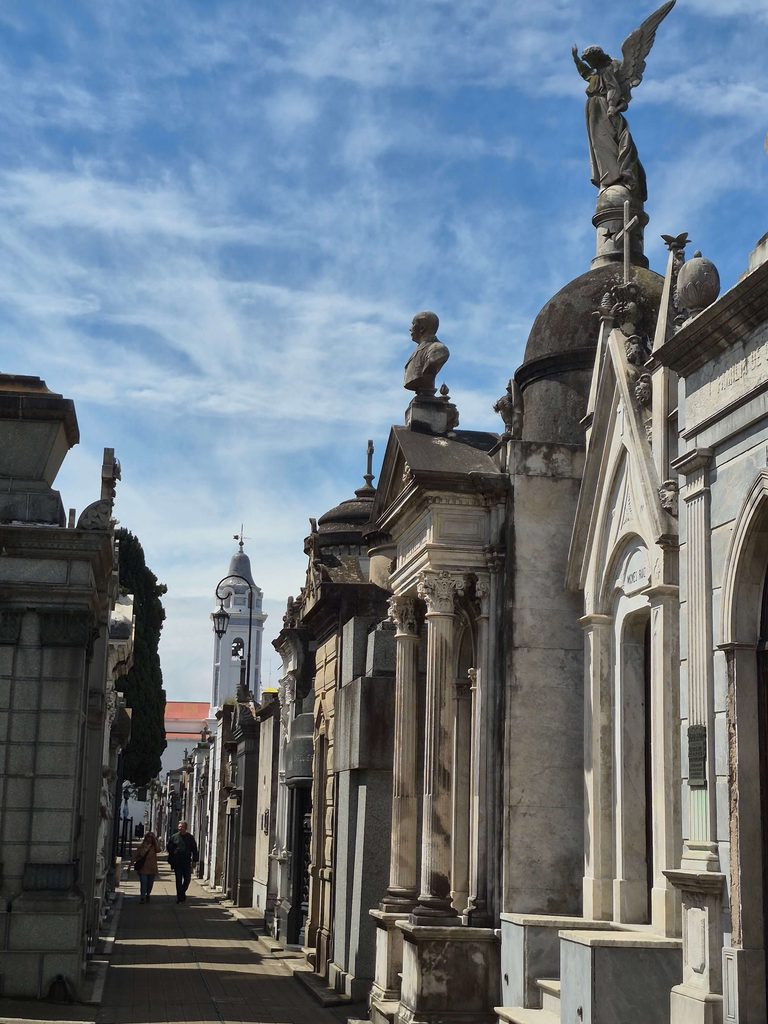
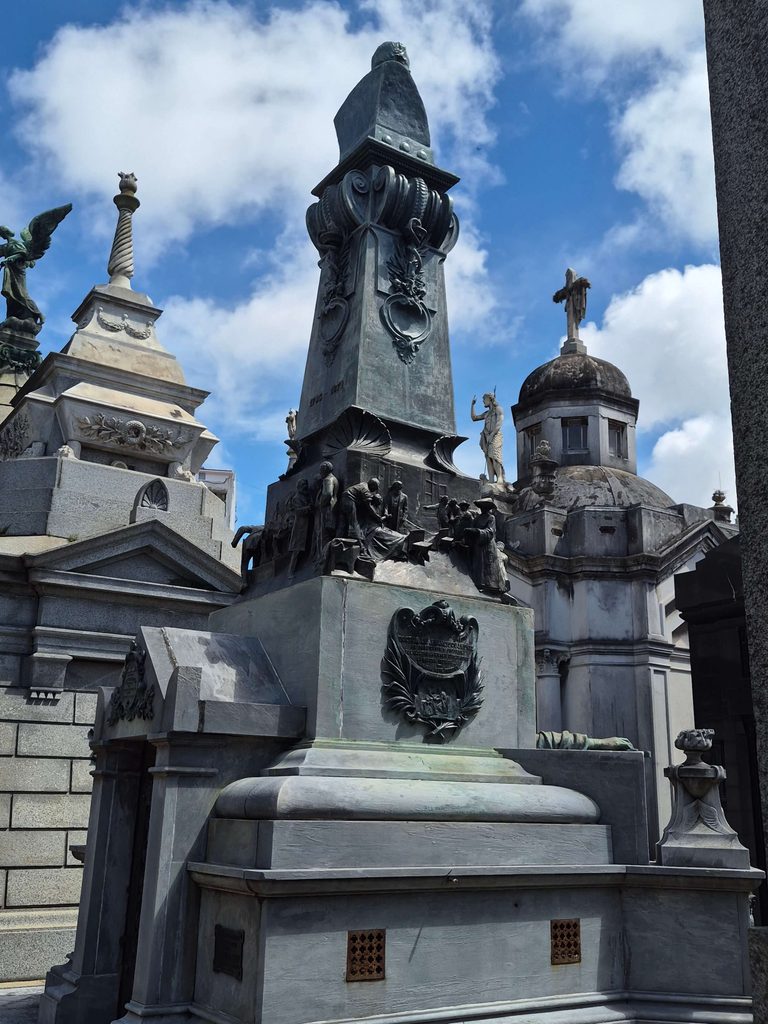
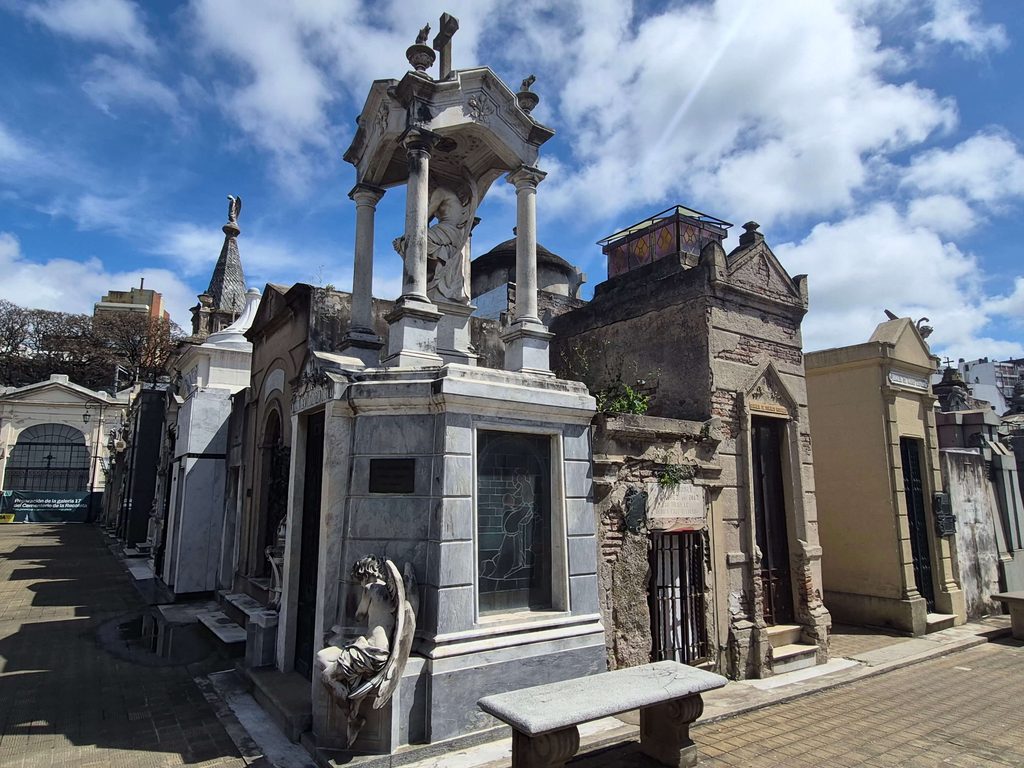
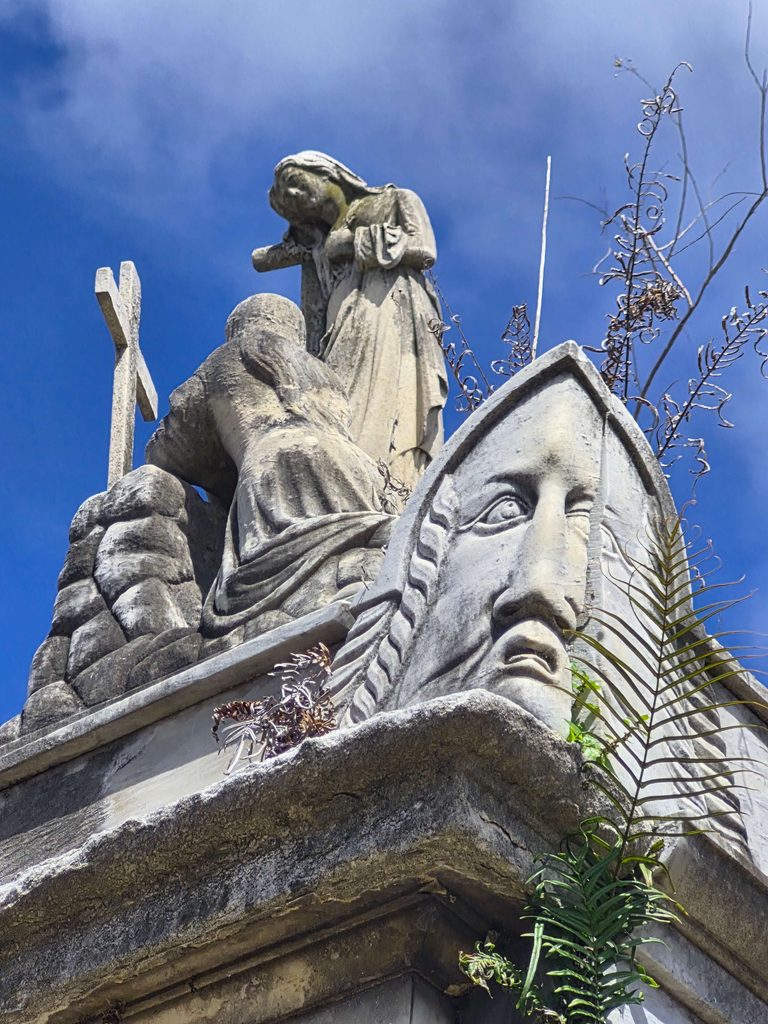
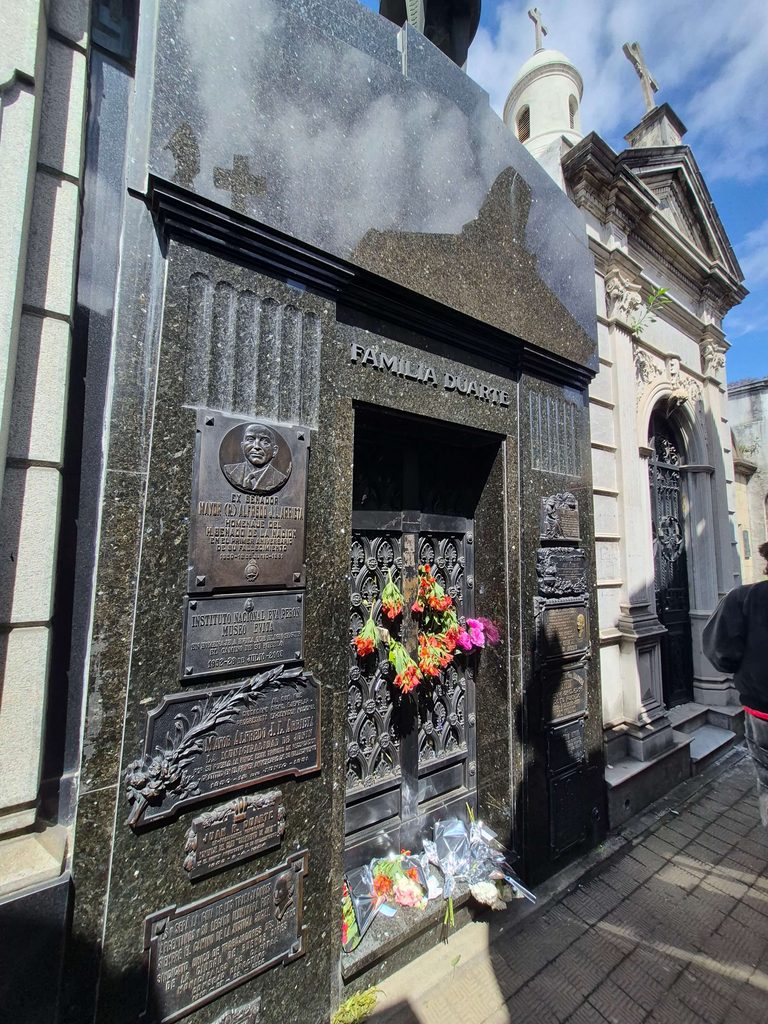
And then there is the Duarte family vault. It’s where Eva Perón, Argentina’s first lady from 1946 until her death from cervical cancer in 1952, has lain since 1976. It’s what most people coming to Recoleta come to see. I had to dodge a large tour group and other people waiting after that to get a quick picture of this vault.
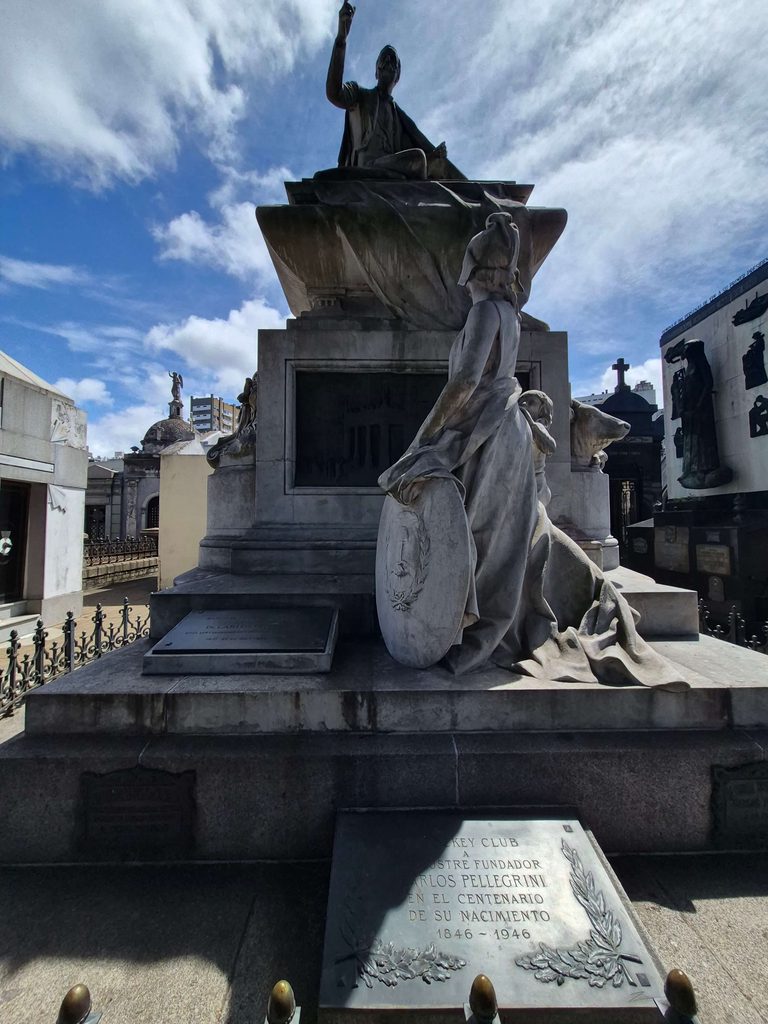
For me, the most interesting vault, in a playful way, was that of Carlos Pellegrini, since that is also my last name. He was an Argentine lawyer, military officer, and politician who served as the 11th President of Argentina from 1890 to 1892. A prominent member of the influential “Generation of ’80”, he is widely remembered as a “pilot of storms” (piloto de tormentas) for navigating the nation out of one of its most severe economic and political crises. His vault was one of the centerpiece vaults in Recoleta.
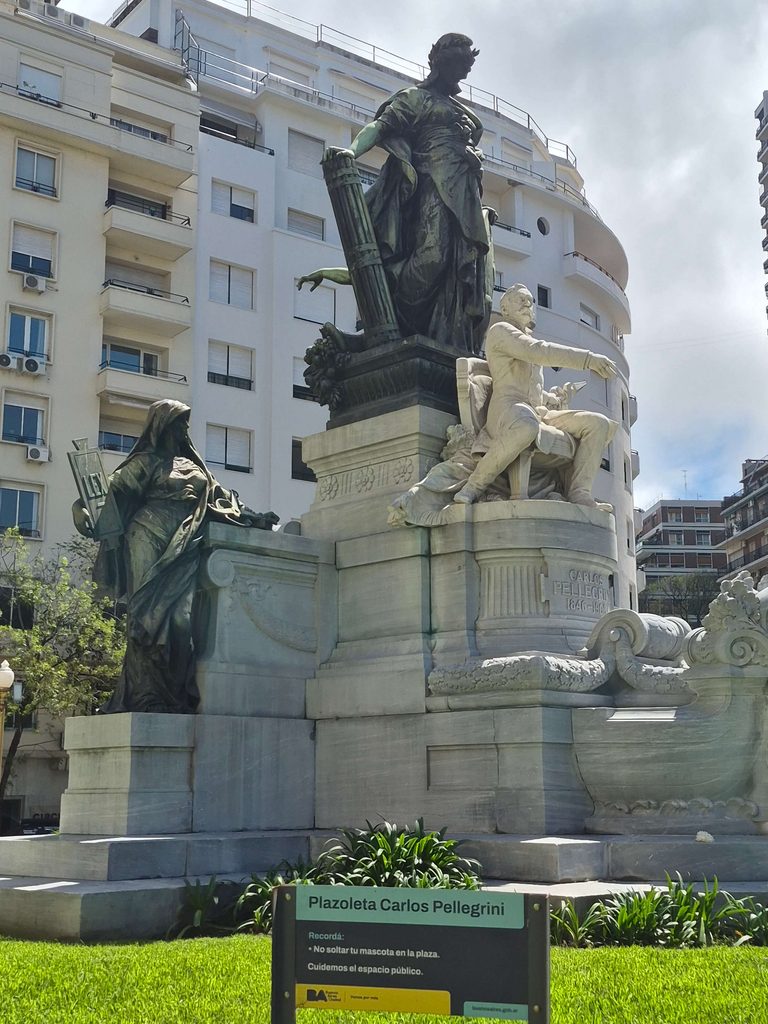
There is also a small plaza in his honor in the center of the city, as well as one of the main boulevards named after him.
Plaza Del Mayo and Nearby Attractions
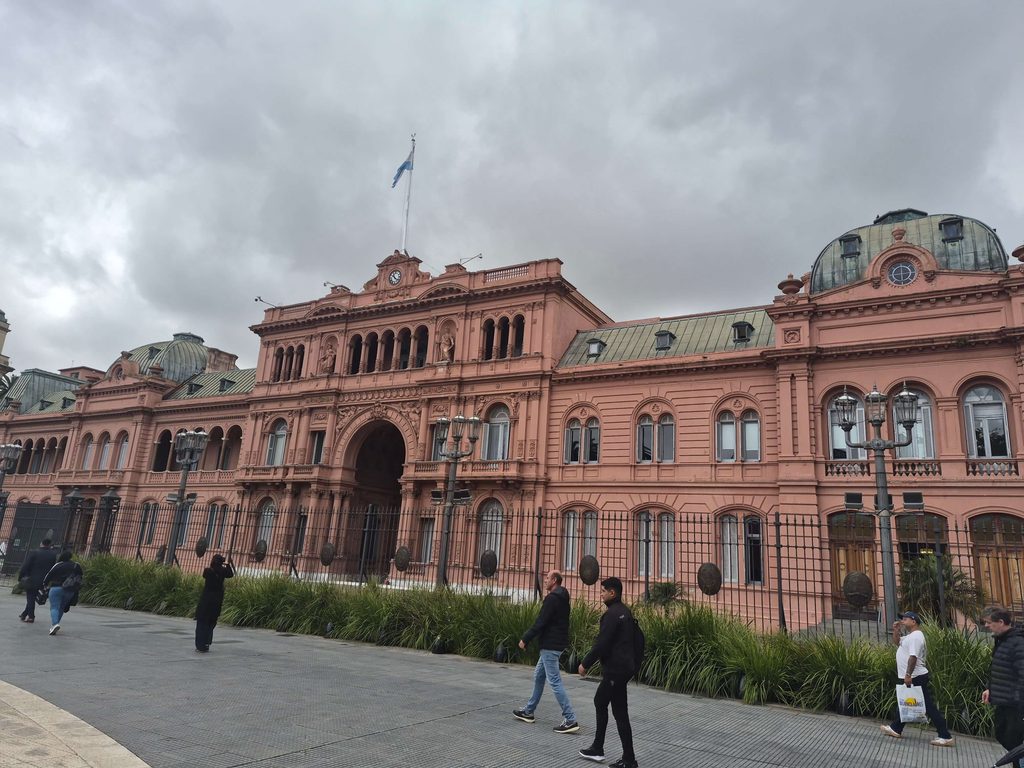
Plaza del Mayo is the main city square of Buenos Aires. The most distinct building in the Plaza is The Casa Rosada – the pink house – which is the president of the Argentine Republic’s official workplace.
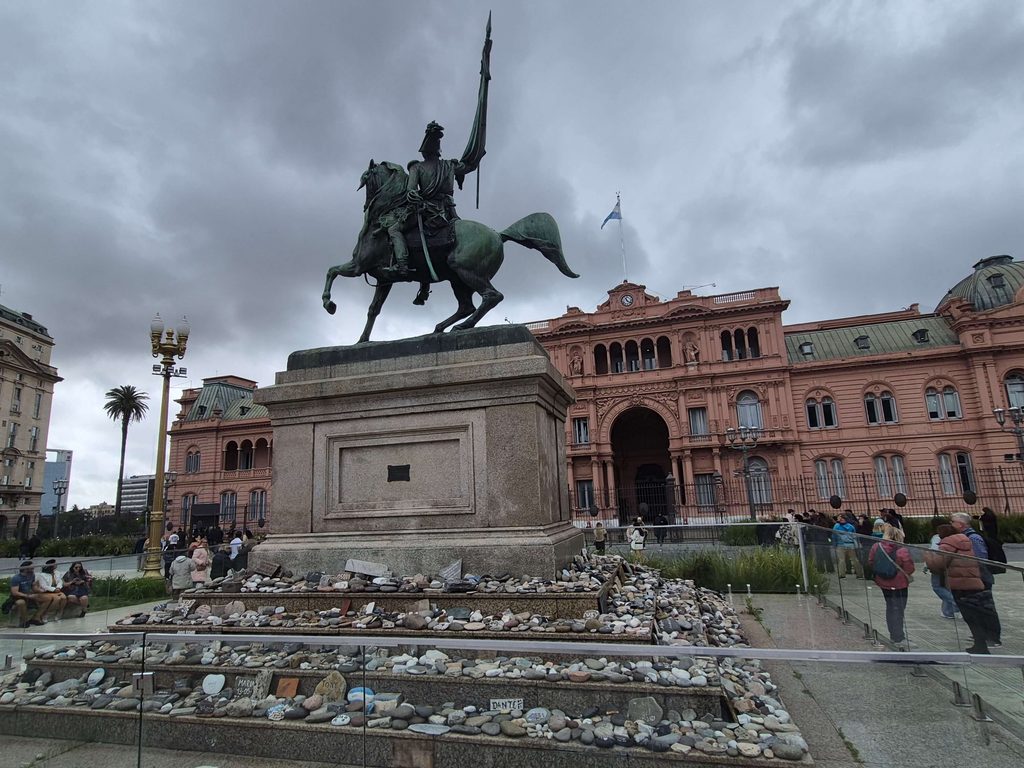
The Equestrian monument to General Manuel Belgrano, one of the founding fathers of Argentina, is in front of the Casa Rosada. Below this monument are stones that are part of the spontaneous “March of the Stones” held in August 2021 by citizens and relatives of people who died during the COVID-19 pandemic. Each stone is painted or inscribed with the name of a person who passed away from the coronavirus.
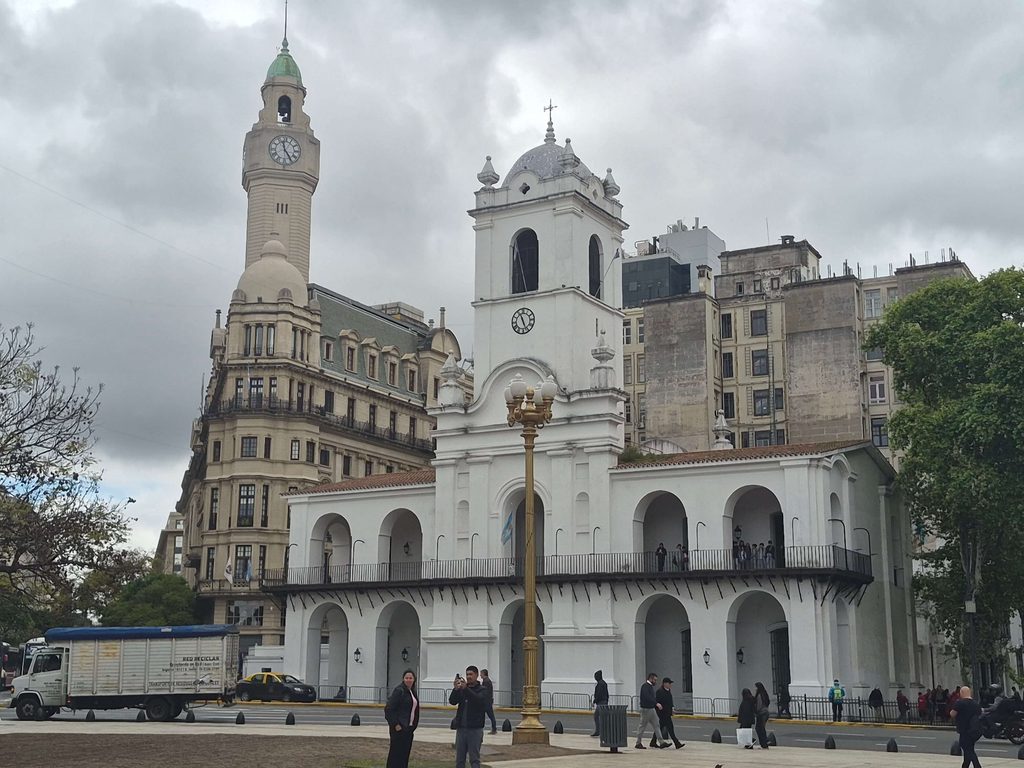
Just off the Plaza del Mayo is The Cabildo of Buenos Aires which was used as a seat of the town council during the colonial era. It was built in the early 1600s and is now a museum celebrating the history of Argentina’s independence.
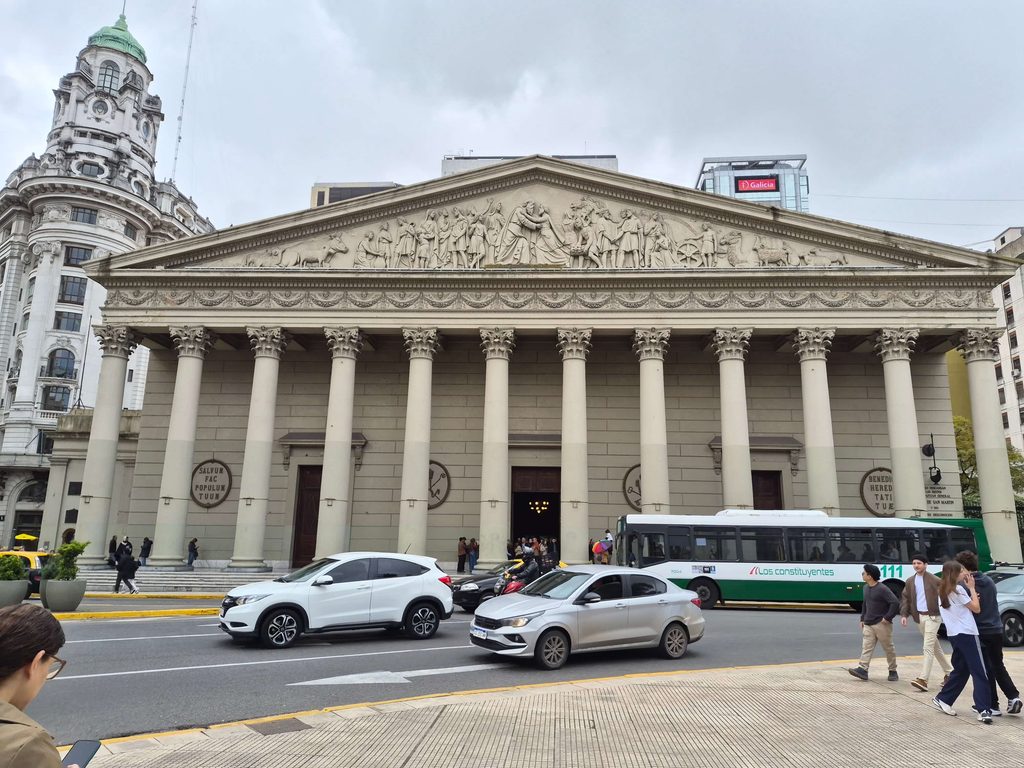
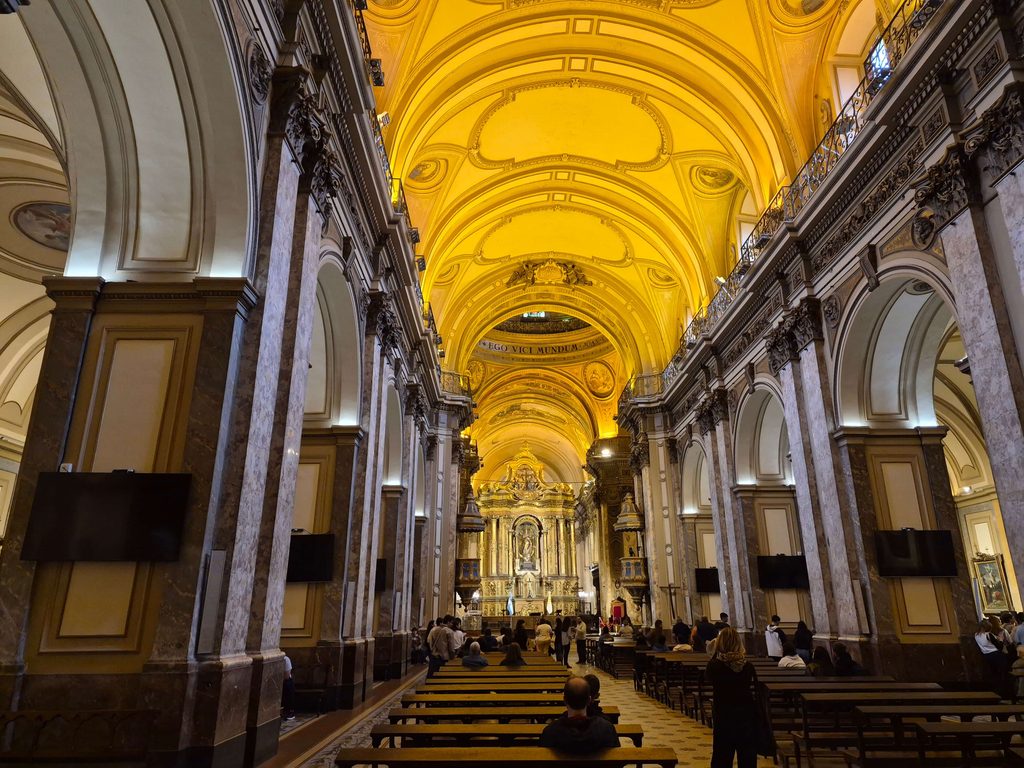
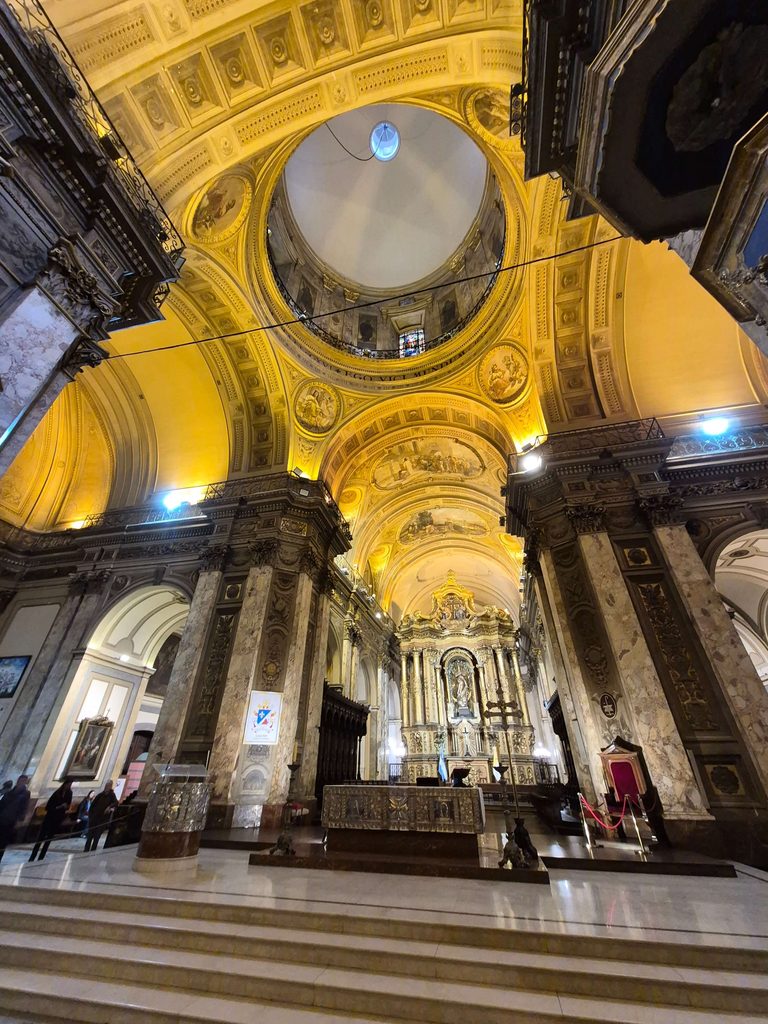
The Metropolitan Cathedral overlooks Plaza de Mayo, and is the mother church of the Archdiocese of Buenos Aires and held the rank of Primatial church of Argentina from 1822 to 2024. While the front doesn’t look like a traditional cathedral, the inside sections definitely do.
San Telmo Sunday Market
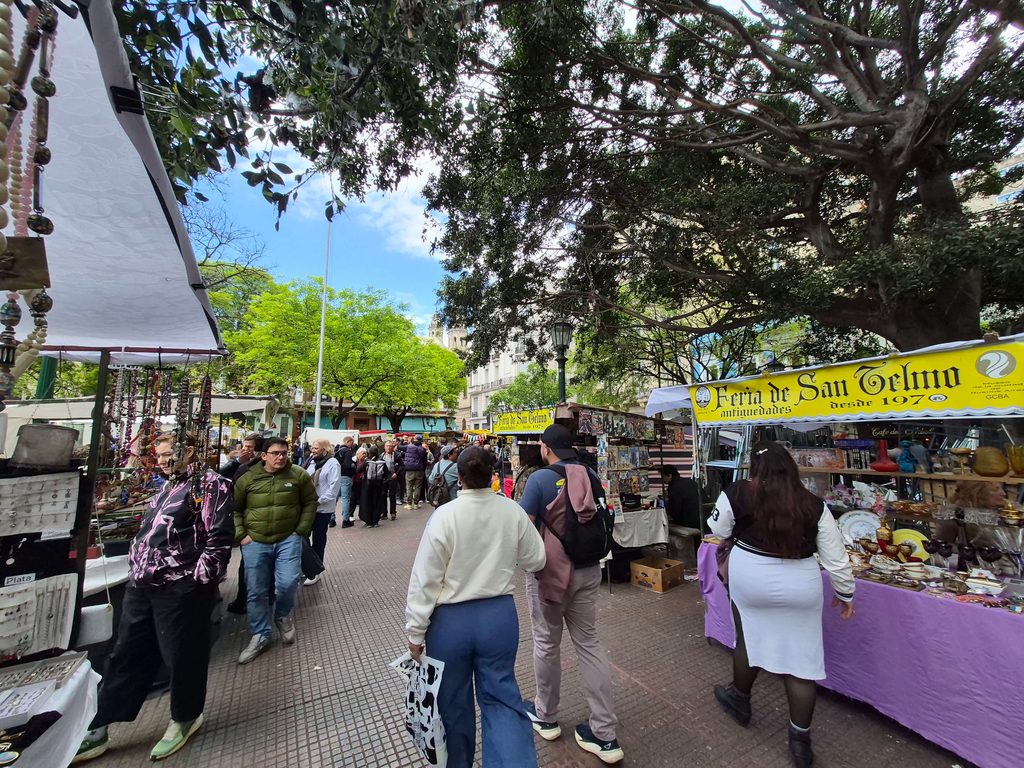
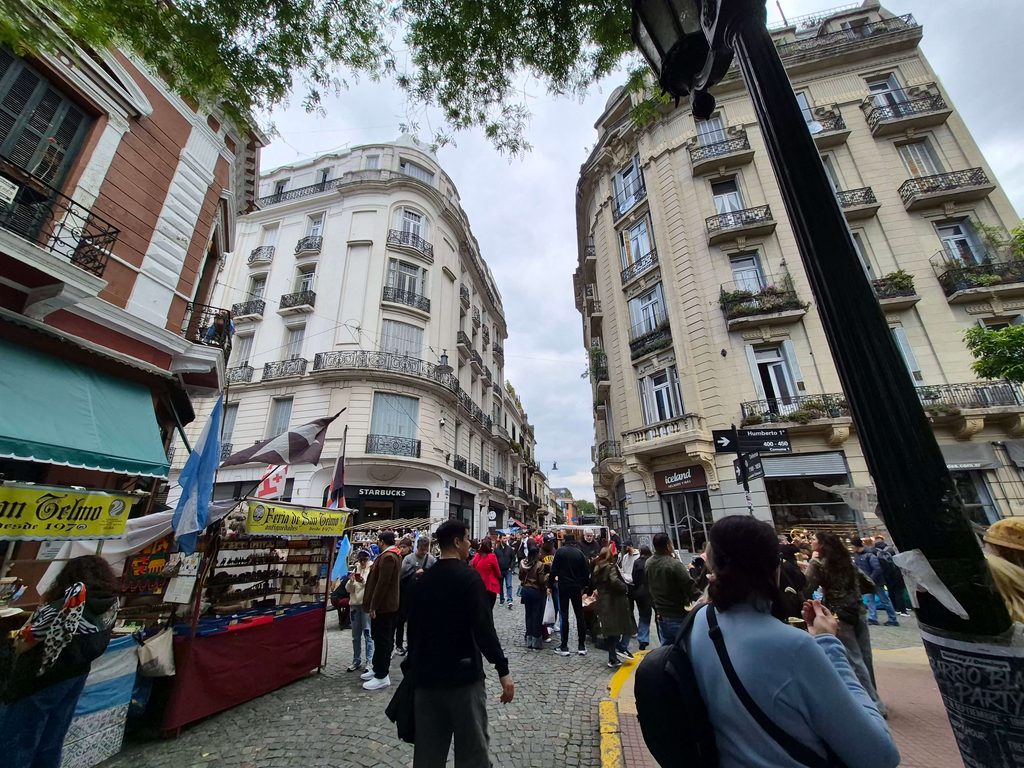
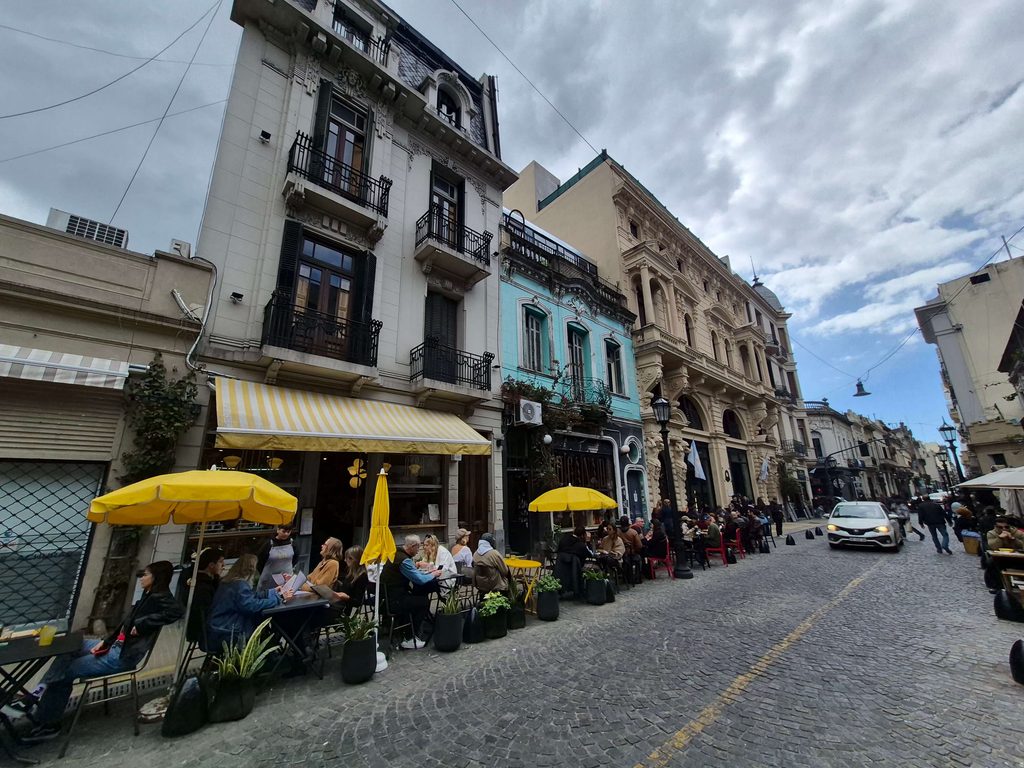
San Telmo is the oldest and most traditional neighborhood in Buenos Aires, known for its well-preserved colonial architecture, cobblestone streets, and bohemian arts culture. Every Sunday the neighborhood transforms into a huge market where all kinds of crafts, food, artwork and many, many other things are for sale in a huge selection of booths going for multiple city blocks in multiple directions.

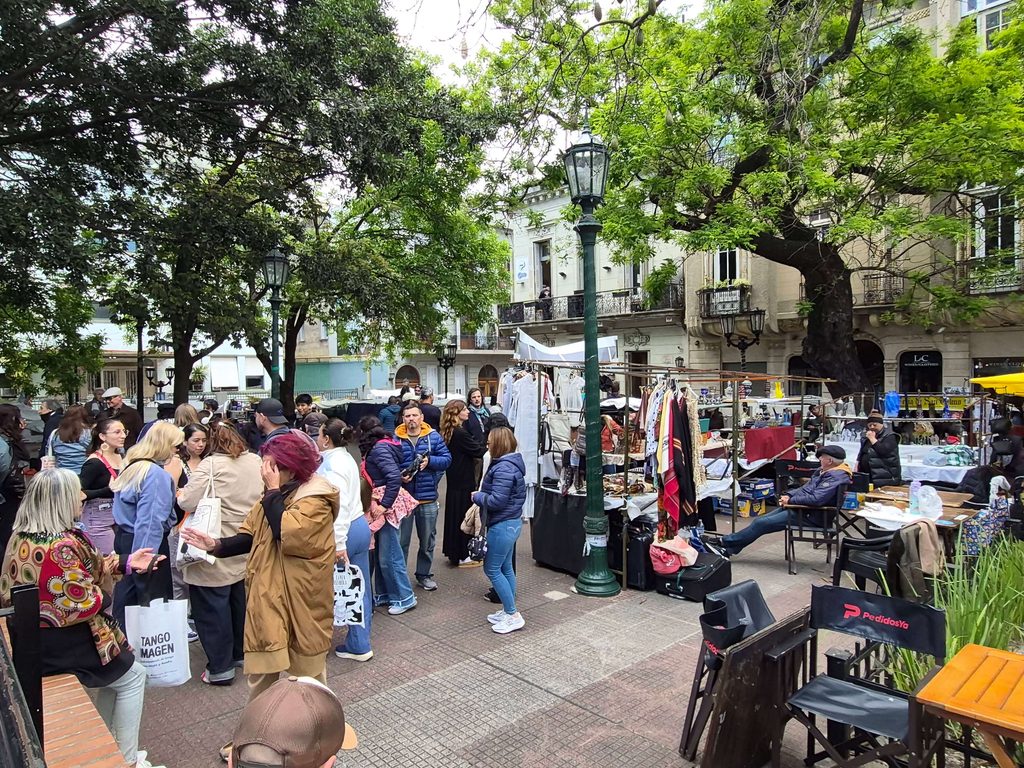
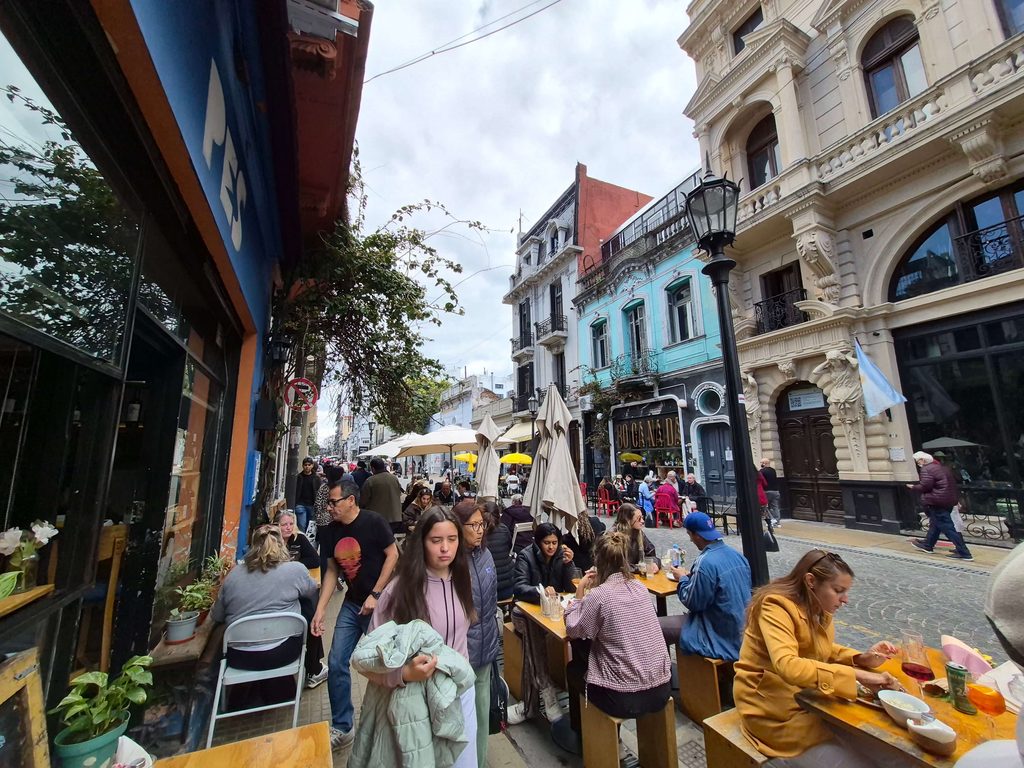
You can get a sense of the grand European styled architecture when you get to places that are bit less crowded.
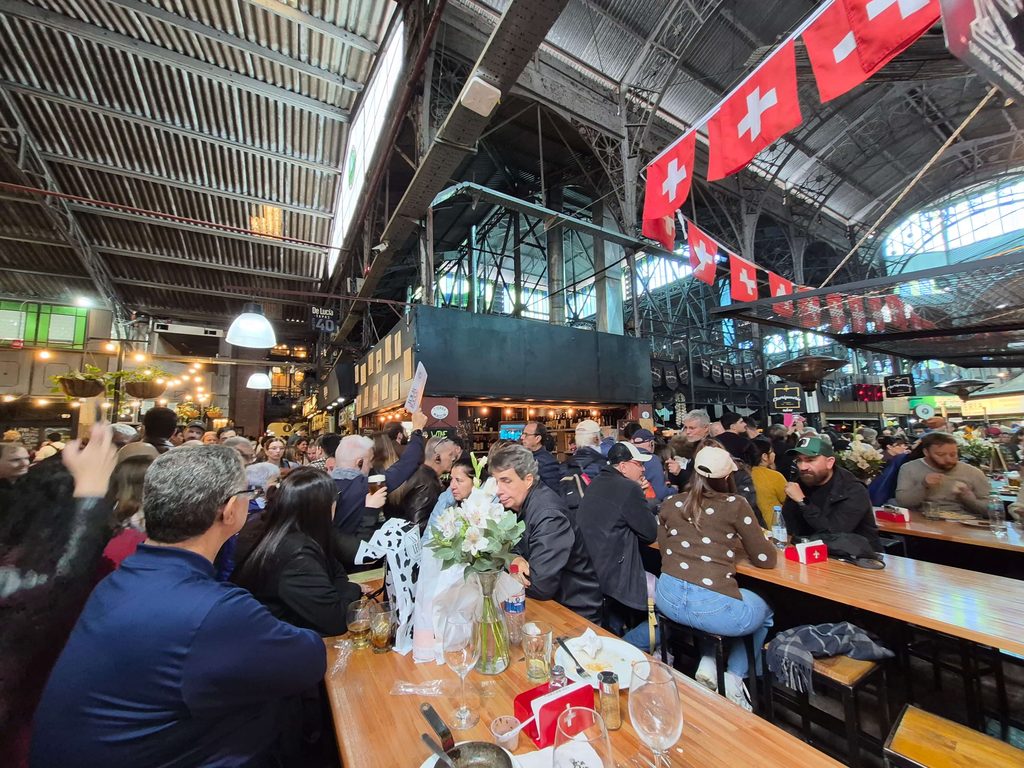
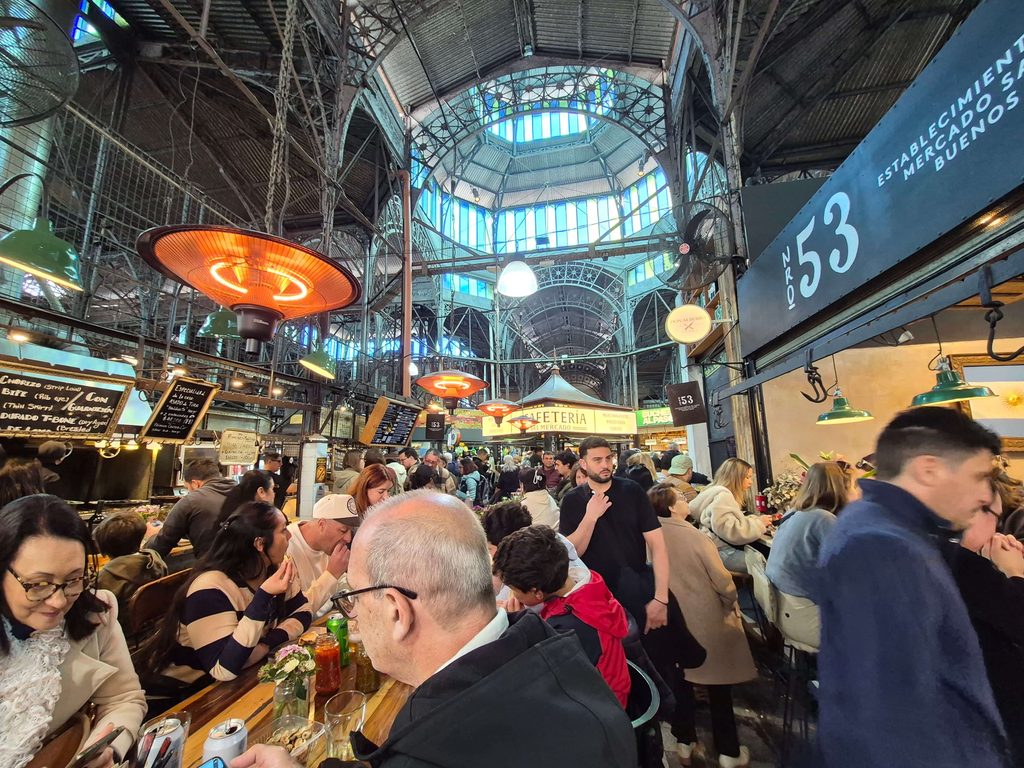
The Mercado de San Telmo is the formal internal shopping area that is open all week. On Sunday it’s packed with people wandering around and having having lunch at the various restaurants.
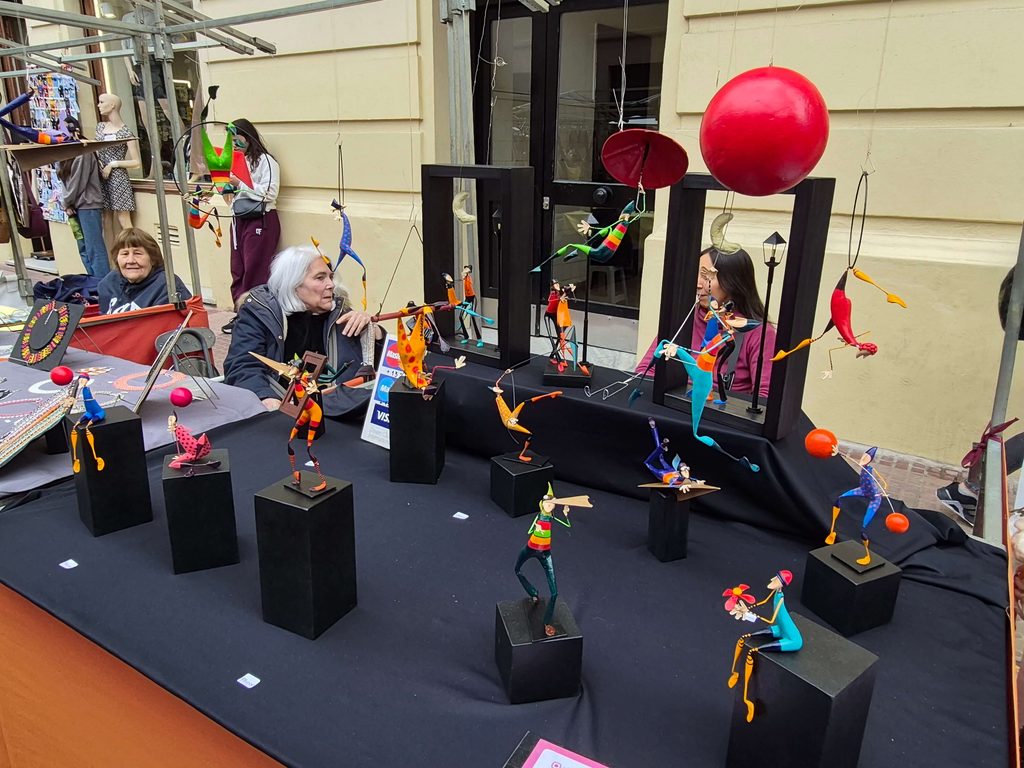
Here are a couple of stalls with unique artwork that caught my eye.

And once in a while you can see some tango dancers enjoying the afternoon and looking for small tips.
Cafe Tortoni
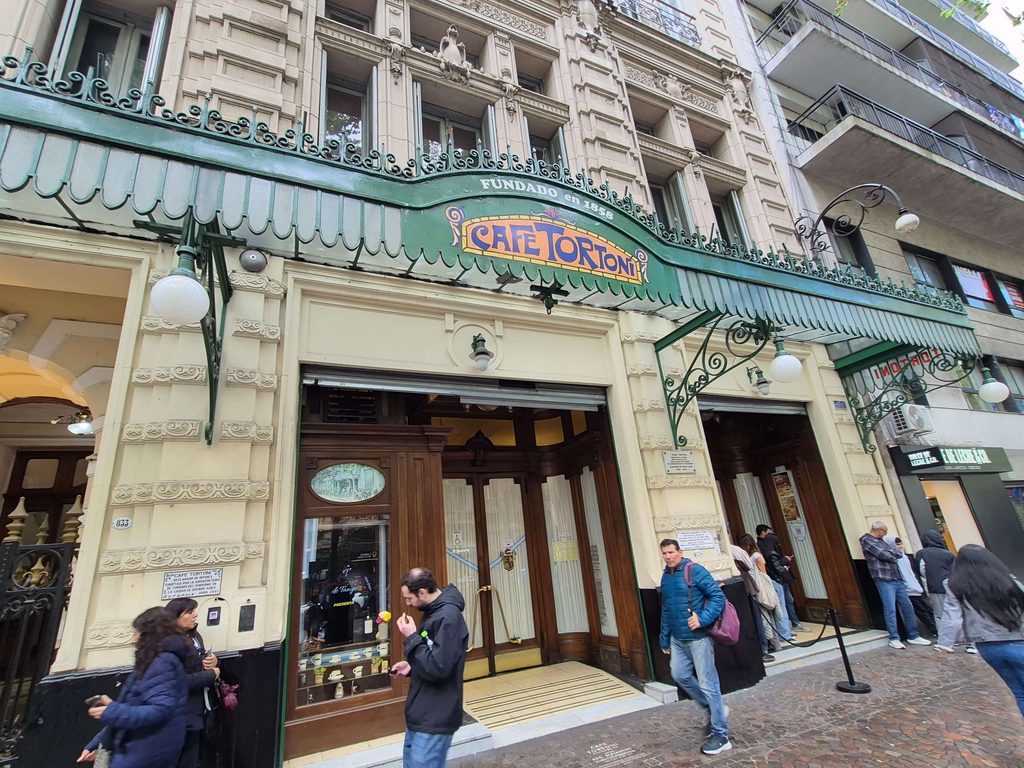
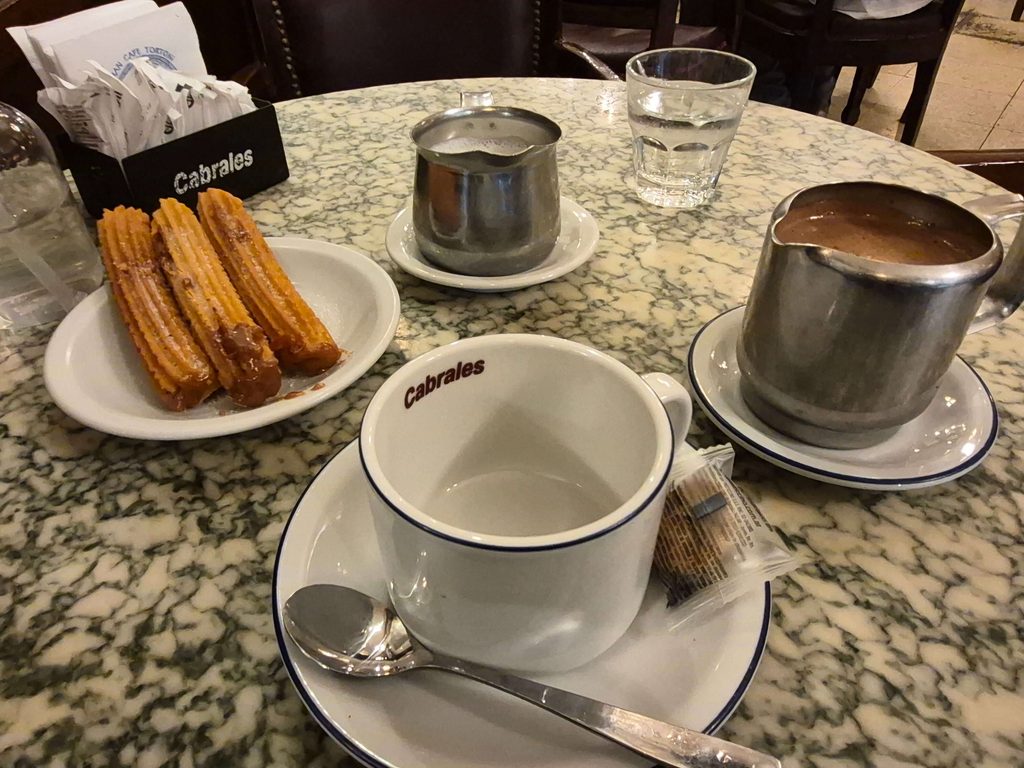
Cafe Tortoni first opened in 1858 and is the oldest cafe in Buenos Aires. It has a beautiful Paris inspired interior and usually has long lines to get into. Thankfully I came on a somewhat rainy day and got in after only about a 5 minute wait.
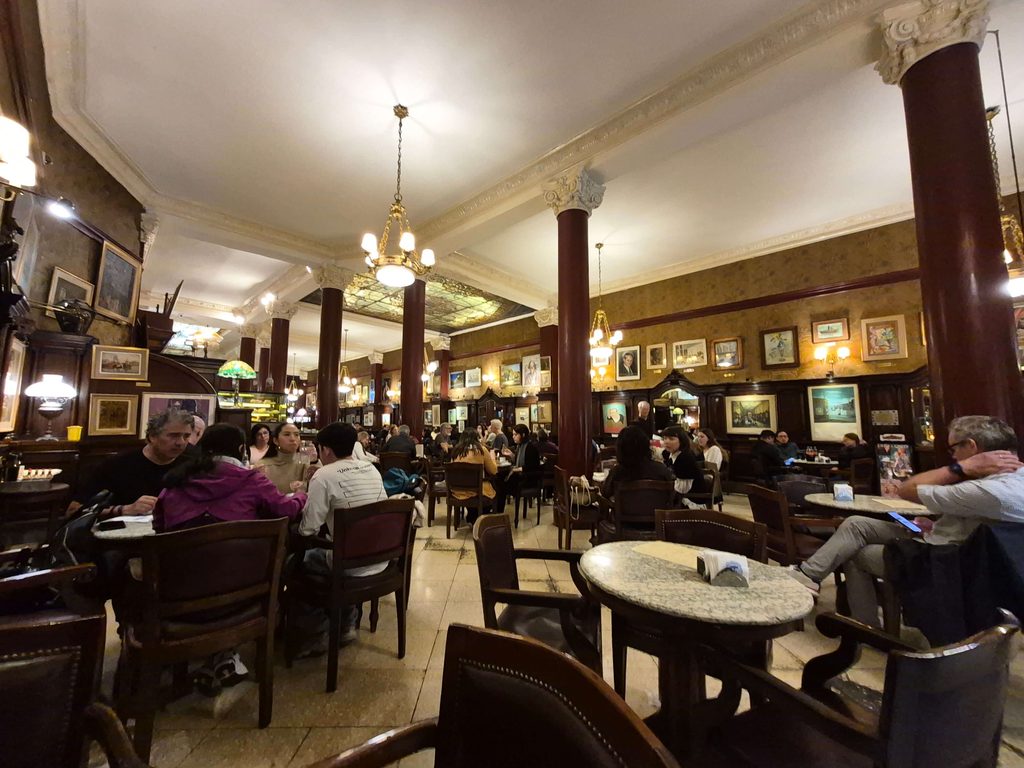
I had one of their signature snacks of rich, hot chocolate and three soft melt-in-your-mouth churros.
El Ateneo Grand Splendid
This enchanting space opened as a theater in 1915 and features ceiling frescoes painted by the Italian artist Nazareno Orlandi and caryatids sculpted by Troiano Troiani. After a change of ownership in 2000 it was renovated and converted into a book and music shop. It’s an absolutely amazing setting. The Guardian listed it second in its 2008 list of the world’s ten best bookshops and in 2019 it was named the “world’s most beautiful bookstore” by the National Geographic.
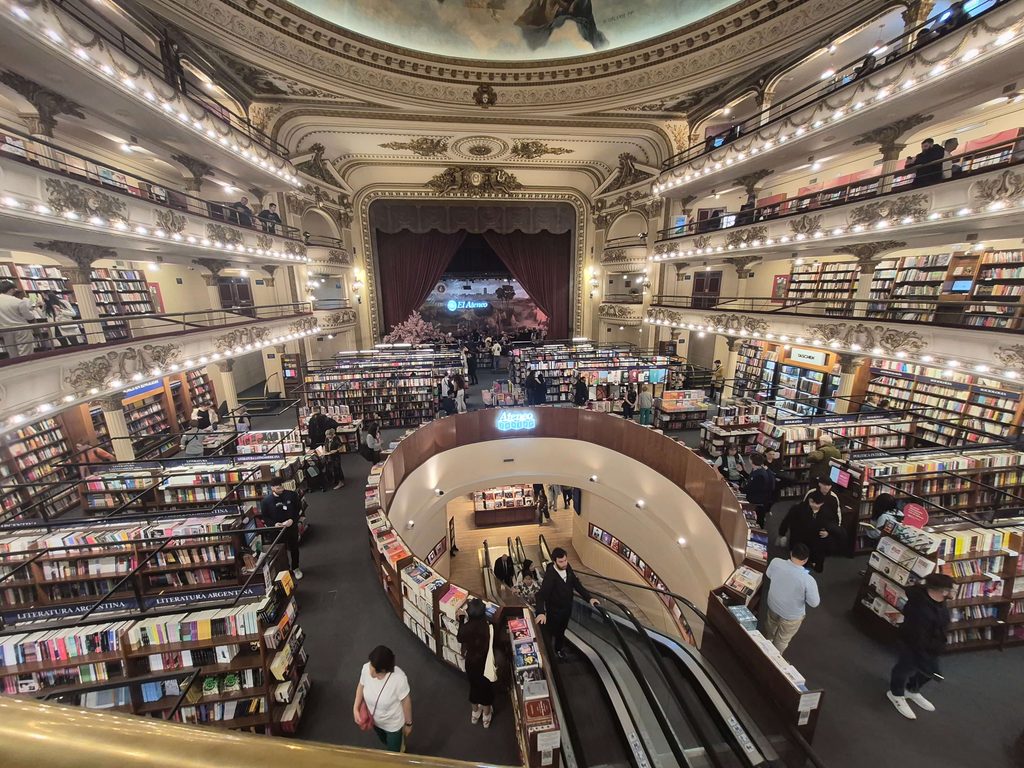
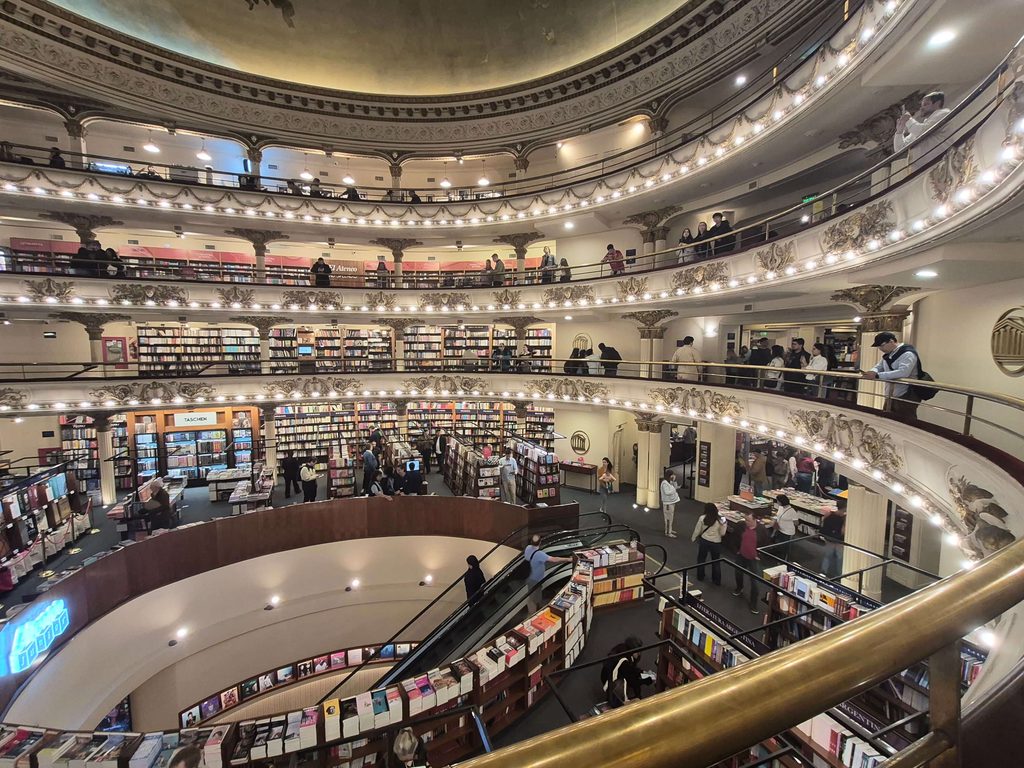
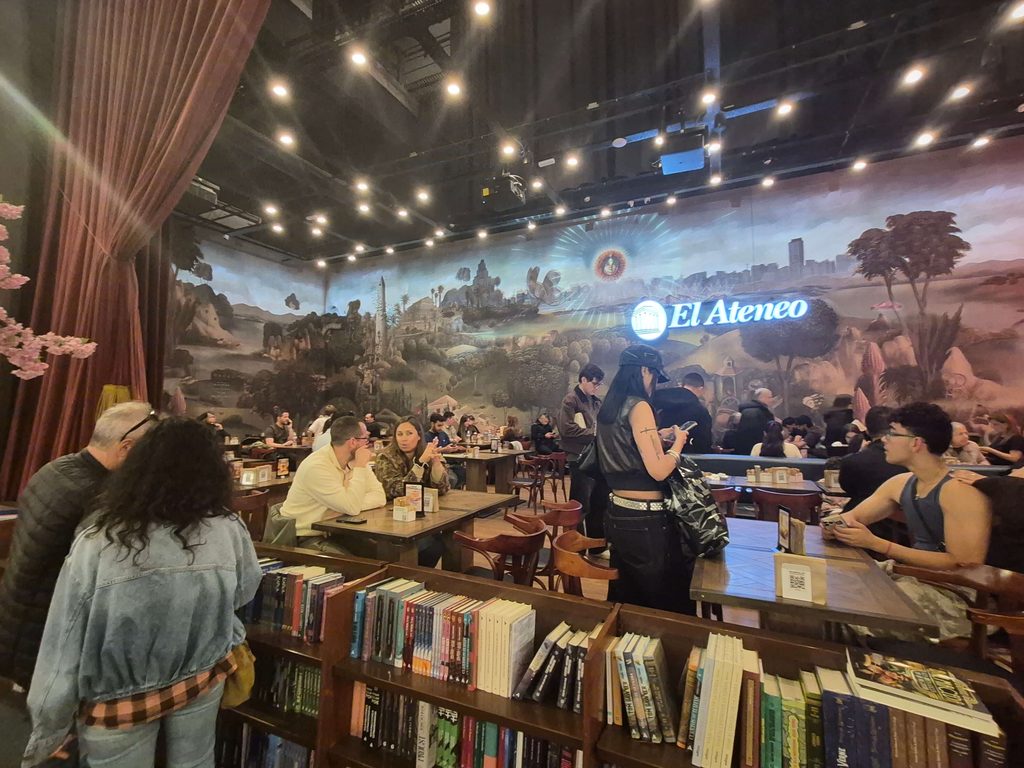
There’s a cafe right on the stage. I wanted to stop there, but it was very crowded and I wasn’t sure if I could get a seat after I ordered from the counter.
Teatro Colon
The Teatro Colón is a historic opera house which opened in 1857. It is considered one of the ten best opera houses in the world by National Geographic. According to a survey carried out by the acoustics expert Leo Beranek among leading international opera and orchestra directors, the Teatro Colón has the room with the best acoustics for opera and the second best for concerts in the world.
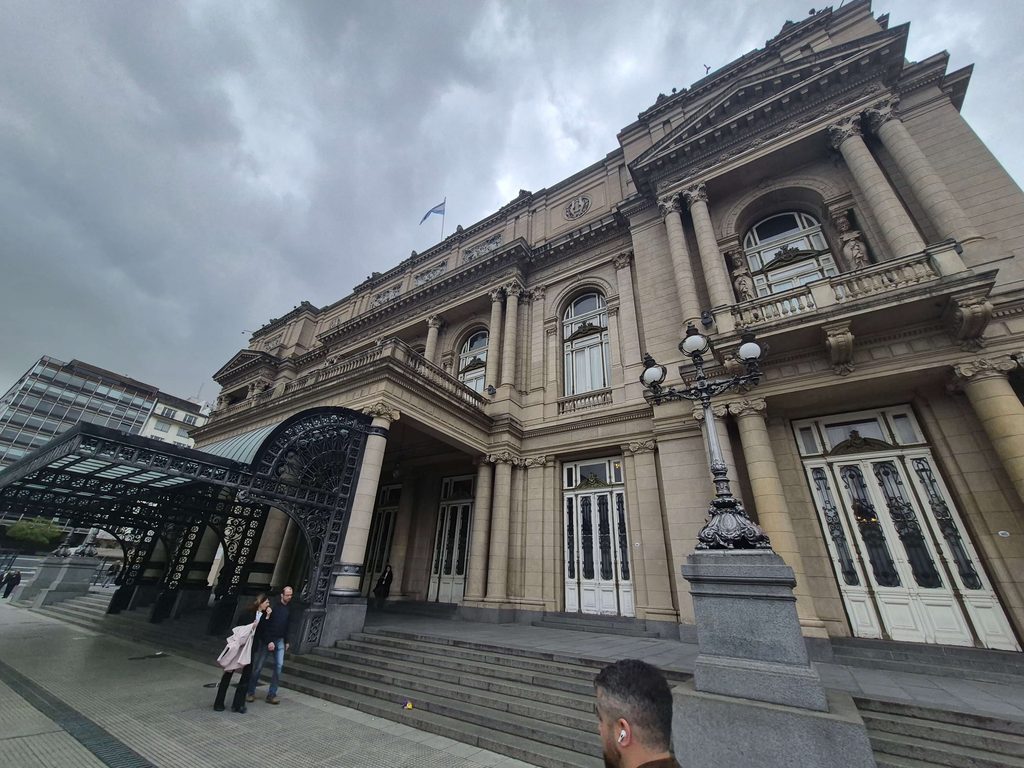
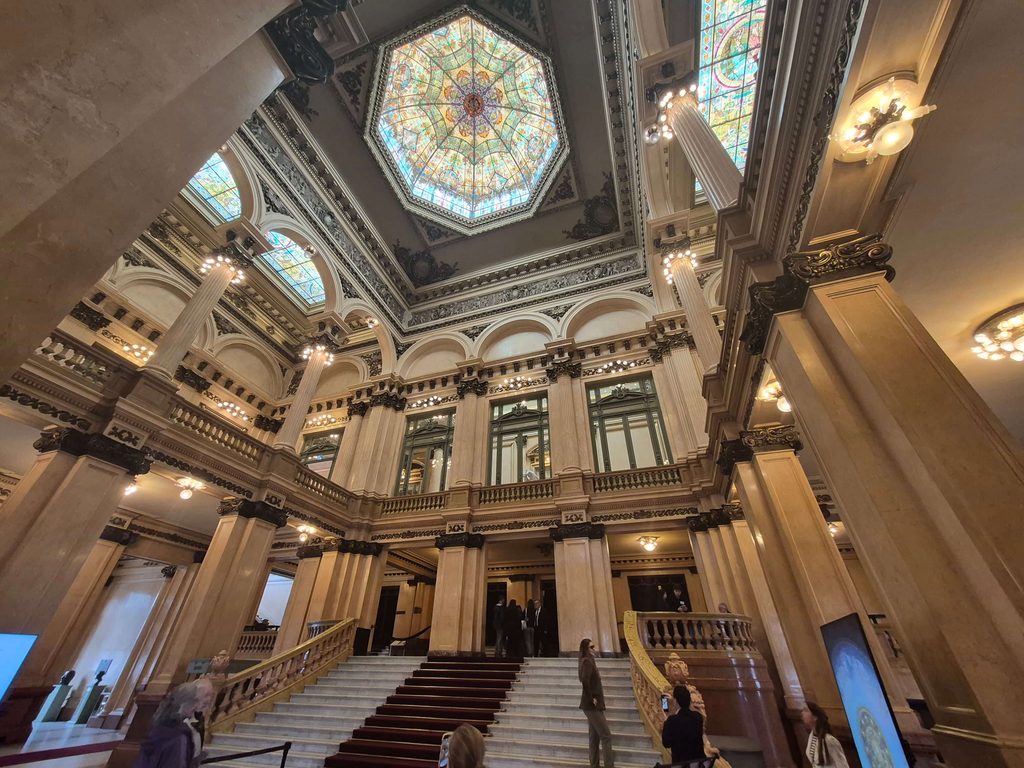
The English language tours were booked for the next two days when I visited, but the side lobby was exquisite.
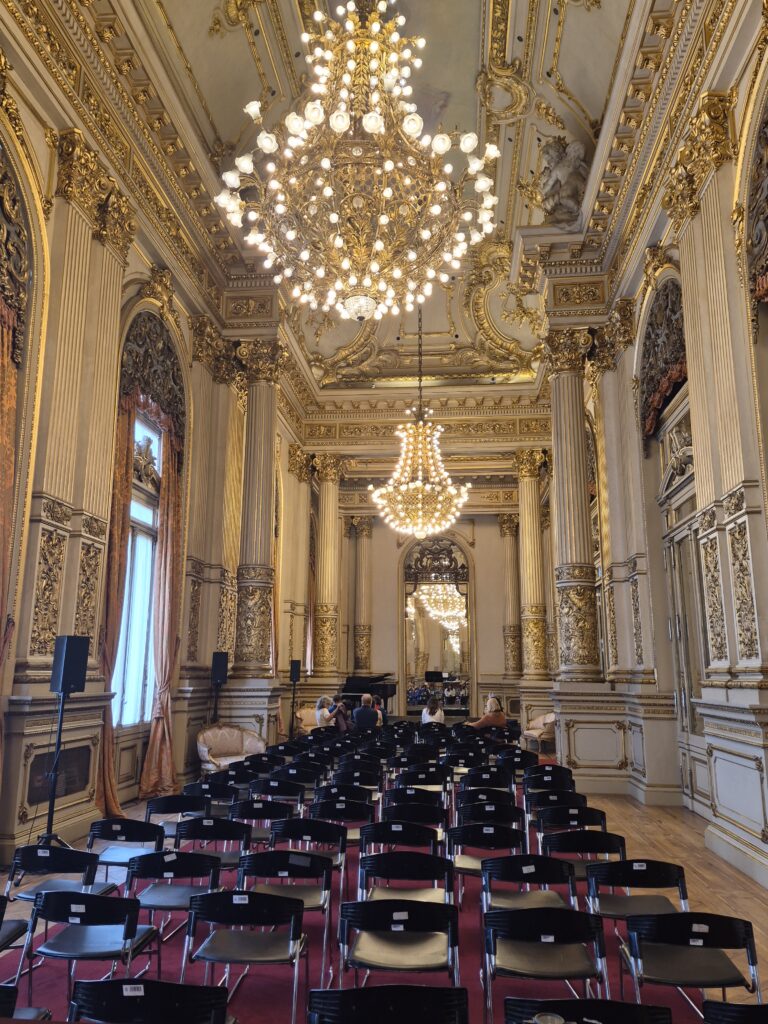
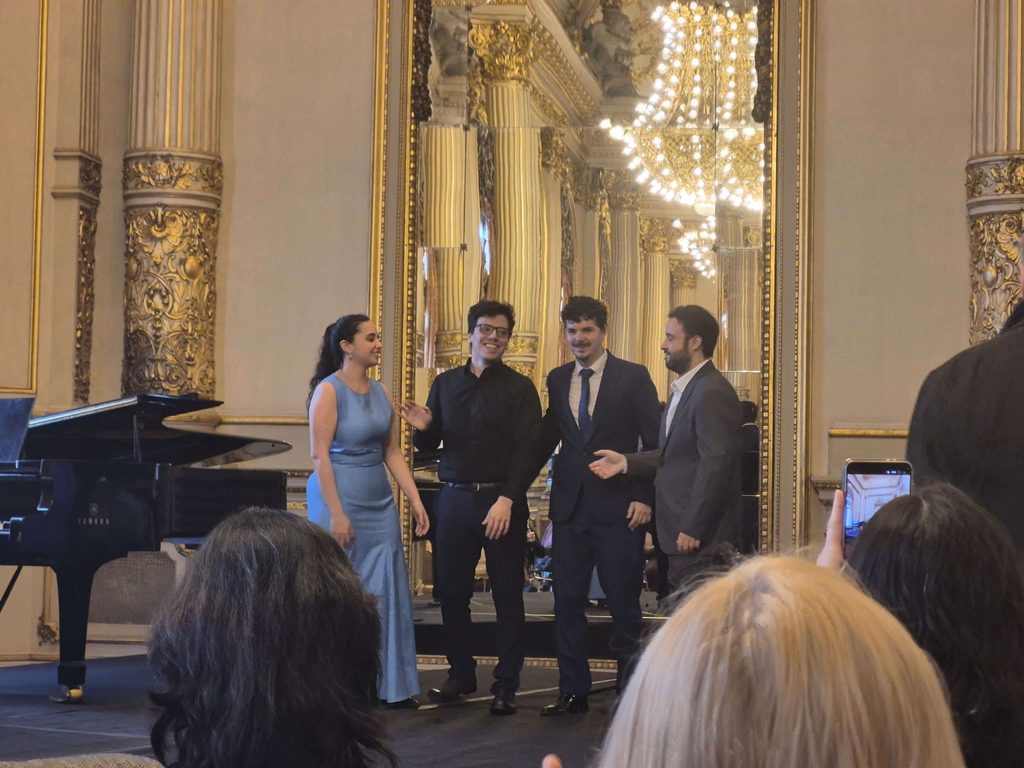
I did get a chance to get a ticket for a vocal chamber music recital by students from the Teatro’s music school. It was in an amazing side hall. The recital featured songs from Schubert, Beethoven, Ravel, and Barber.
The two students on the left played the piano and the two on the right were the singers. The pairs alternated between each set.
Casa Republica
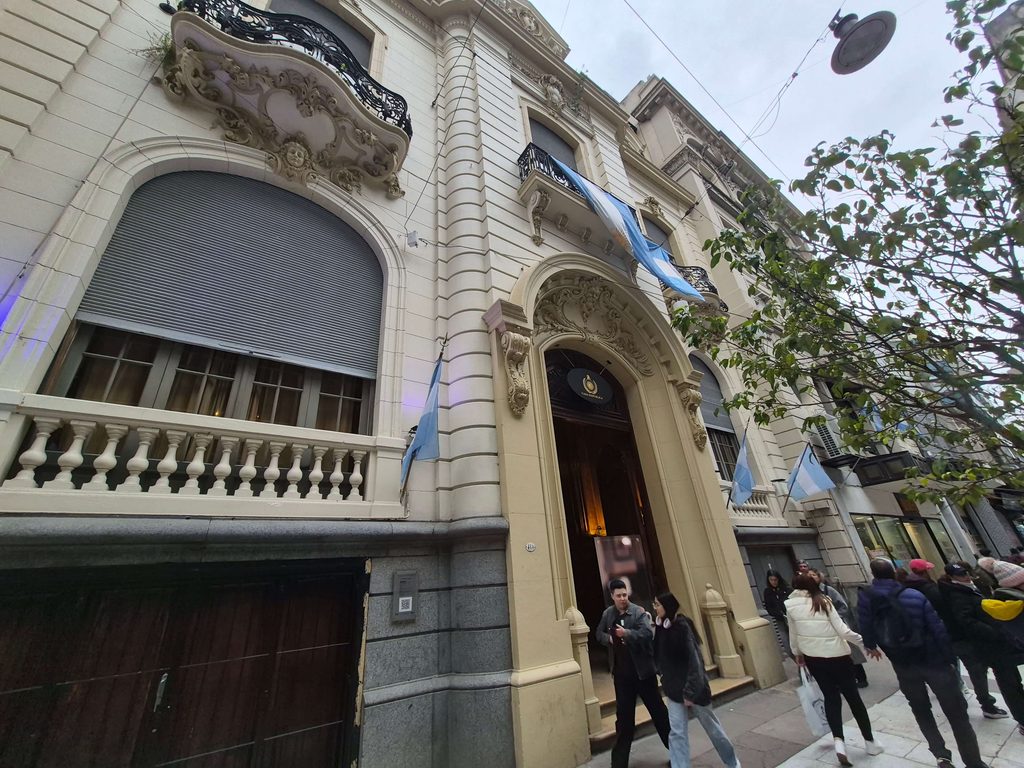
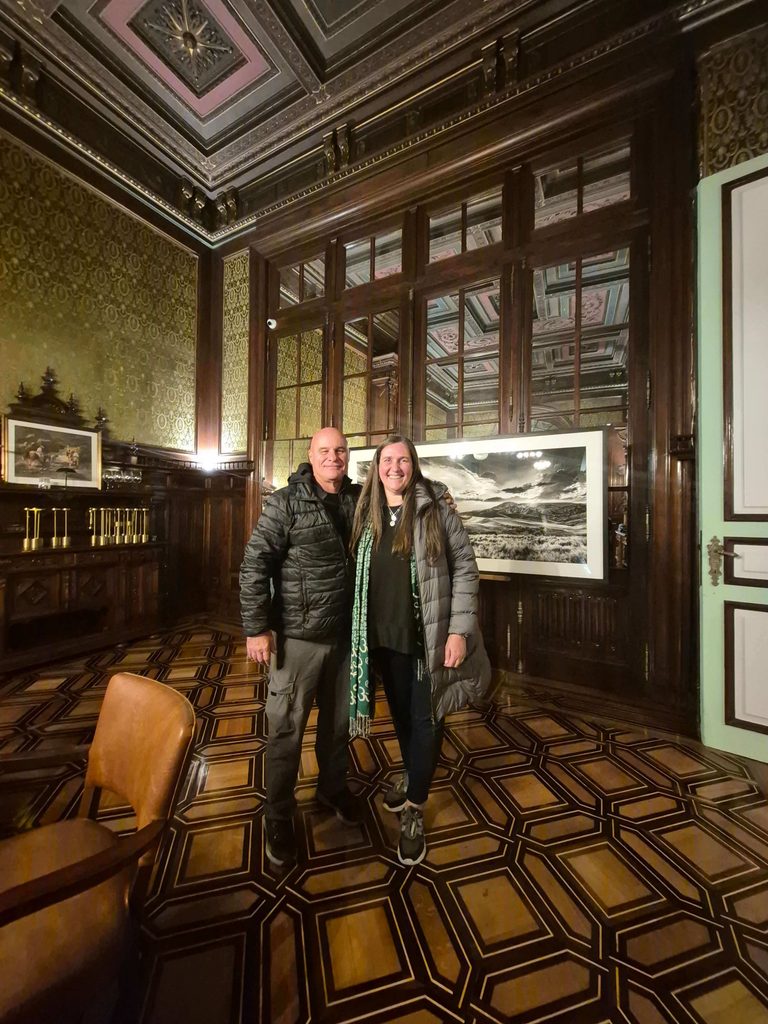
Palacio Pena was built in 1903 as a private family residence for the influential Peña-Blaye family, prominent members of the Argentine aristocracy. Following an extensive 15 month restoration, the landmark reopened to the public under the name Casa República in July of 2026, as a café and signature restaurant.
I had a friend in Buenos Aires suggest we meet there as she hadn’t seen it yet herself. They were even doing formal tours of the upstairs former residence areas. The outside was clean and dignified.
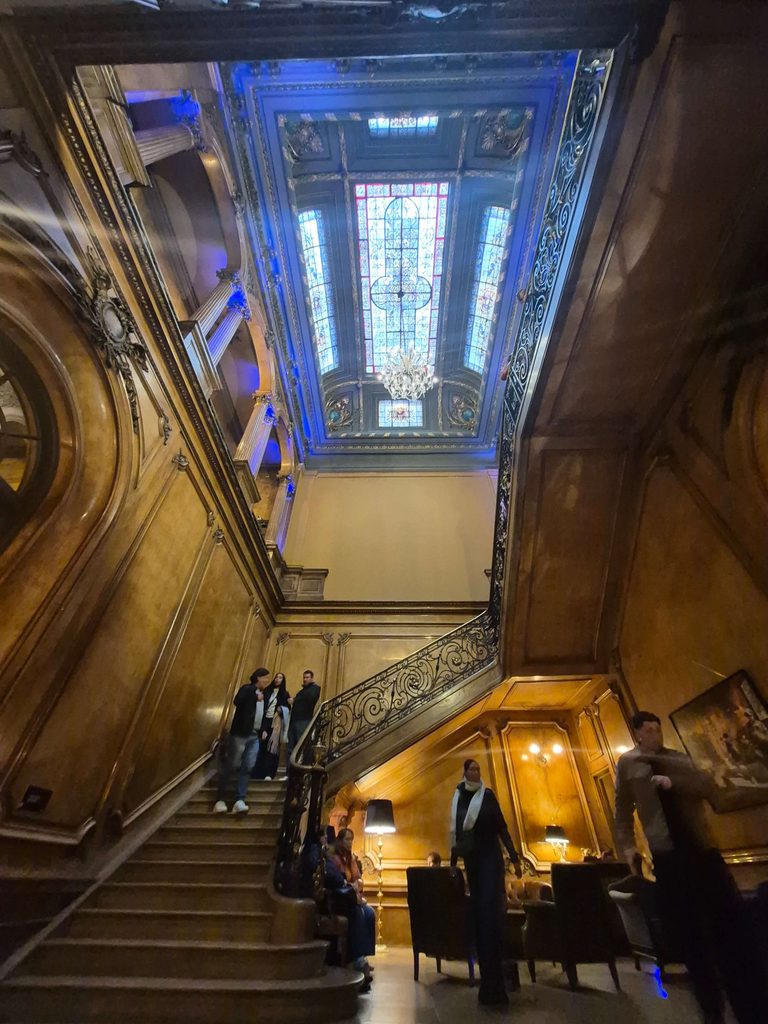
The interior foyer was magnificent.

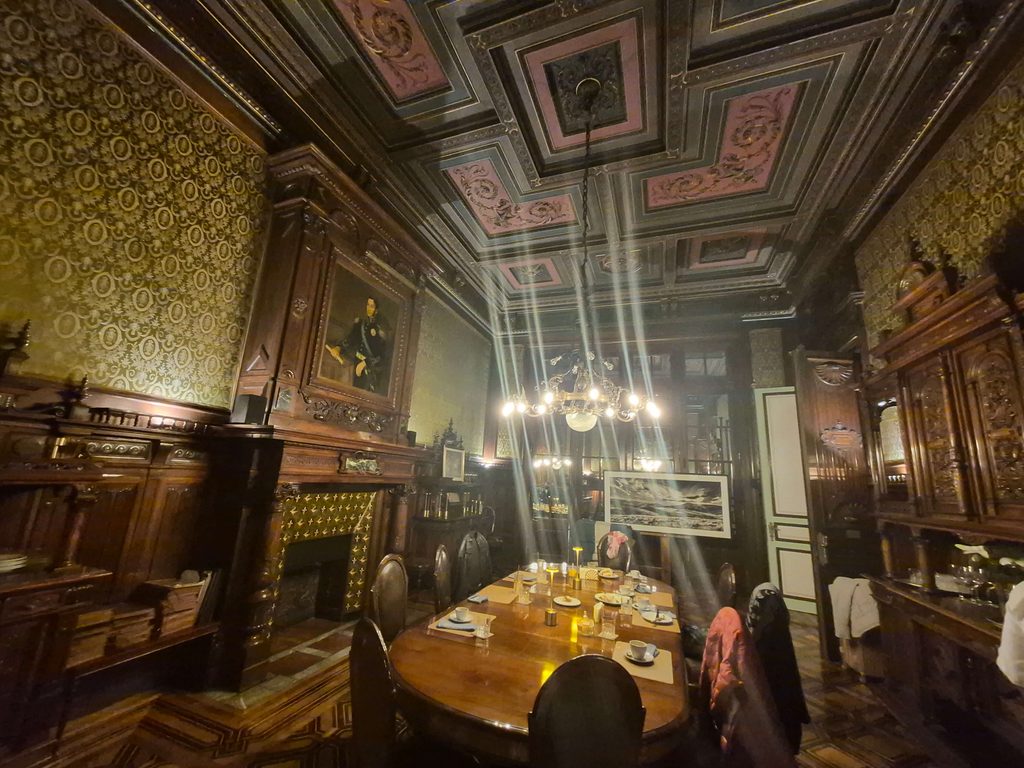
Since we met at 5pm, the main dining rooms weren’t officially opened yet, but we could get a picture. Here is a side dining room. We ended up having a wonderful “light” meal in the cafe area.
As we were leaving the main dining room was just opening and seating people.
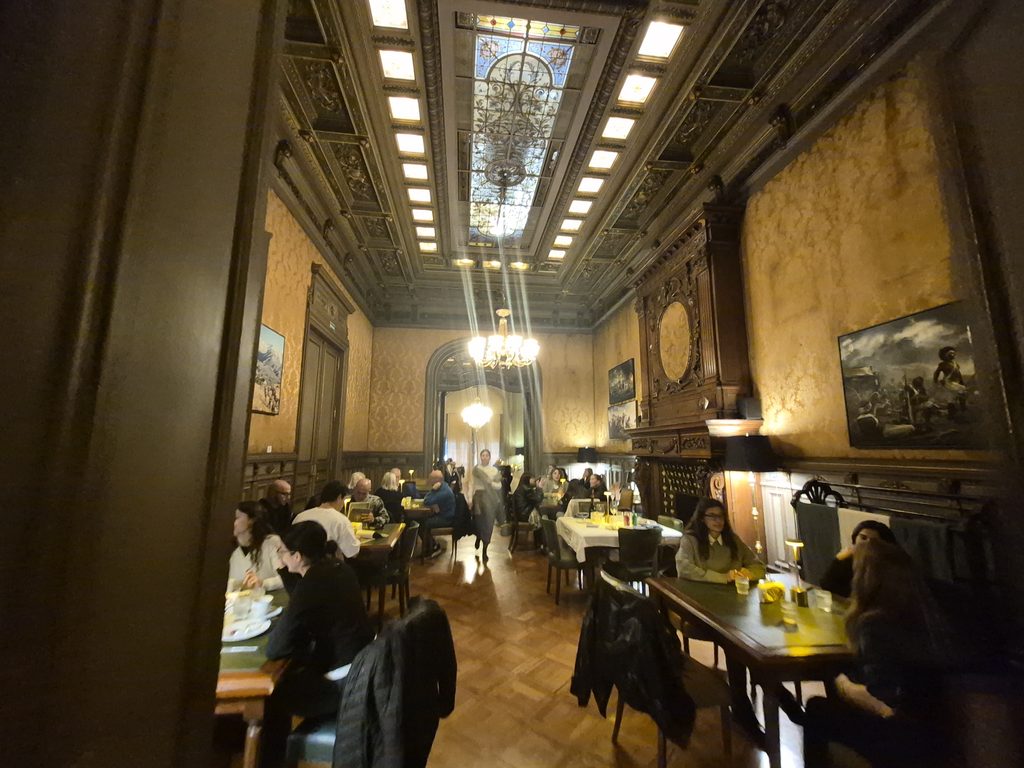
Here we are in one of the other side dining rooms.
Galerias Pacifico
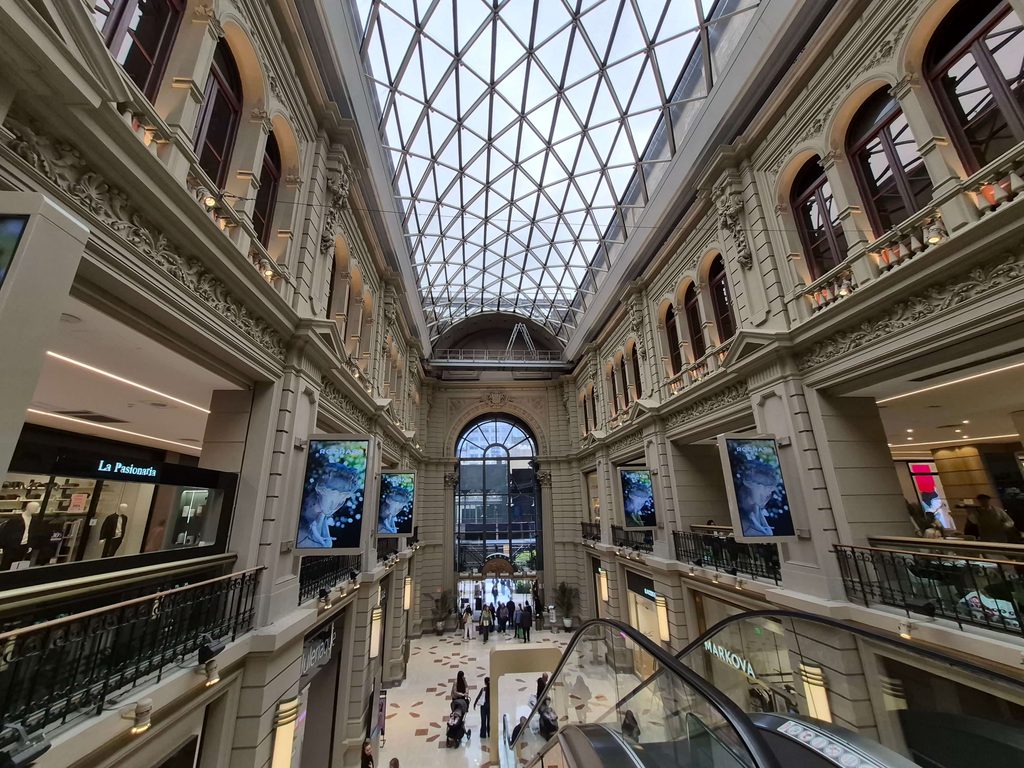
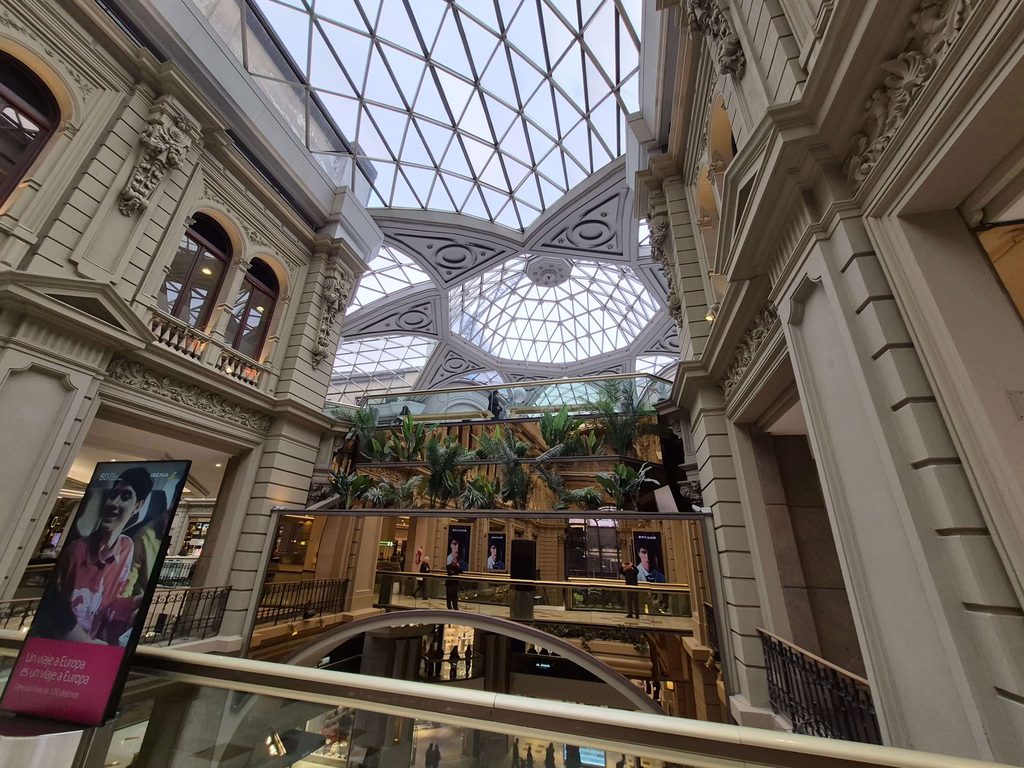
The Beaux Arts building Galerias Pacifico was designed in 1889 to accommodate a shop called the Argentine Bon Marché, modeled on the Le Bon Marché in Paris. It’s now a normal shopping mall within an amazing setting. It’s one claim to shame was in 1987, a film crew uncovered an abandoned torture center in the basement of the building that had been used during the Argentina’s infamous Dirty War.
Confiteria Ideal
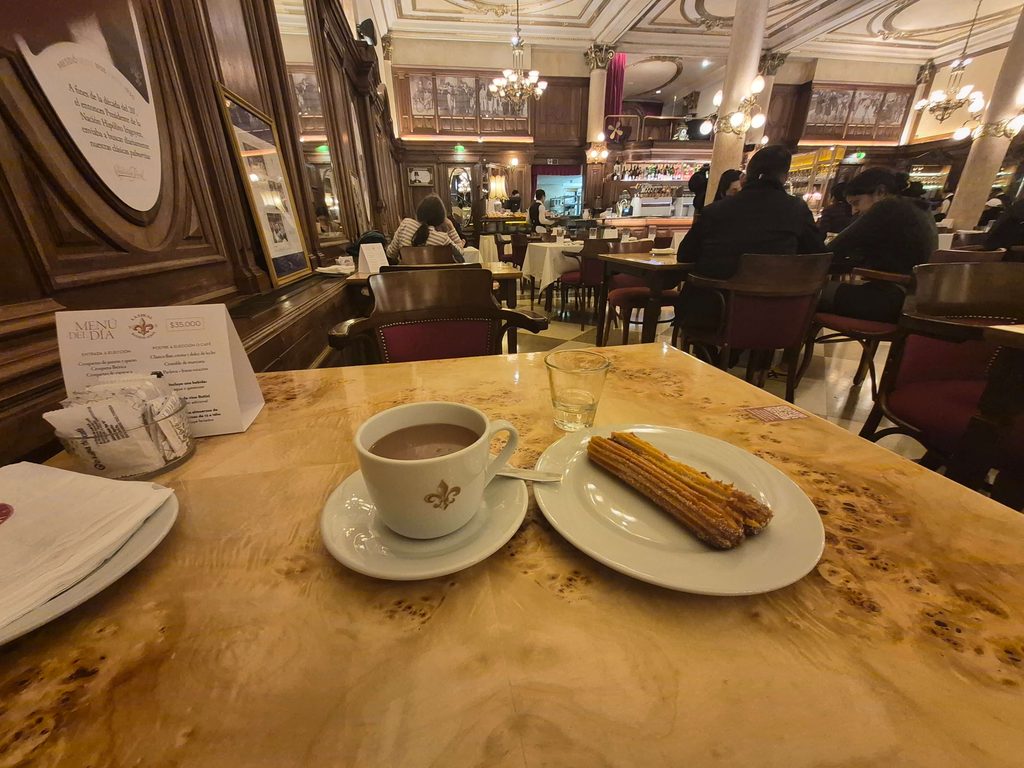
Another afternoon in Buenos Aires and another beautiful cafe/restaurant. This one, Confiteria Ideal was started in 1912, closed in 2017, and then reopened with a complete refurbishment in 2022.

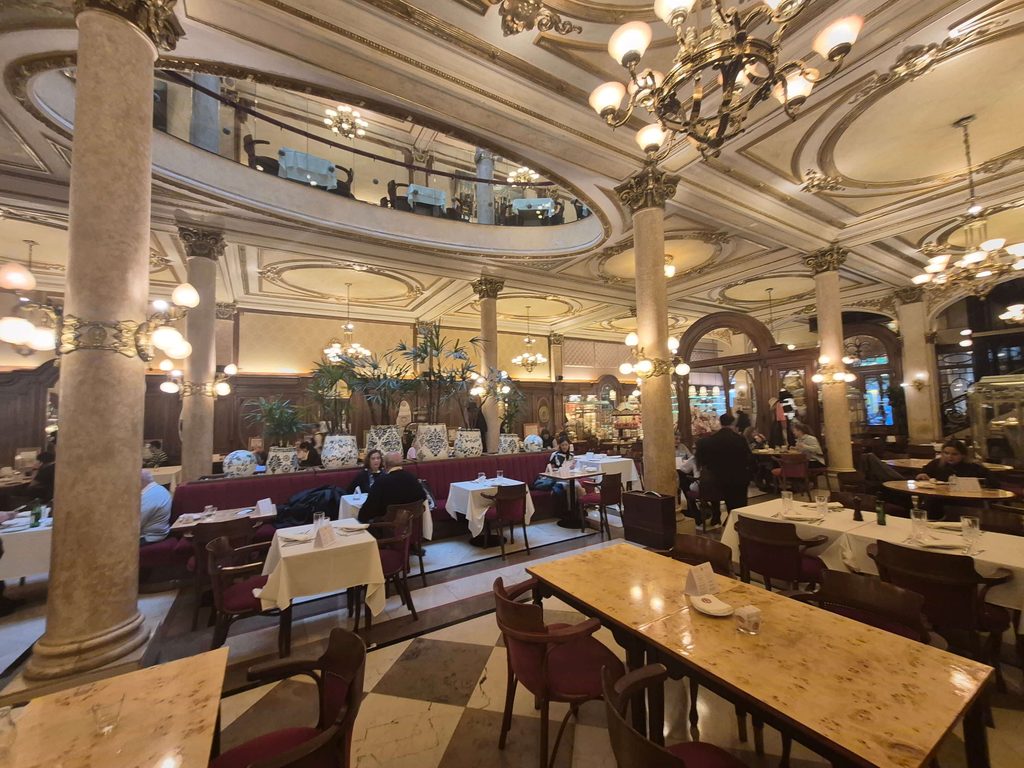
Everything you consume or buy at La Ideal is made in-house: it has its own bakery, kitchen, pastry shop and chocolate shop. I kept it simple and had a rich hot chocolate and two really soft churros.
Music
There were a number of musical acts that came through Buenos Aires while I was there but the logistics weren’t right or the price/value ratio just wasn’t good enough. But none of that mattered, because I did see this wonderful group.
La Bomba De Tiempo
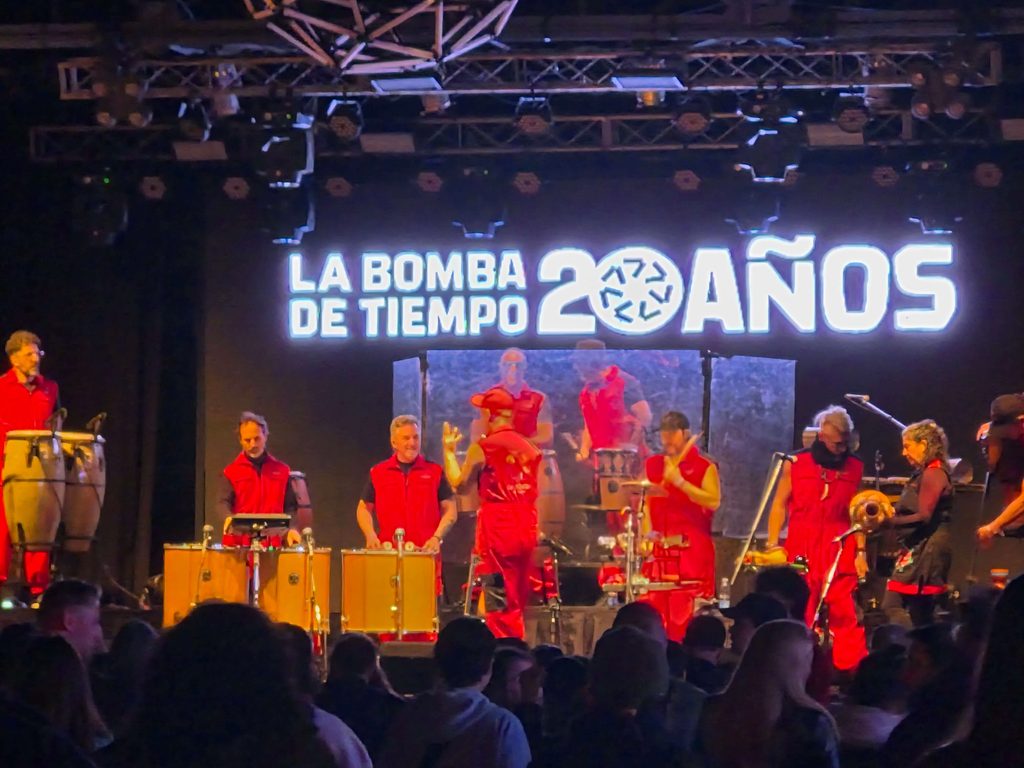
Starting in 2006 La Bomba De Tiempo (The Timebomb) has become a Buenos Aires institution. Every Monday night at the Ciudad Cultural Konex they perform a two hour improvisational drum extravaganza.
Each show is unique. They rotate through band members acting as conductors and each uses their system of “ritmo con señas”—which translates to something like “rhythm with signs”—a sign language with over 100 signals designed explicitly for conducting musical compositions in real-time. And they continually make it up as they go for the entire two hours.
Despite the fact that they have opened for bands as diverse as Santana and Coldplay, they don’t travel much. Their primary aim is to “bring joy to Argentina”. And as the videos below show, they do so with gusto!
On many nights, about half way through the show, they bring on a local band to perform with them. The night I was there it was Mamita Peyote, a locally famous reggae/ska/funk band from Messi’s hometown of Rosario. They played three songs.
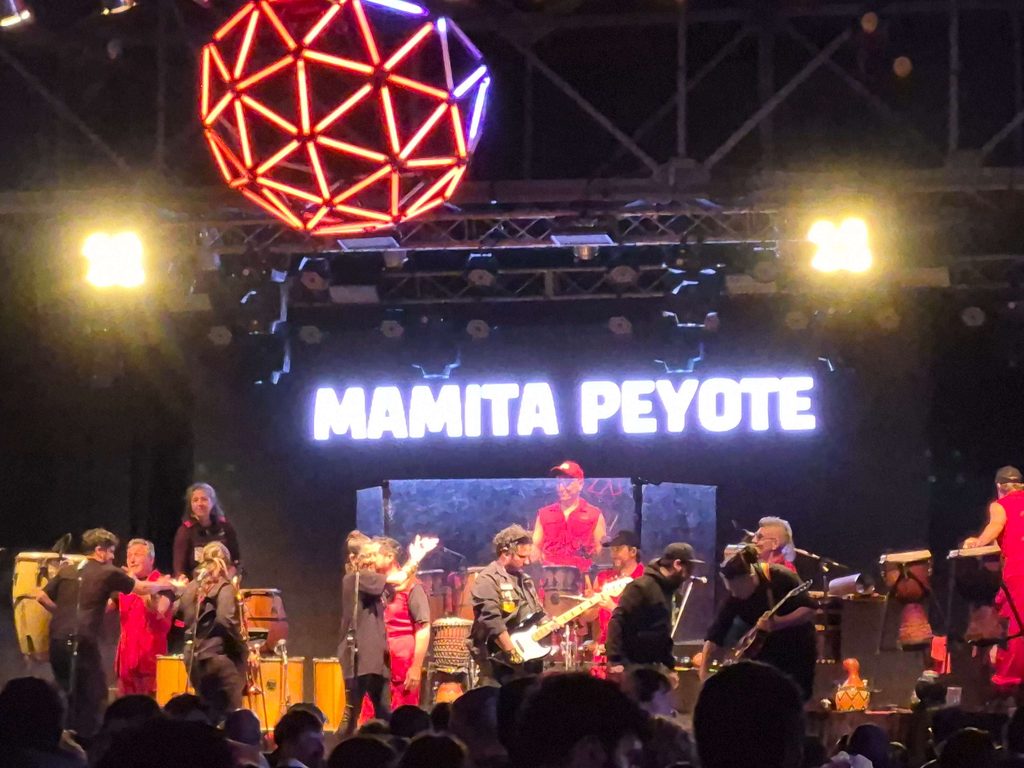
And then La Bomba continued on with their penetrating, pulsating percussion production.
Gaucho Culture
I spent a day outside Buenos Aires getting a small taste of Argentina’s gaucho culture.
San Antonio
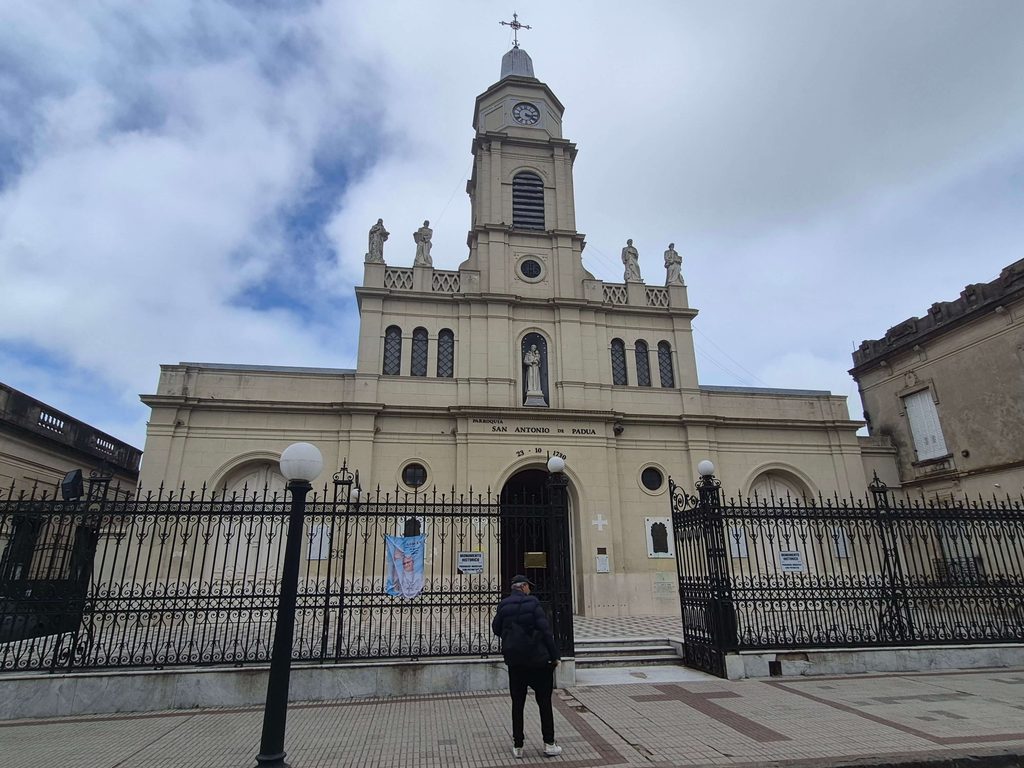
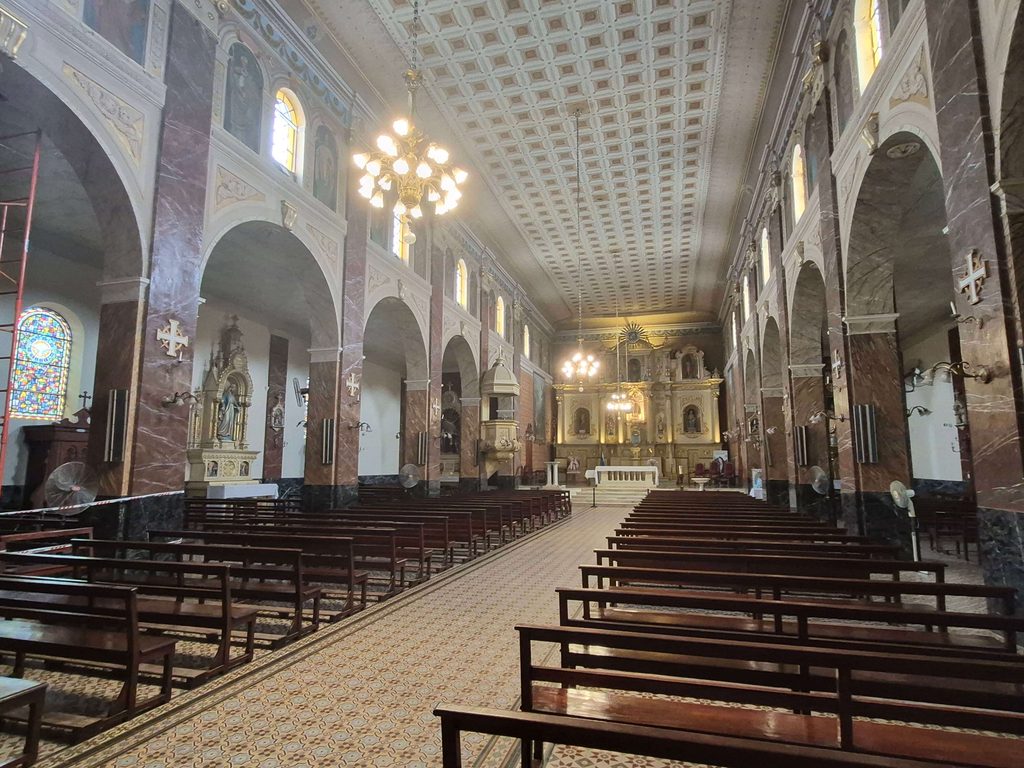
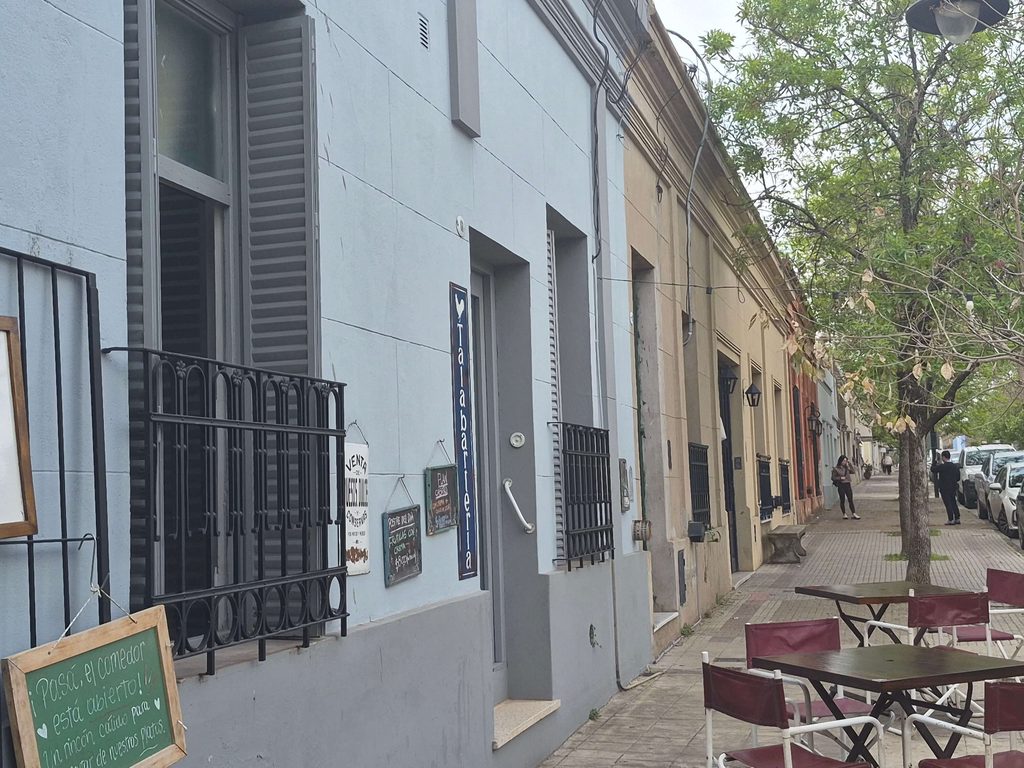
The first, rather quick, stop was the town of San Antonio. It is known as the cultural heartland of gaucho and was founded on October 23, 1730. It really hasn’t changed much over the last century and is known for it’s relaxed lifestyle, cobblestone streets, and gaucho inspired artisans. The center of the town is the simple San Antonio de Padua church.
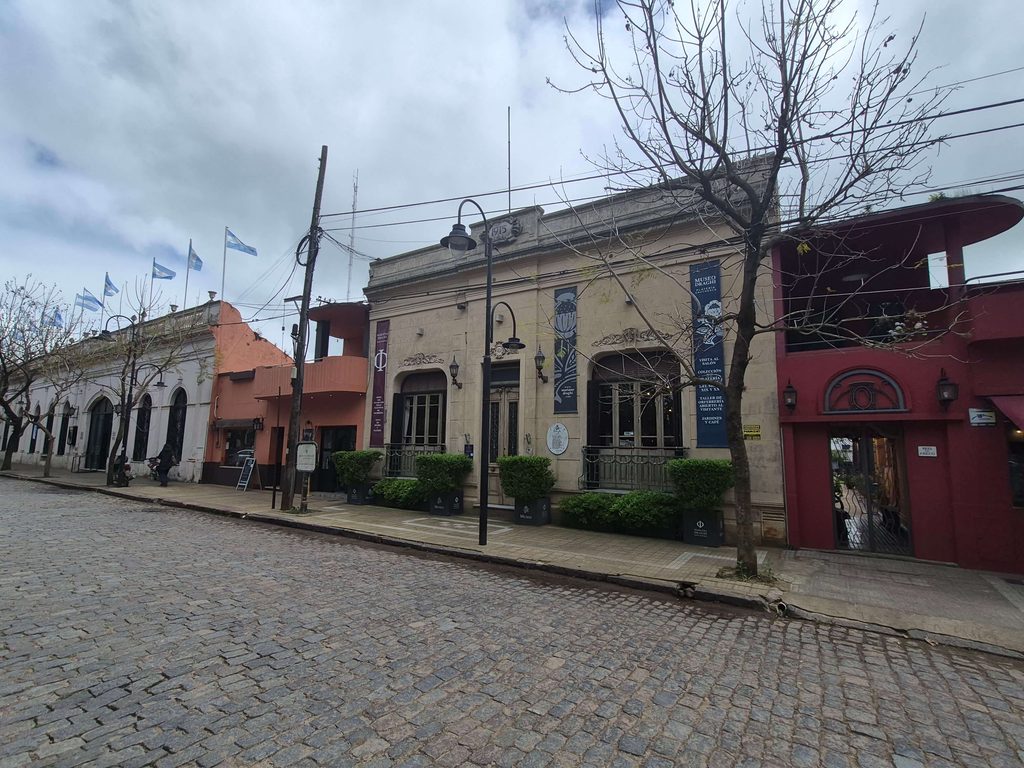
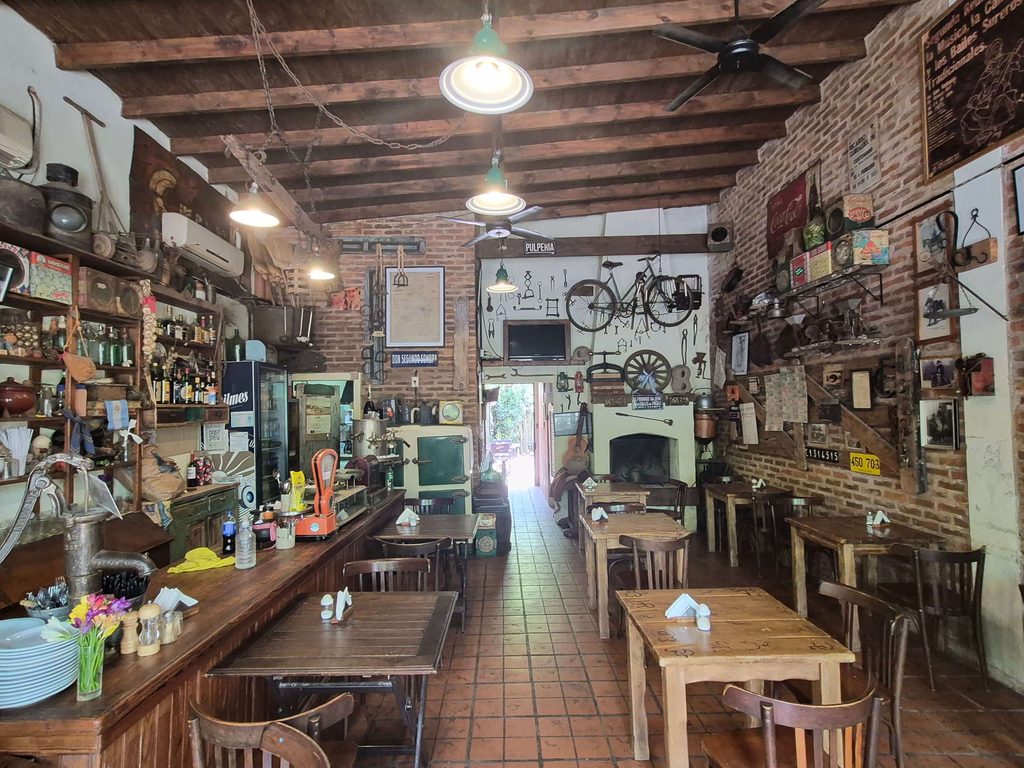
A local pulperia (traditional country store and bar) in the heart of the city.
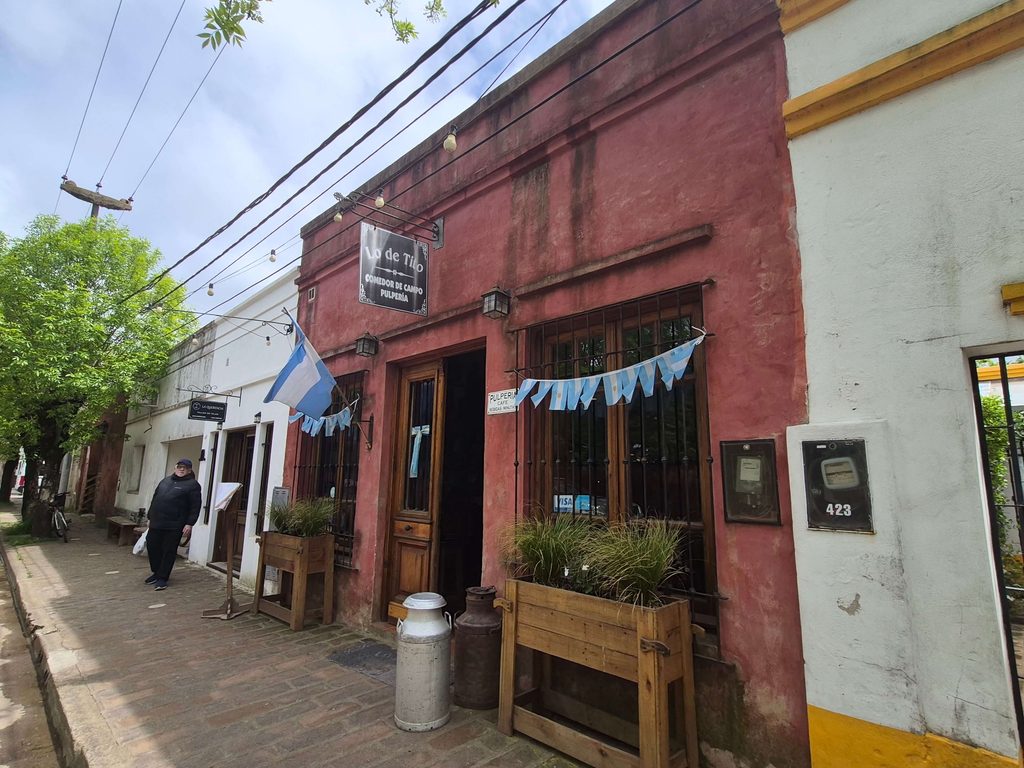
Stepping inside you can see the small restaurant and all the artifacts of gaucho culture.
El Ombu de Areco
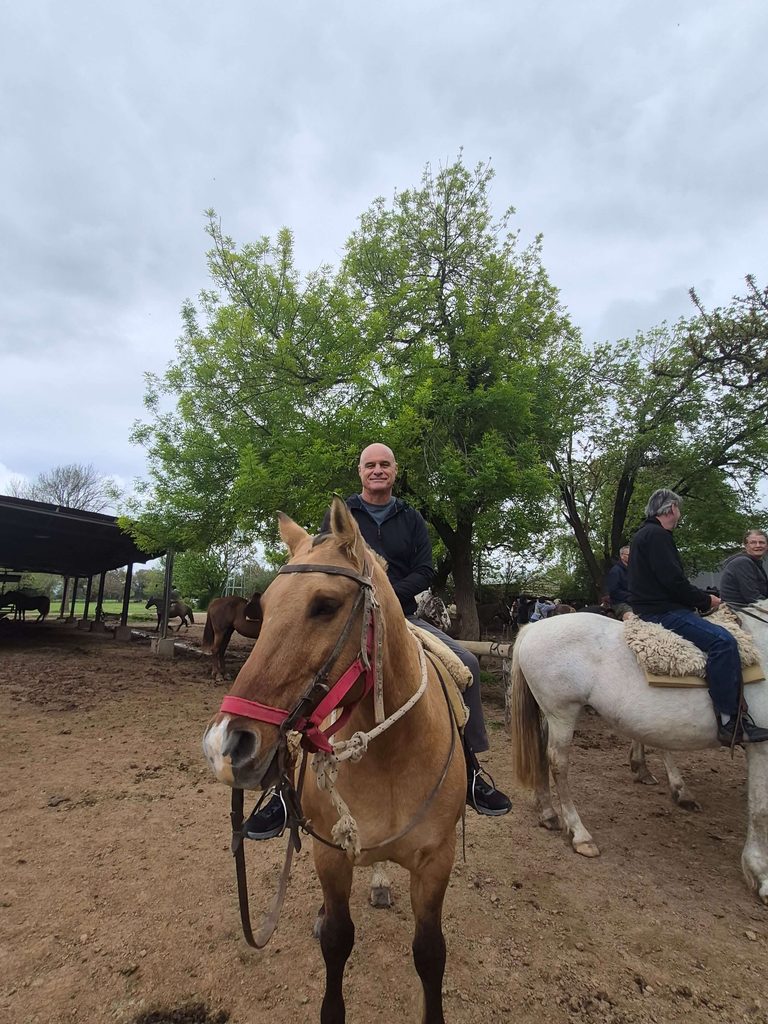
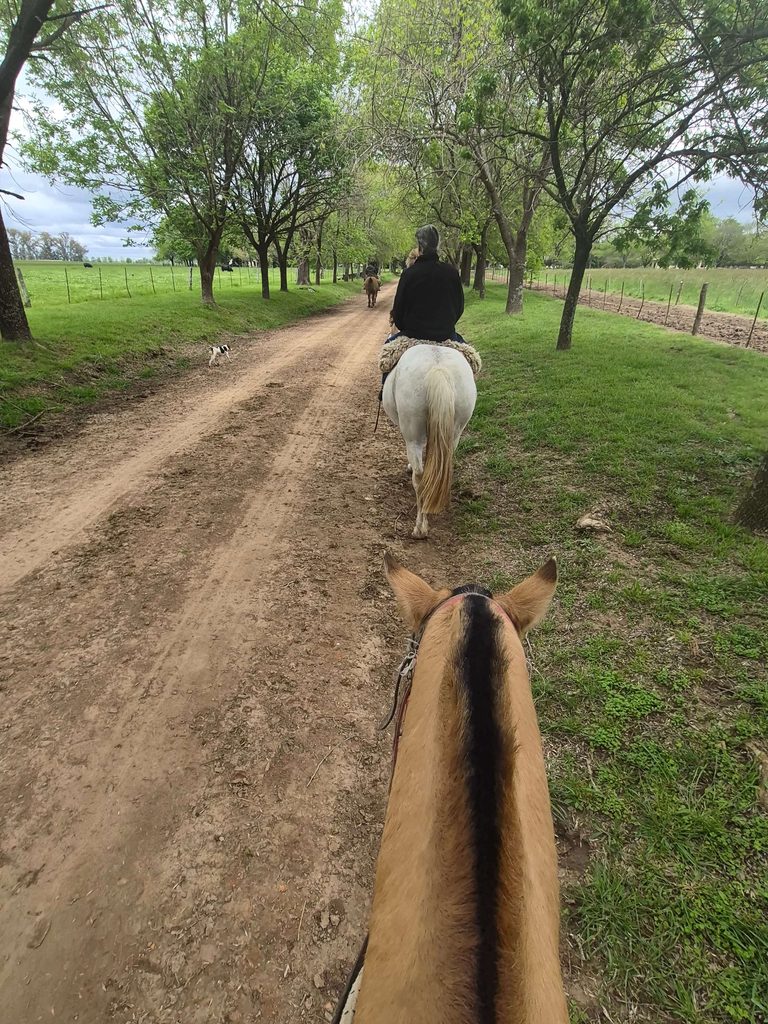
The main part of the trip was to visit the working ranch called El Ombu. Since this was gaucho country we started out with a wonderfully peaceful 30 minute horse ride through part of the ranch.
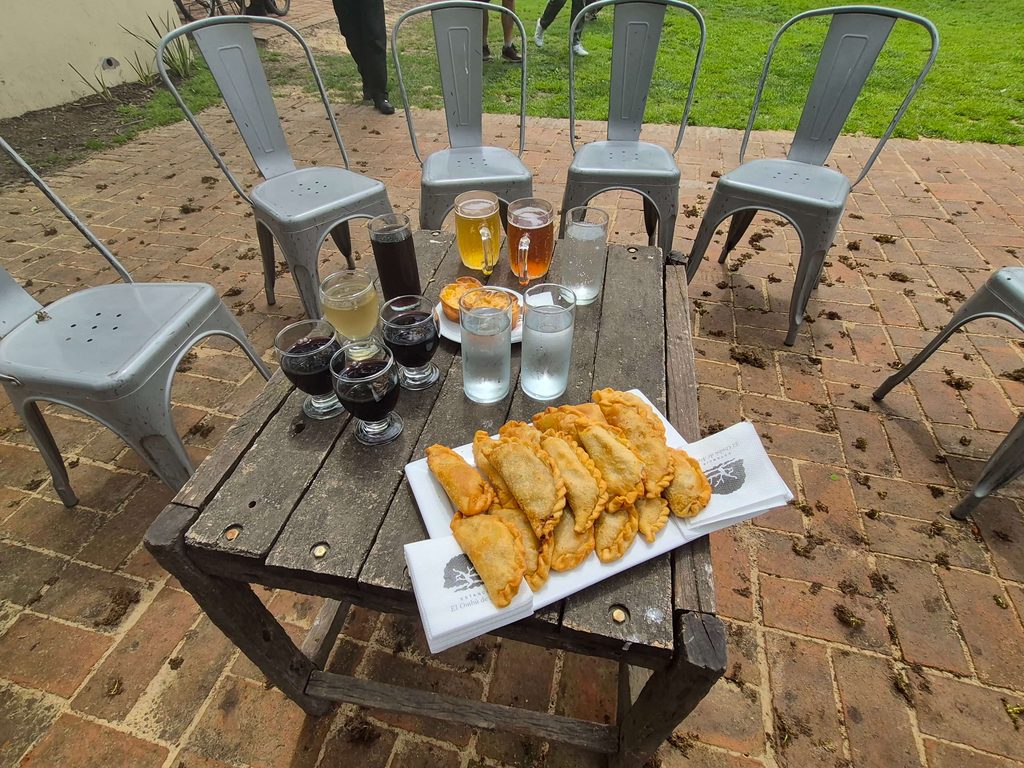
We then had some appetizers of fresh, soft empanadas and wine.
We took a quick tour of the rustic oven area.
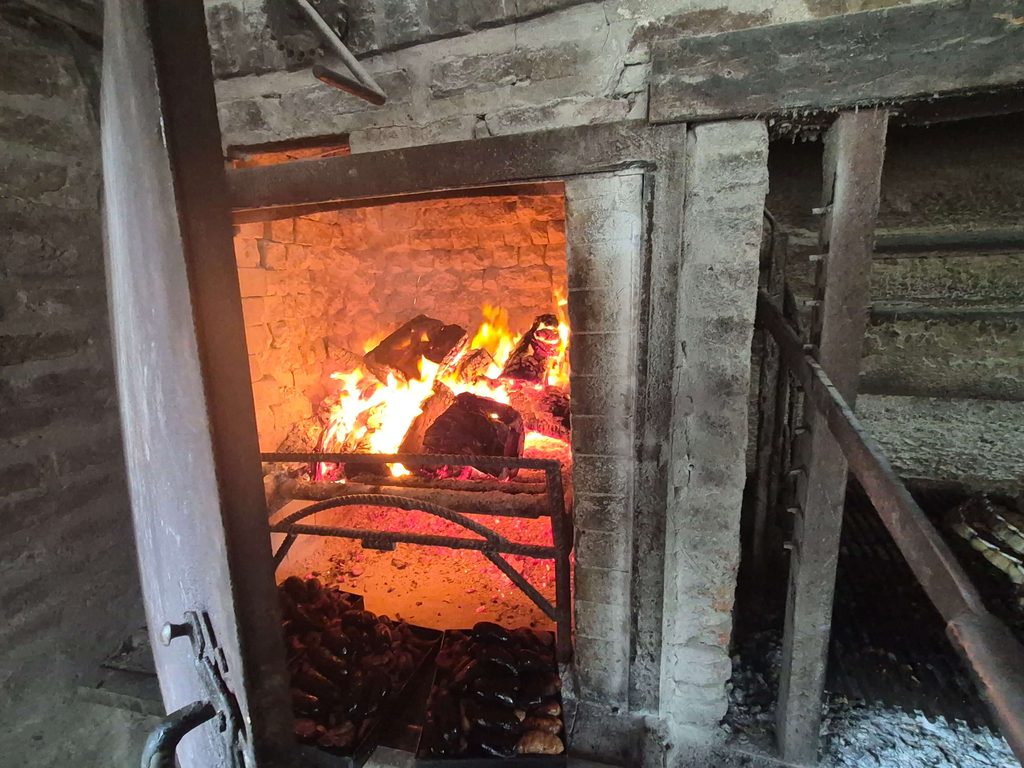
And then had a huge meal of steak and wine, where they kept bringing by plate after plate of different types of meat.
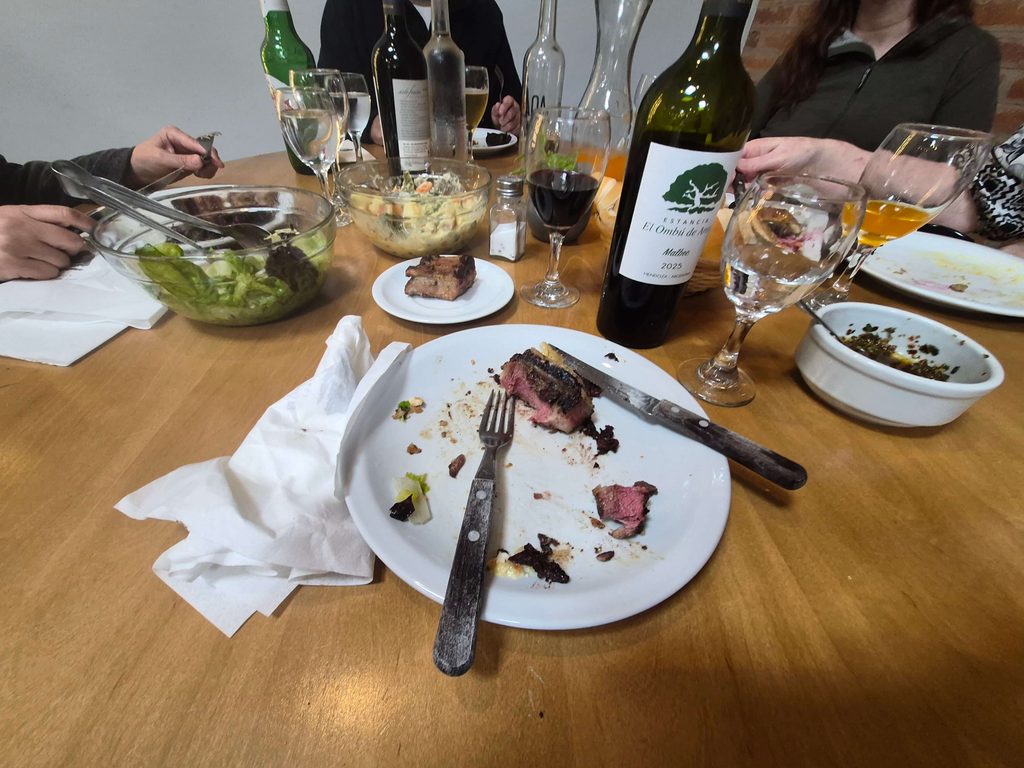
After this huge lunch we relaxed and watched some traditional dancers go to work.
Finally, an amazing horse whisperer showed off his incredible partnership with a very responsive horse.
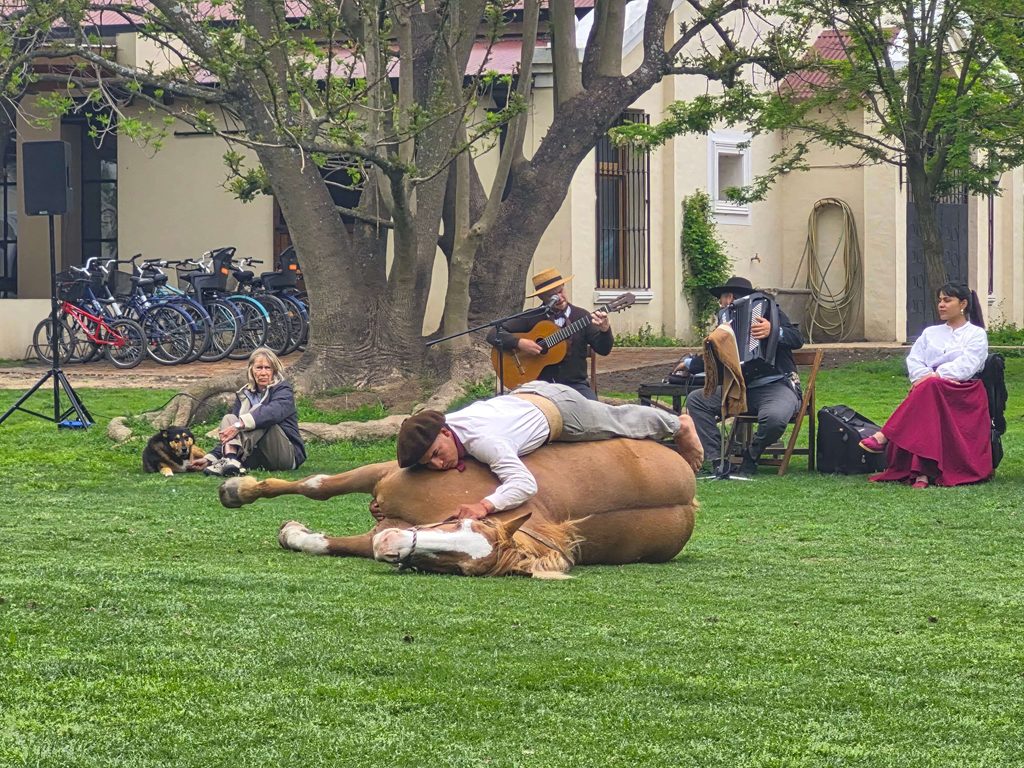
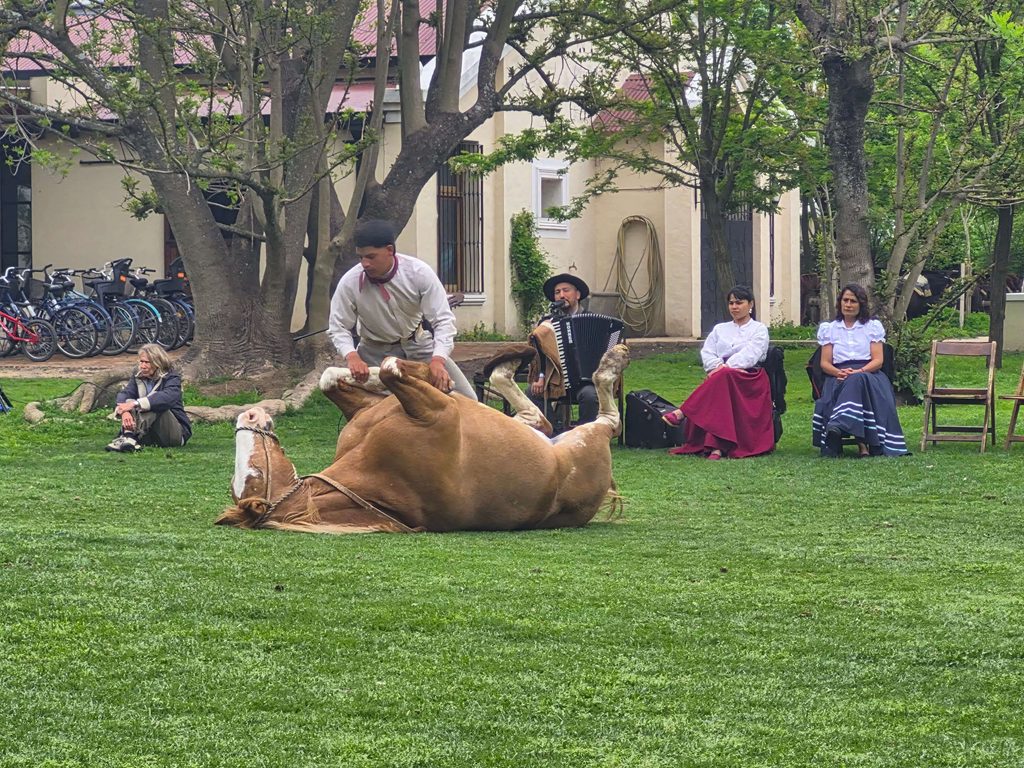
It was a nice day to take a break from the urban setting of Buenos Aires.
Street Scenes
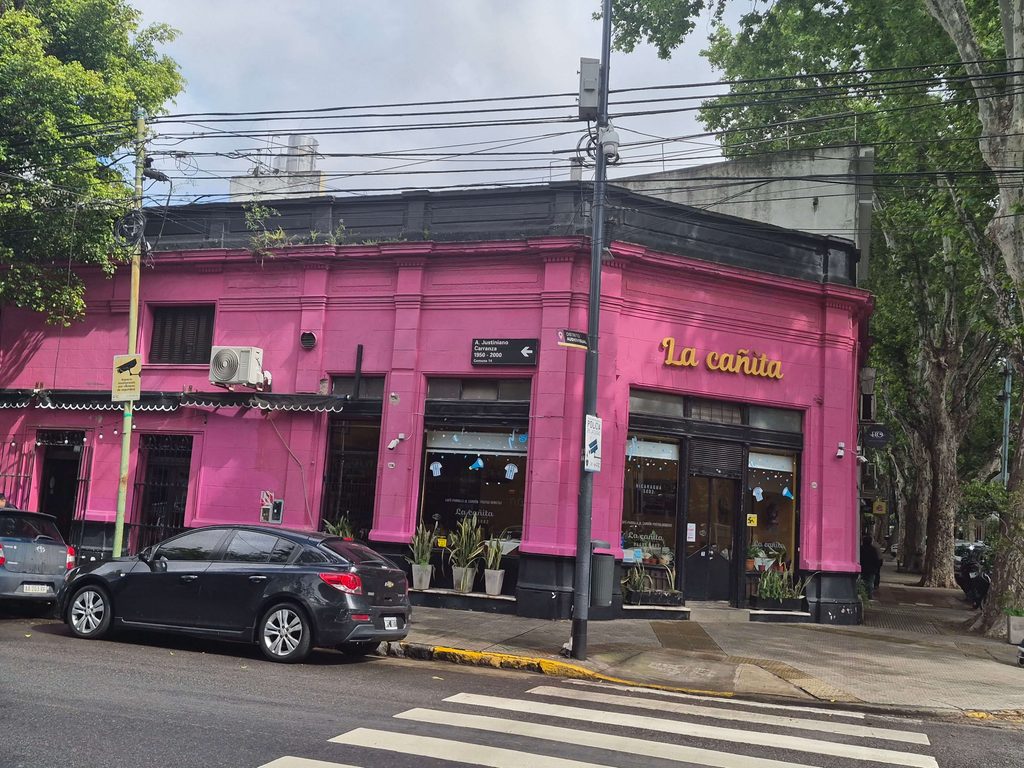
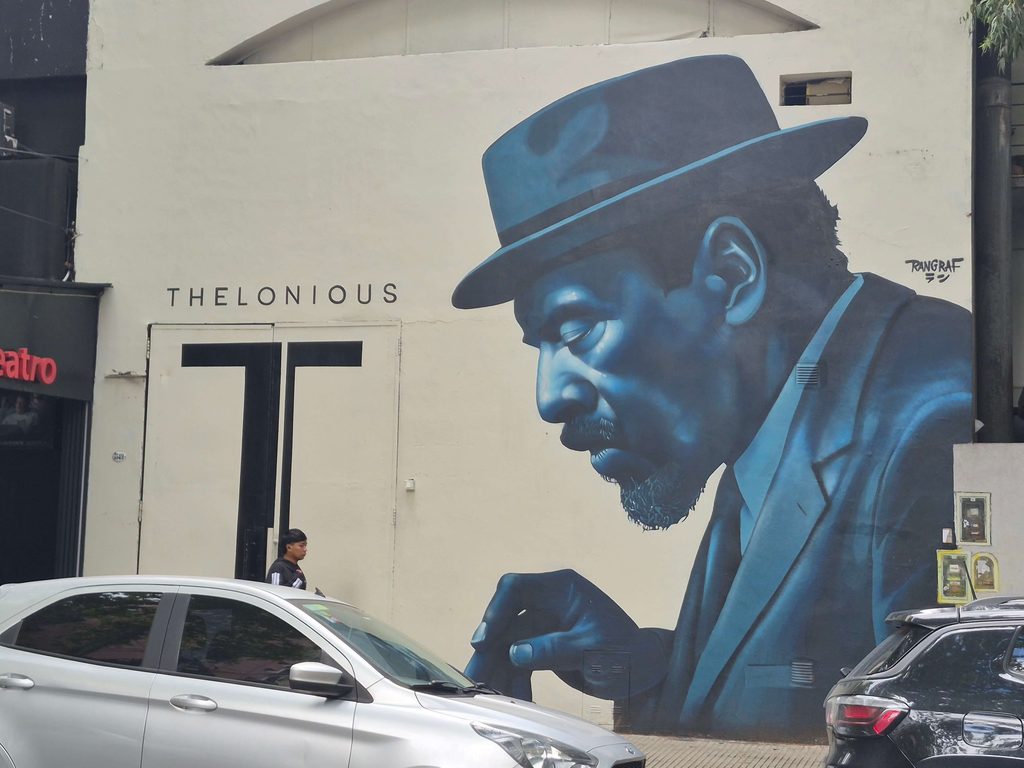
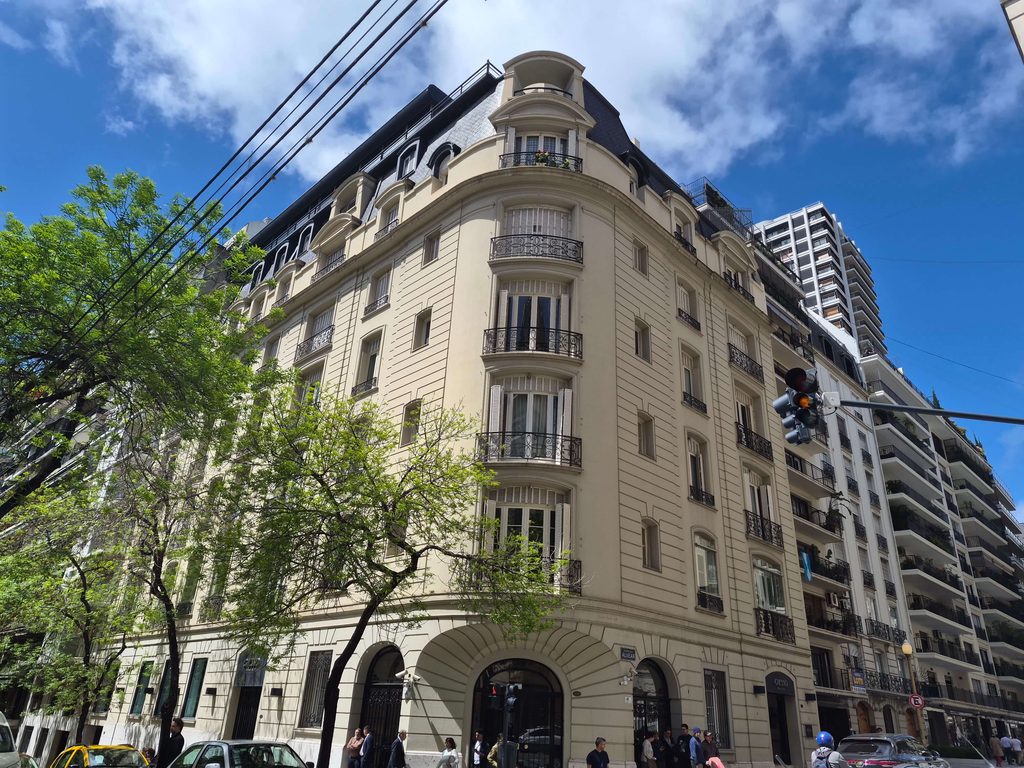
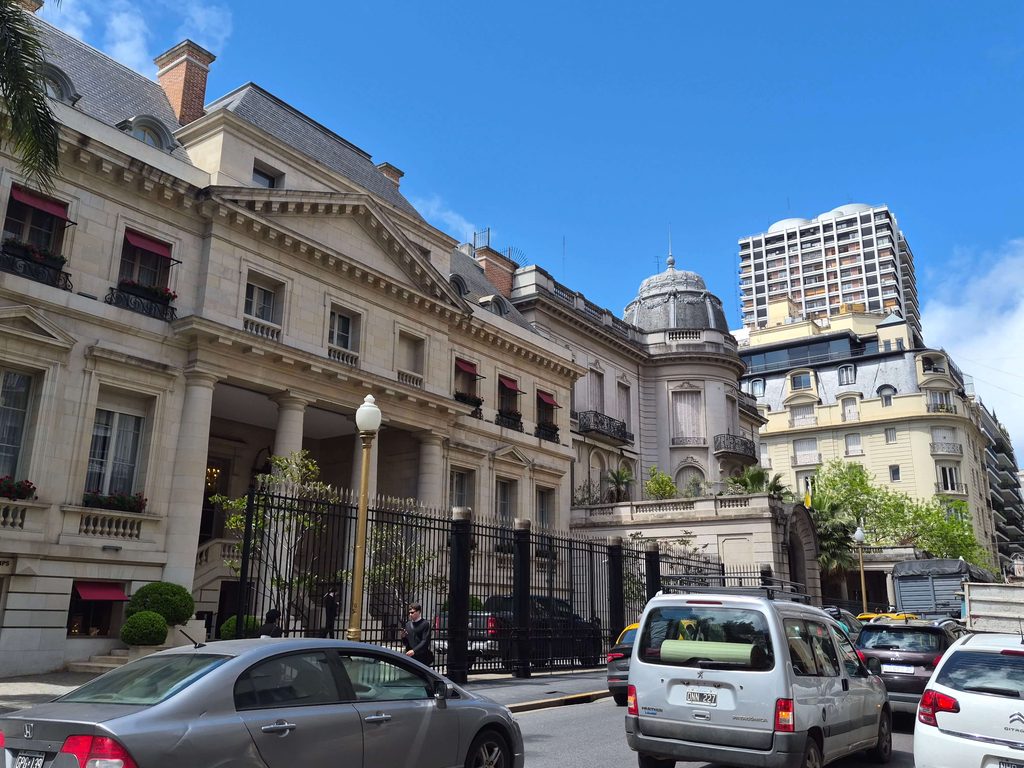
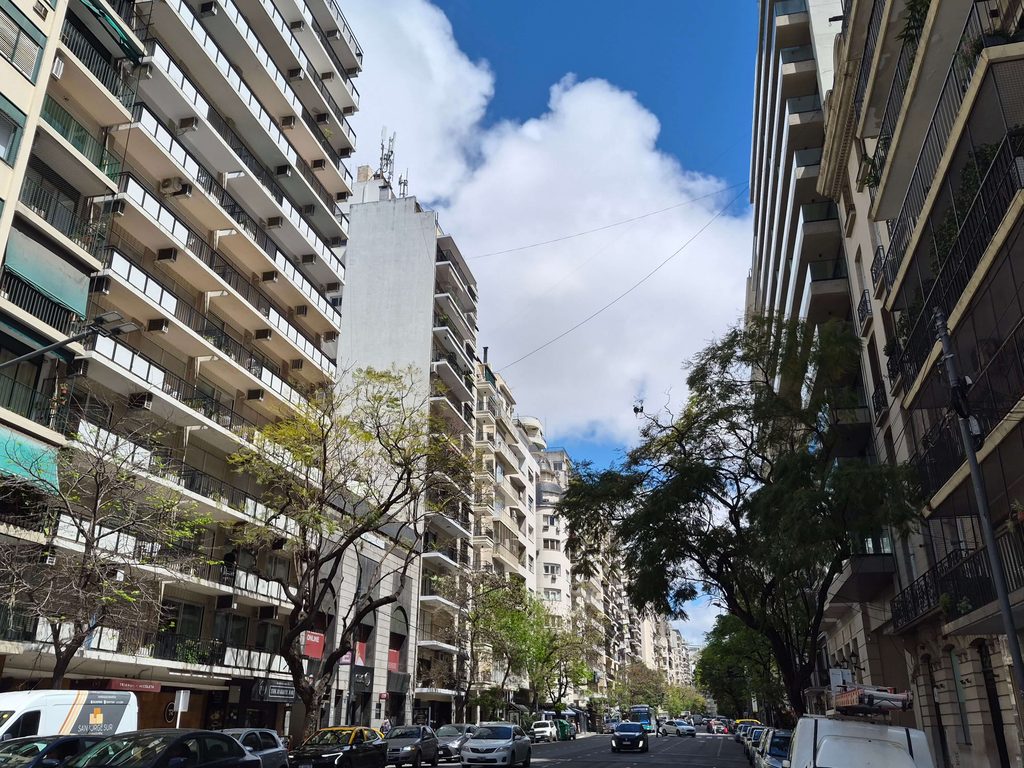
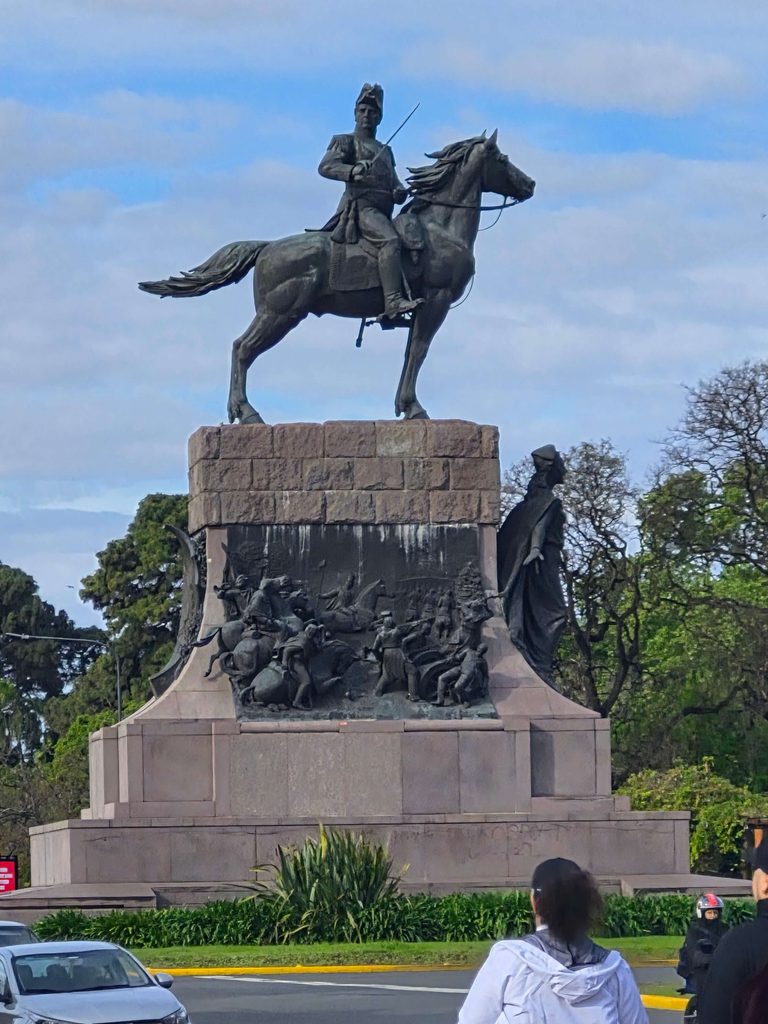
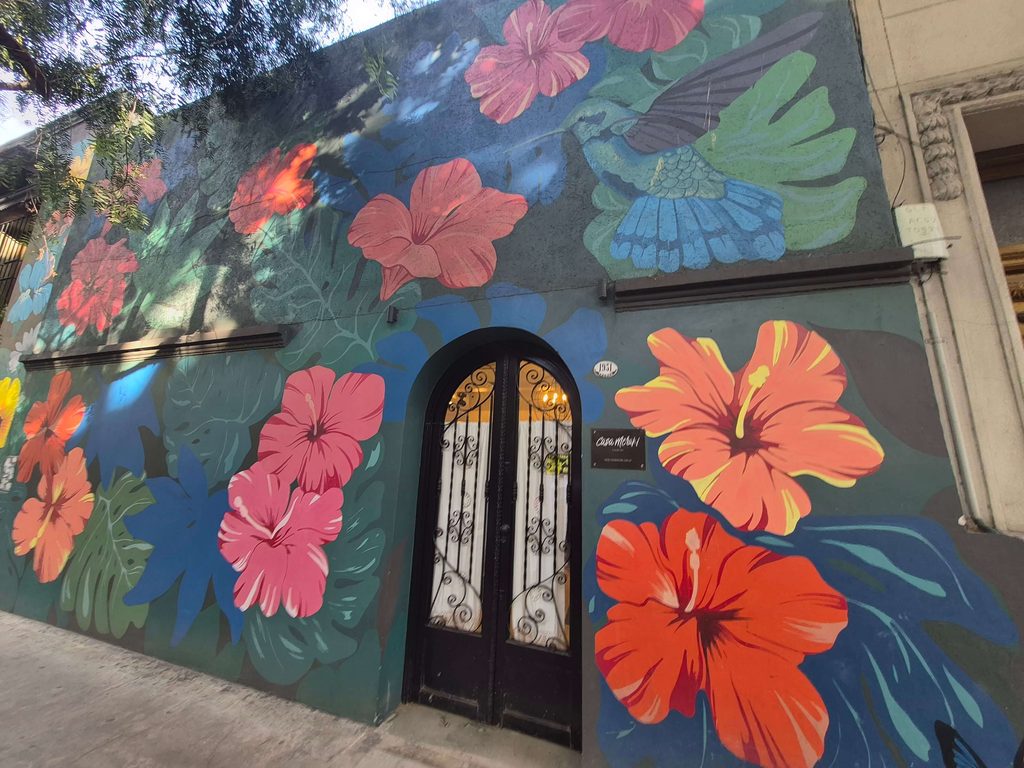
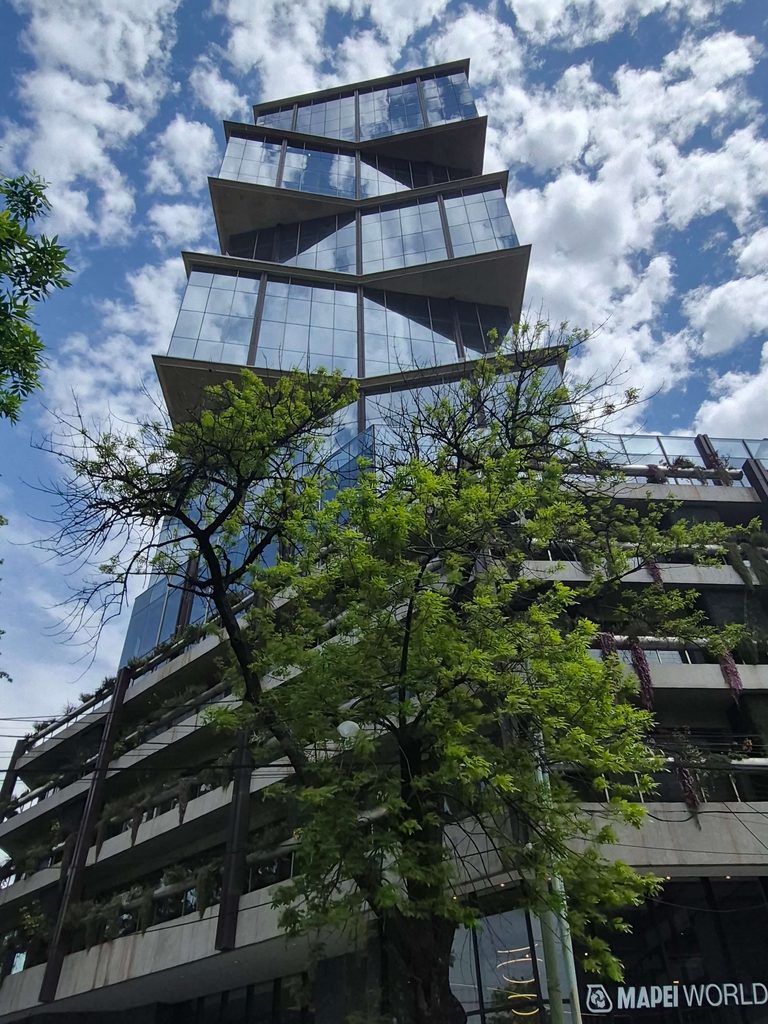
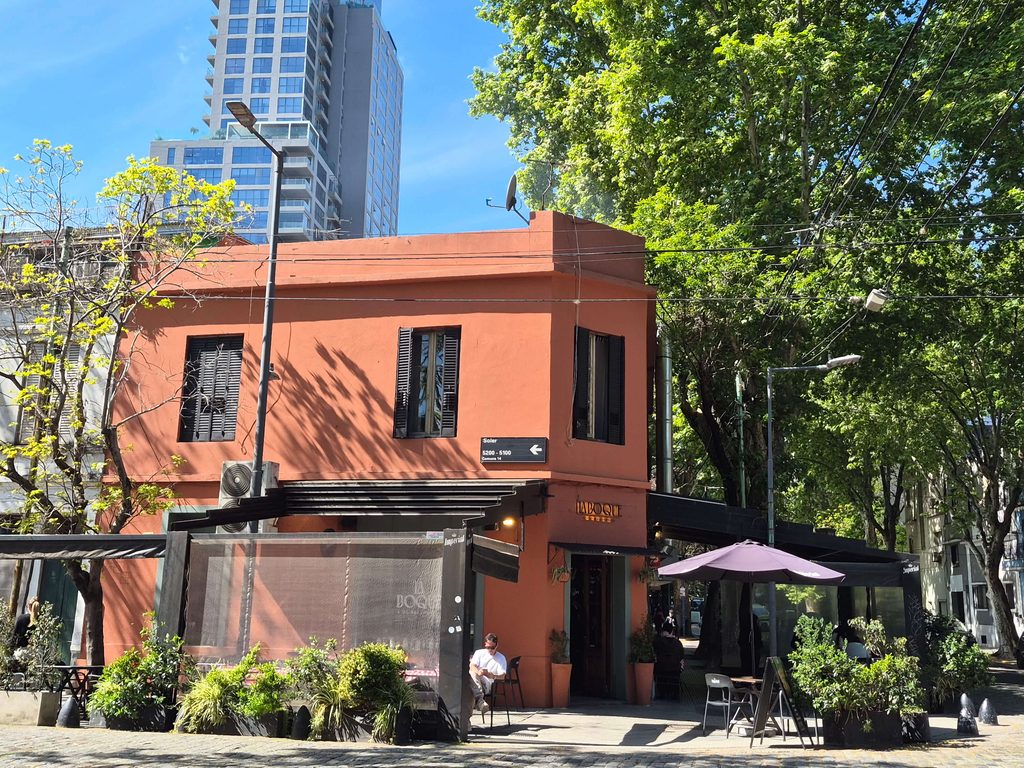
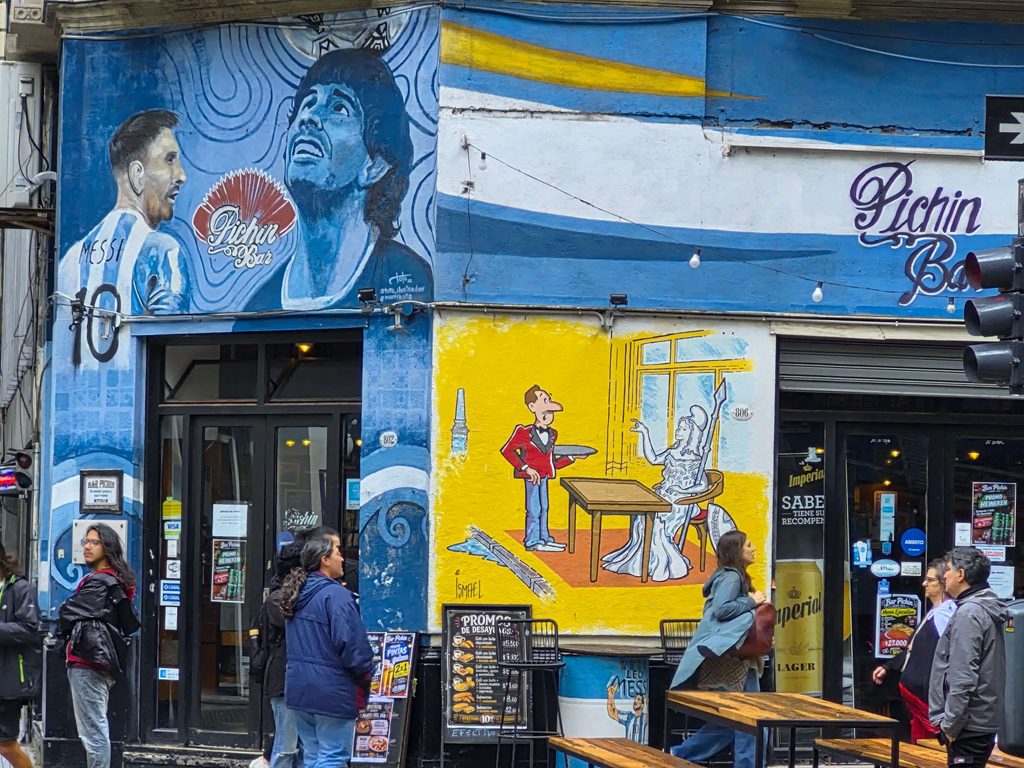
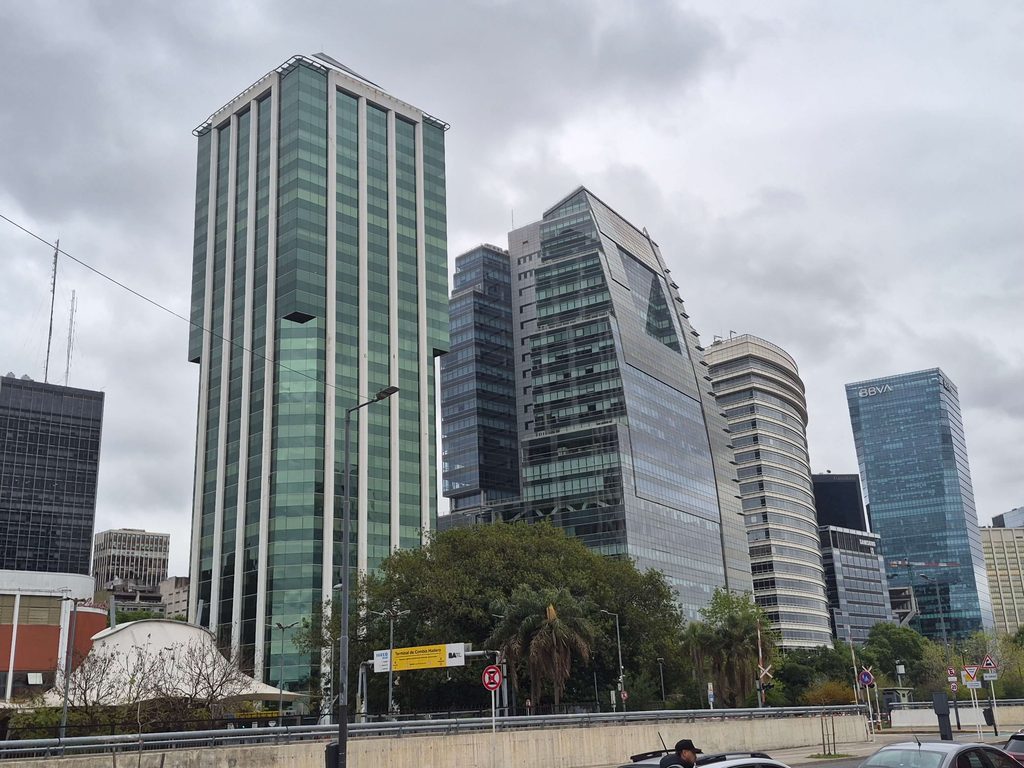
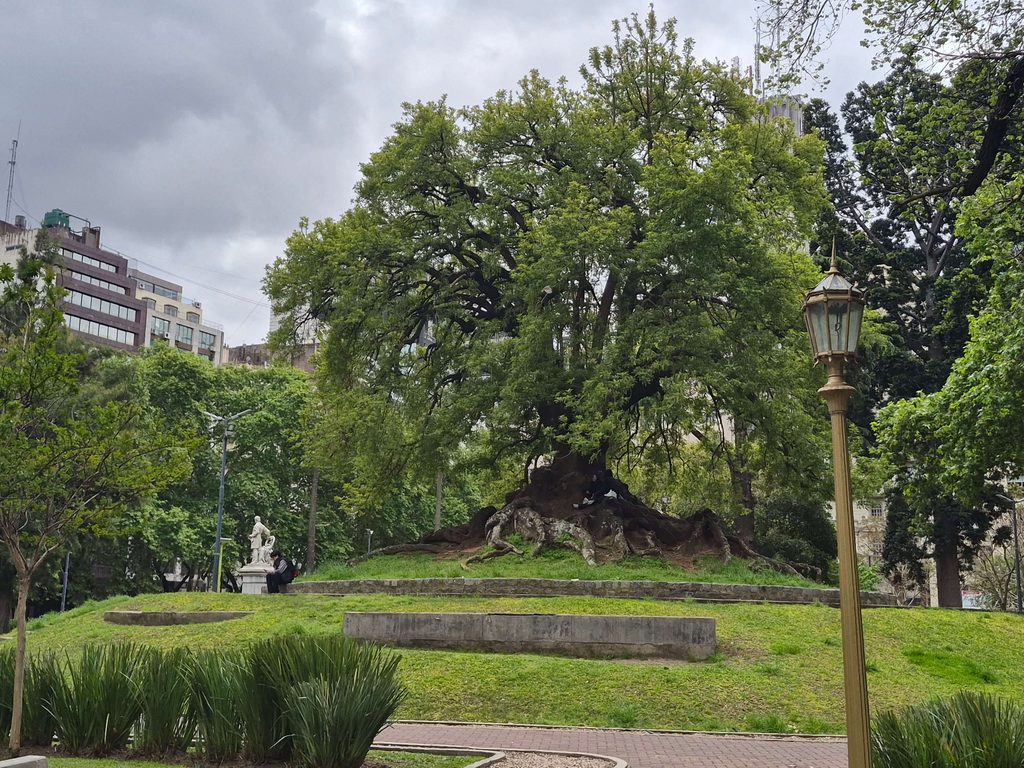
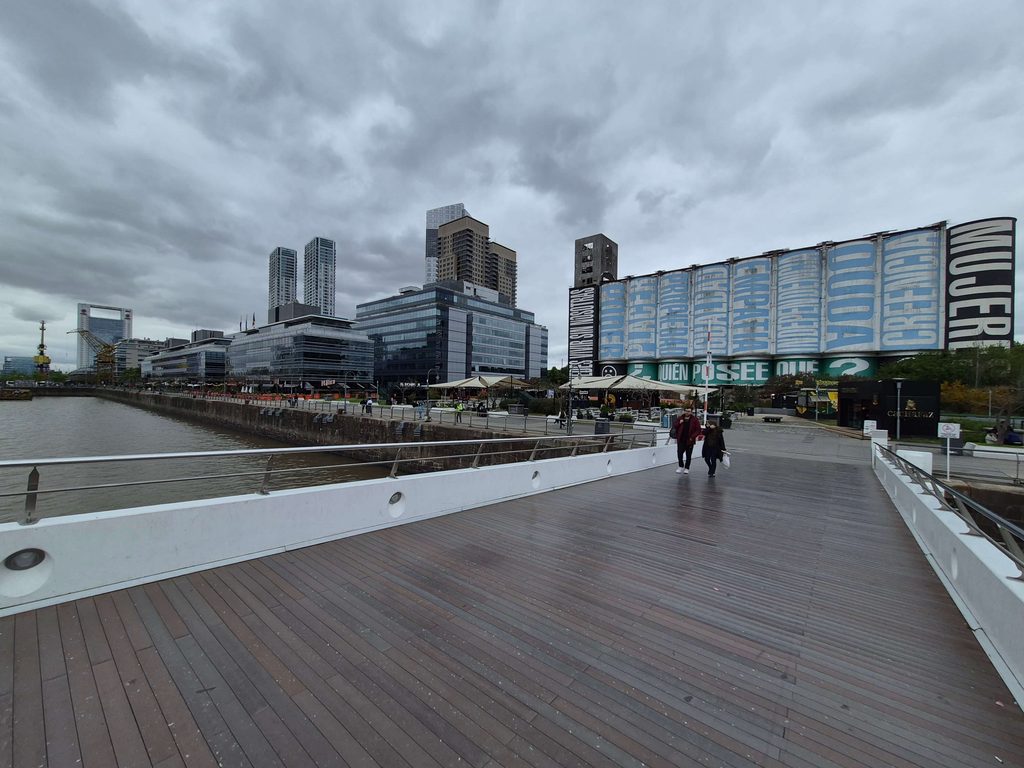
One of the best parts about visiting Buenos Aires is to just walk around and enjoy the wonderful ambience of it’s various sites.
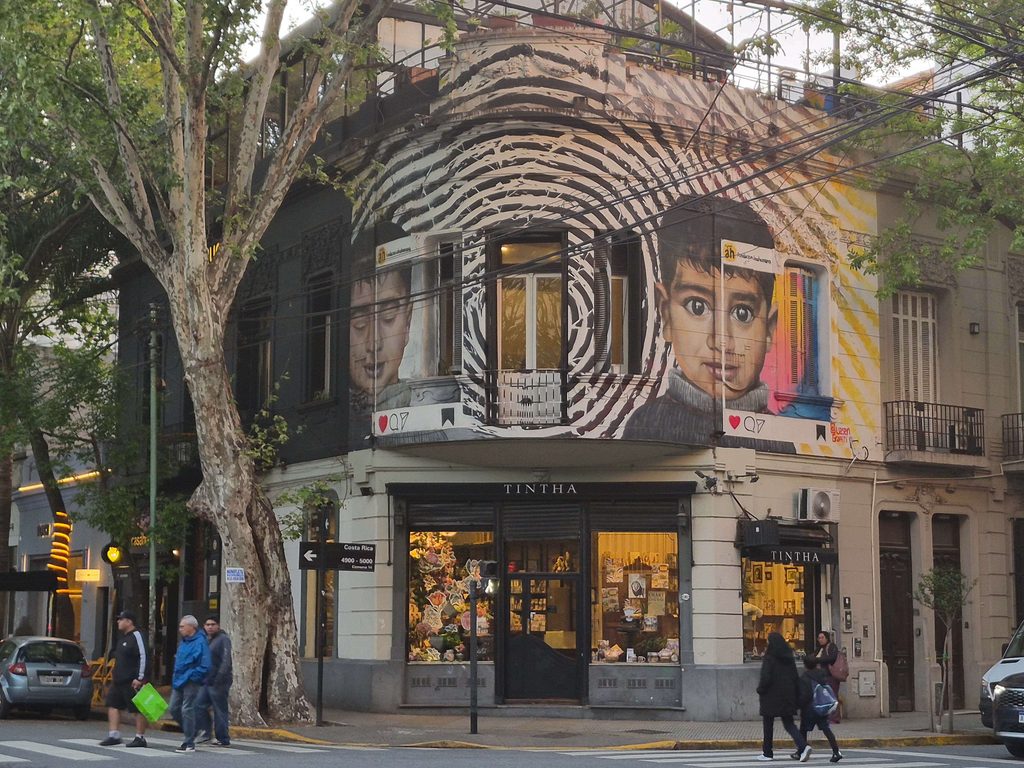
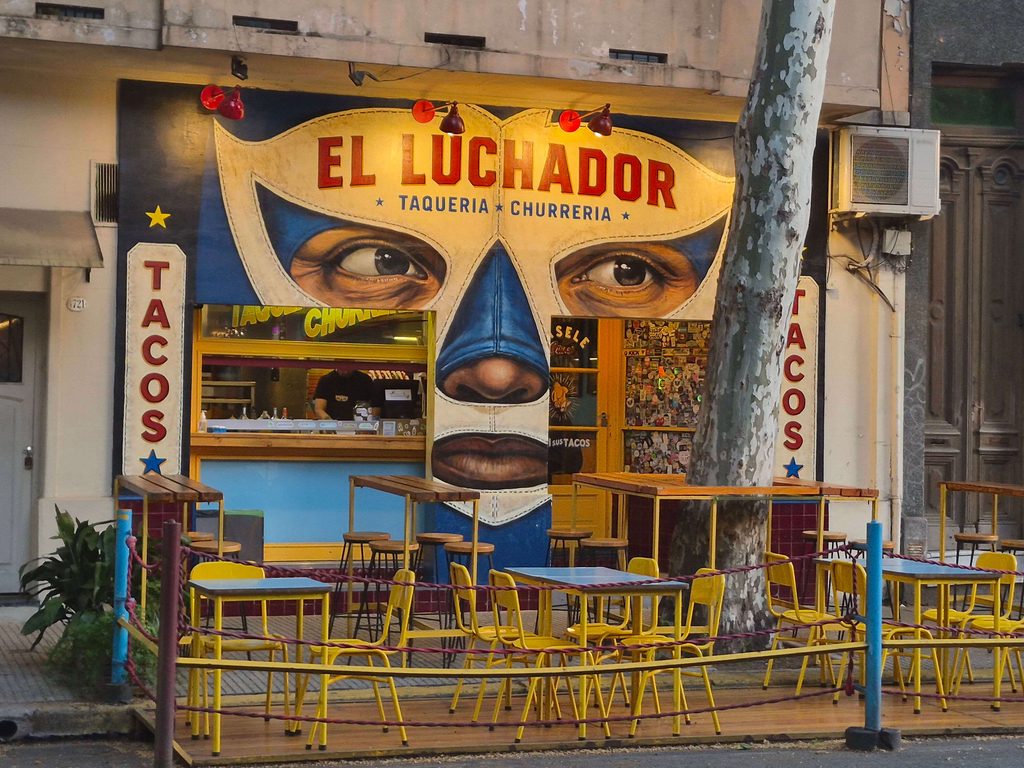
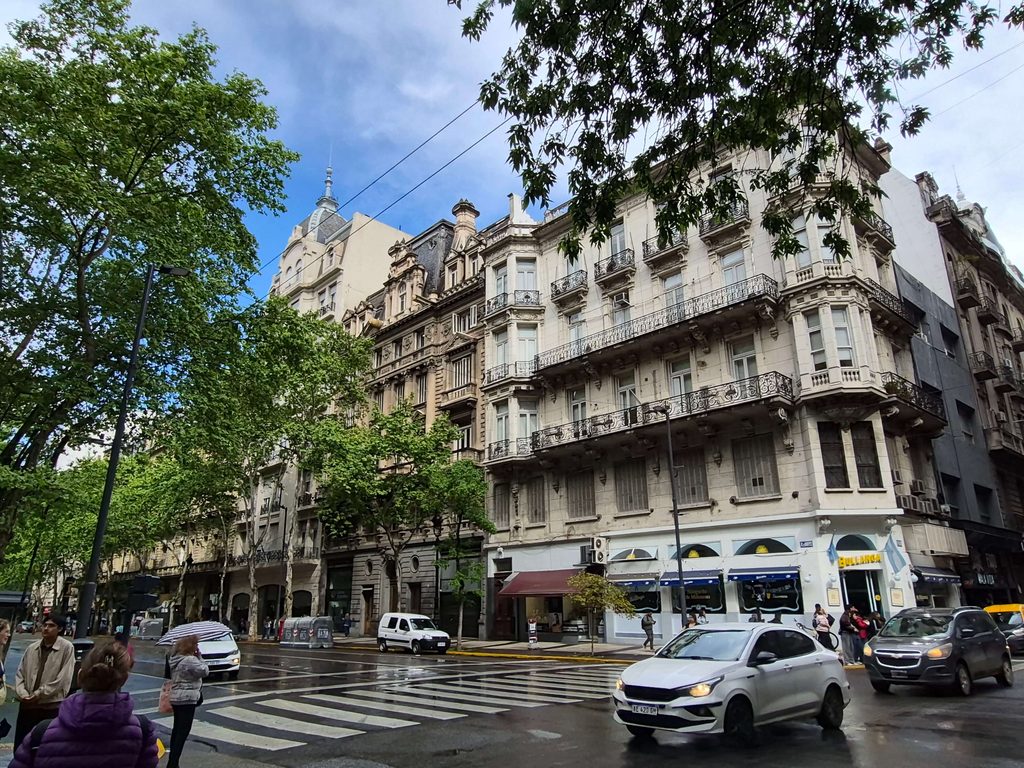
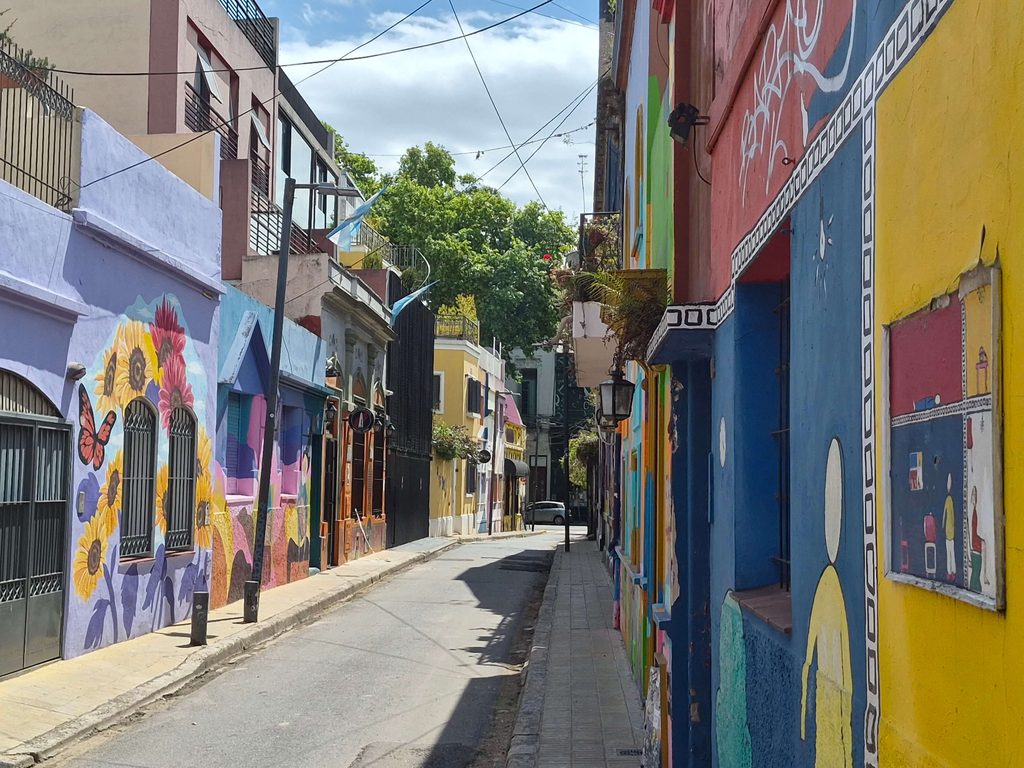
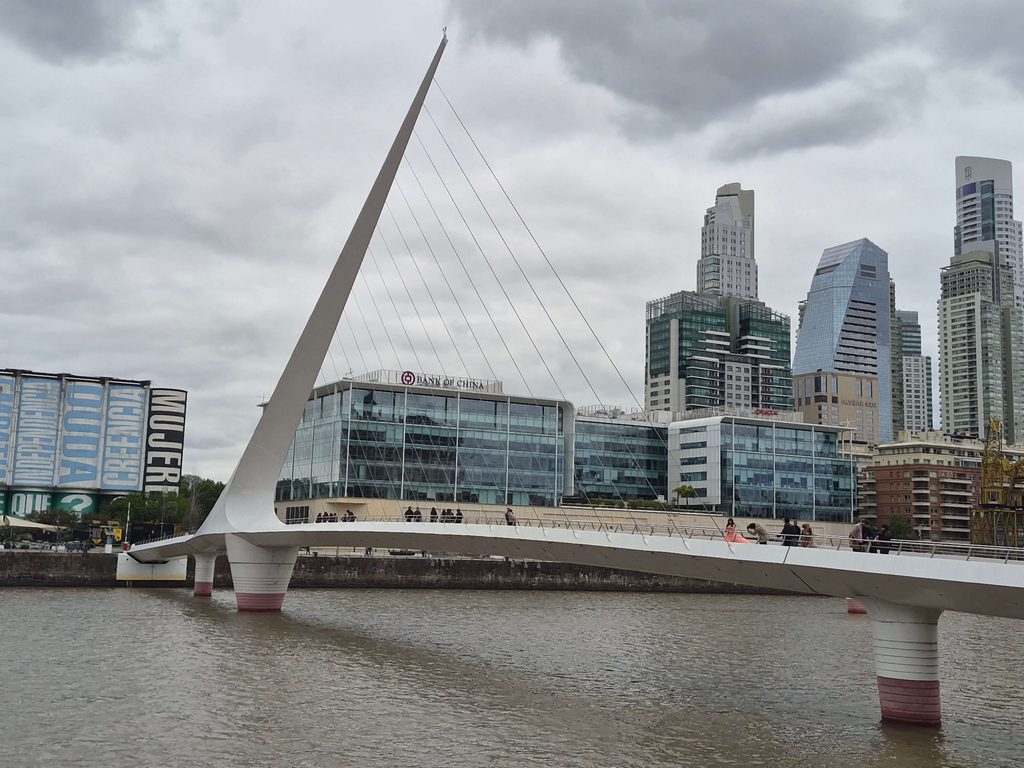
El Puente de la Mujer is a famous rotating pedestrian bridge located in the Puerto Madero neighborhood of Buenos Aires, Argentina. The structure symbolizes a couple dancing the tango, with the white steel mast representing the man and the curved deck representing the woman. The central span can swing 90 degrees on its axis to let boats and sailing ships pass through the dock.
Parks
Japanese Gardens
Parque Tres de Febrero, commonly known as the Bosques de Palermo (Palermo Woods), is the largest and most popular urban park in Buenos Aires, located in the heart of the Palermo neighborhood. It is named after February 3, 1852, the date of the Battle of Caseros, where 19th century dictator Juan Manuel de Rosas was defeated. Since it’s also my birthday, I enjoyed walking around parts of this large area.
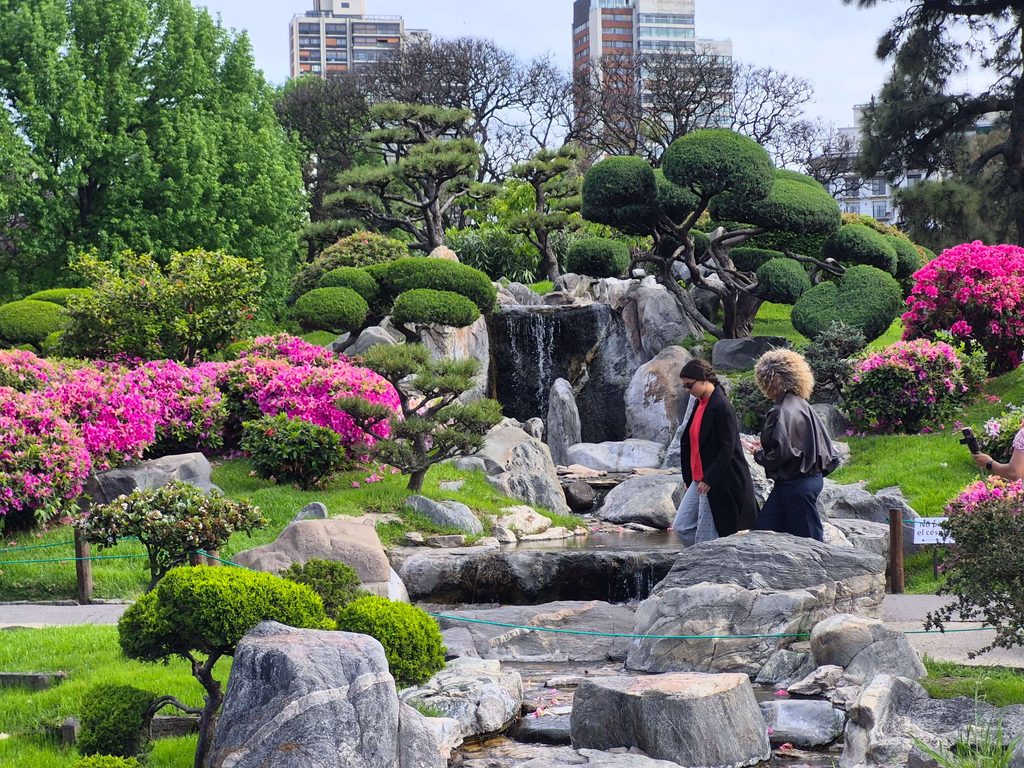
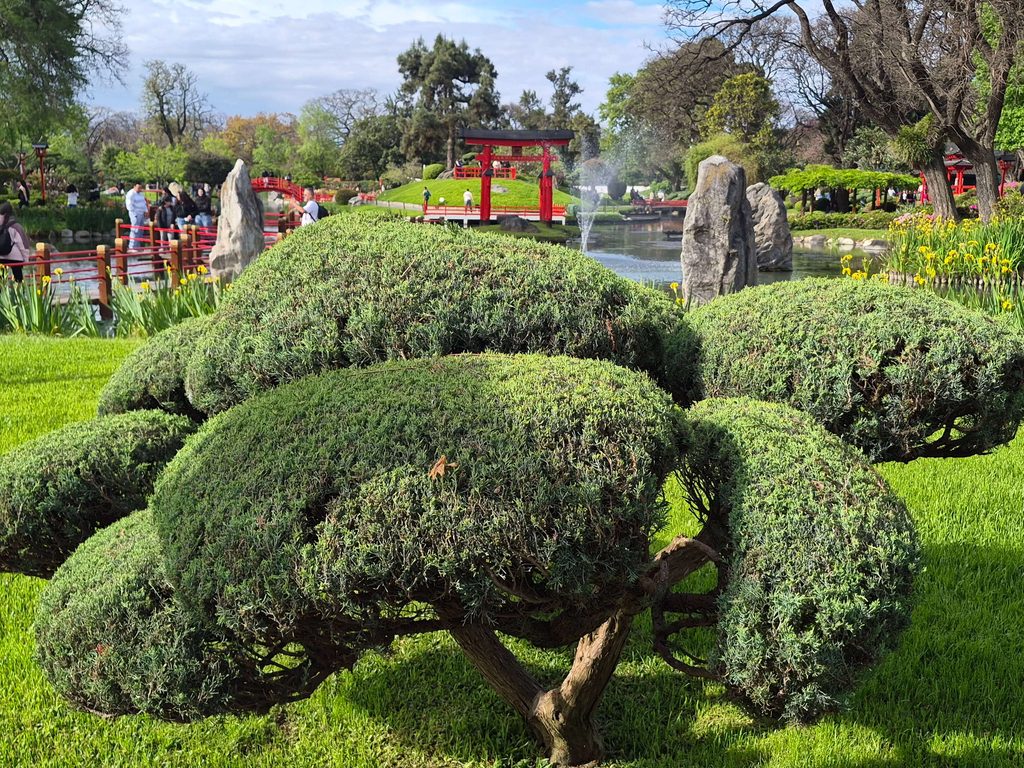
Within Parque Tres de Febrero are the Jardin Japones. They are among the largest Japanese gardens in the world outside Japan. Completed in 1967, the gardens were inaugurated on occasion of a State visit to Argentina by then-Crown Prince Akihito and Princess Michiko of Japan.
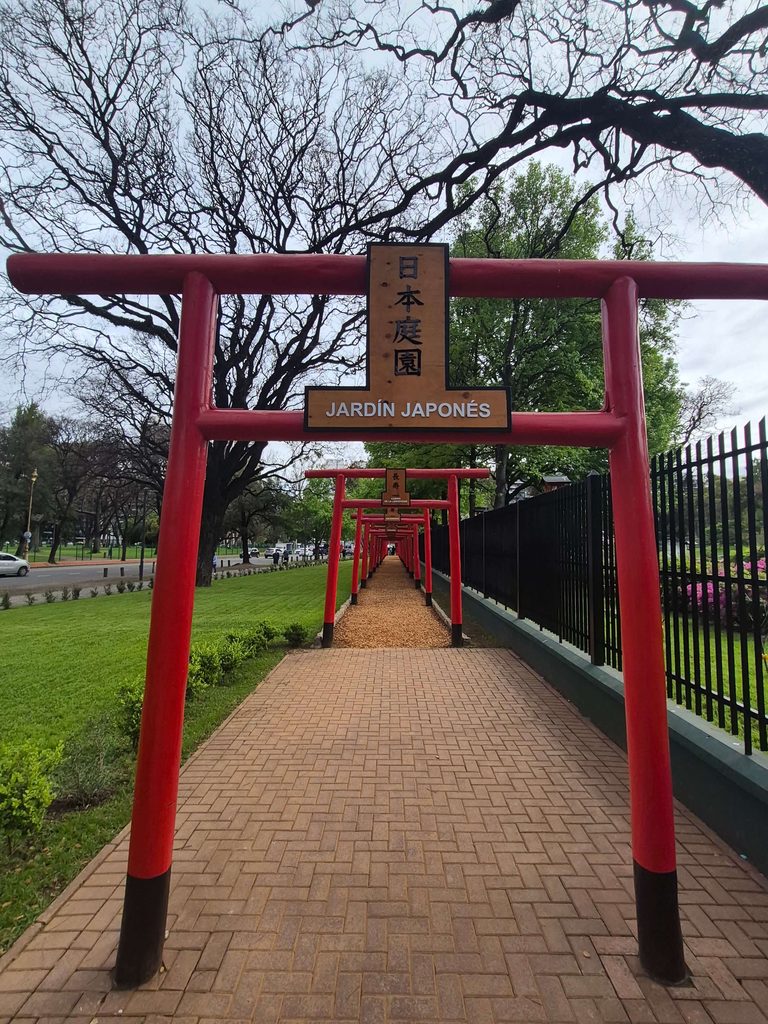
The landscaping is immaculate.
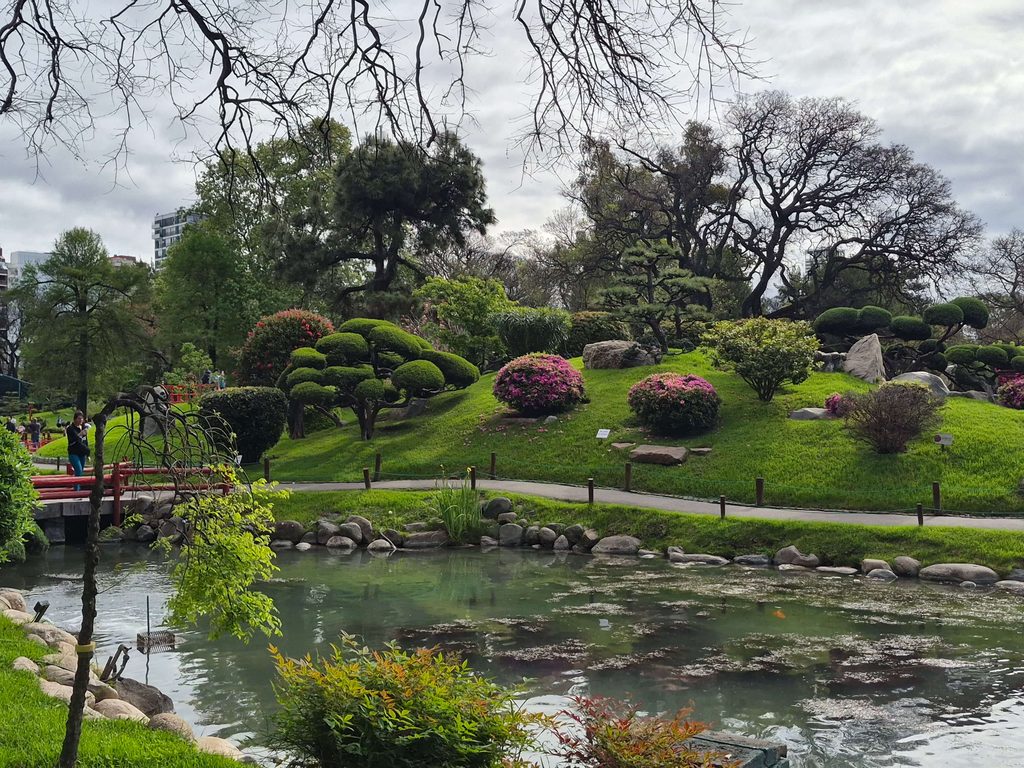
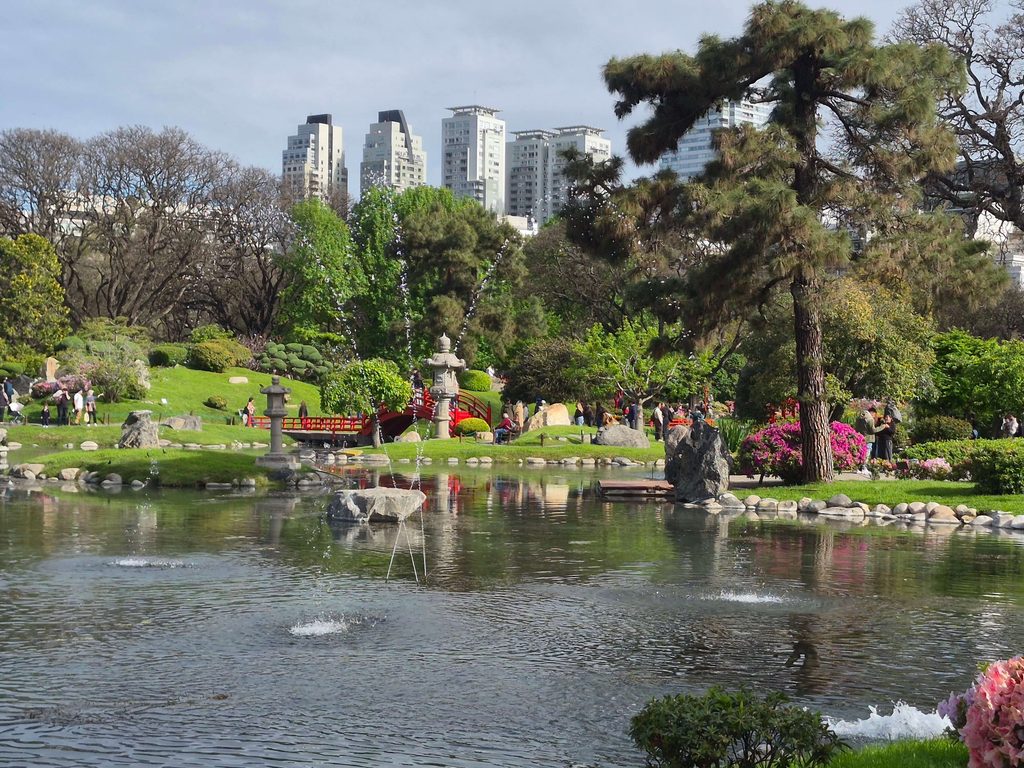
The main fountain forms a nice foreground to the urban landscape of Buenos Aires in the background.
Ecoparque de Buenos Aires
What is an Eco Park? After spending a couple of hours at one, I’m still not sure exactly what one is. And it feels like the Ecoparque de Buenos Aires is also still trying to define what one is.
Since 1888 Buenos Aires had a zoo. There were animals in the zoo. They were in compounds pretty much unchanged since it’s opening. Over time there became more of outcry in Buenos Aires over this situation. So in June 2016 the Buenos Aires City Government made the decision to close the Buenos Aires Zoo and release about 2,500 animals (the majority of the zoo’s population) into the wild. Now what should the city do with this land and all these compounds? It created an Eco Park.
The first major project is a natural area that recreates a local pond ecosystem.
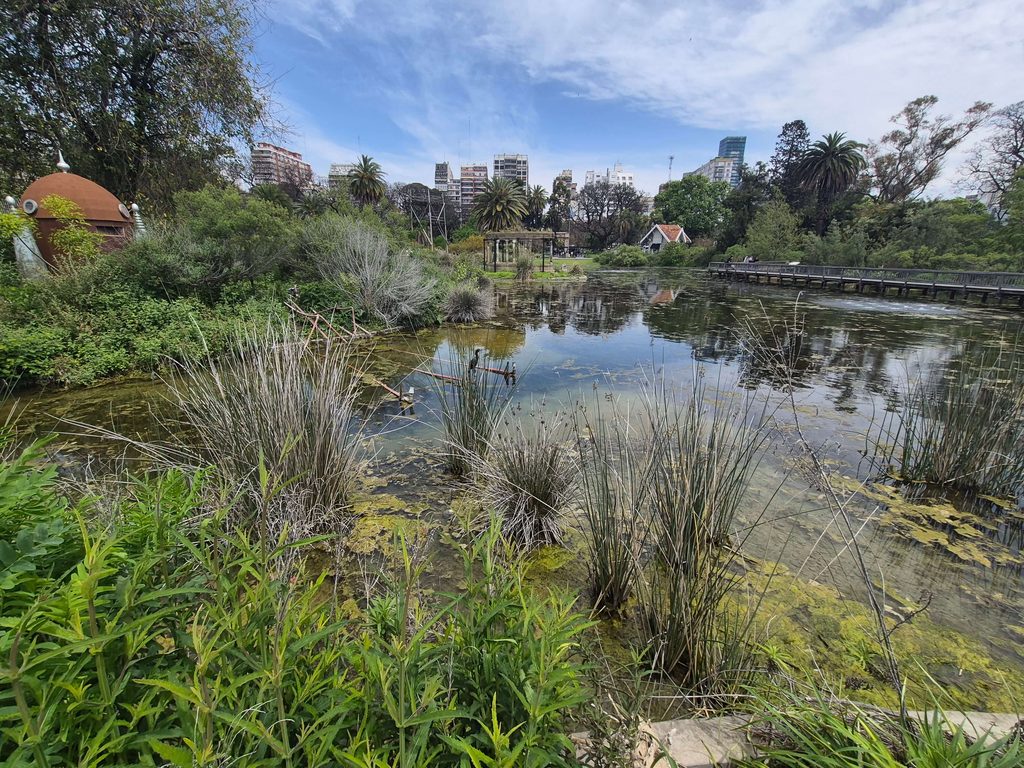

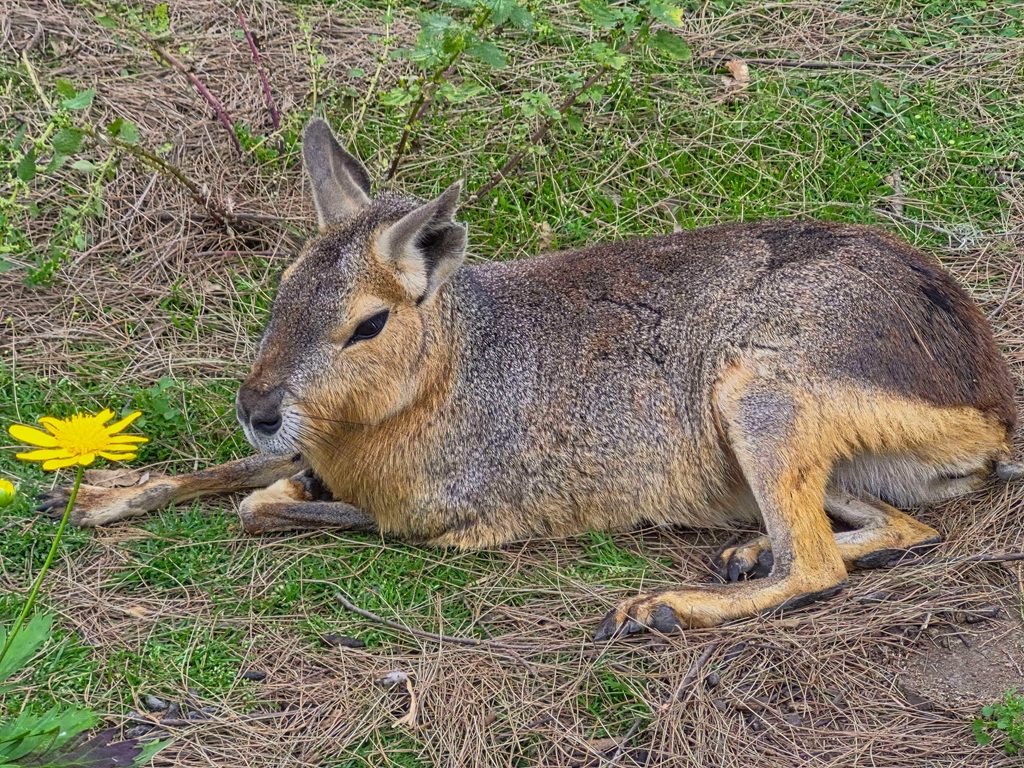
Only 2,000 guests are allowed per day and there is no feeding of the animals. There were scores of school groups of young children the day I was there. Throughout the park small mammals and birds run around freely. One example is this Patagonian mara.
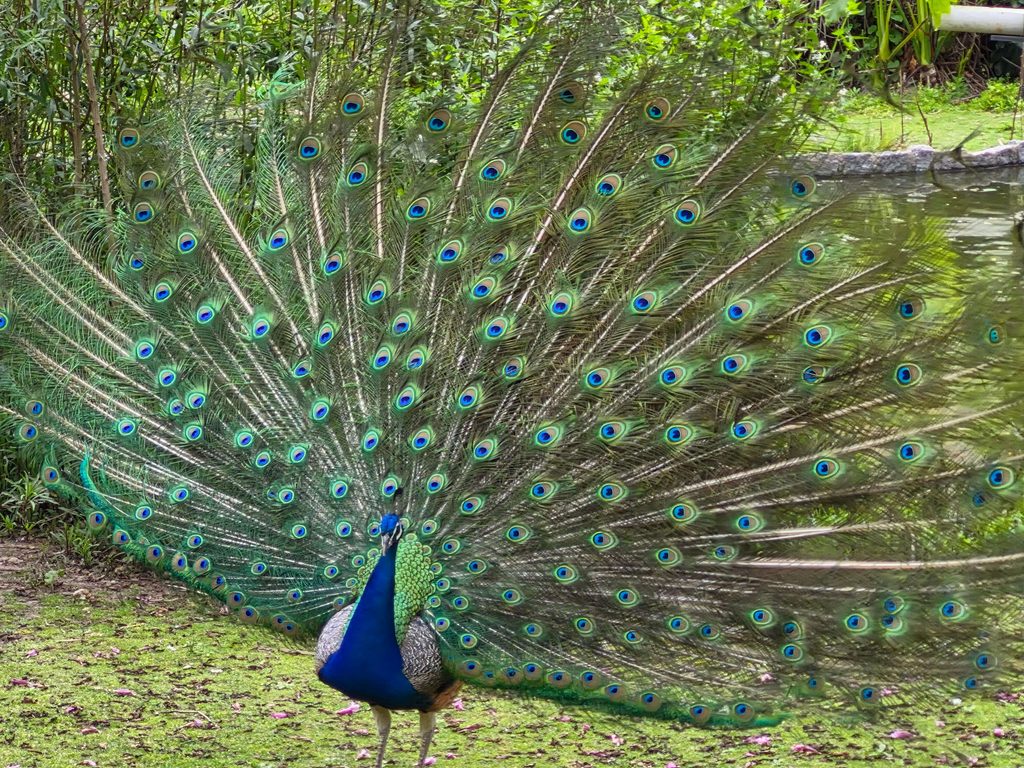
Another are a lot of peacocks. While beautiful to look at, the constant loud cries of these birds can get old after a while.
Additionally, while some of the old, listed buildings are being restored, others are being repurposed as offices, cafes and education centers. The zoo’s baboon house has been transformed into a state-of-the-art animal hospital, which takes in injured wild animals from all over Argentina, and also houses the largest biobank in South America, with genetic material from 120 species held in cryogenic suspension.
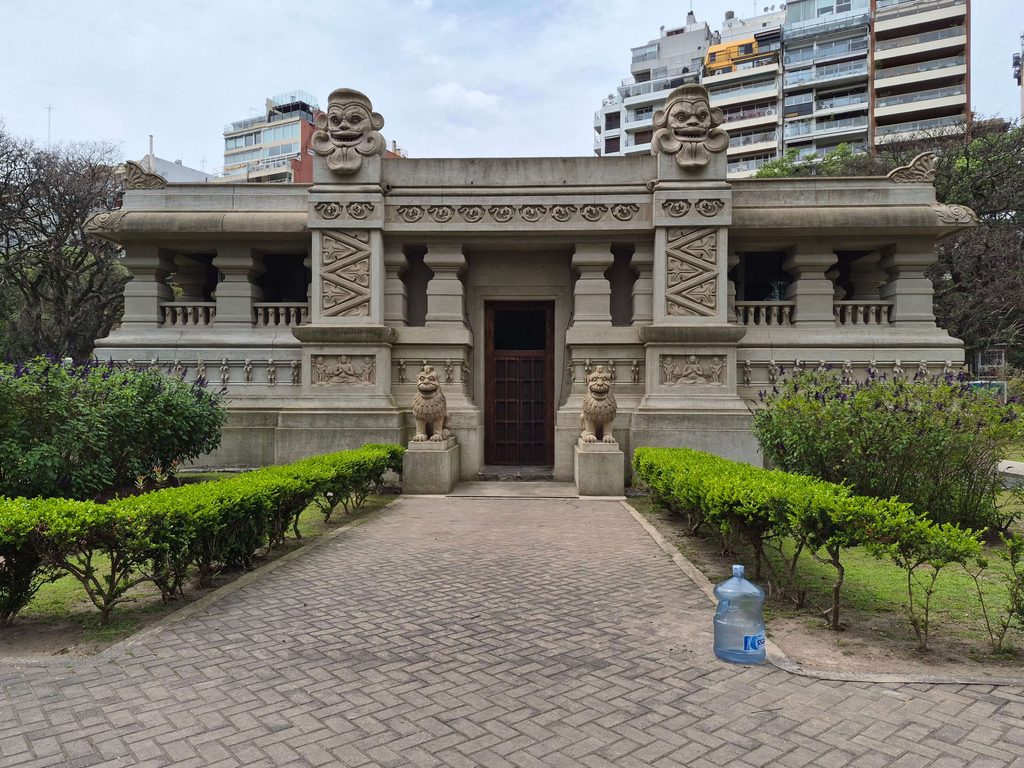
Below is some type of monkey house that has yet to be repurposed.
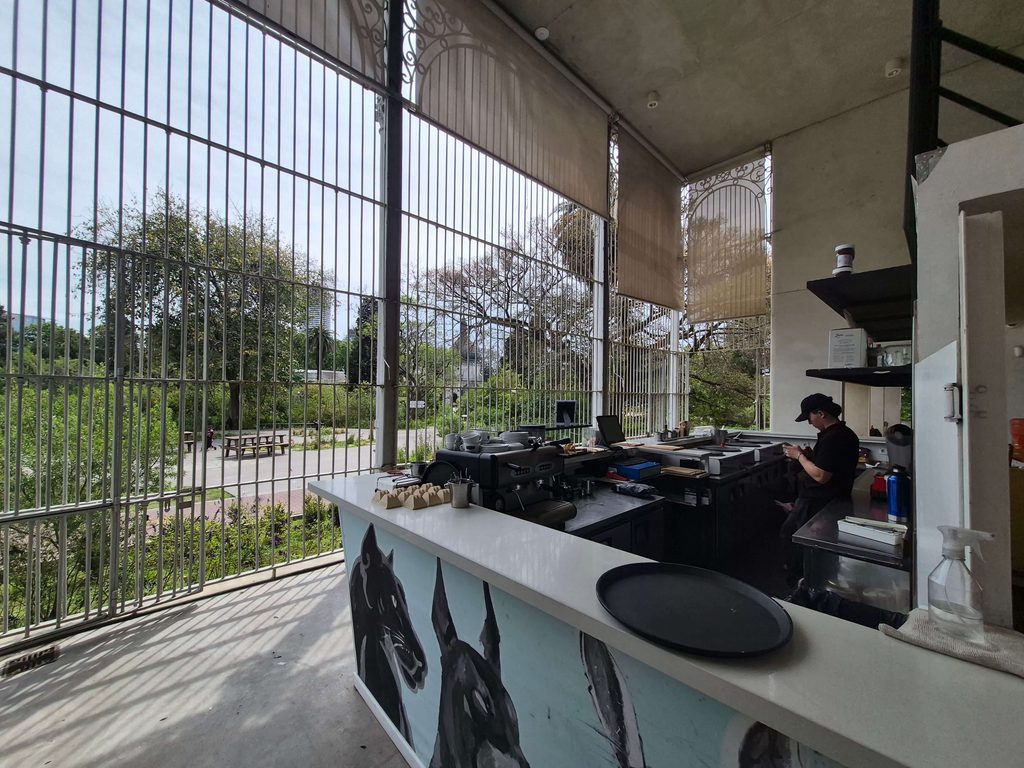
One building has been turned into a nice, semi-caged cafe.
Another has been turned into a multi-media center.
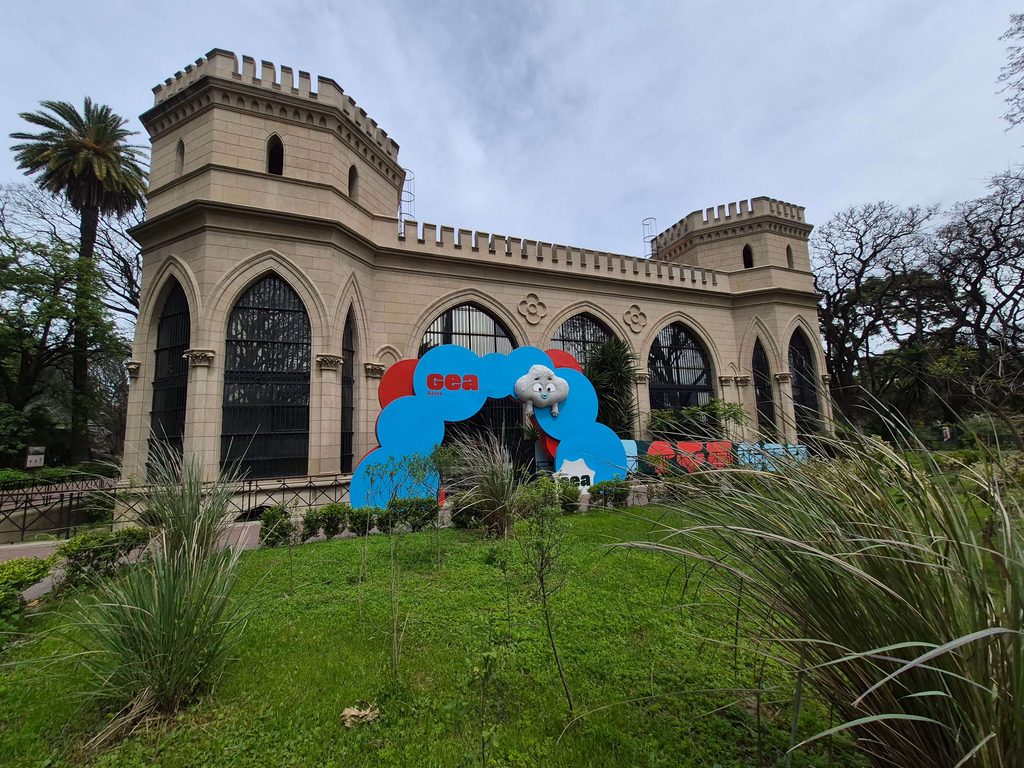
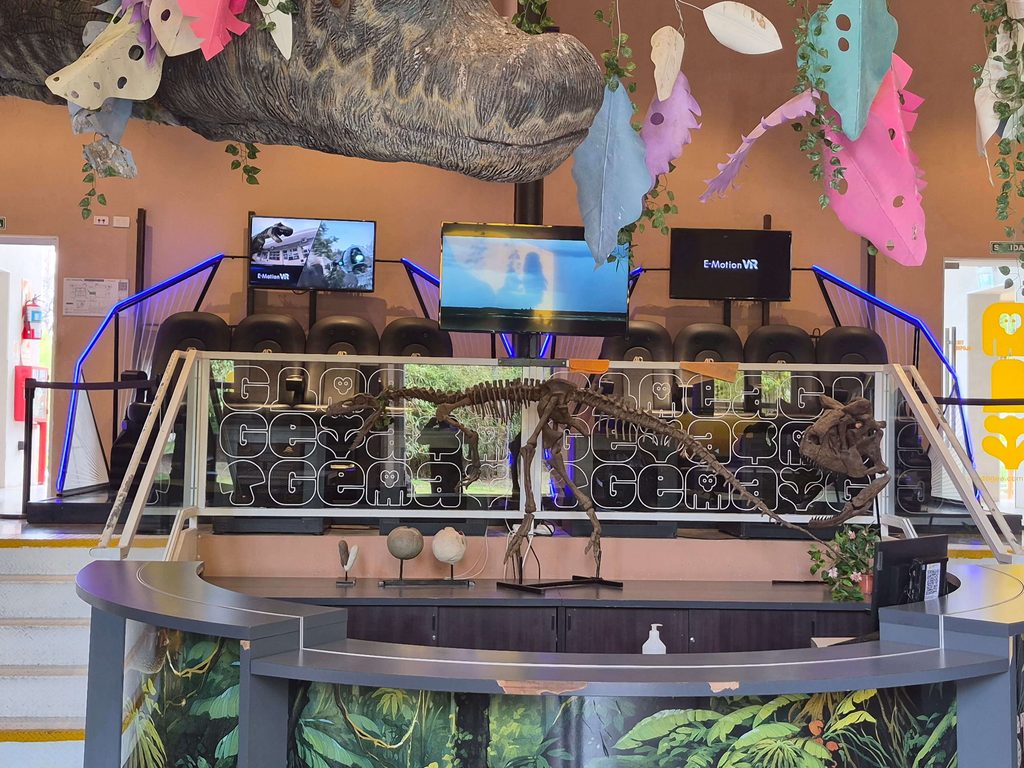
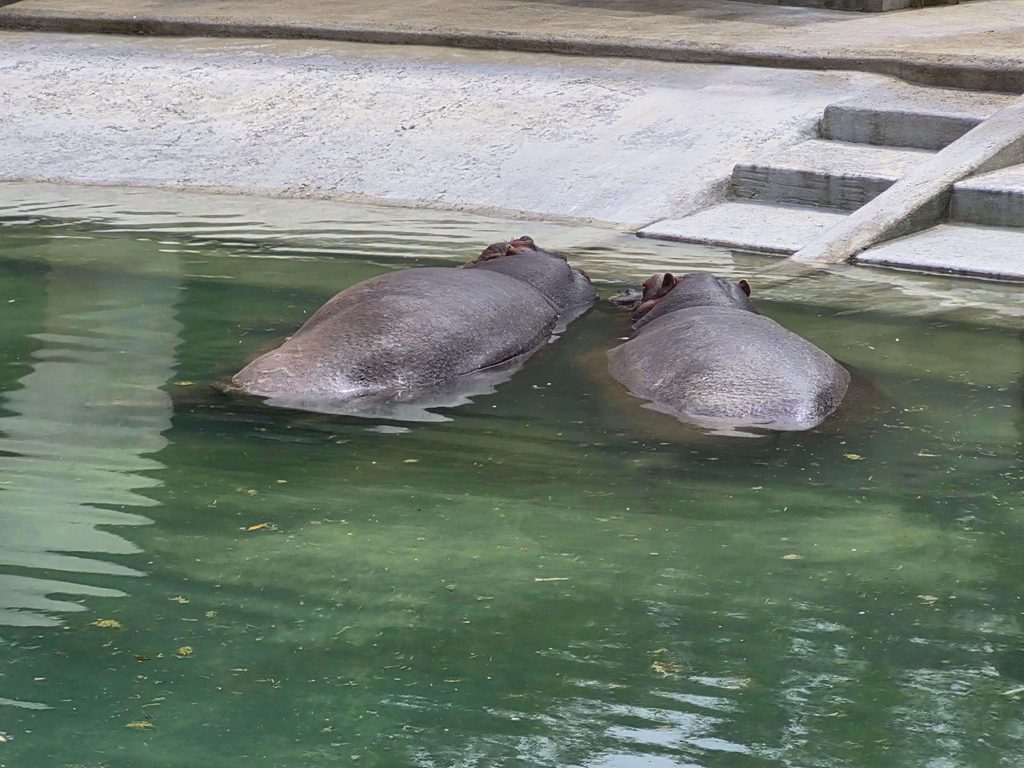
Today, only a few legacy animals remain, mostly those hard to relocate due to their age.

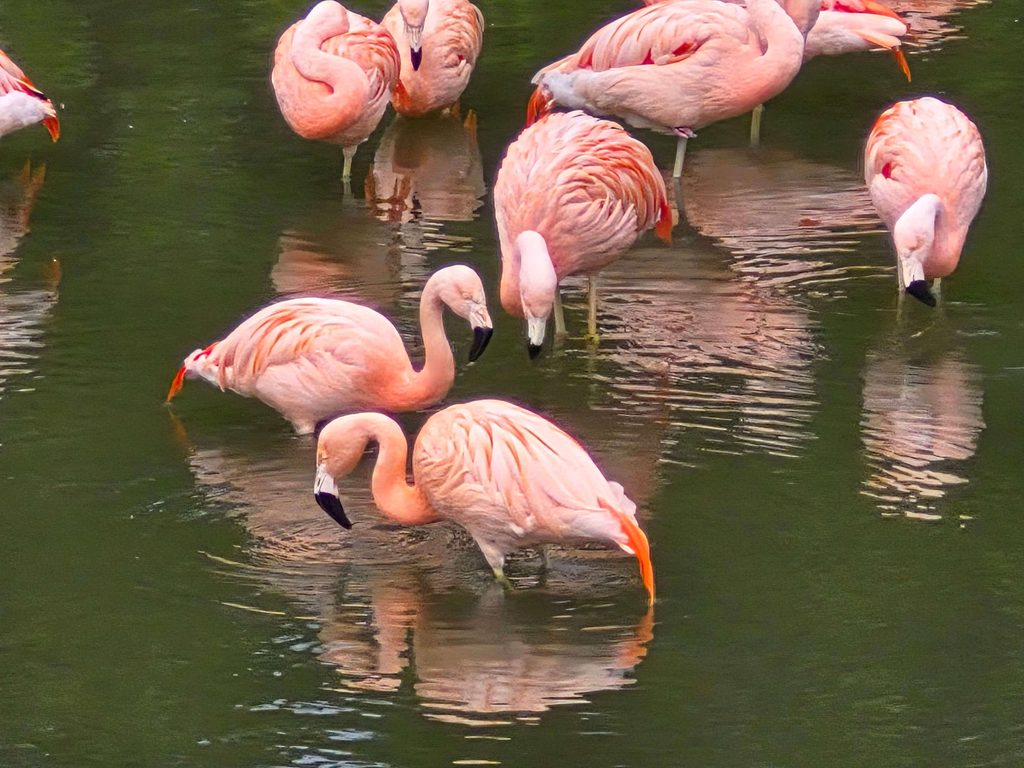
There’s still some beautiful flamingos in a small pond.
Here is an overgrown former puma enclosure.
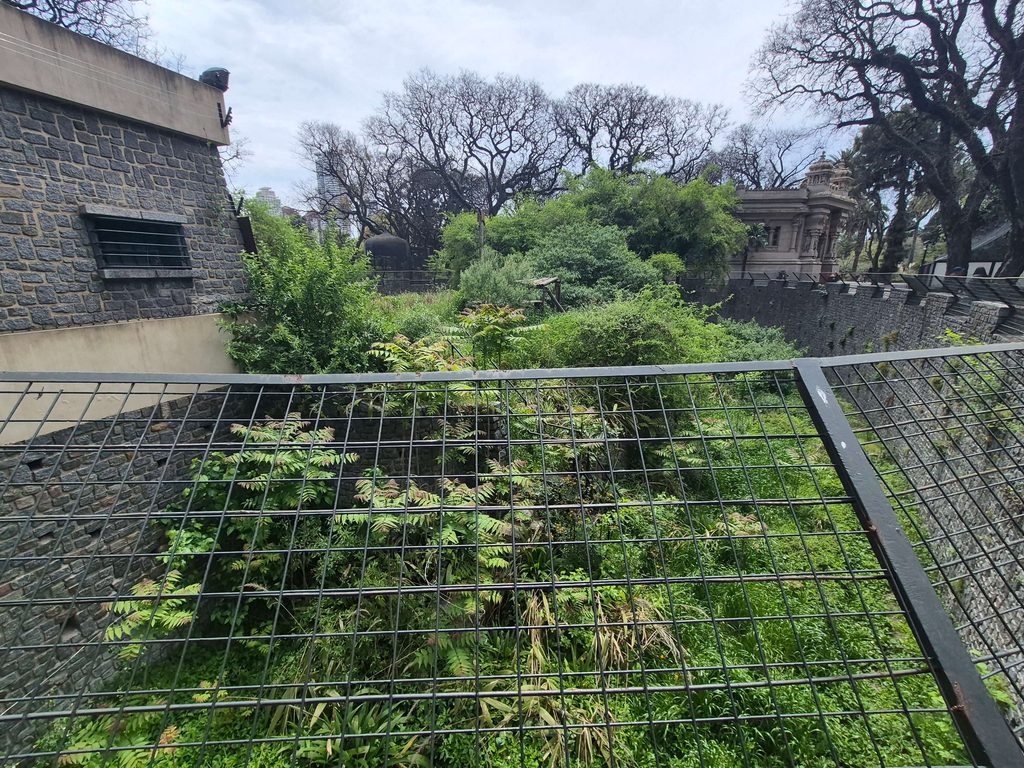
This whole place is a work in process. It would be interesting to see what it becomes in the next 5 to 10 years.
Buenos Aires Jardín Botánico
The Botanical Garden was created in 1898 and holds approximately 5,500 species of plants, trees and shrubs, and five greenhouses. There’s also a wide range of early 20th century sculptures that add some character to a very relaxed environment in the midst of downtown Buenos Aires. It’s a small peaceful oasis surrounded by some of Buenos Aires’ busiest streets.
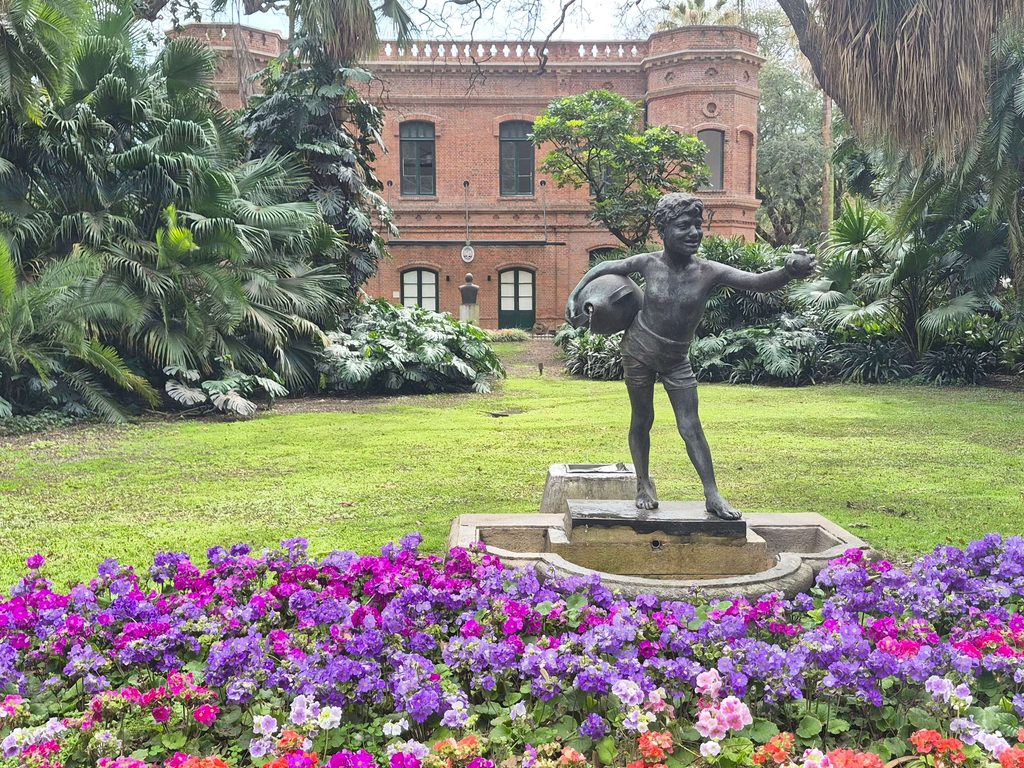
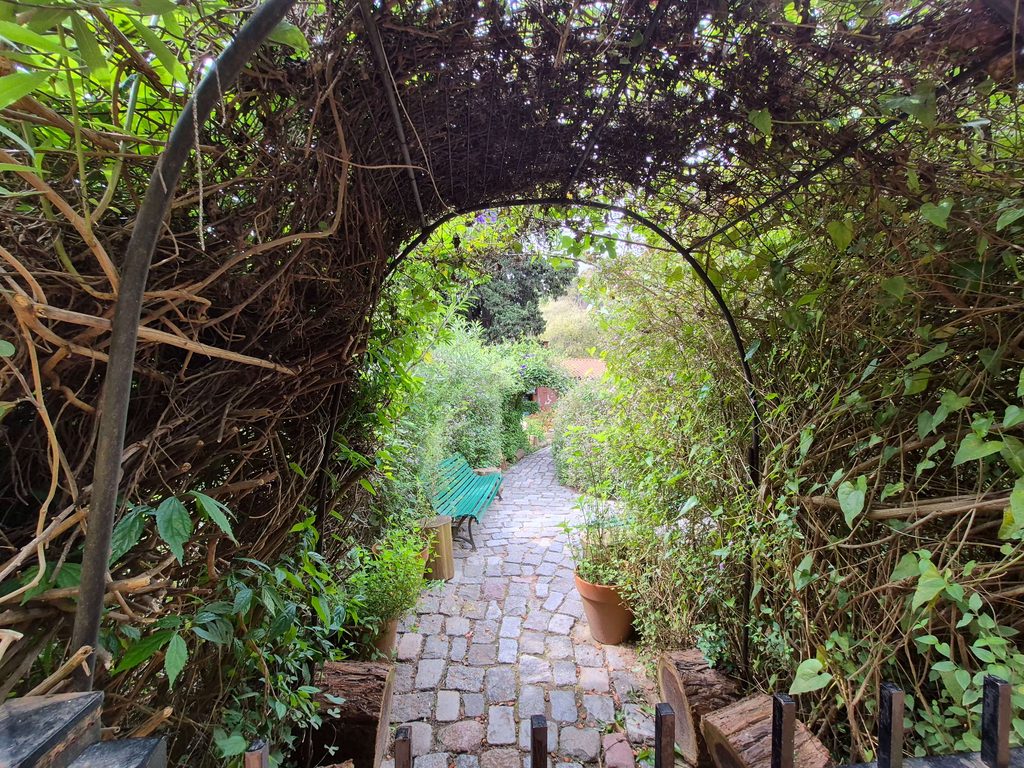
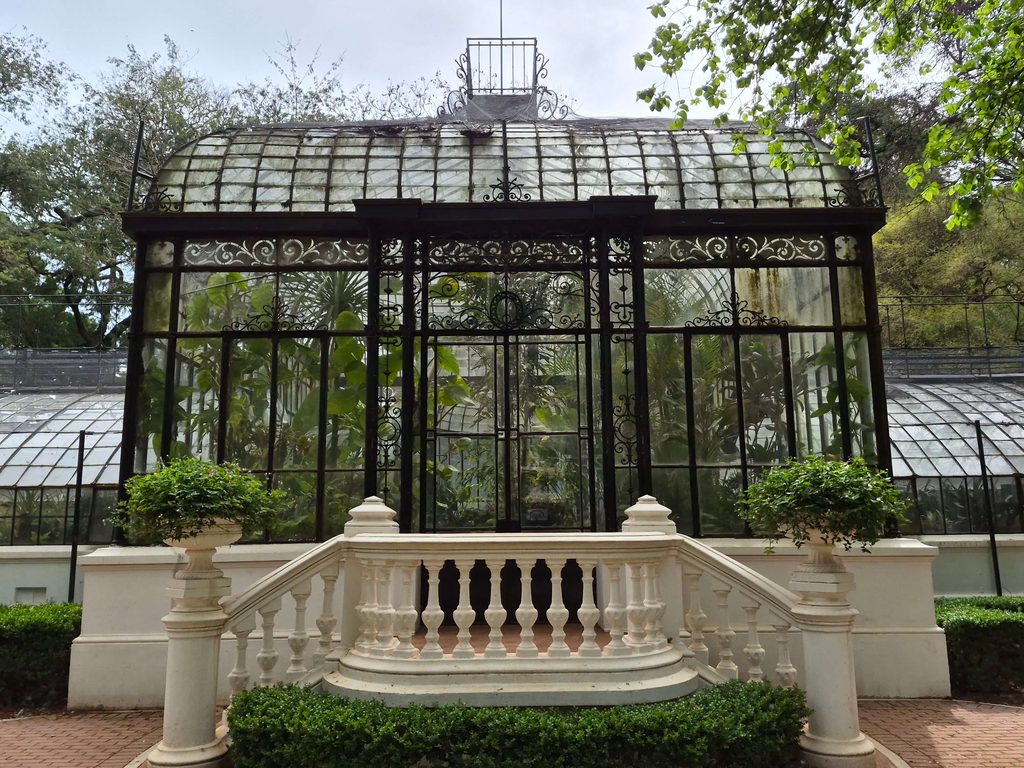
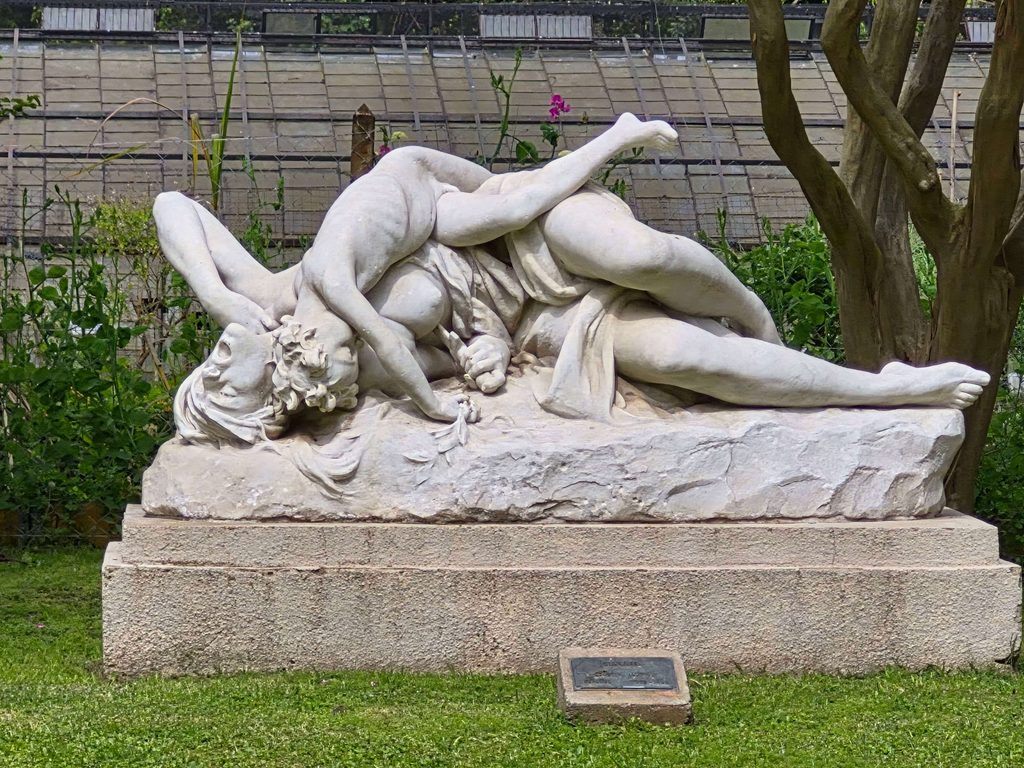
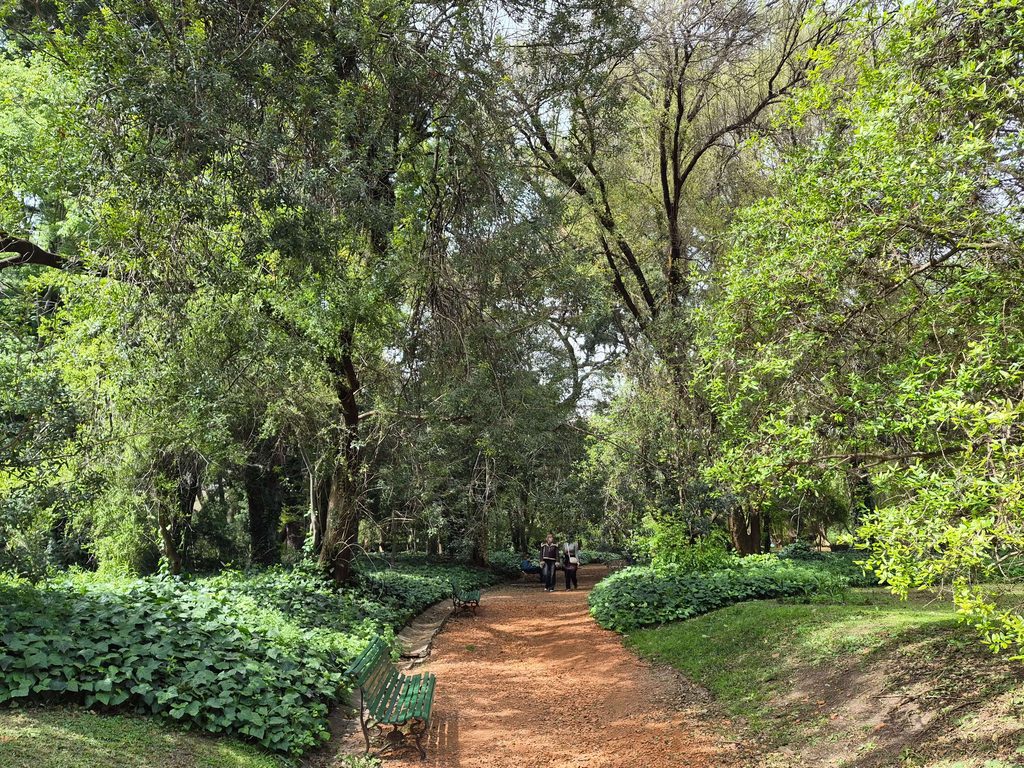
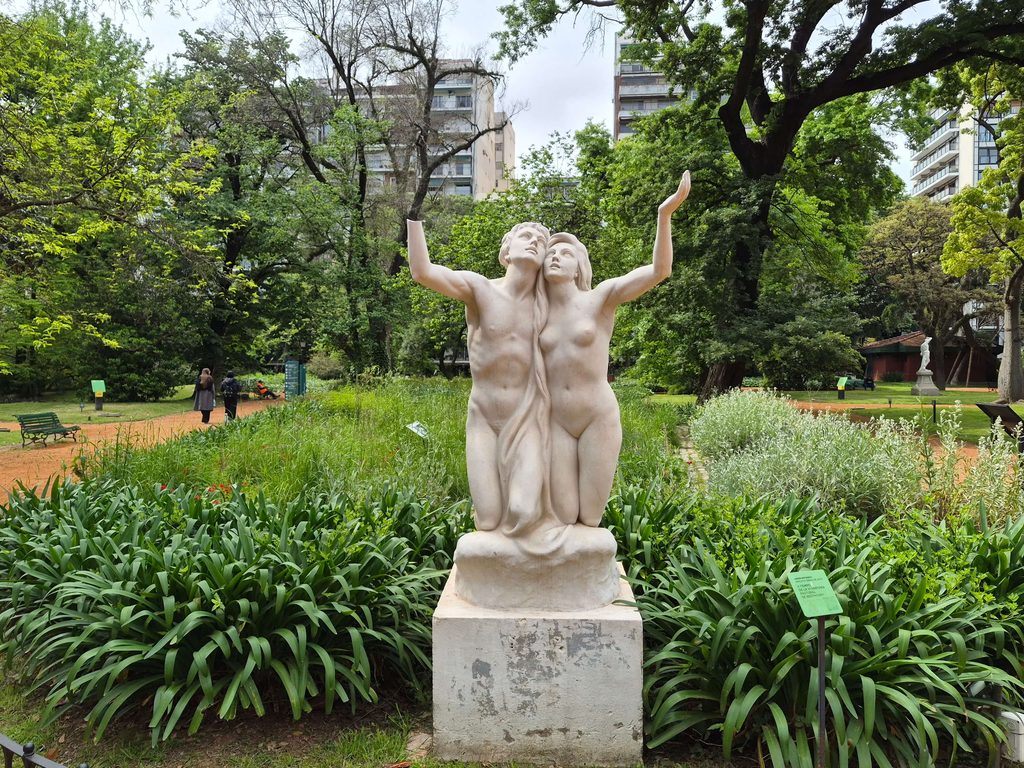
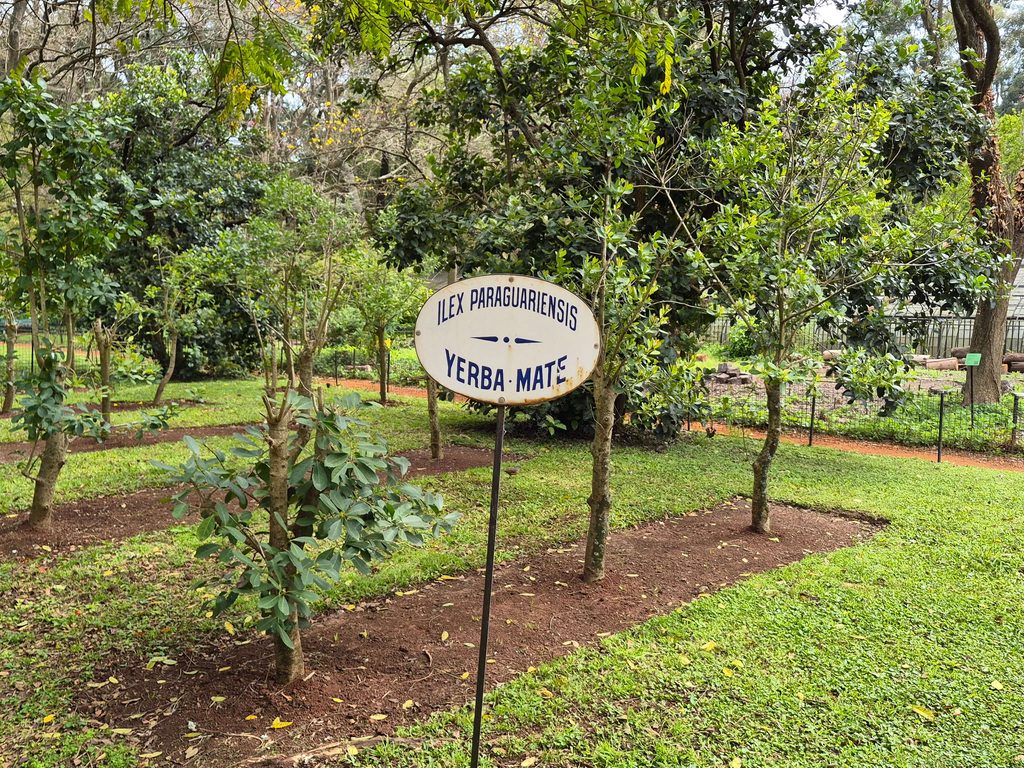
And, of course, there was a small section of small mate tea trees. What would a botanical garden be in Argentina without that?
Museums
MALBA
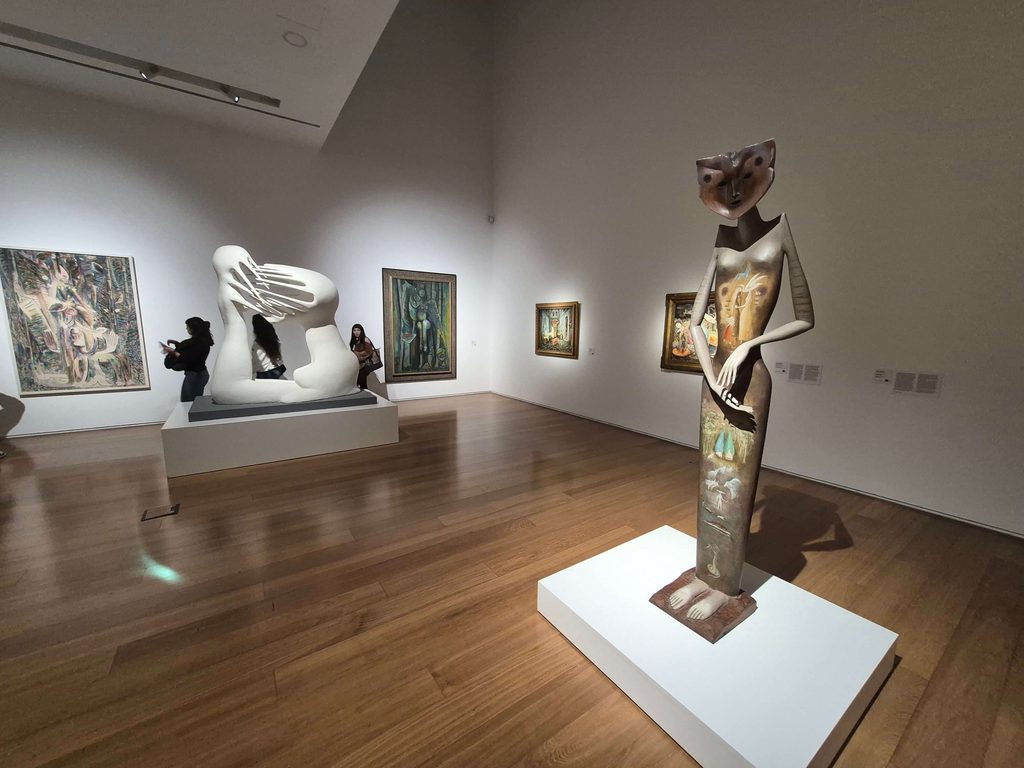
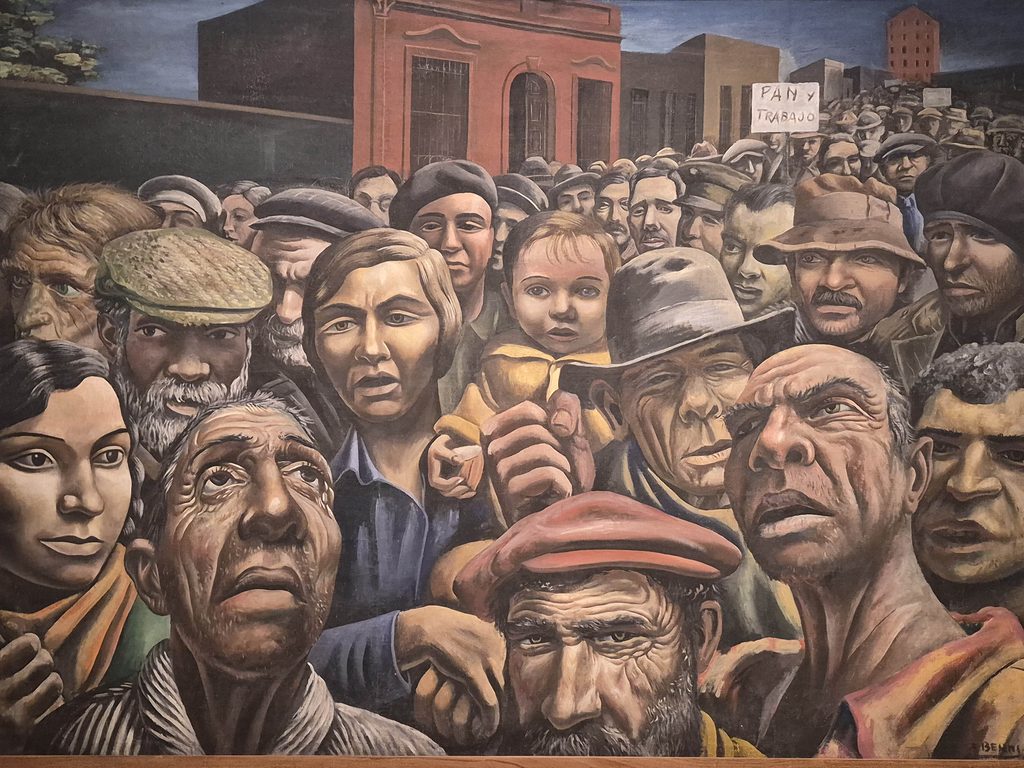
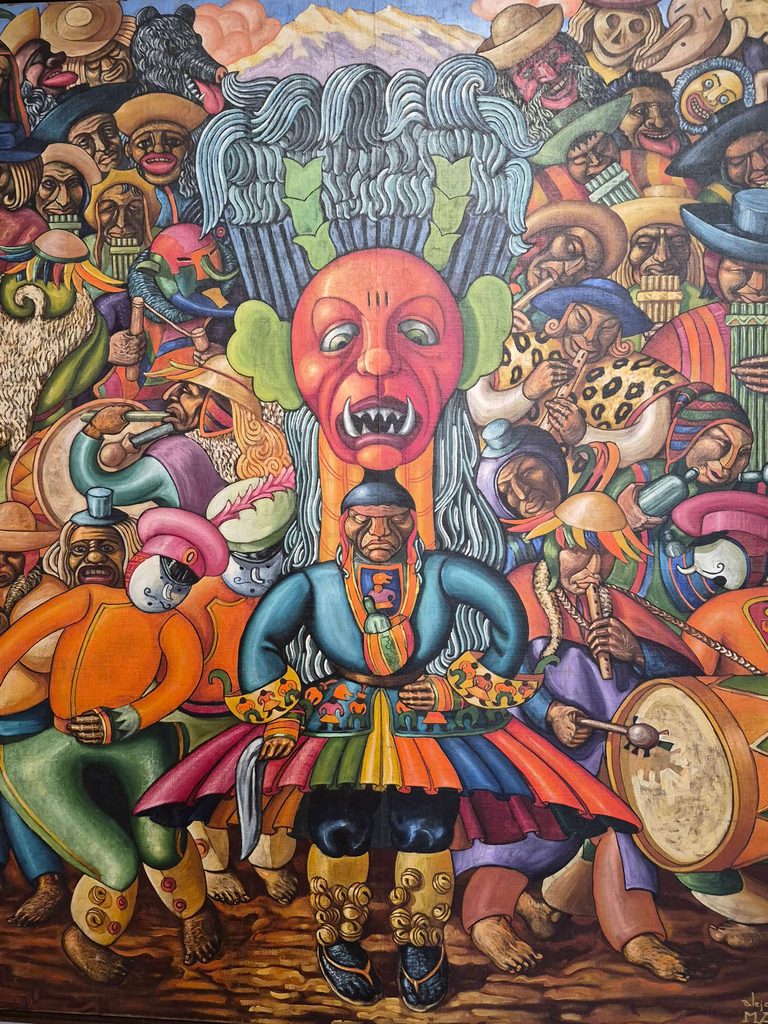
The Museum of Latin American Art of Buenos Aires (MALBA) was founded in 2001 with the aim of collecting, preserving, studying, and disseminating Latin American art from the beginning of the 20th century to the present. The museum’s permanent collection, comprises 400 works by 160 artists.
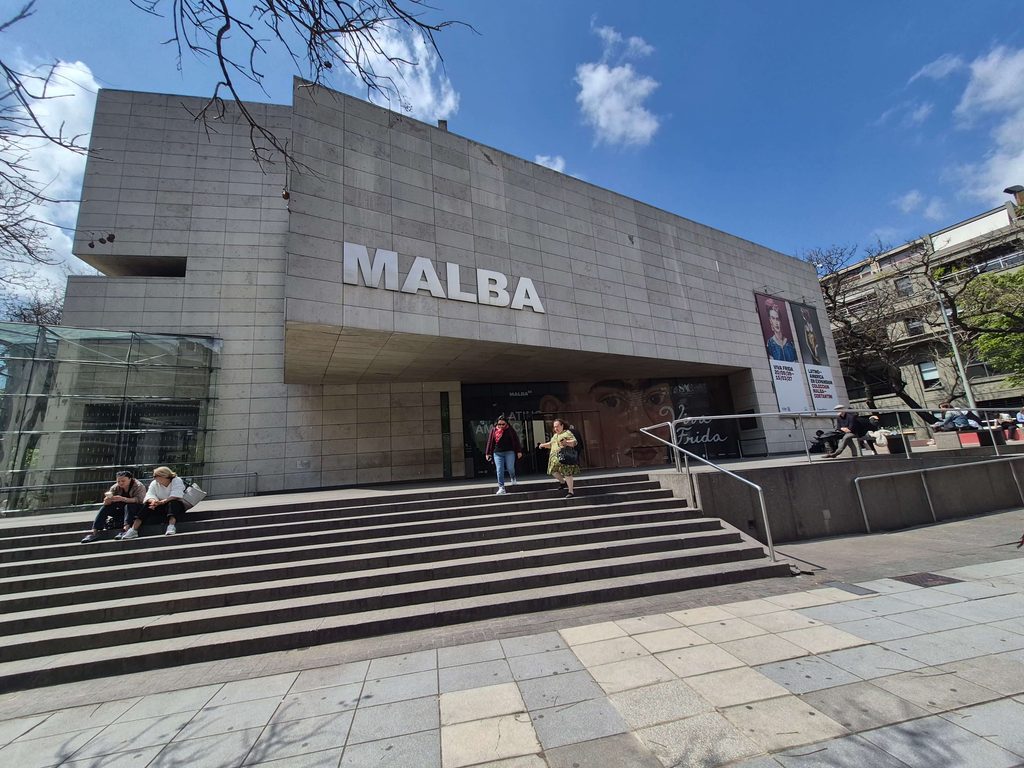
The museum is in a wonderful space.
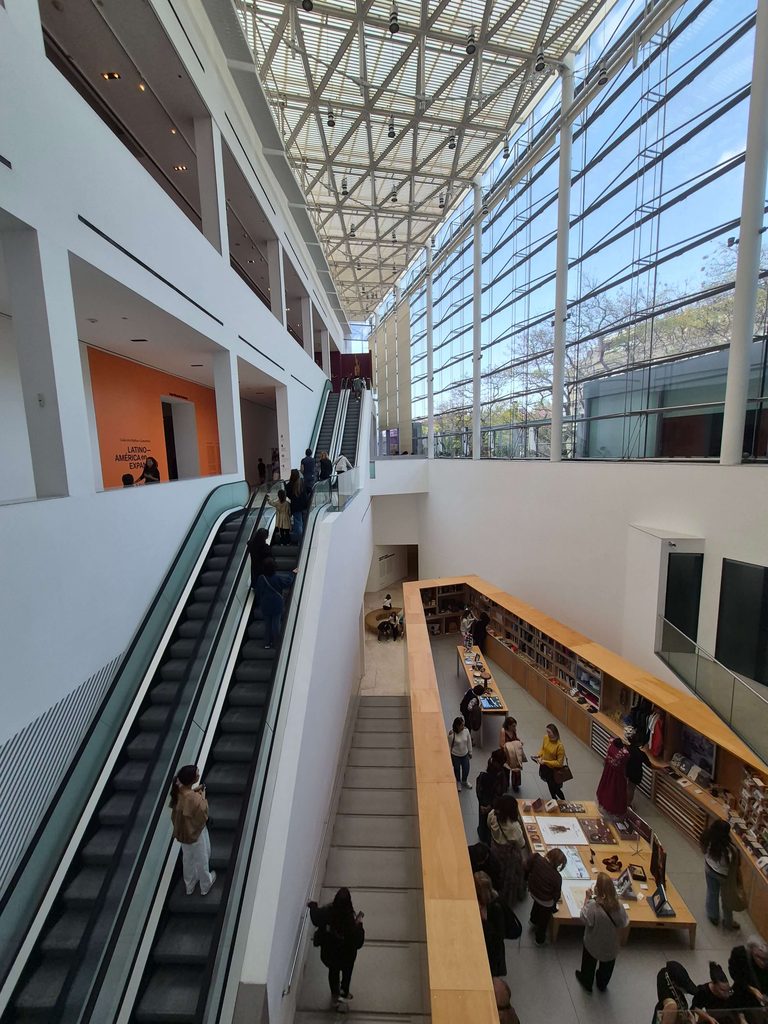
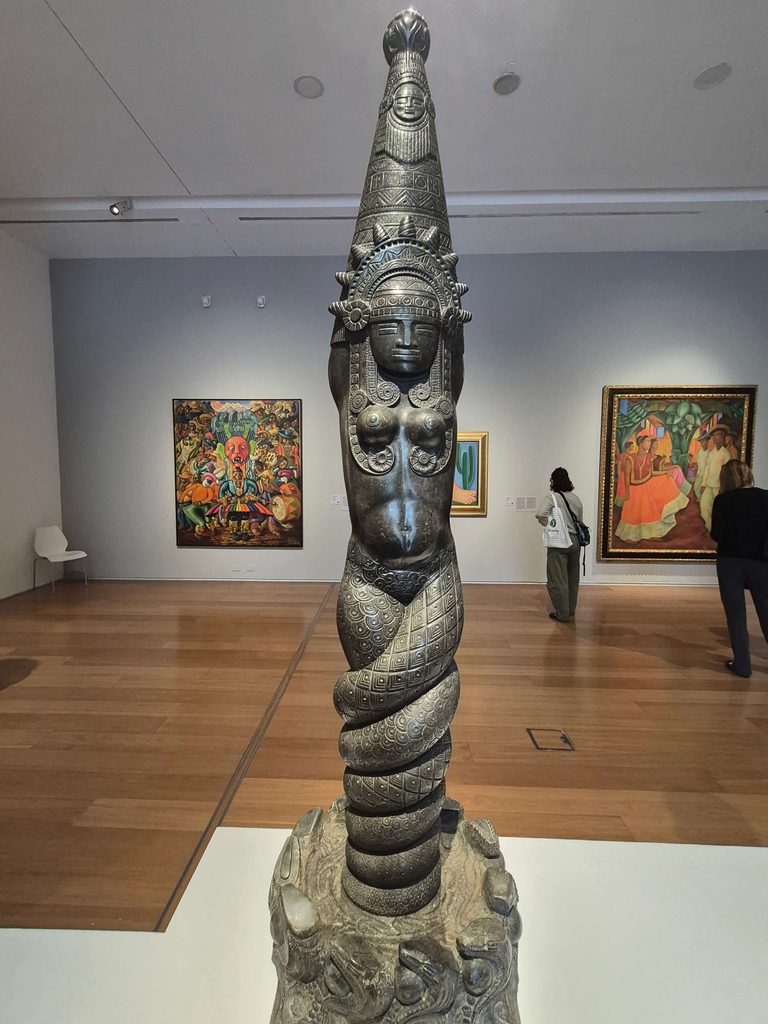
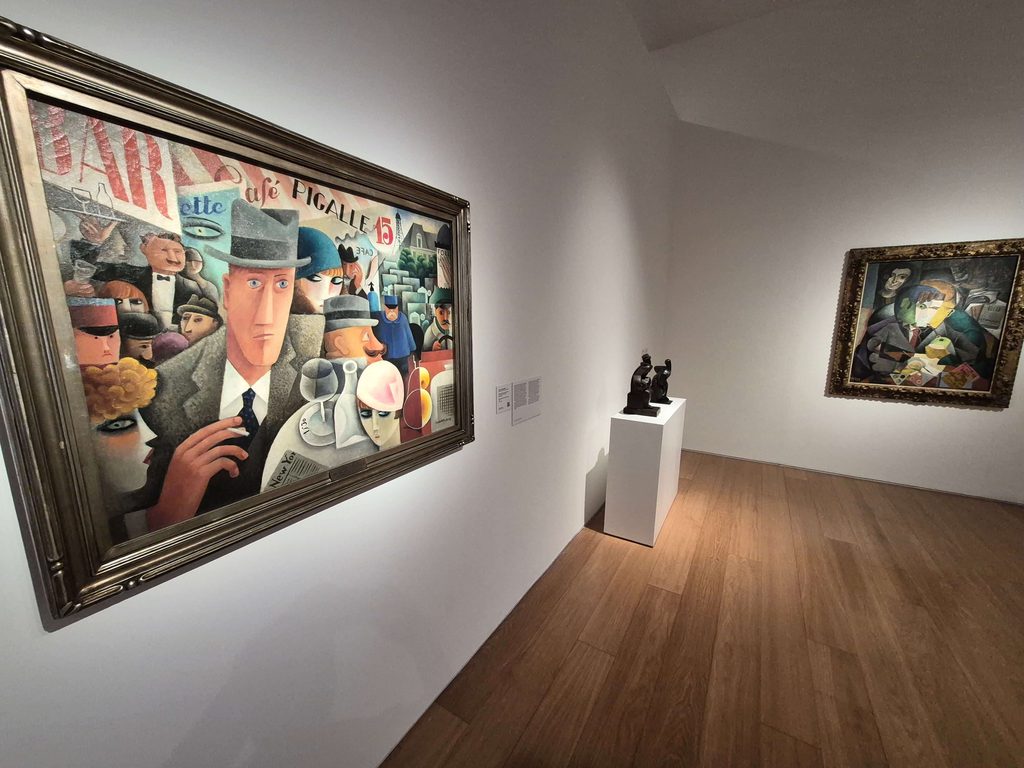
And it has some fascinating pieces and paintings.
Museum of Fine Arts
This museum has been in various locations in Buenos Aires since 1895. It has an eclectic mix of art including some from Goya, Rembrandt, Van Gogh, Rodin, Manet, and Chagall.
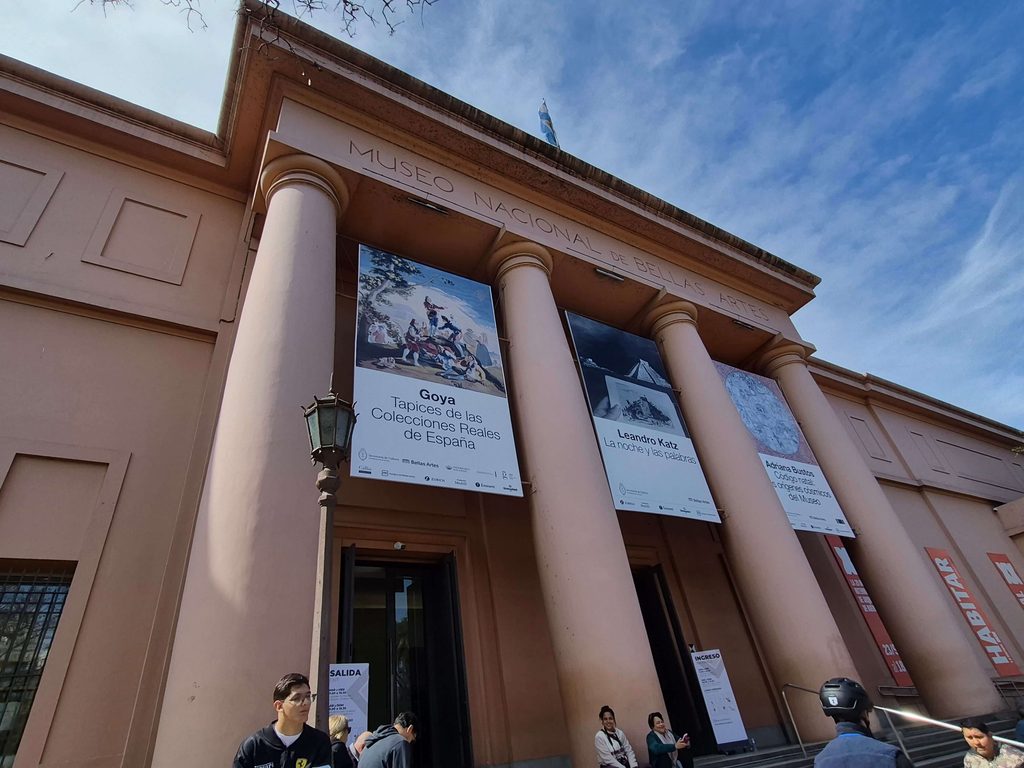
The most interesting section is this small gallery dedicated to the famous French sculptor Auguest Rodin, especially his famous The Kiss sculpture. Impressed by the Argentine government’s substantial acquisitions and his friendship with Eduardo Schiaffino, the founder and first director of the Museo Nacional de Bellas Artes (MNBA), Rodin donated a full-scale plaster cast of The Kiss (taken directly from the original marble in the Musée de Luxembourg) in 1908 as a gesture of thanks.
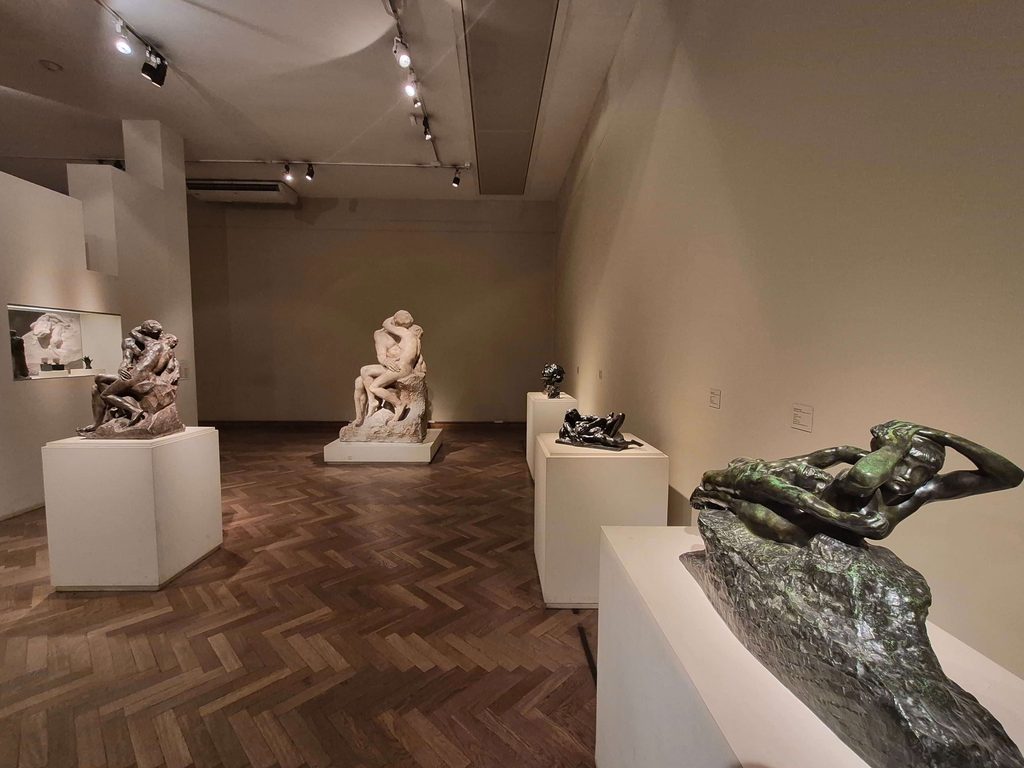
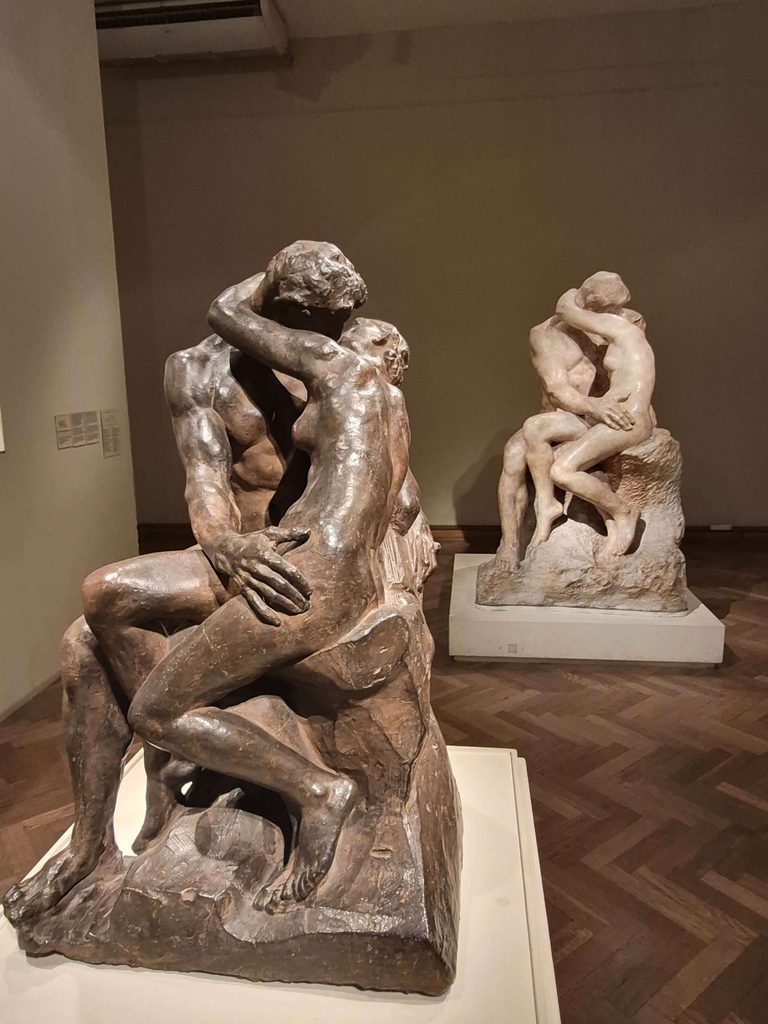
There is a wide range of art in this museum and I couldn’t keep track of who did what. But it was a great way to spend part of an afternoon.

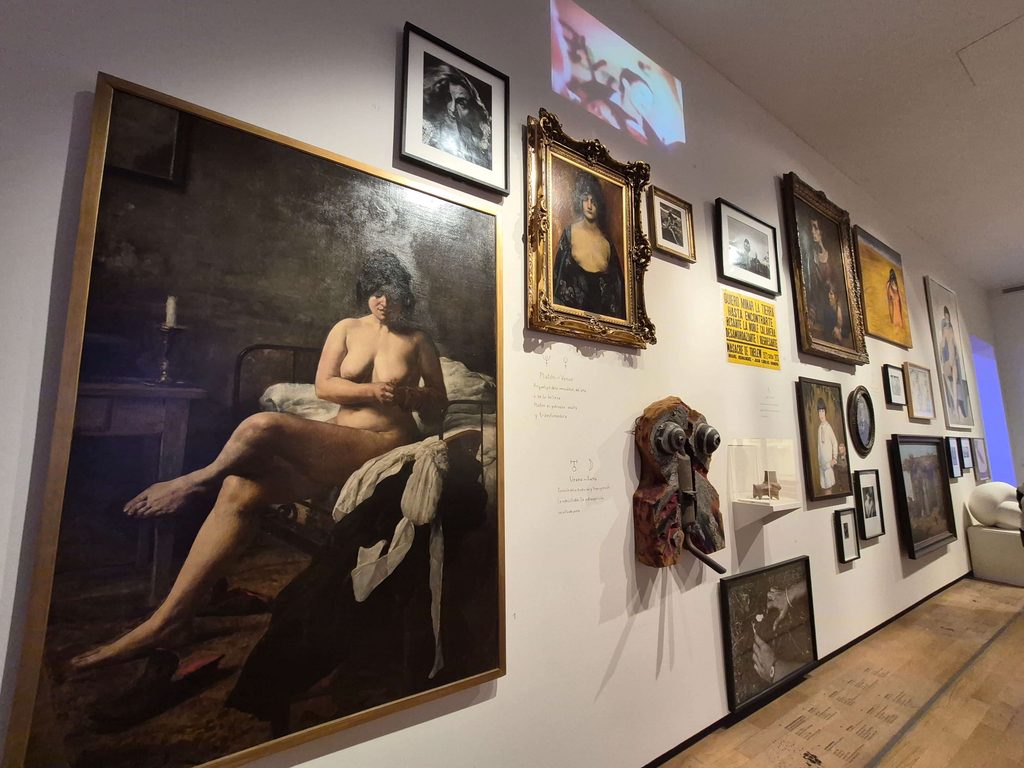
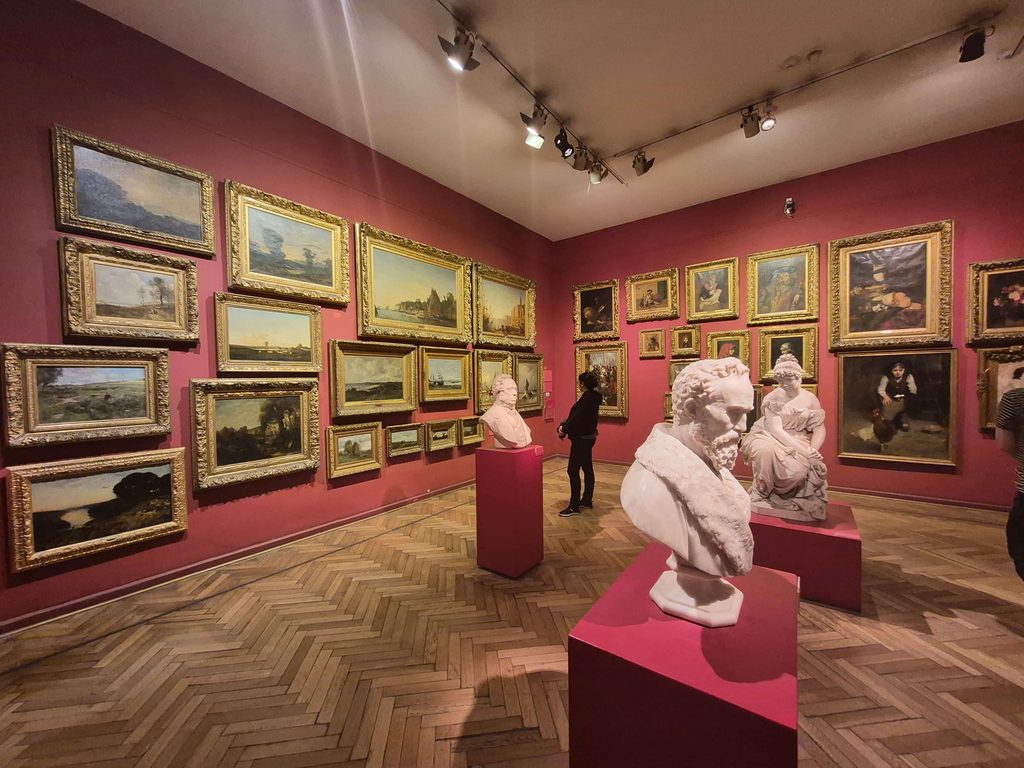
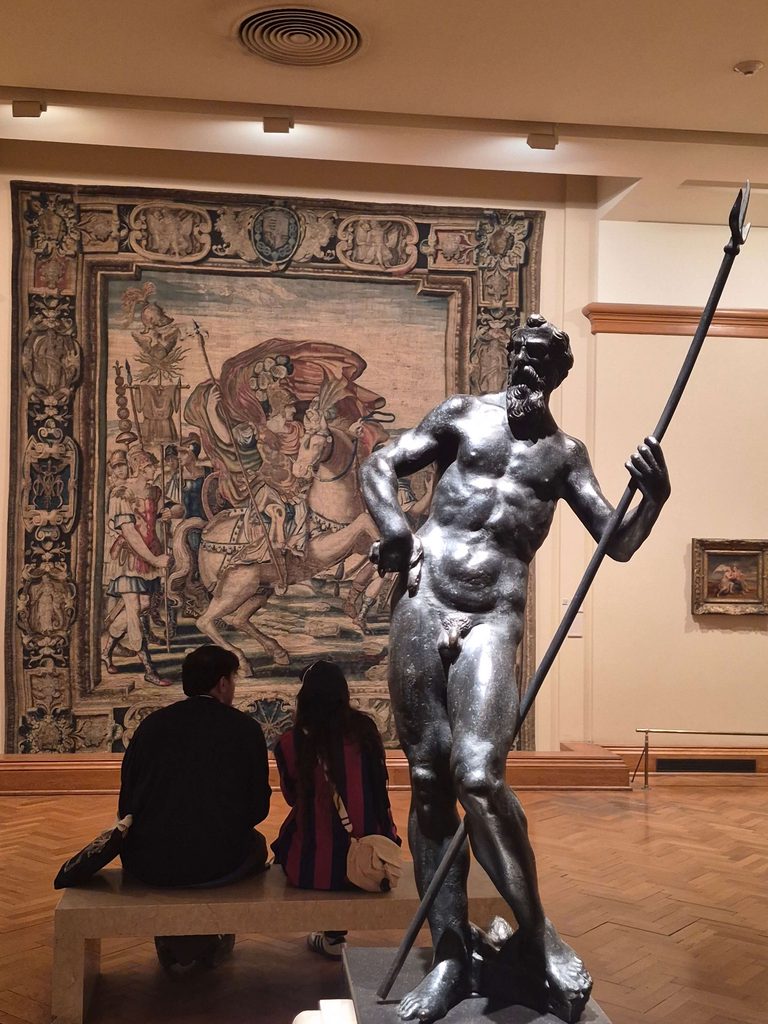
One interesting setup was an ancient Italian Etruscan statue in front of a 16th century tapestry.
Museo del Agua
This was a small museum that you could visit in less than 30 minutes. But what made it fascinating was it’s history, as described in the paragraphs below from the museum’s website.
“In 1871, the government commissioned the design of a comprehensive water, sewer, and storm drainage system for the entire city. This system needed a heart—one capable of holding millions of liters of water—and this very building, in this specific location, was chosen to fulfill that role.
Under this system, water was drawn from the Río de la Plata and purified in Recoleta, where the National Museum of Fine Arts now stands. That very building housed the pumping station that sent the already filtered water from Recoleta to this Palace. Despite the building’s majestic, palatial appearance, what it holds inside is a massive distribution reservoir. And because we are situated on relatively high ground, once the water was stored here, gravity allowed it to flow down to the rest of the city.
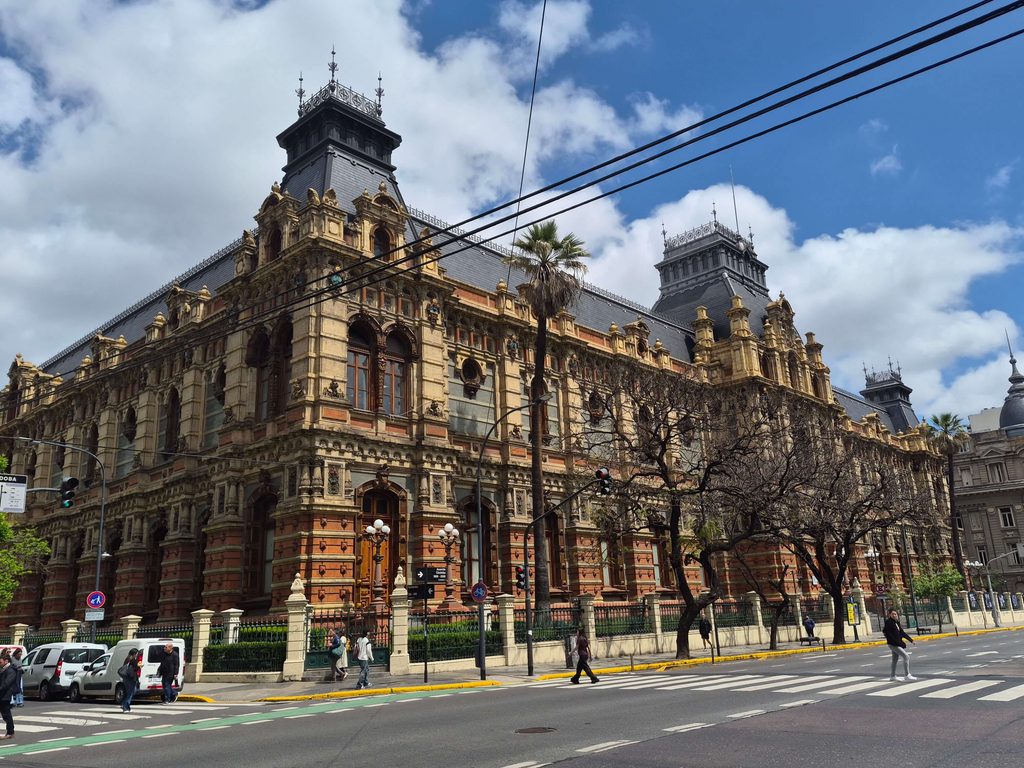
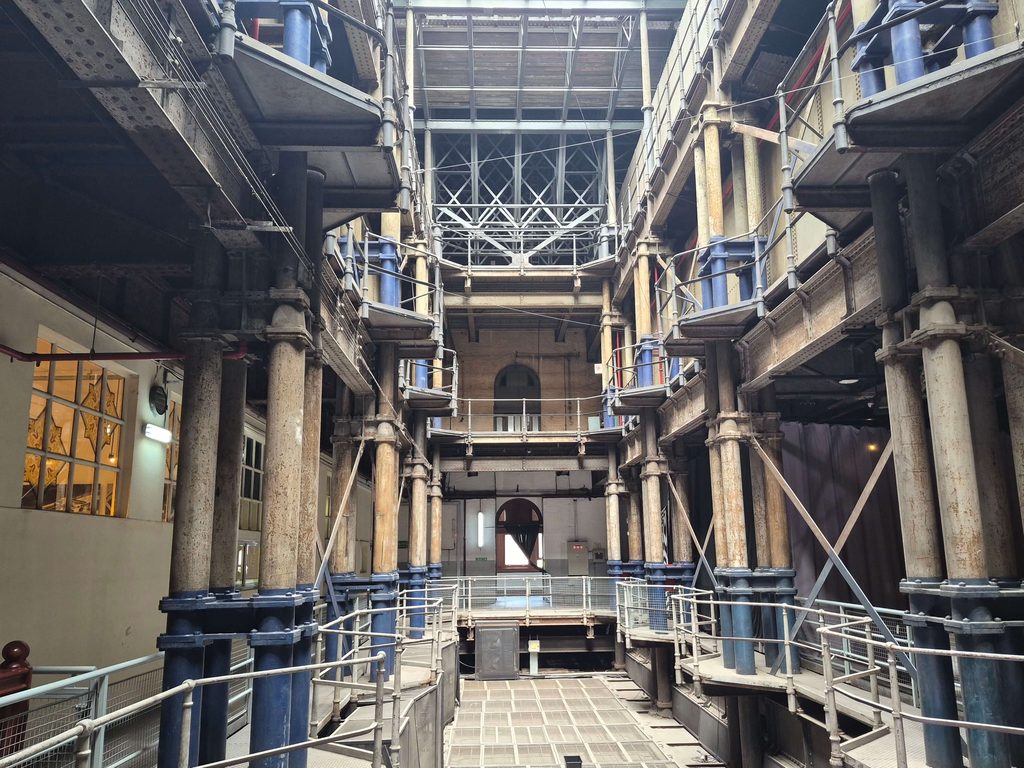
It was conceived as a model to be assembled piece by piece. For its exterior, 300,000 enameled tiles were imported from England to cover its four facades. And for the interior, one of the largest iron tank structures in the world at that time was shipped from Europe.
This Great Reservoir, designed during the Steam Era to supply a city of low-rise buildings (up to two stories) by gravity, began to experience problems with the arrival of electricity and elevators. The urban landscape changed rapidly, and Buenos Aires transformed into a great metropolis. Buildings soon surpassed the height of these water tanks, and the gravity-fed supply system gradually became obsolete.
This building operated at full capacity with all twelve tanks for only twenty years. After that, tanks were taken out of service progressively, from the bottom up, until 1978, when the third level was completely decommissioned. Since then, the Palace of Running Waters has ceased functioning as a large distribution reservoir and now hosts only administrative, social, and cultural activities.”
The incredible exterior view.
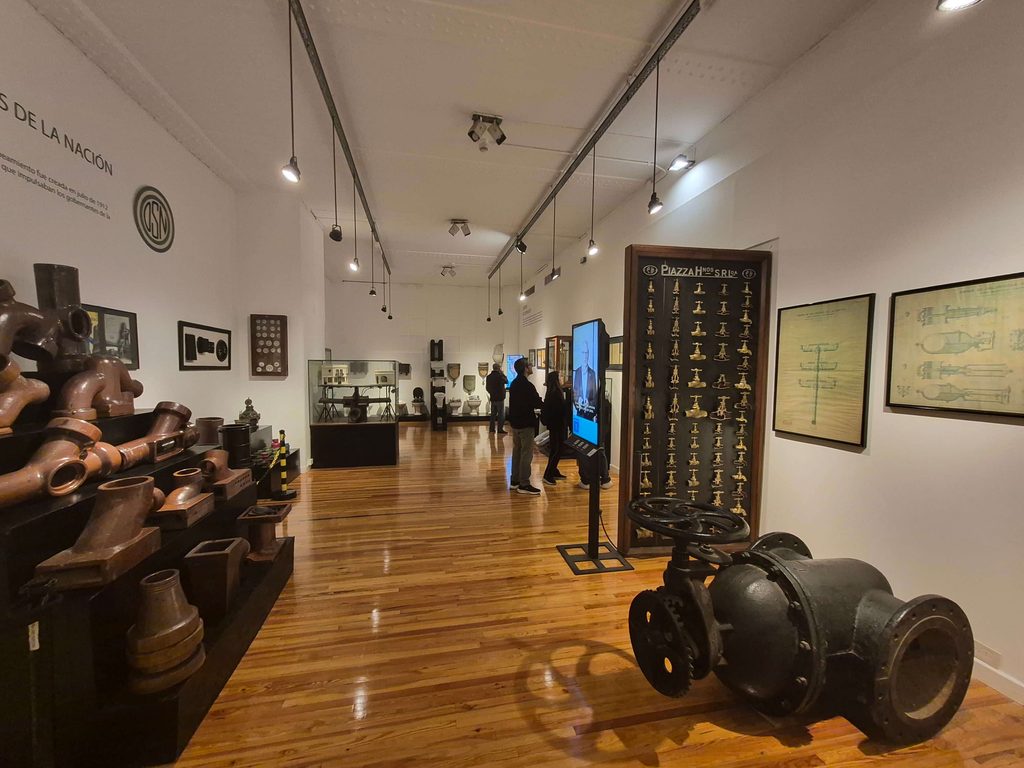
Some of the piping sections in the main lobby.
One of the huge water tank sections.
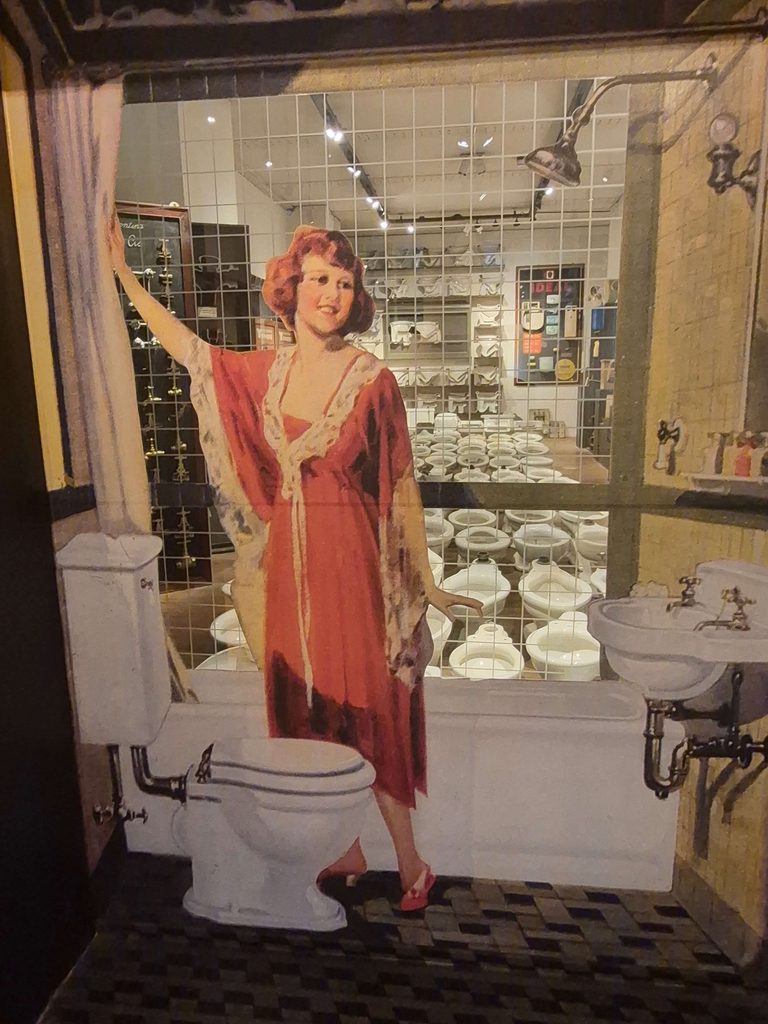
A display of toilets…because, why not?
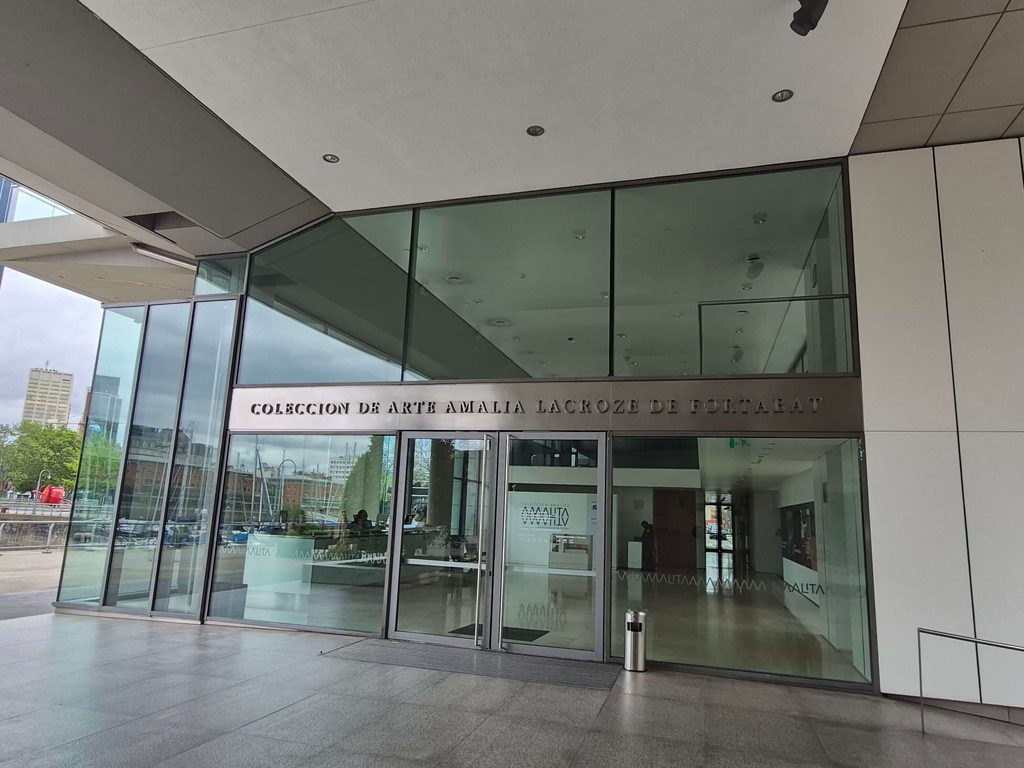
Colección de Arte Amalia Lacroze de Fortabat
This museum originated from the private collection of Mrs. Amalia Lacroze de Fortabat, one of the wealthiest women in Argentina, and an avid collector of artworks from different periods by national and international authors. The collection is made up of over two hundred artworks and objects.
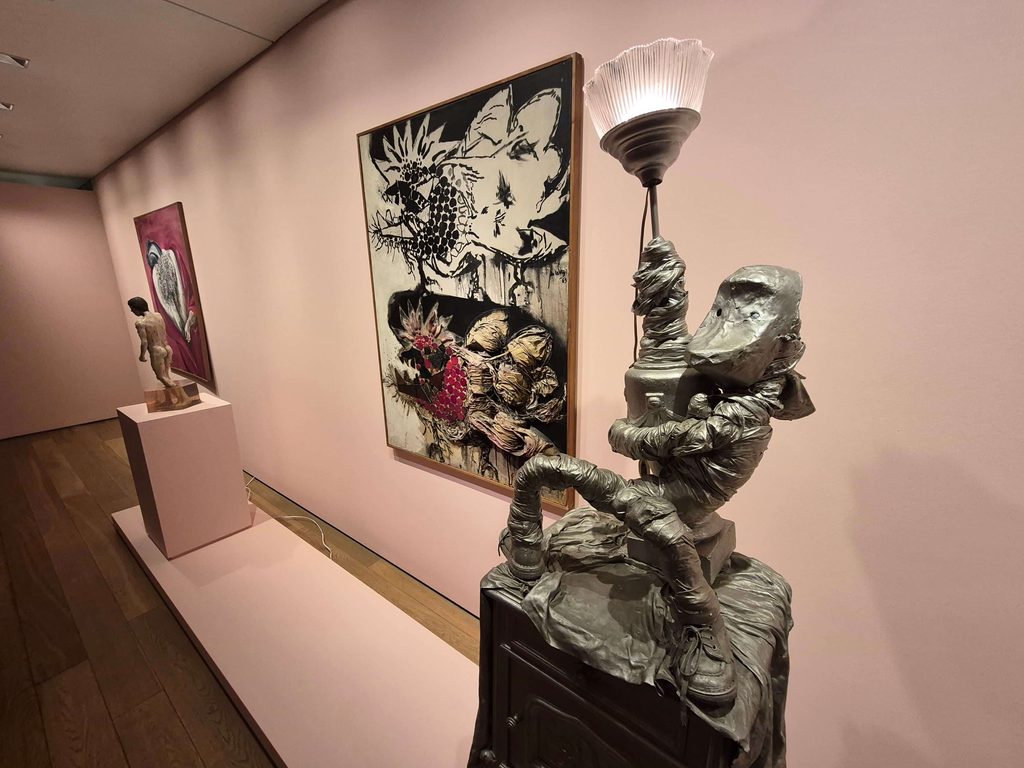
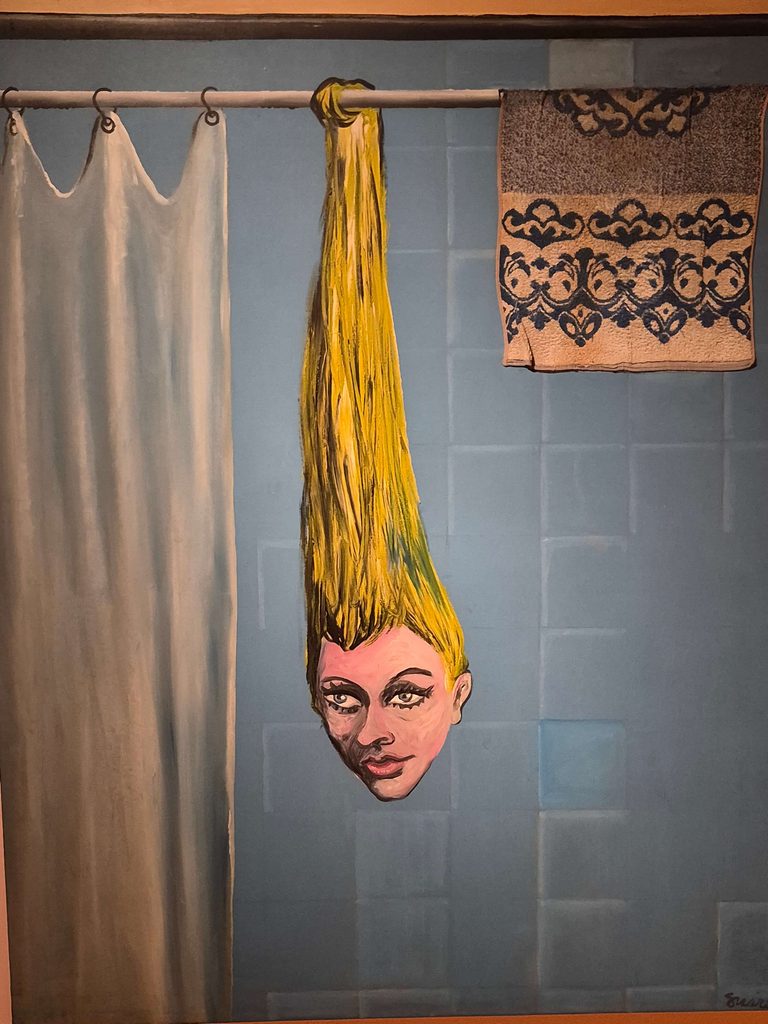
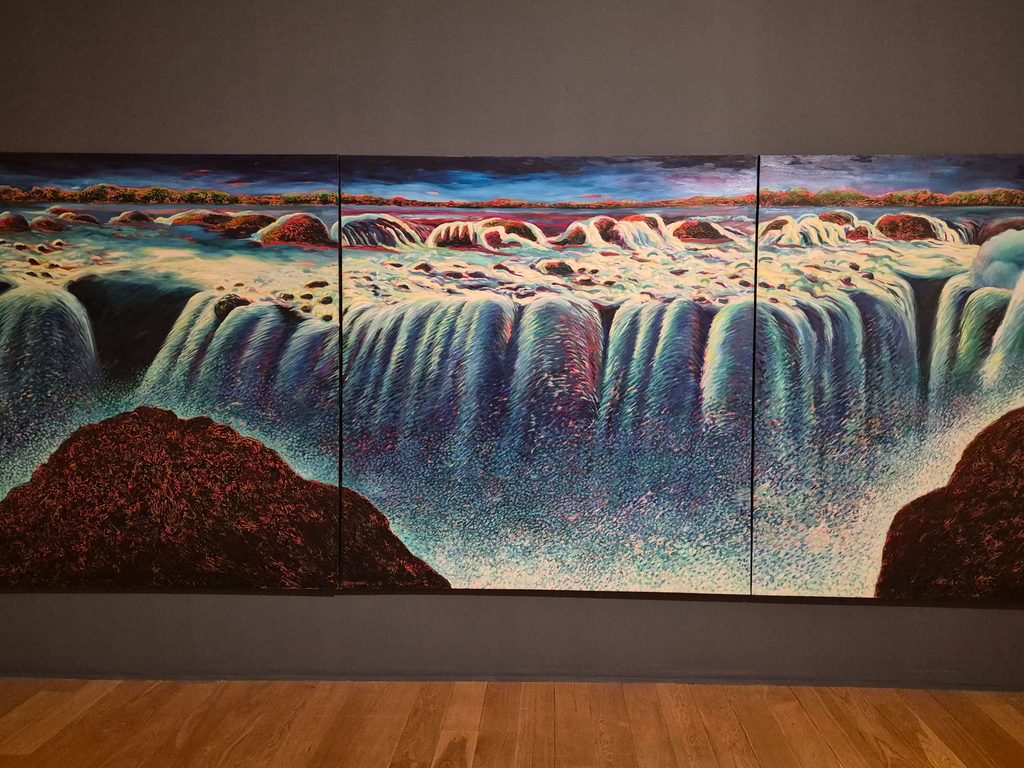
The main part of the museum is an eclectic mix of modern artwork.
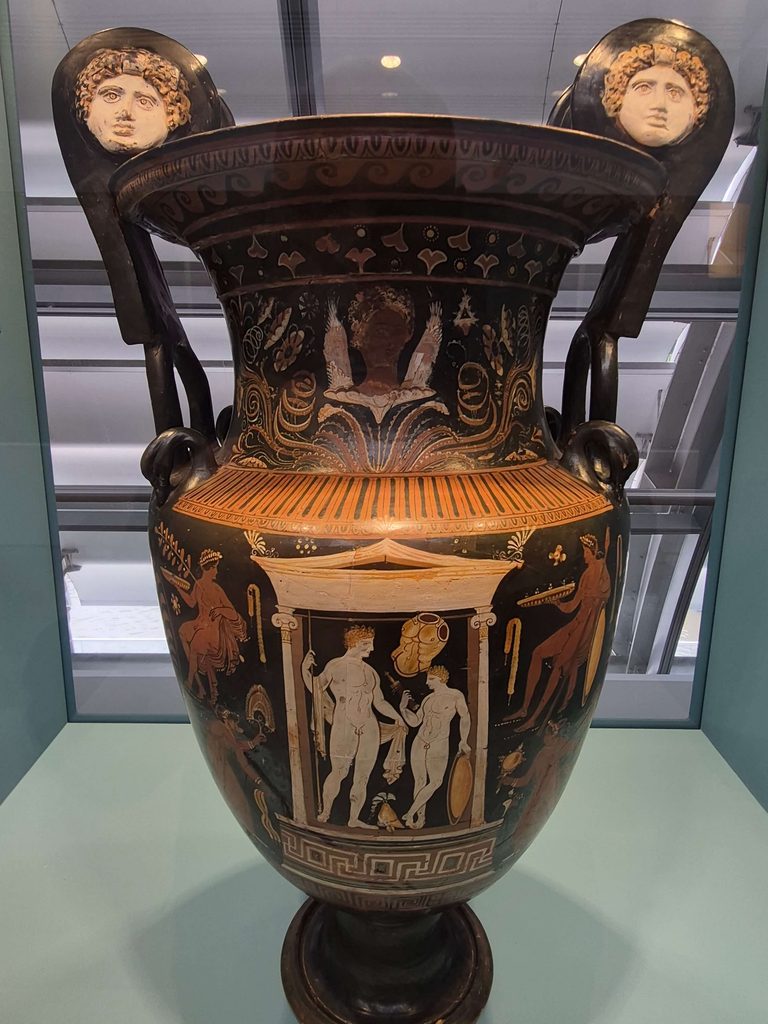
A smaller section on the top floor has some nice antiquities, including an ancient Greek vase…
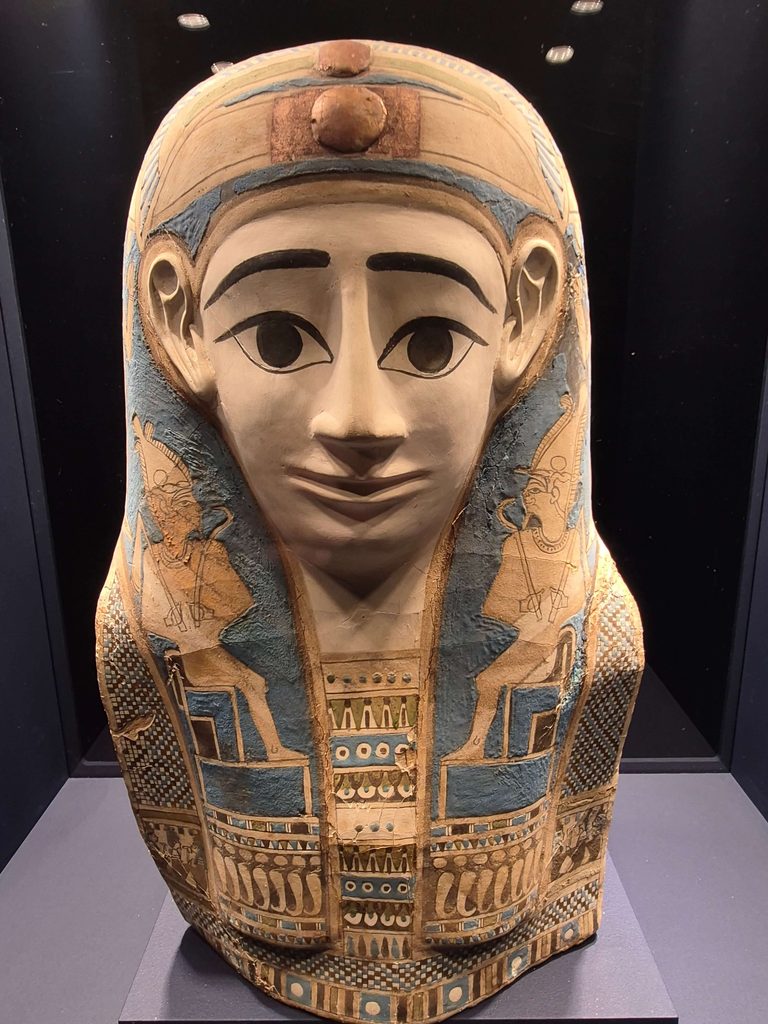
…and a late period Egyptian headpiece.
Mate
Argentina is in the heart of the mate triangle of Argentina, Uruguay and Paraguay. As by far the largest country of the three, it has the most dynamic mate infrastructure.
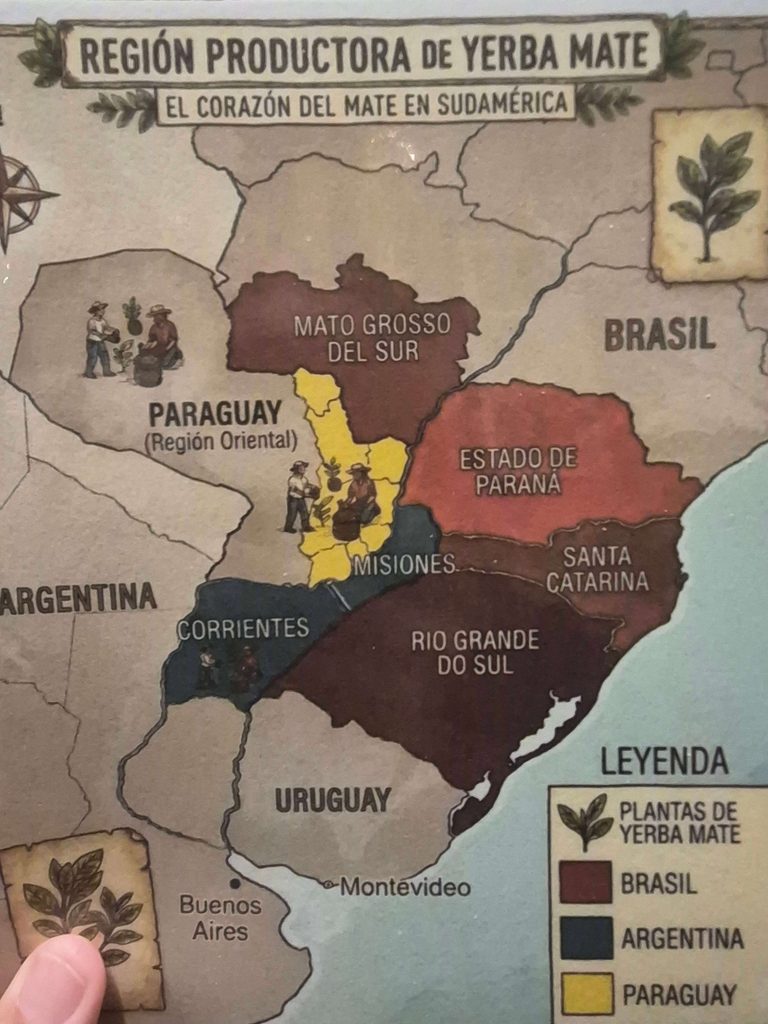
Since I had experienced mate in Paraguay and Uruguay, I had to do it as well in Argentina. The challenge is there really aren’t any cafes you can try mate. So I went to the Mate Bar Experience to get a fuller understanding of this important part of Argentinian culture. Rita and her husband have been running it for two years for tourists and they’ve done so well they will be opening a second location soon.
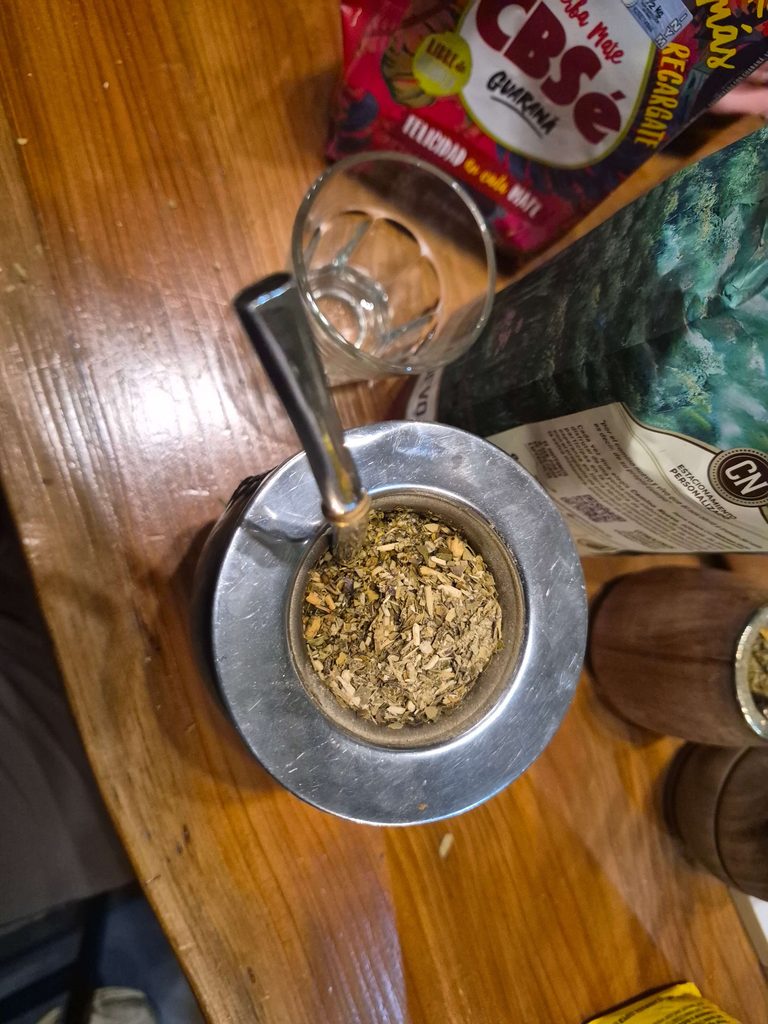
There are three components of mate: the leaves, the stems and the powder. The combination of those three components determines the taste. The first one we tried the most popular brand of traditional yerba mate called Playadito. Traditional mate has about 65-70% leaves, 25-30% stems and 5% powder. She did this in the quick style where the cup was smaller and the leaves, straw (bombilla) and water were poured in without much preparation.
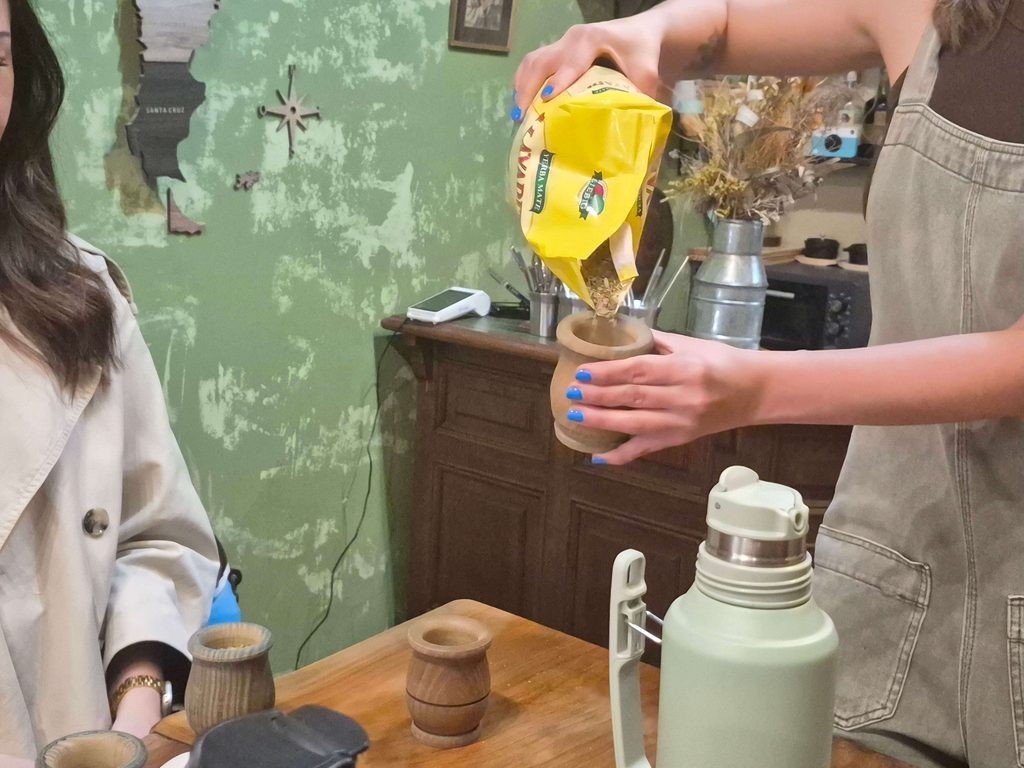
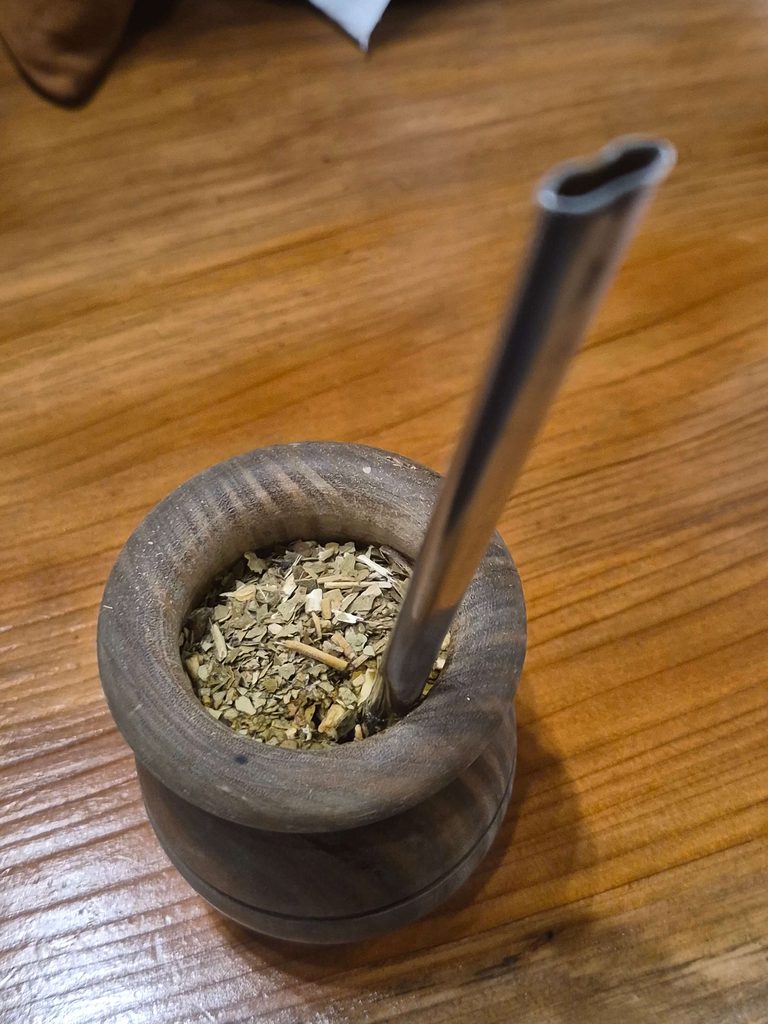
We also had a second cup with the most common suave mate called Pipore. Suave mate has less leaves and more stems. The stems have a less strong flavor than the leaves which creates a smoother (suave) taste.
The mate in Uruguay has a much stronger taste. It’s called stemless mate and it has 90% leaves and 10% powder. The funny thing is Lionel Messi, that icon of all things Argentinian, primarily drinks Uruguayan mate because of the influence of his friend and teammate Luis Suarez from Uruguay. It is a small blemish in the country’s otherwise unflinching worship of this great athlete.
There are also mixed types of mate where flavors such as orange and coconut are added. They are primarily used with cold water, which is why this type is so popular in Paraguay. Their much hotter climate means they primarily have cold mate (with the same cup/straw/thermos combination). In the summer, many Argentinians also switch to more flavored cold mate.
Next we got to learn the core traditional process. You fill the cup about 3/4ths full of mate. Then make about a 45 degree mountain on one side.
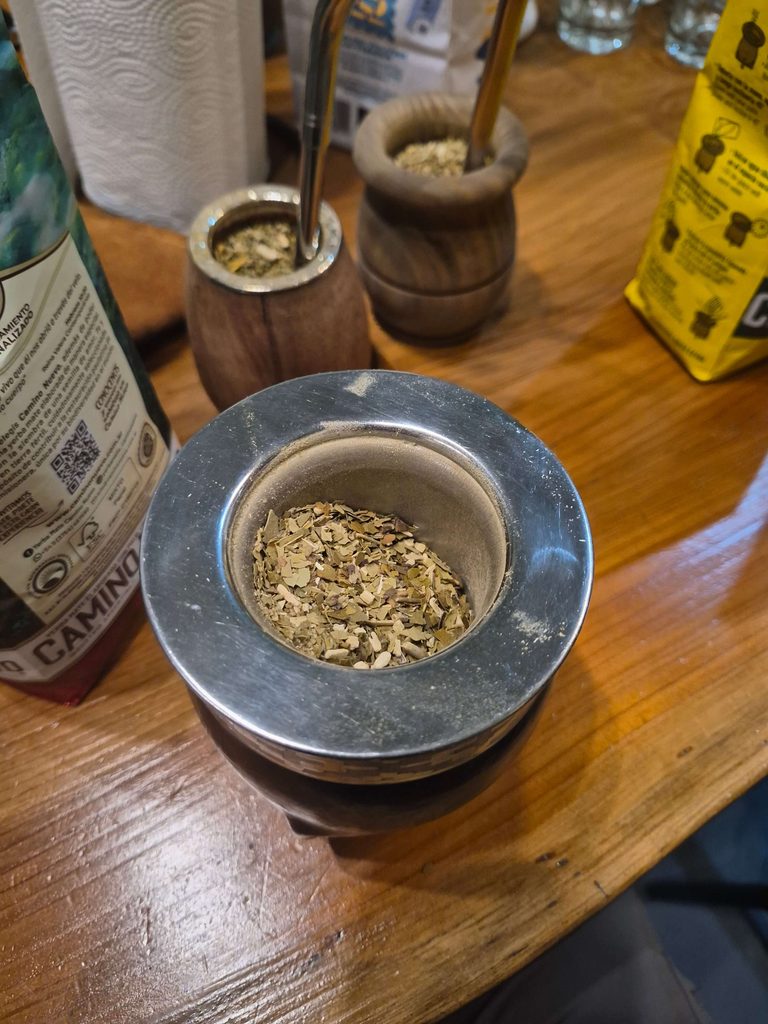
After that you pour a very small amount of lukewarm water in the valley of your mountain. This solidifies that section of leaves. After that you add your metal straw into that valley area. Notice how the straw has a filter on the bottom. That keeps the leaves out when you sip it up.
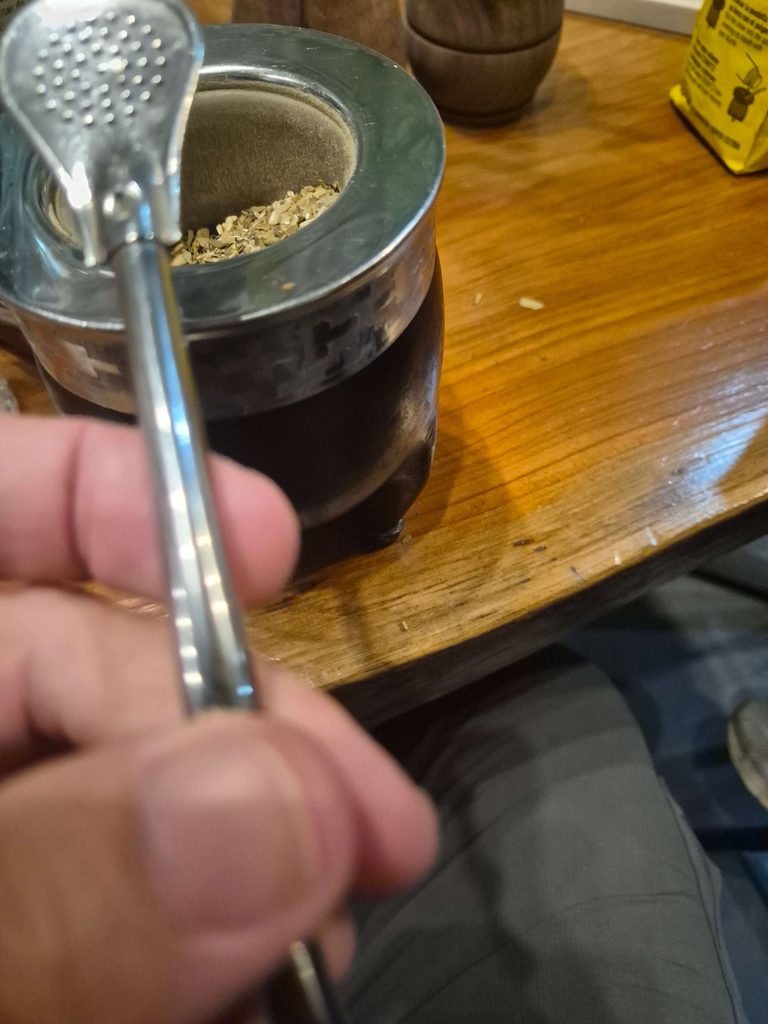
Finally you pour hot water from your thermos into that straw section, keeping the other sections of the leaves dry, and sip away. This process is repeated for as long as you wish.
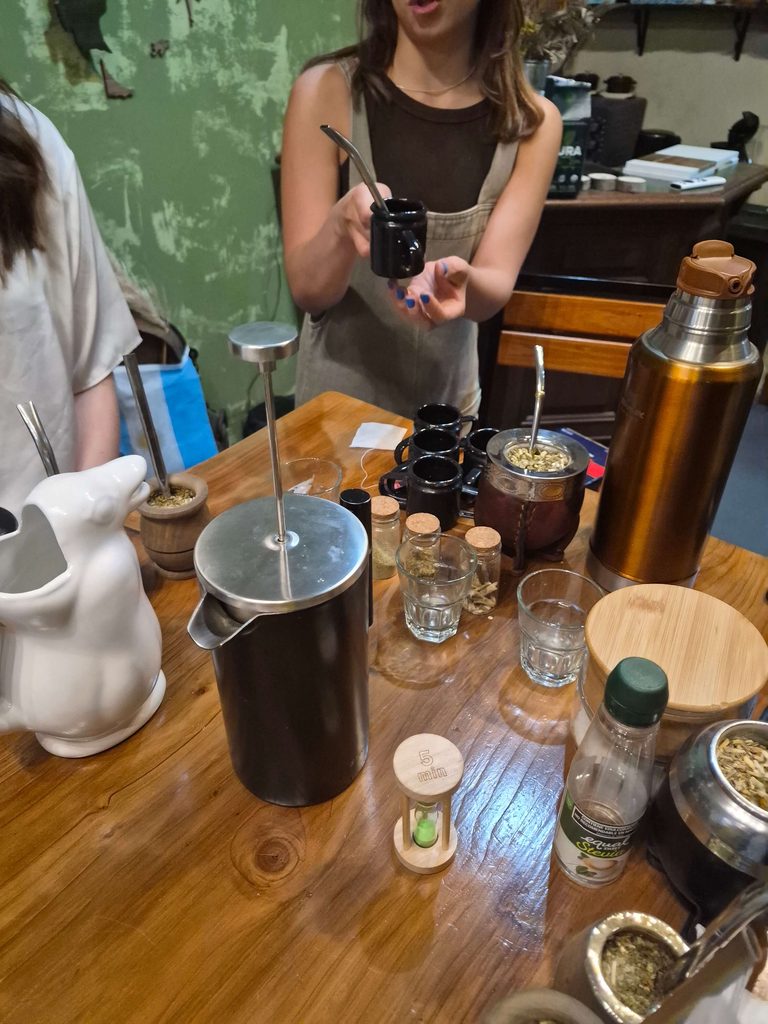
Finally, she used a French press to make little shots of mate tea in espresso like cups. Those were really strong.
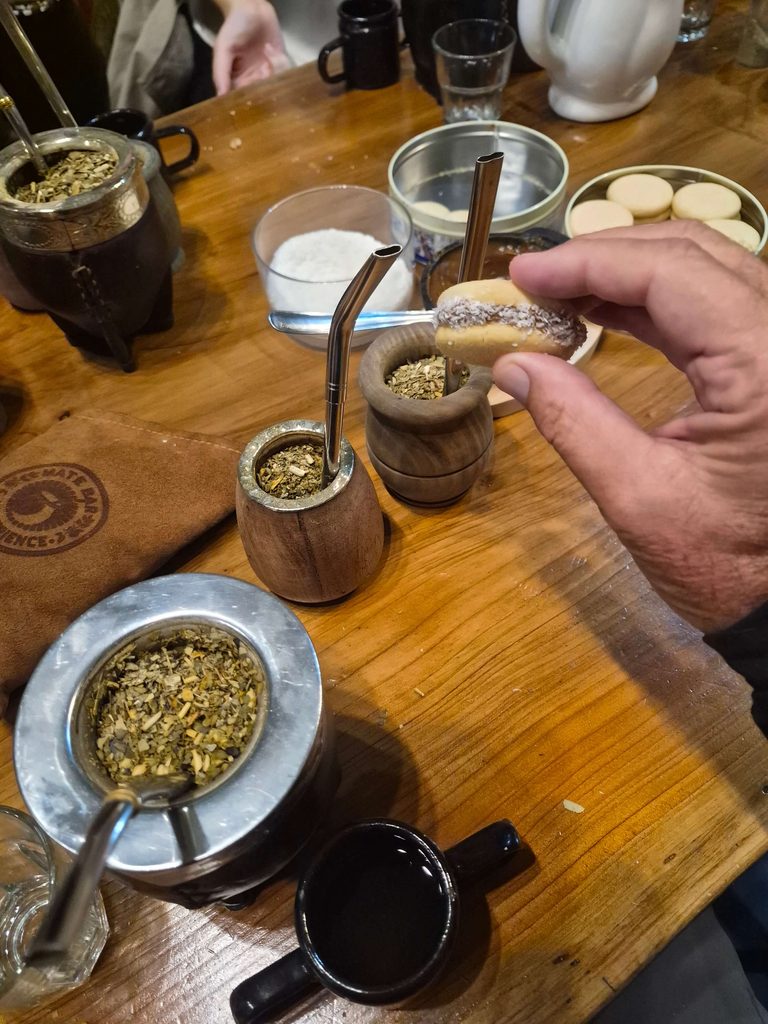
And of course we had to have some treats. We made our own alfajores by taking two sugar cookies, putting chocolate dulcet de leche in the middle and then rolling the edges around in coconut powder. The really sweet cookies were a nice compliment to the bitter mate.
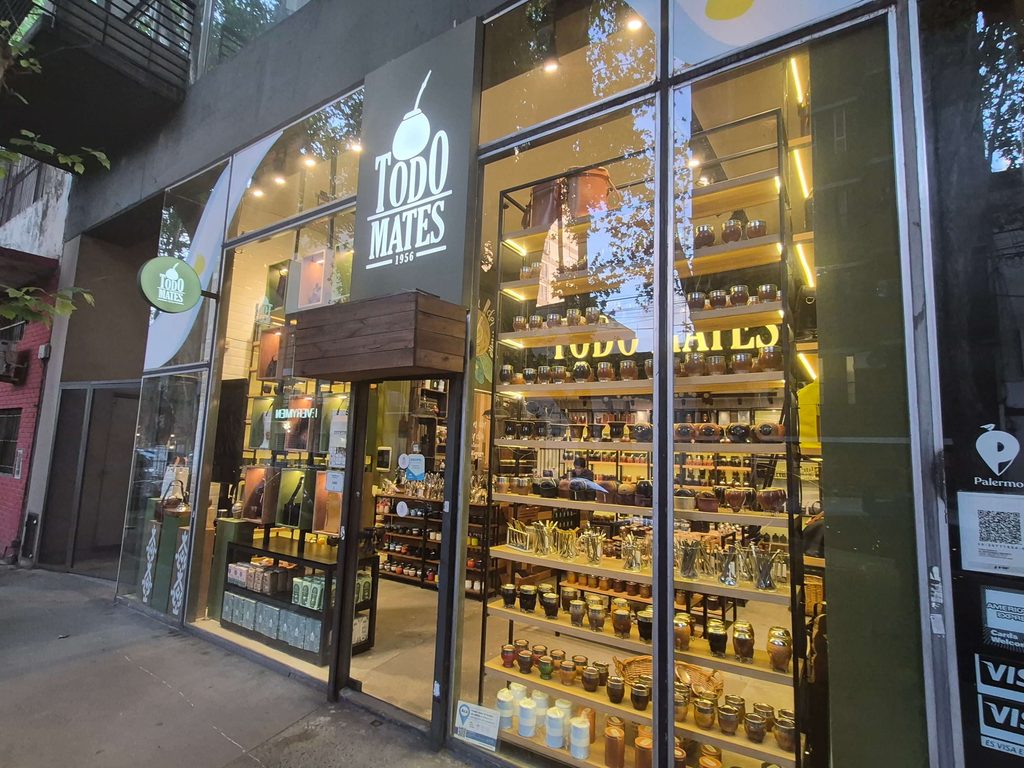
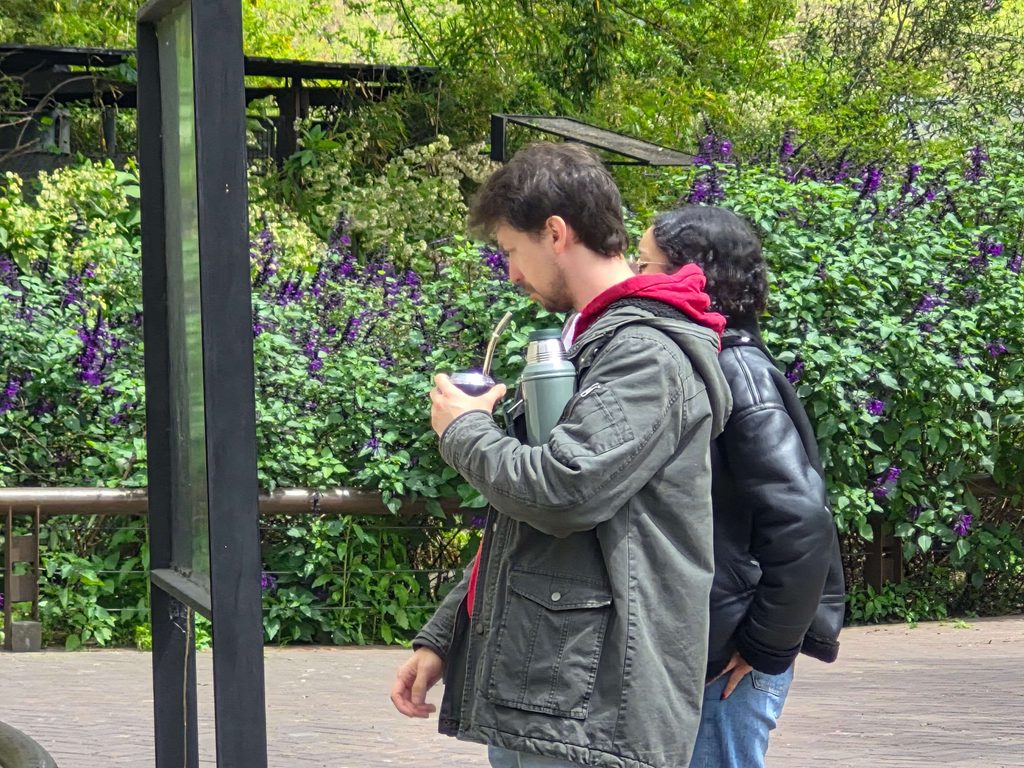
There are all kinds of stores throughout the city where you can get your distinct mate paraphernalia.
And here’s a couple displaying the proper way of carrying their mate components.
Food
There are four basic food groups in Buenos Aires: pizza, pasta, steak and empanadas. If you are OK with those, this city is paradise. And for me, for a couple of weeks, it was.
Buenos Aires has some of the best pizza in the world. It has all types, sizes and flavors. The most common core one is called fugazzeta. The dough is light and airy, it has basic cheese, but what sets it apart is it’s completely covered with cooked, soft, stringy onions.
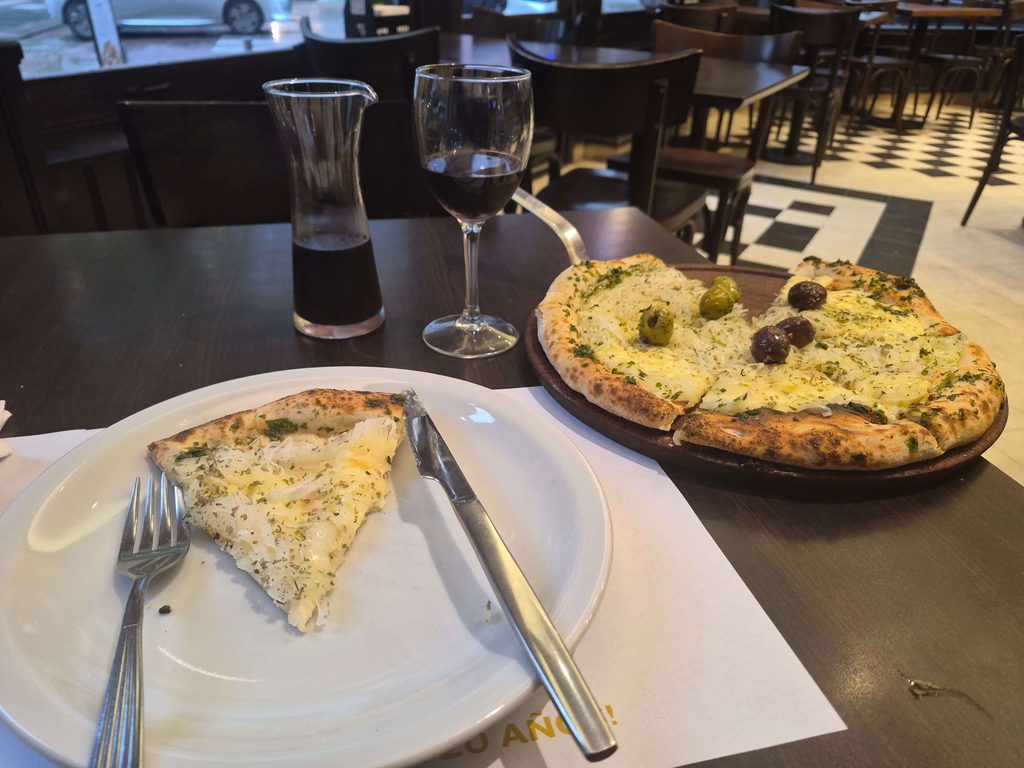
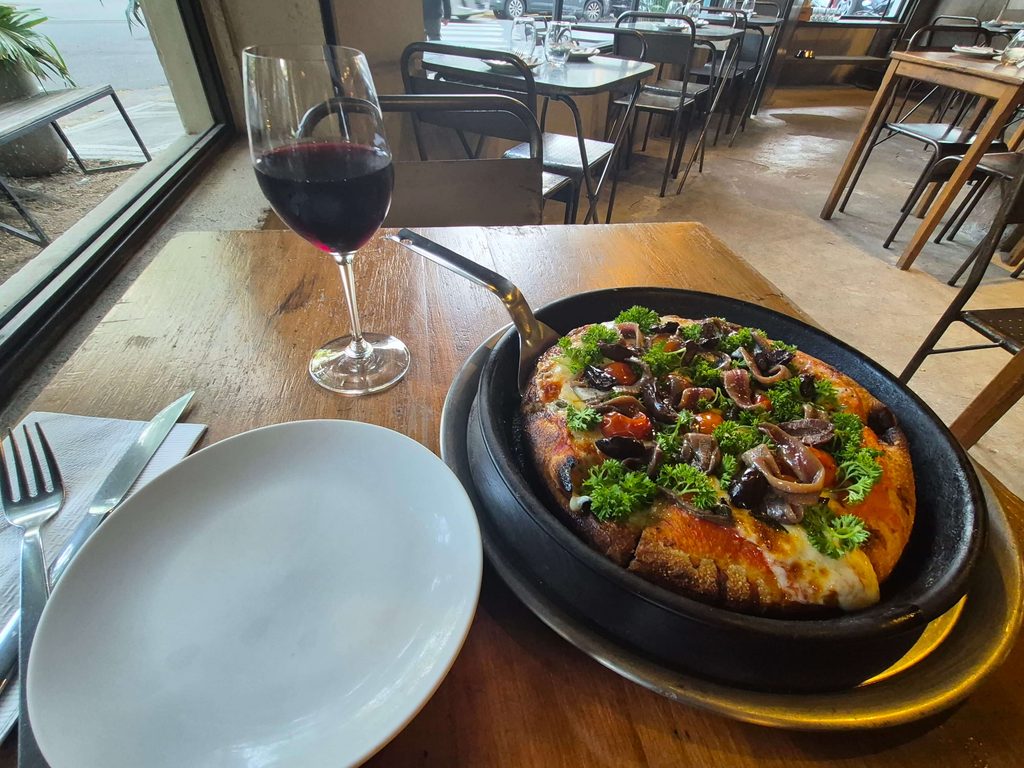
My favorite pizza was this insanely cheesy pizza with fresh anchovies. It also had olives and capers to round out the sharp taste matrix.
And, of course there is the steak. There are parrillas on almost every street in some parts of town. So I just picked a few from Google Maps reviews and tried them. My favorite was a 45 day aged strip steak at a parrilla just a block from my apartment.

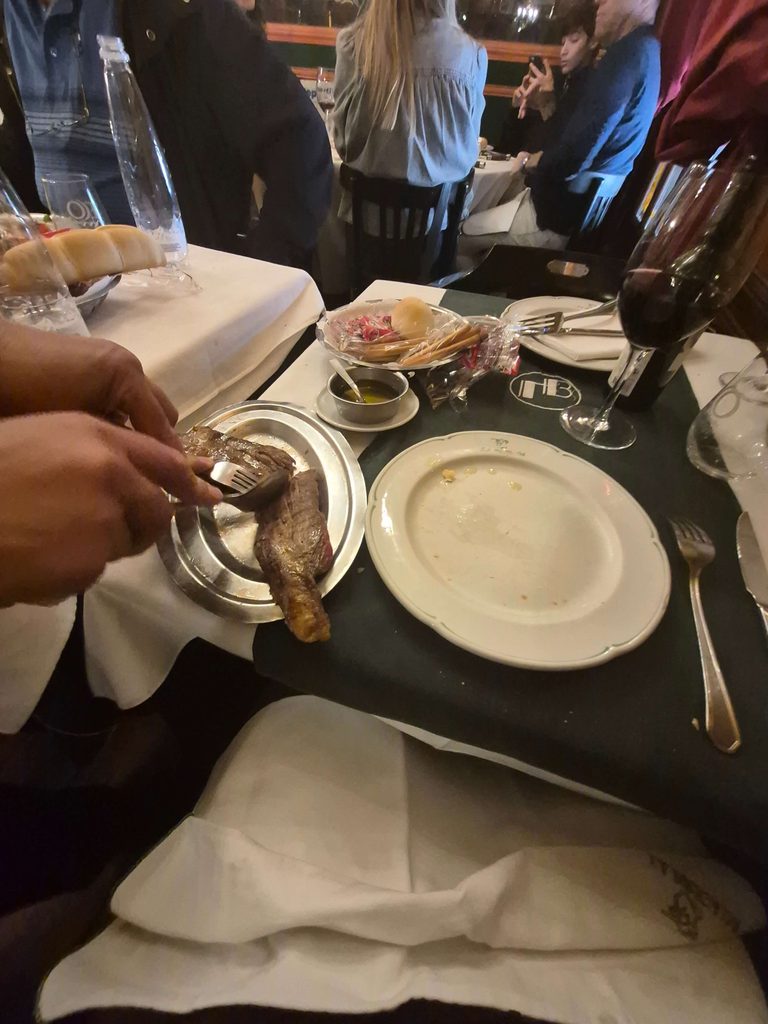
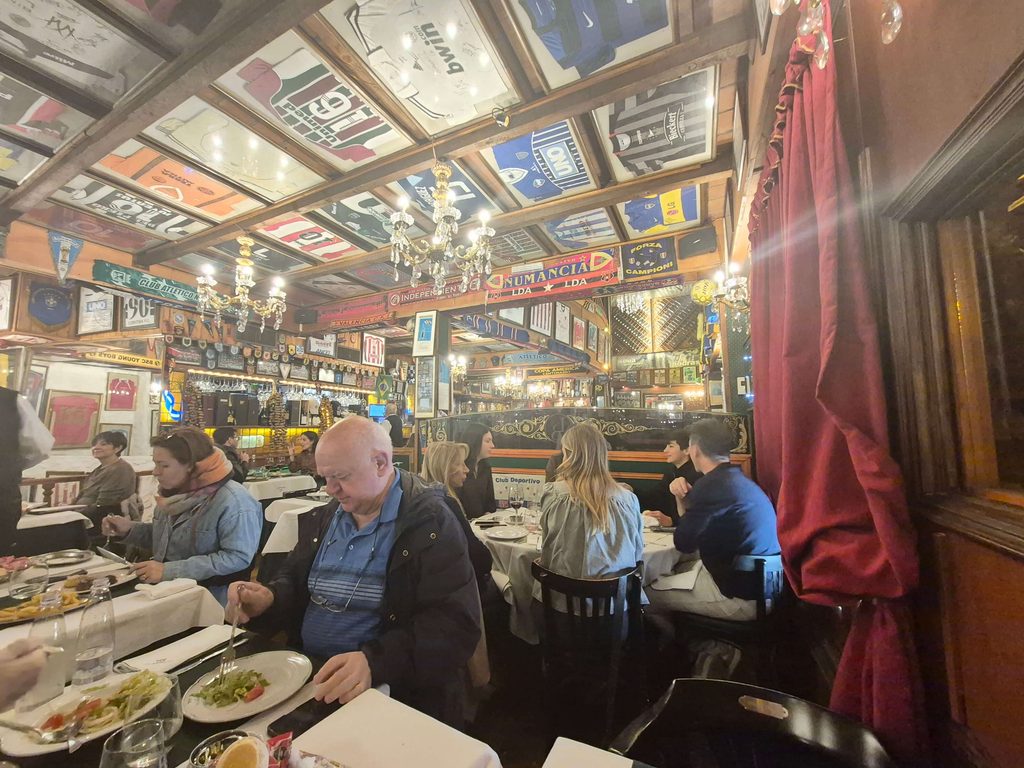
My favorite parrilla ambience was at La Brigada.
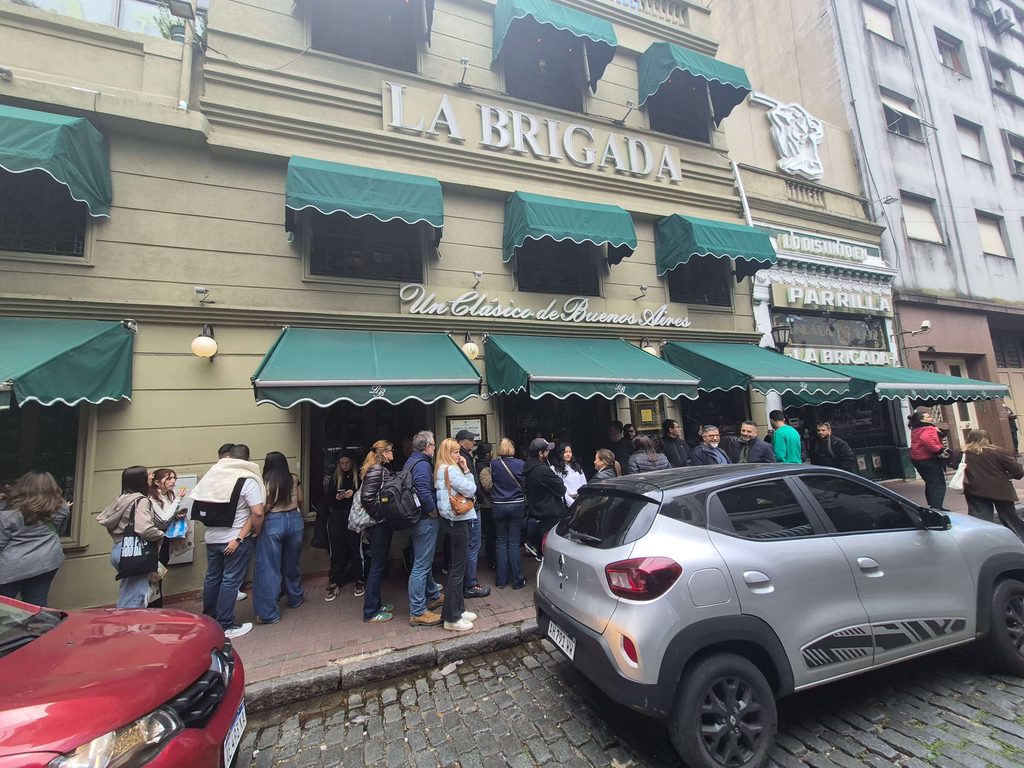
It became world-famous for the extreme tenderness of its steaks, famously demonstrated by waiters who cut the beef using only a soup spoon instead of a knife to show how soft the meat is, as my waiter does below.
It’s also known for having its walls completely covered in Argentine football memorabilia, including signed jerseys, trophies, pennants, and historic photographs documenting local and national sports history.
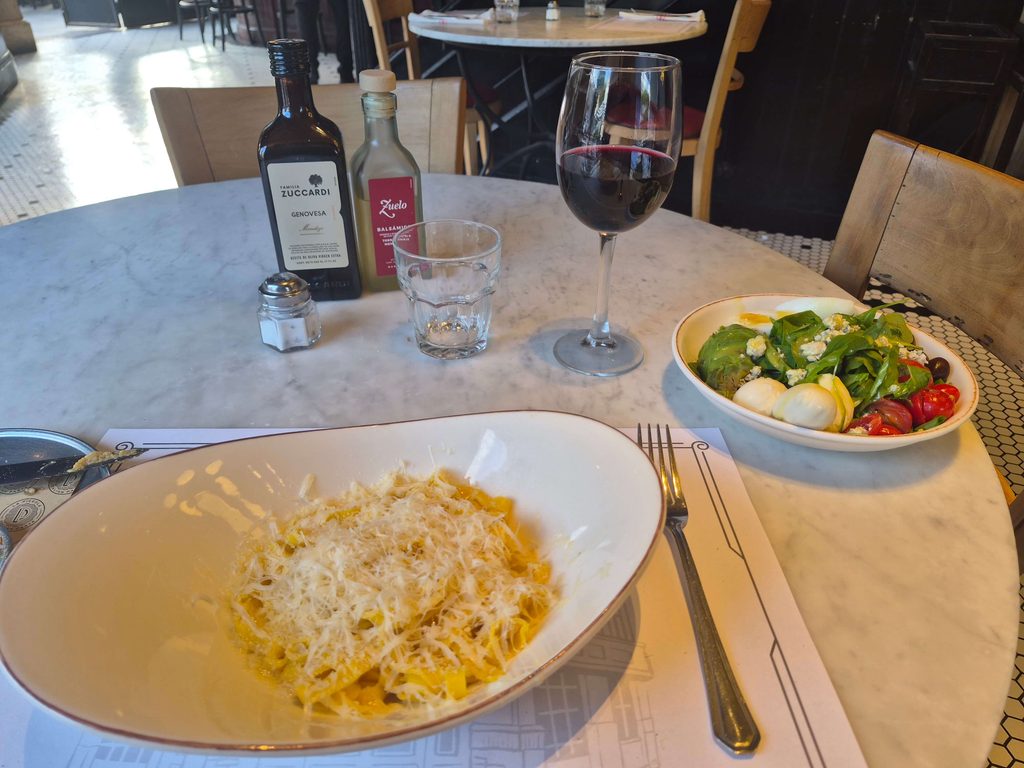
The pasta in good Buenos Aires restaurants is usually hand made. This fettuccine melted in my mouth. And this fresh cold salad of spinach leaves, avocados, olives, tomatoes and cheese was perfect.
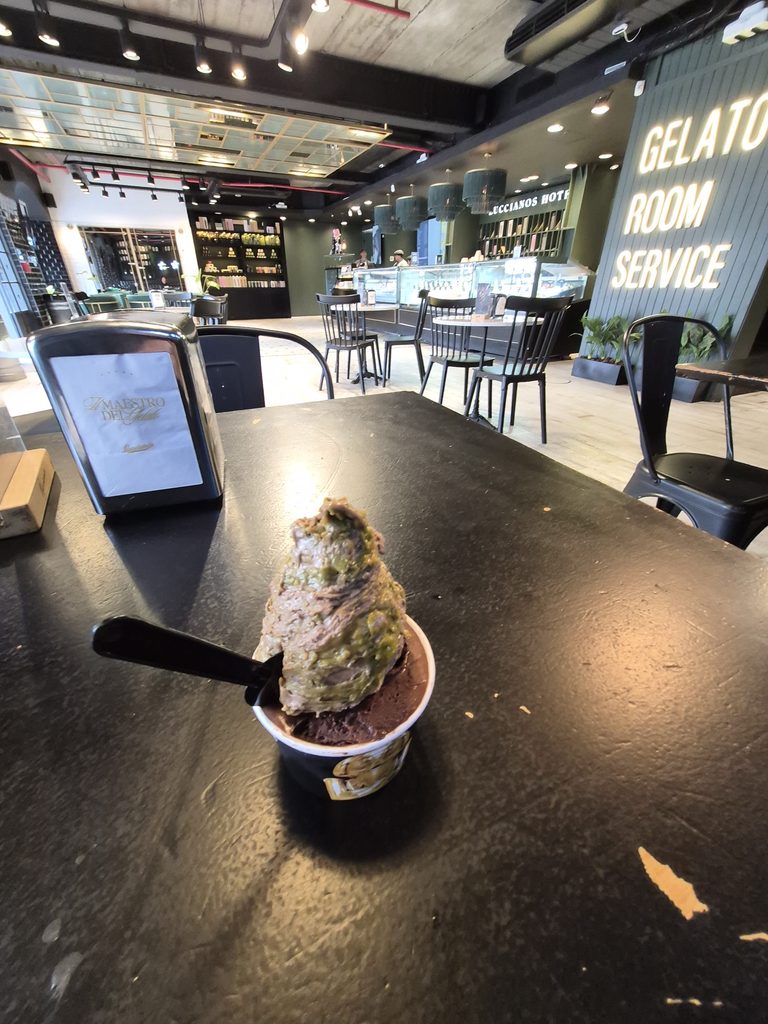
Once you’ve finished one of the four core food groups of Buenos Aires, then there’s always room for it’s amazing gelato. I tried a bunch of places and the best was the small chain called Luccianos. Yes, it definitely feels like gelato room service!
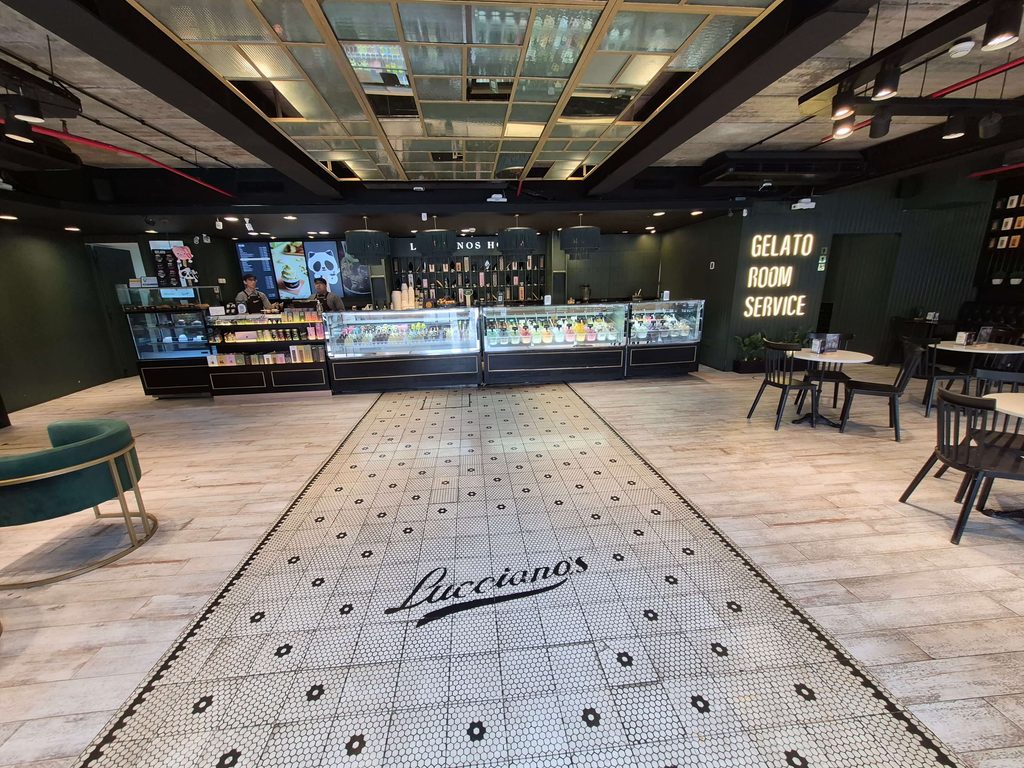
My favorite was the Dubai chocolate mixed with 80% dark chocolate. I was a repeat offender of this tasty crime.
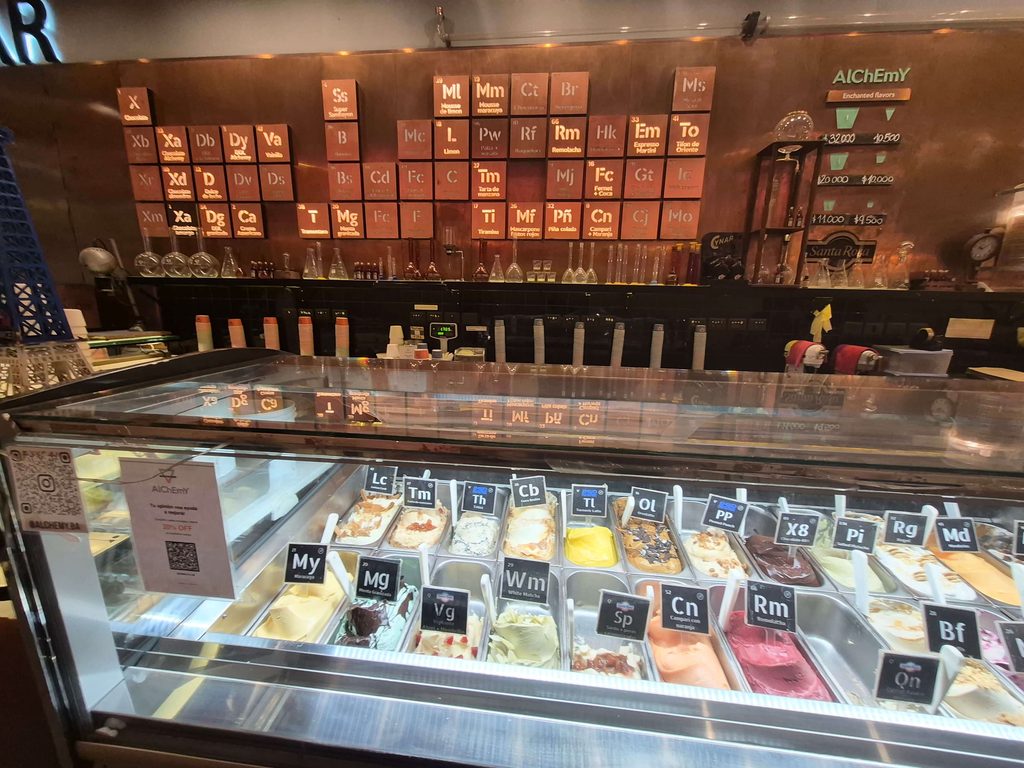
The most interesting shop was Alchemy, where they are known for mixing all kinds of crazy flavors together. I sampled numerous unique cheese based flavors.
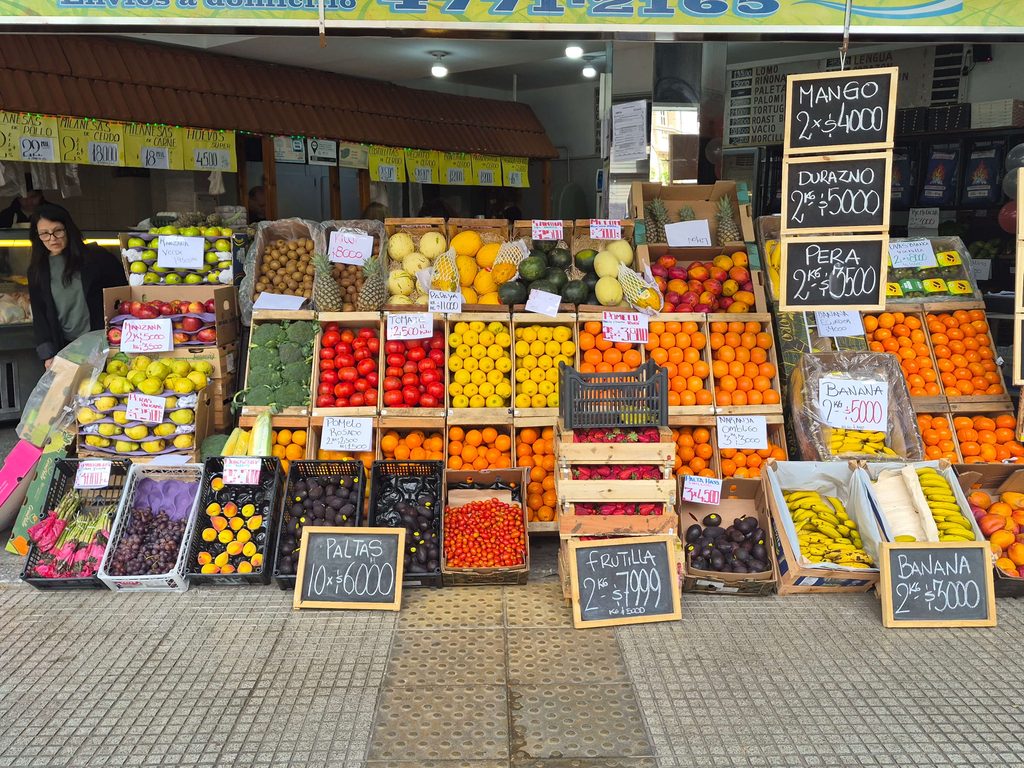
If you get tired of the city’s core heavy food choices there are scores of high quality fruit and vegetable shops every few blocks. There were a couple of nights where just having some fruits for dinner was a good break from the traditional Buenos Aires meals.
Apartment
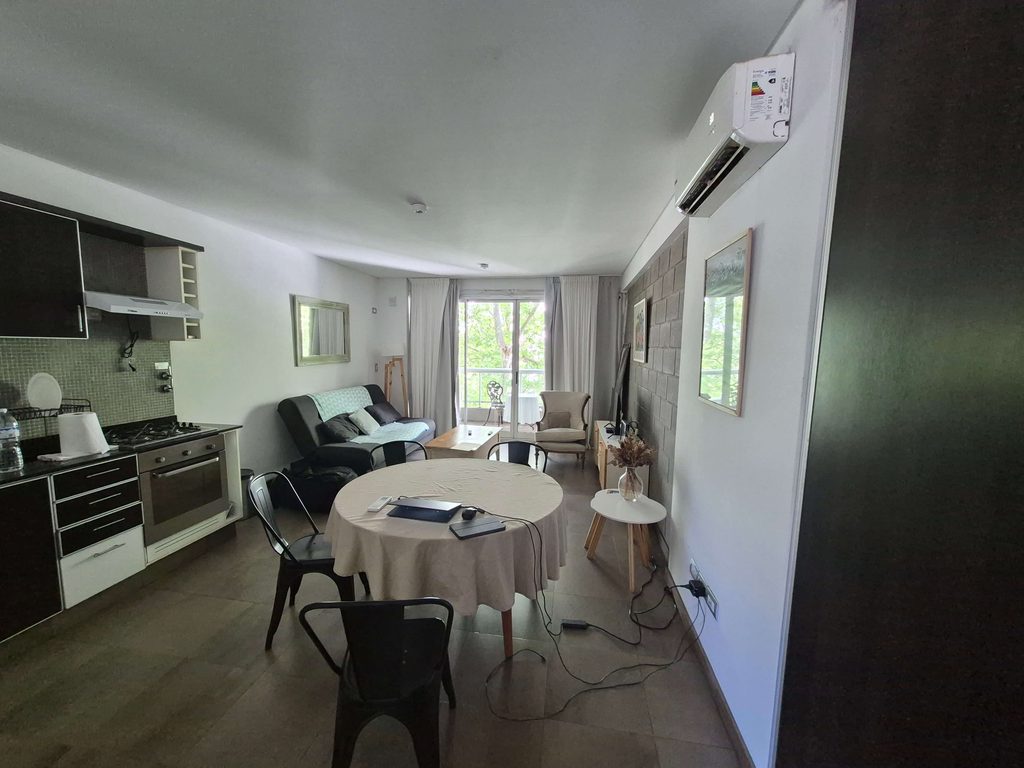
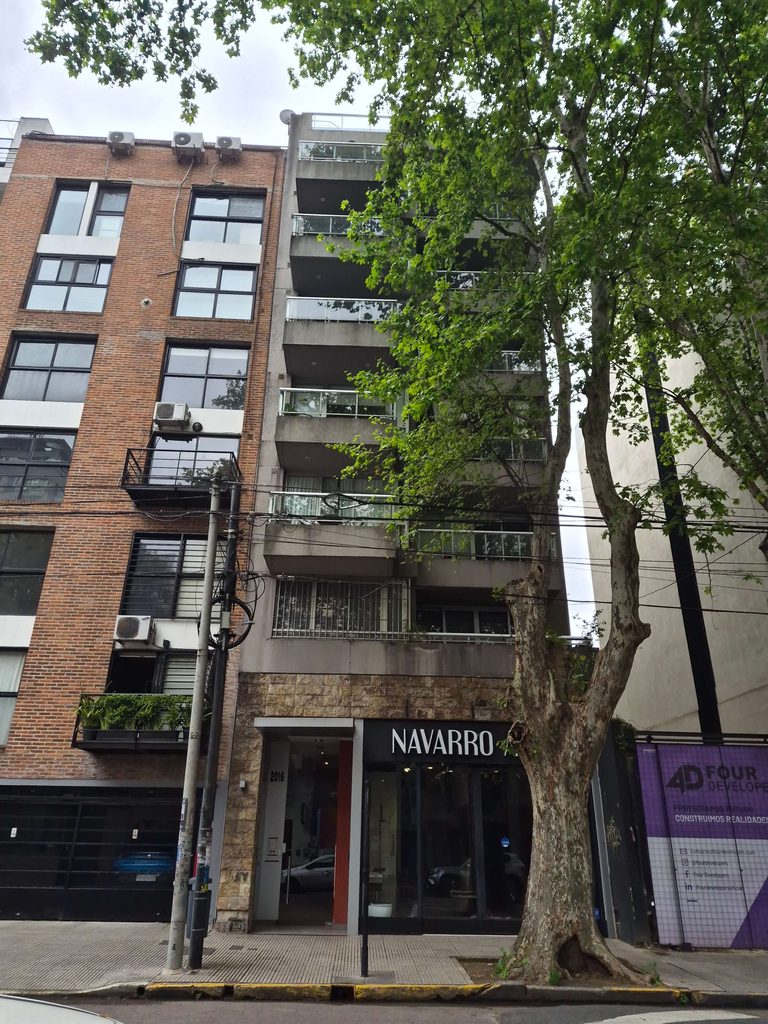
I stayed in a comfortable, somewhat quirky Airbnb apartment in a great location in Palermo.