The Atacama Desert in northern Chile is the the driest nonpolar desert in the world. The average rainfall is about 15 mm (0.6 in) per year, although some locations receive only 1 to 3 mm (0.04 to 0.12 in) in a year. Some weather stations in the Atacama have never received rain. Periods up to four years have been registered with no rainfall in the central sector.
It may also be the oldest desert on earth. Recent geological and scientific studies indicate that the region started drying out more than 40 million years ago. Certain boulder surfaces and gravel beds in the desert show evidence of not being moved by significant water flow for 15 to 23 million years.
So why go to someplace that remote and arid? It turns out, there are a lot of pretty amazing experiences to be had here.
Climbing the Cerro Toco Volcano
What would you think about climbing to top of the 5,604 meter (18,386 foot) Cerro Toco Volcano if it only meant hiking 2 kilometers and climbing 400 meters? It sounds pretty easy. You drive up a steep dirt road to an abandoned sulfur mine at 5,200 meters (17,000 feet) high and just do this nice concierge hike.
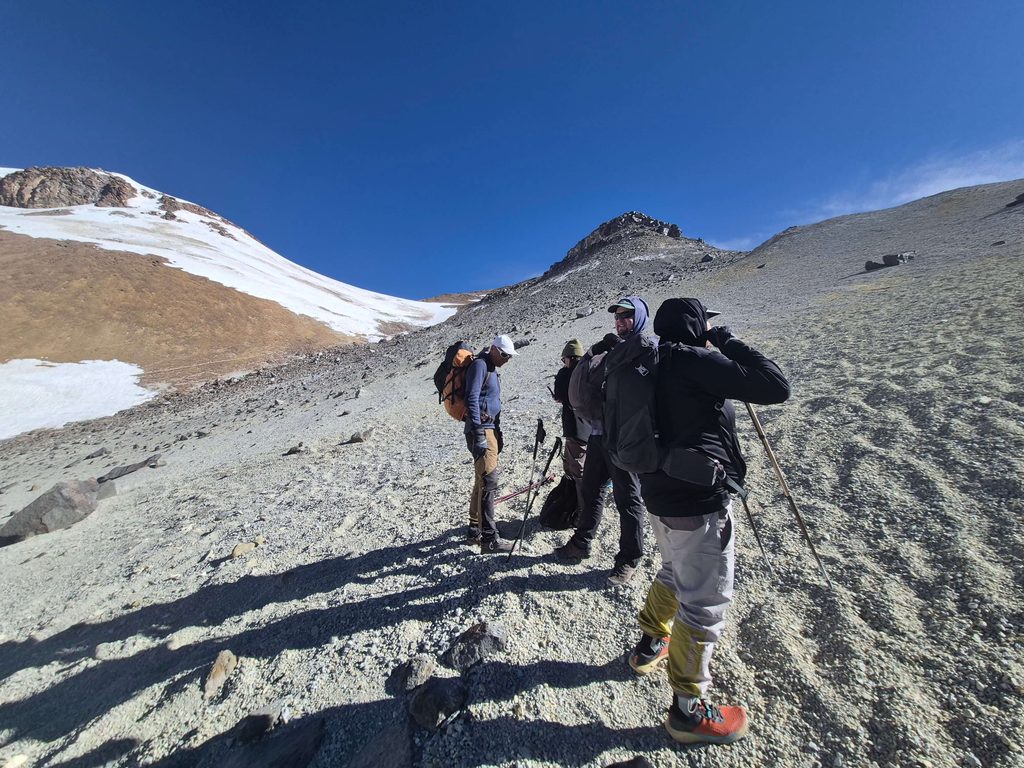
The catch is the elevation. 17,000 feet is no joke. It took our group of five people just over two hours to make this “short” climb. We had to do the altitude walk: breath in as you take one short step and breath out as you take a second short step. For two hours. And even then we had to stop three times to regroup. But still, it was only two hours and the vantage point from the top was spectacular.
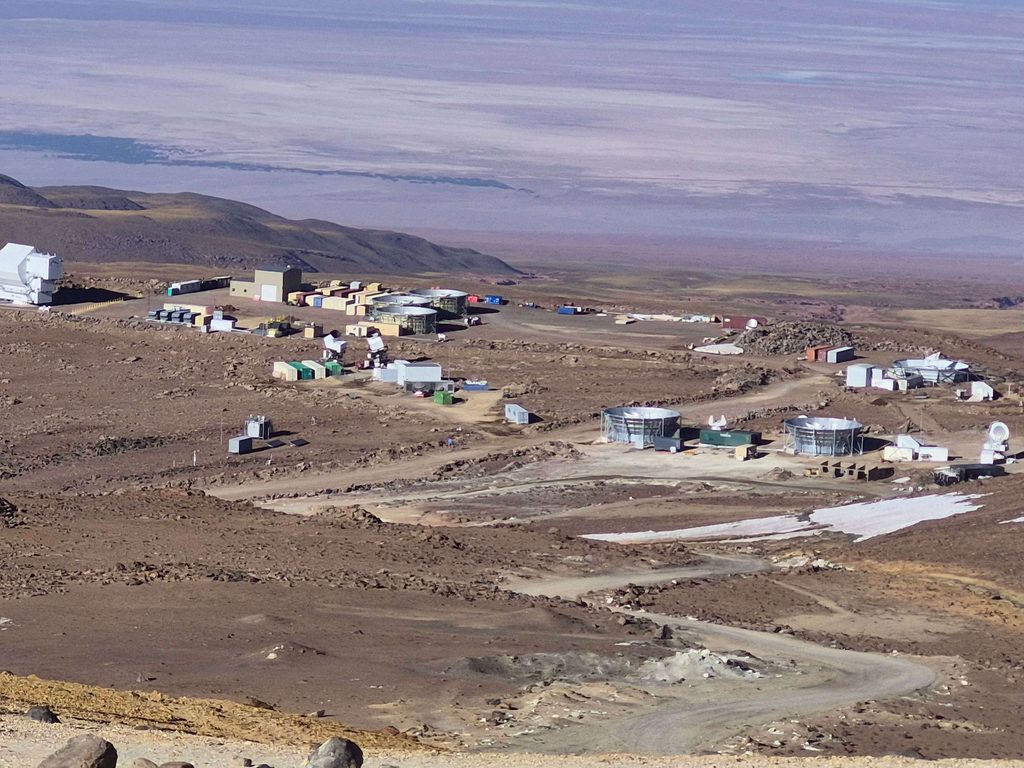
The view from the start of the climb of the Atacama Cosmology Telescope and related microwave and millimeter-wave experiments inside the Parque Astronómico Atacama.
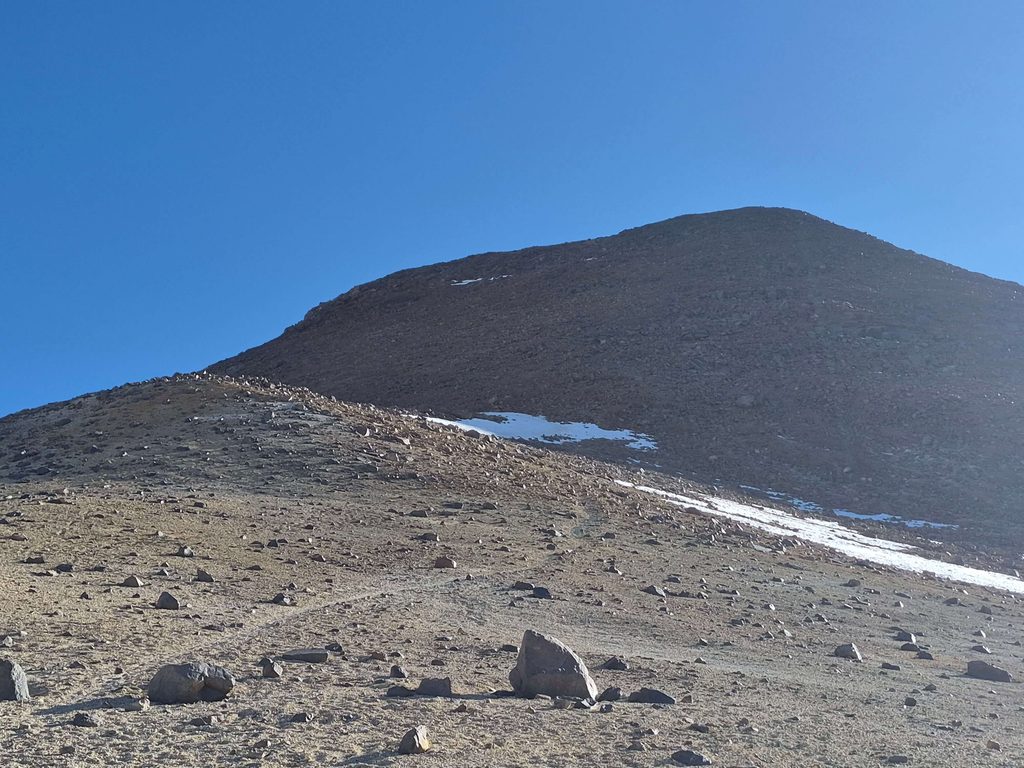
The view of part of the 400 meters we will climb. The actual peak is behind that top part.
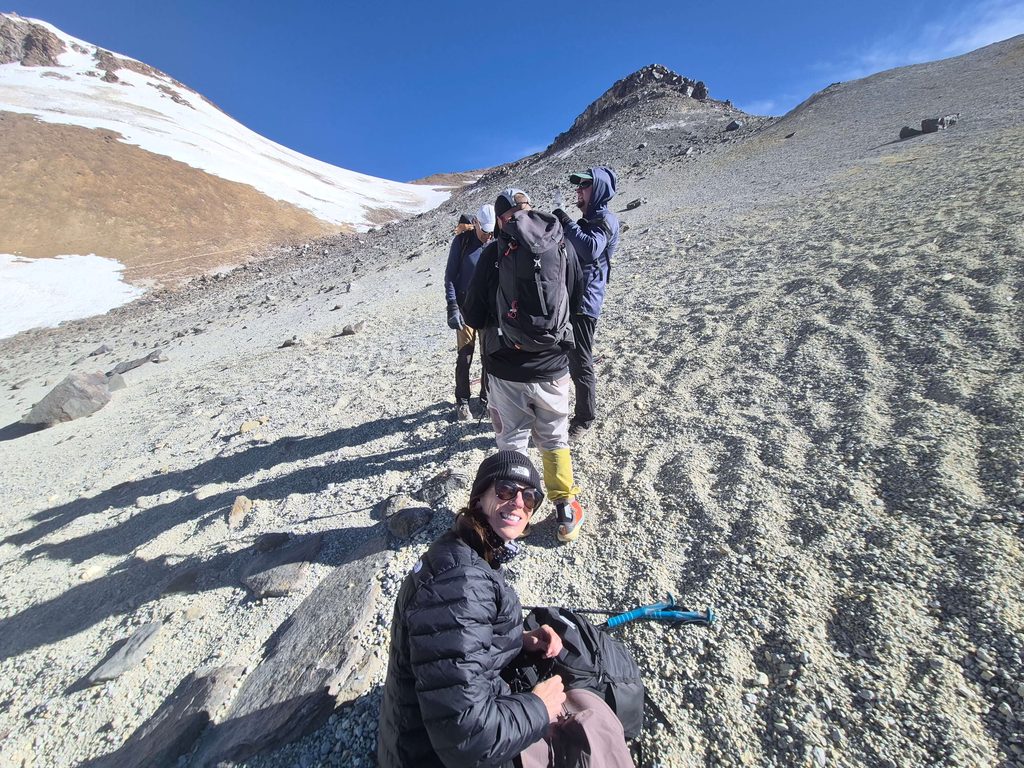
Getting ready to start our climb up.
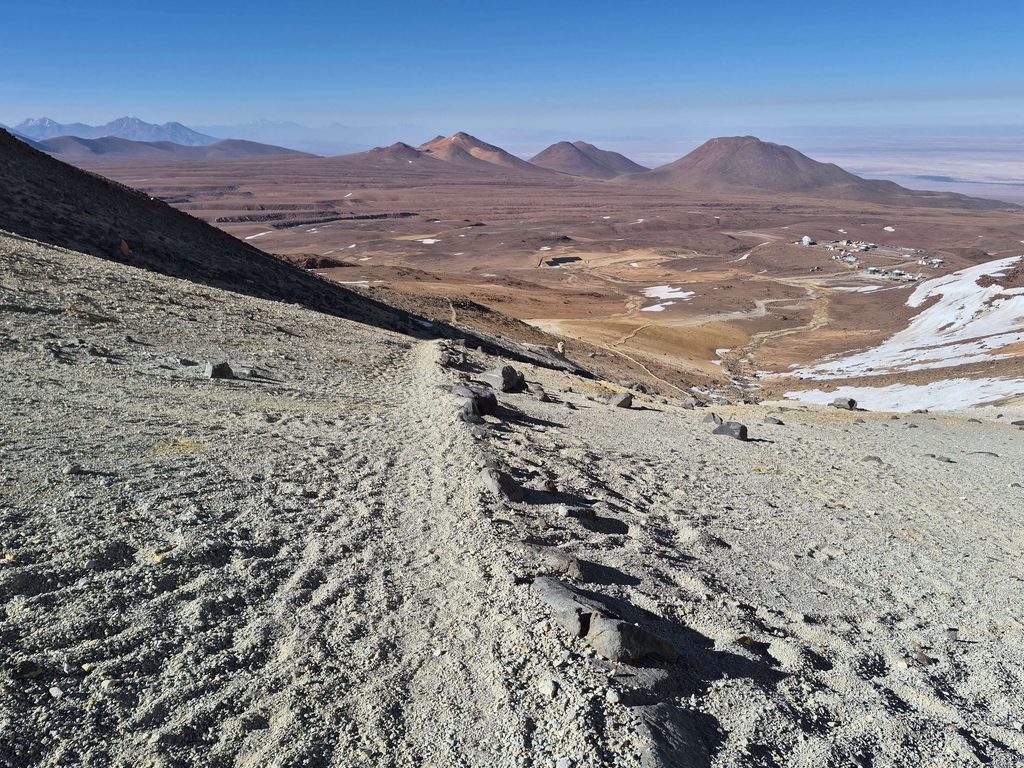
The view back from our first break.
Relaxing and facing forward at our first break.
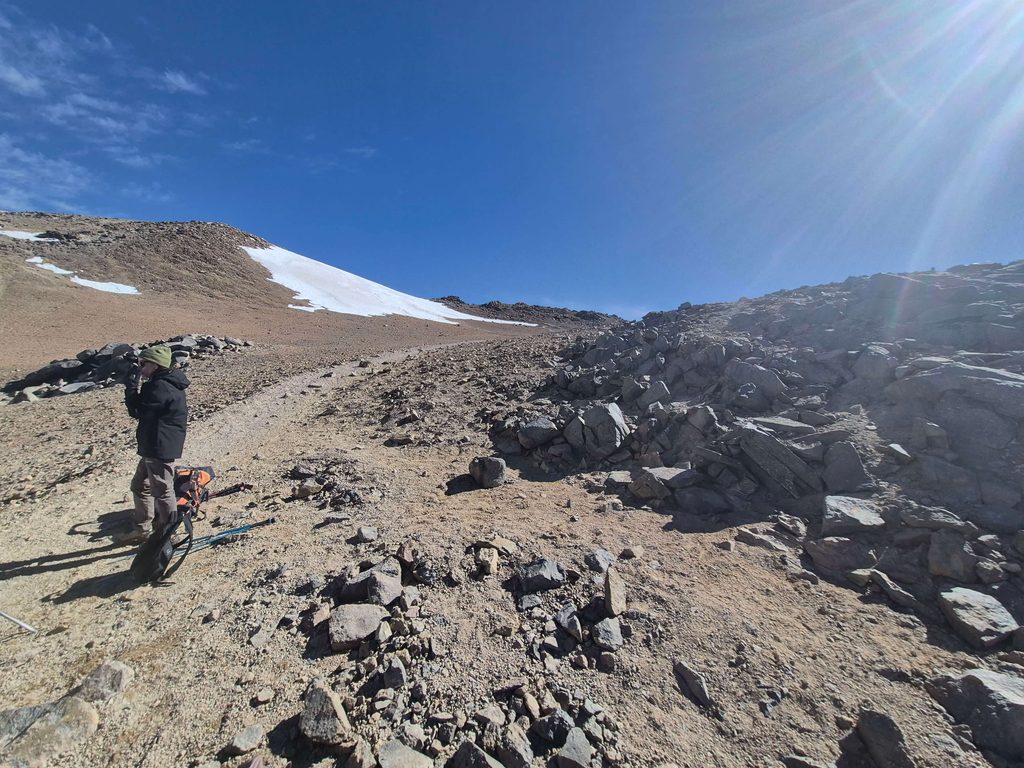
Stopping at our second break.
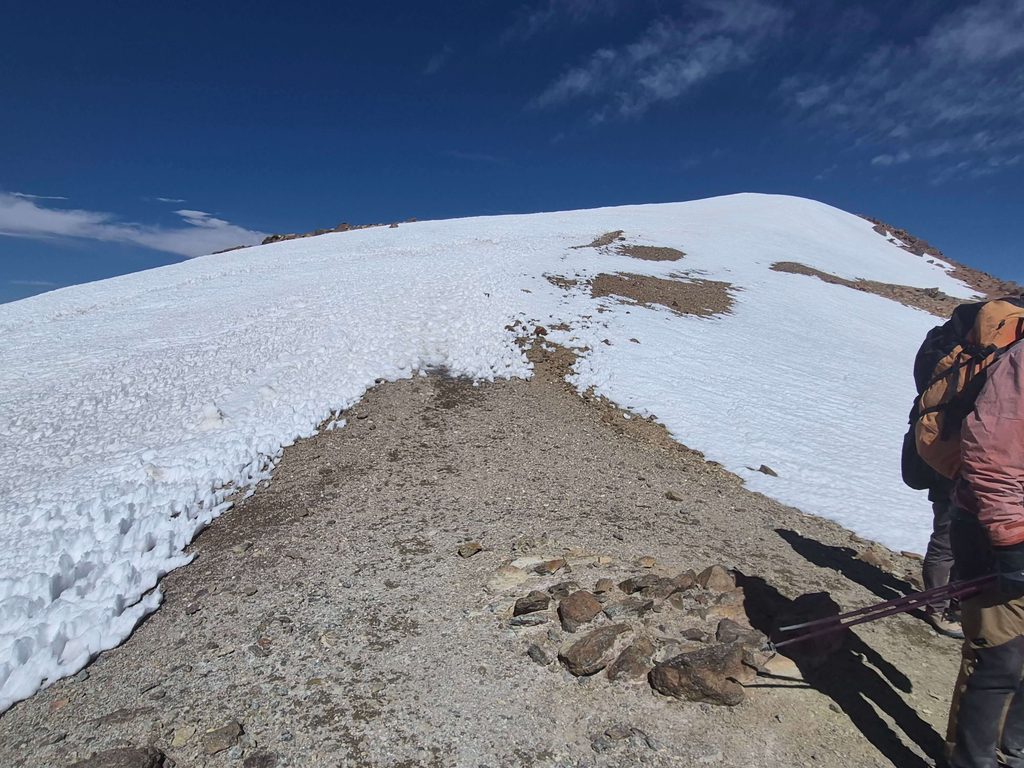
Checking out the snow we will hike up for the last few minutes of the climb to get to the top.
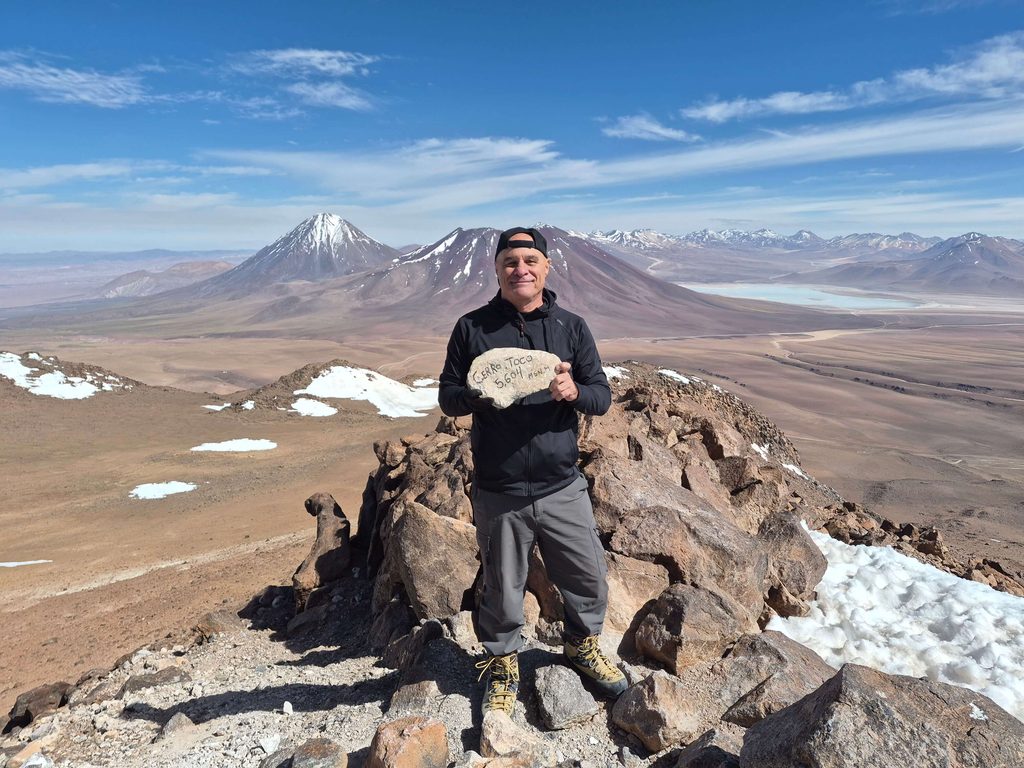
And we are at the top! Looking north towards the iconic, snow-capped Licancabur and Juriques volcanoes in Bolivia.
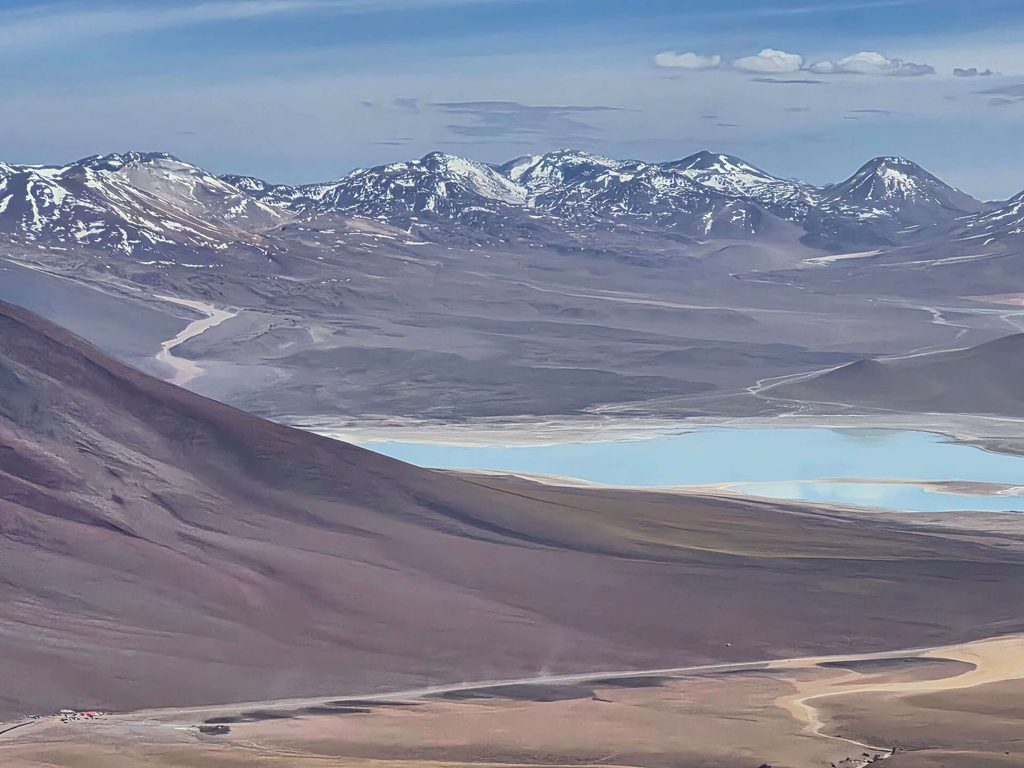
A closer view of the Laguna Verde & Laguna Blanca high altitude lakes in the Bolivian Altiplano.
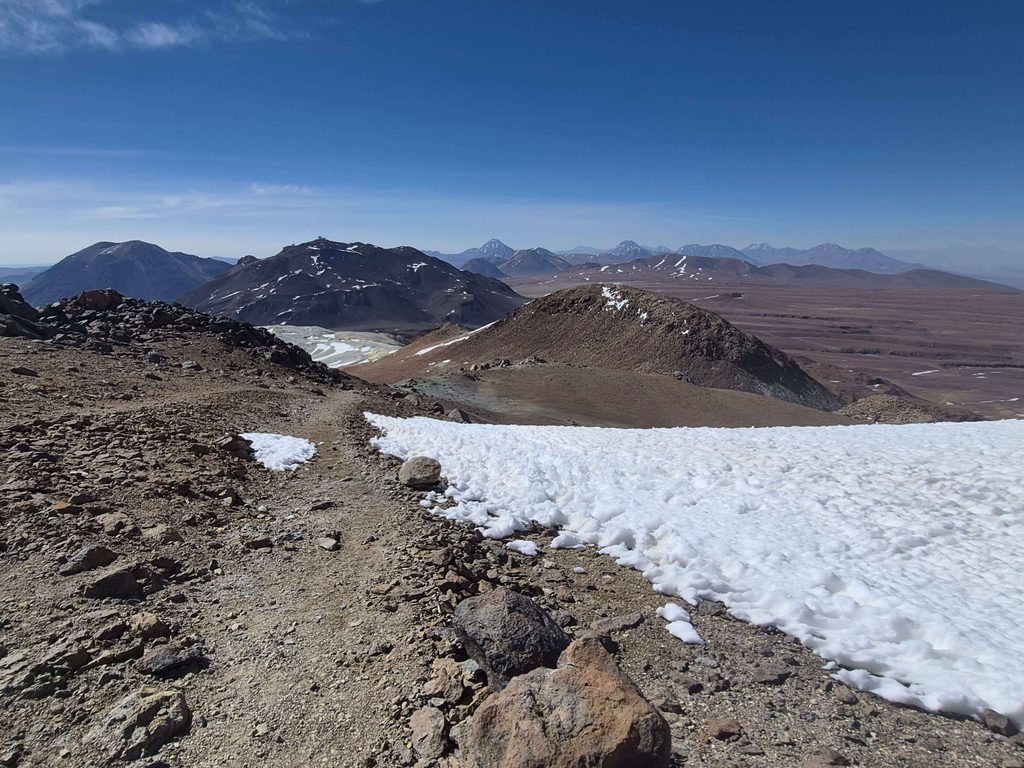
Looking back South the way we came up.
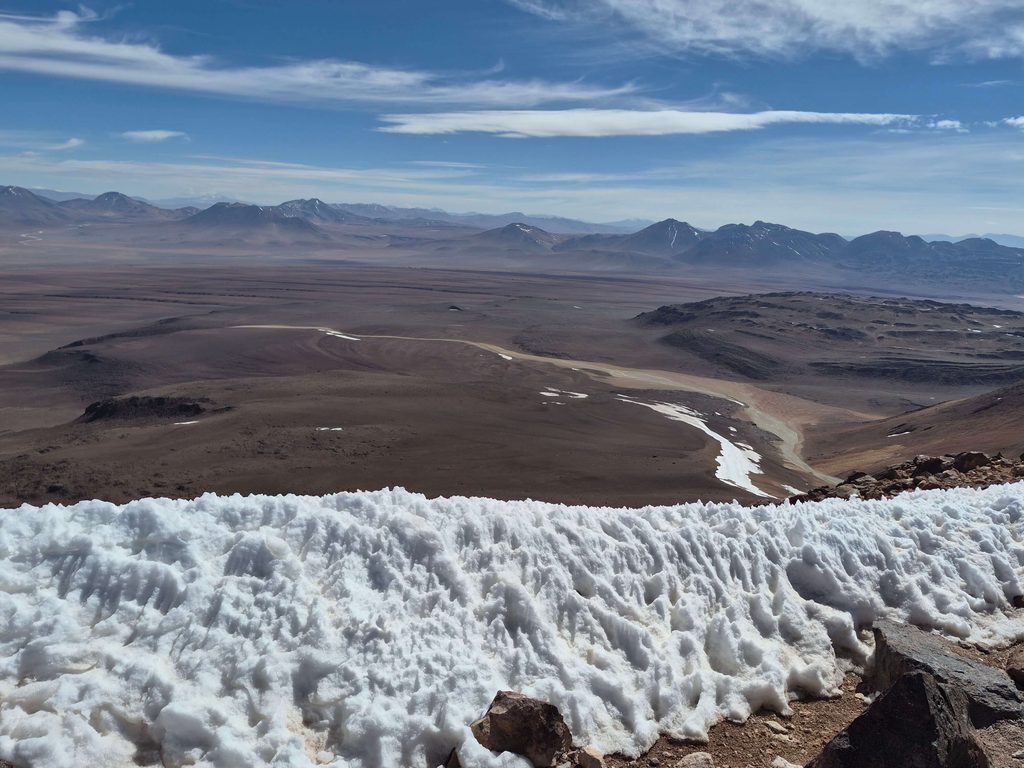
Looking Southeast to Argentina and the Chajnantor Plateau.
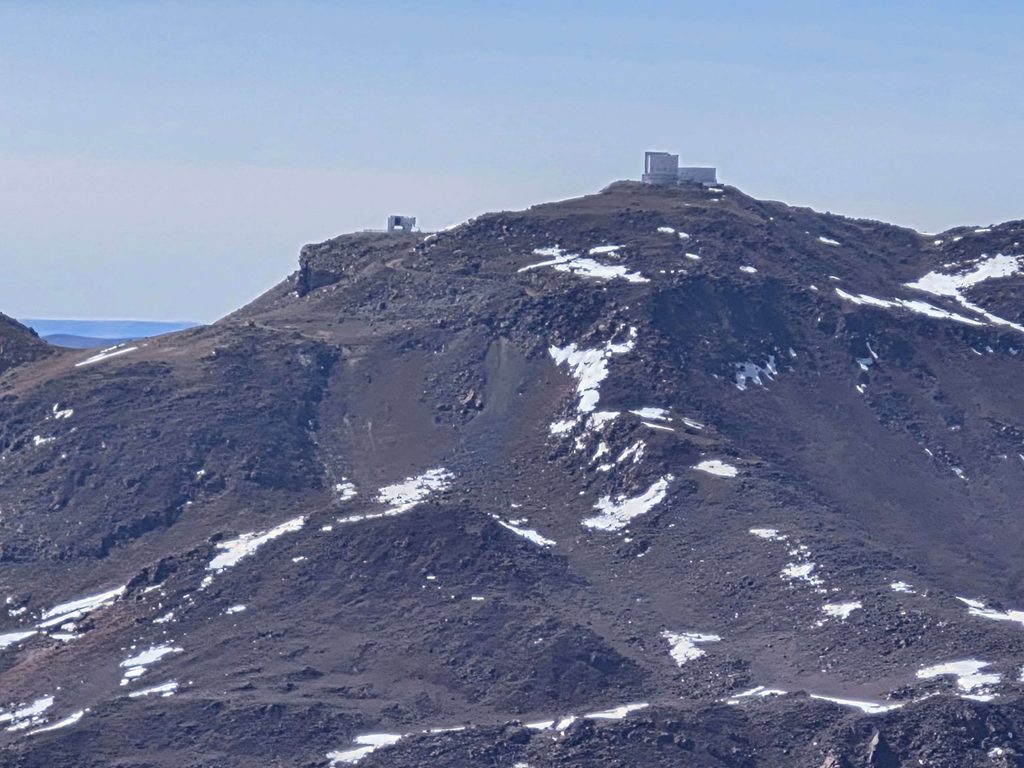
Looking across to the University of Tokyo Atacama Observatory (TAO), located on the neighboring high peak of Cerro Chajnantor. It is the highest permanent astronomical observatory in the world. It features a 6.5-meter optical-infrared telescope designed to study galaxy evolution and planet-forming regions
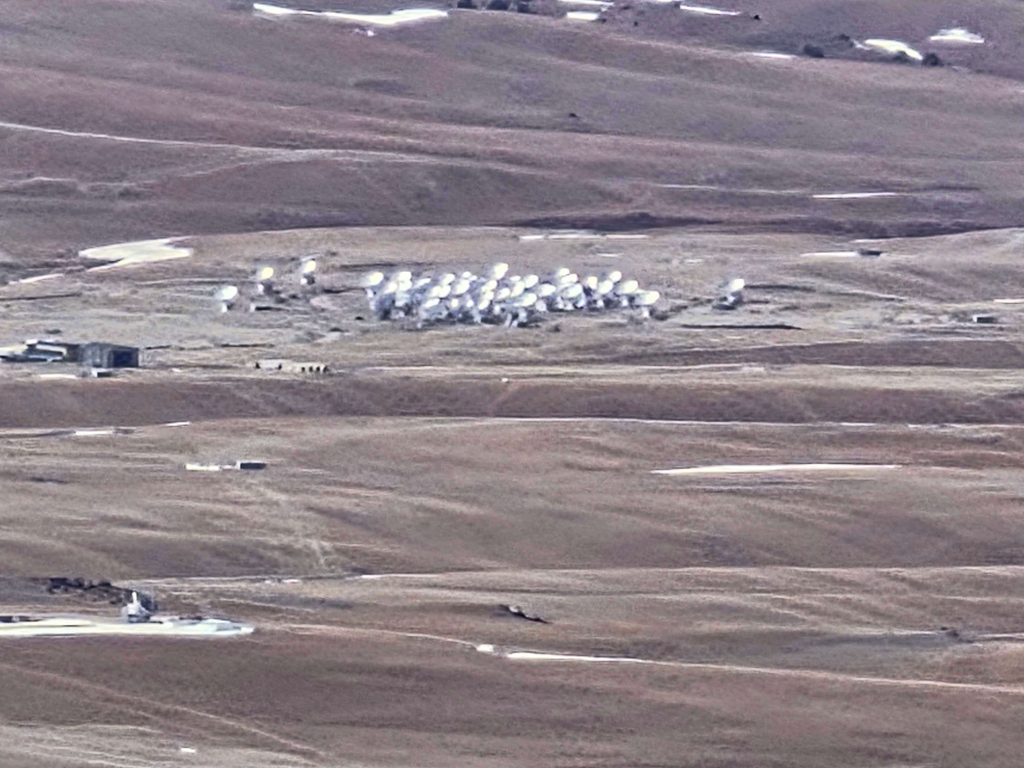
Looking way down at the 66 radio telescope array of the Atacama Large Millimeter/sub-millimeter Array, popularly known as ALMA. It is an international partnership among Europe, the United States, Canada, Japan, South Korea, Taiwan, and Chile. Costing about $1.4 billion, it is the most expensive ground-based telescope in operation. ALMA provides insight on star birth during the early Stelliferous era (roughly 150 to 400 million years after the Big Bang) and detailed imaging of local star and planet formation.
We had a German astrophysicist as part of our group and he was in absolute ecstasy that he could see this famous array.
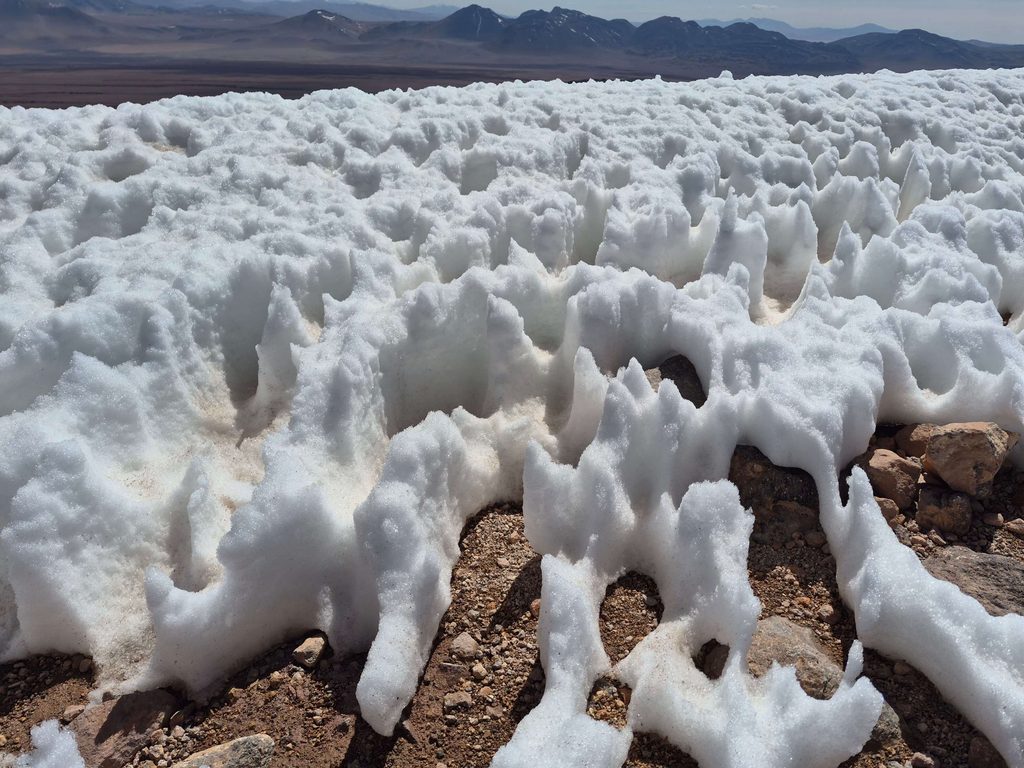
Some of the Spring snow still left at the top of the volcano.
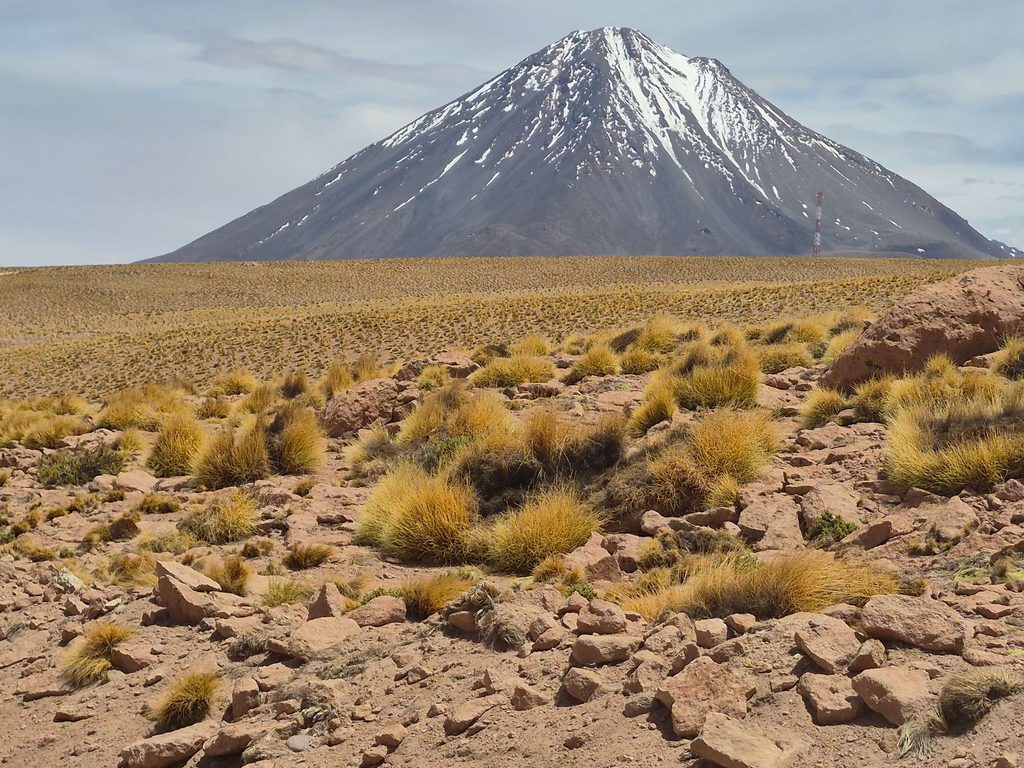
We had a nice view of the Licancabur Volcano on our drive back to San Pedro de Atacama.
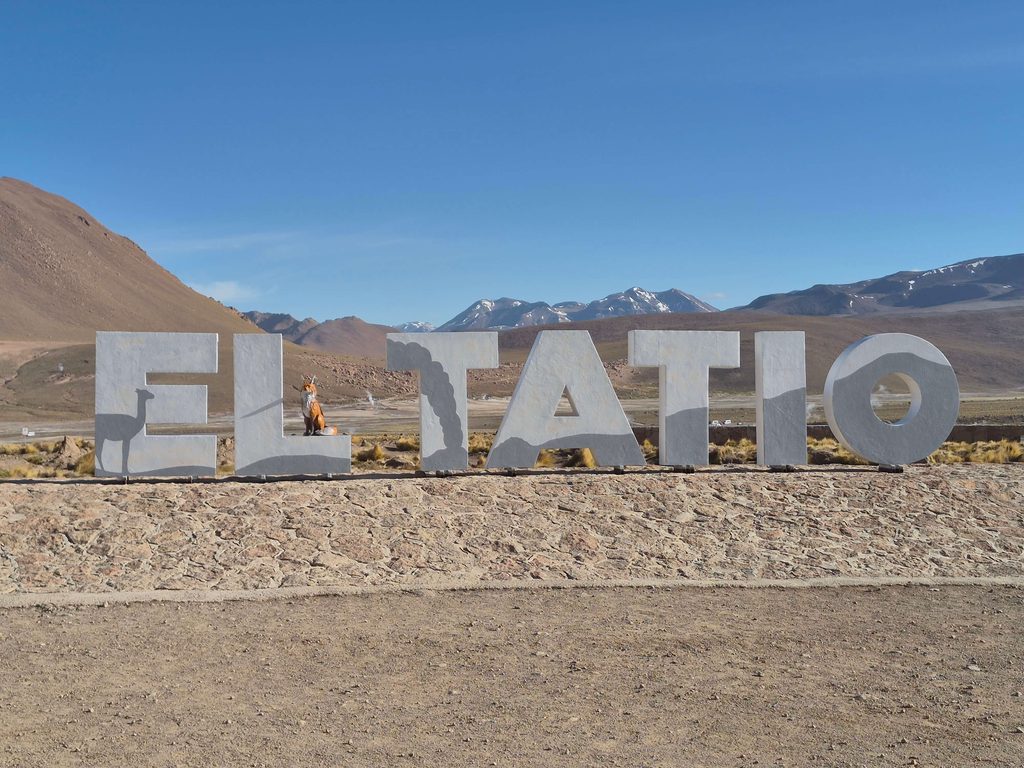
El Tatio Geyers
El Tatio is the third-largest geyser field in the world (after Yellowstone in the US and Valley of Geysers in Russia) and the largest in the Southern Hemisphere. At 4,320 meters (14,170 feet) above sea level it is also the highest in the world.
Most tour groups (including the one I went on) arrive just before sunrise because the shaded light and cold air create the best steam shows.
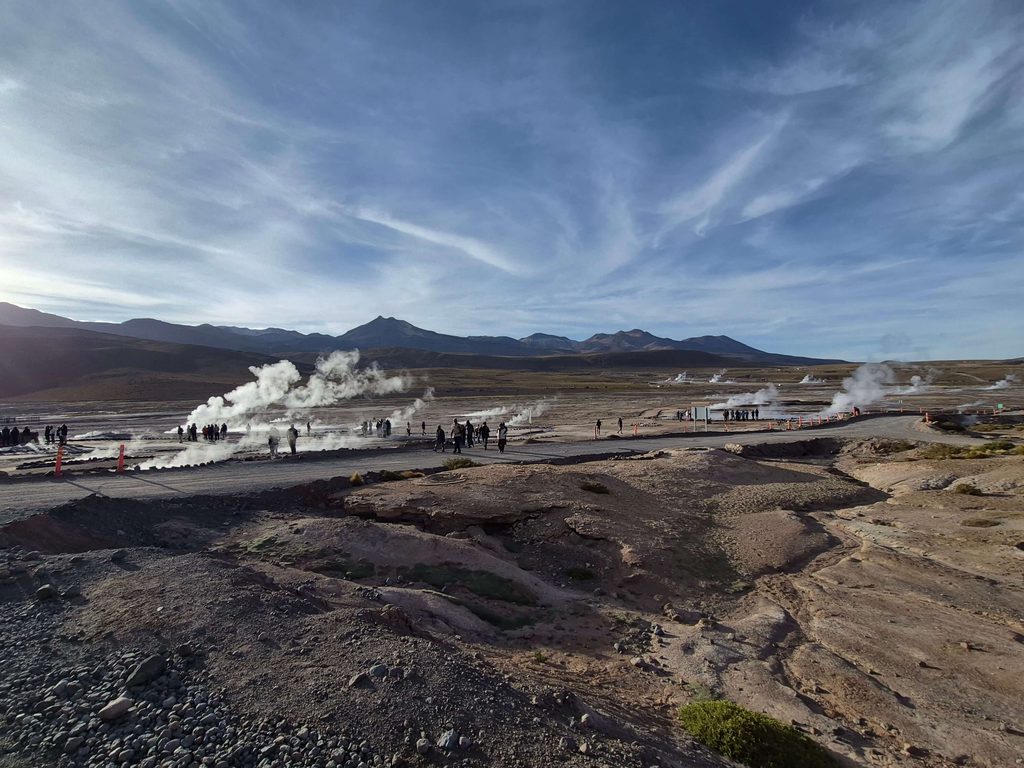
A view of a large section of the geyser field.
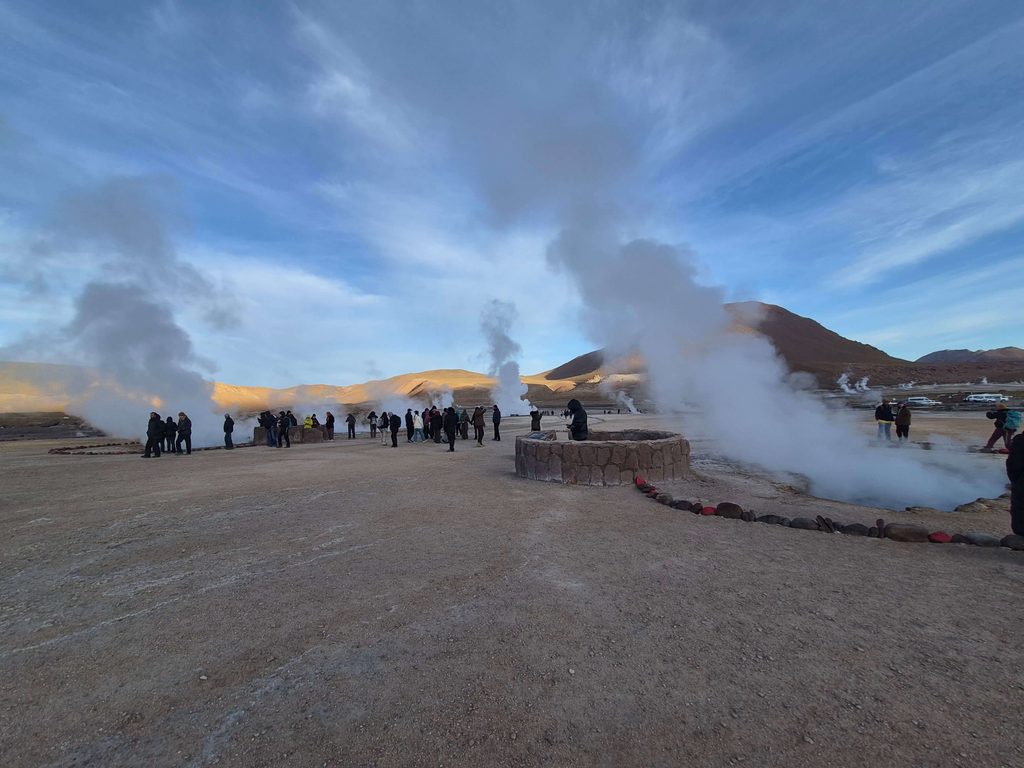
A more close up view of the some of the geysers clustered together.
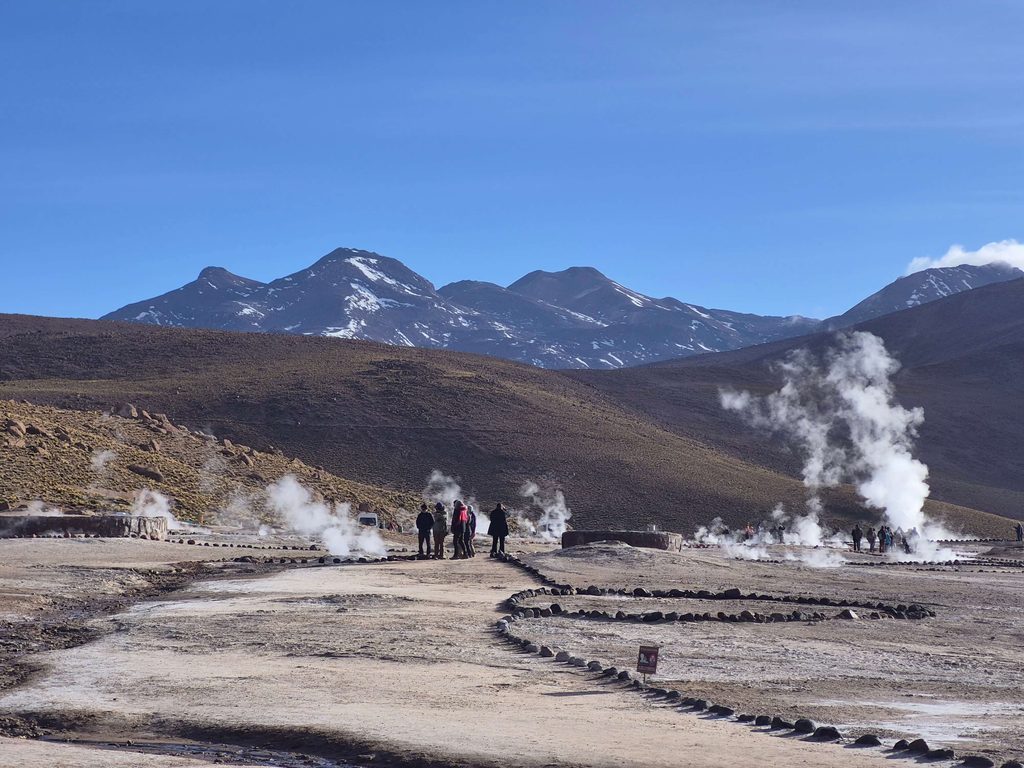
Some of the small volcanos surrounding El Tatio.
The El Jefe (The Boss) geyser erupts every seven minutes.
It keeps going for a few minutes with water bursts sometimes over ten feet high.
Another geyser with a nice sized eruption.
This one creates a cauldron of bubbling water and a lot of steam in the early morning cold.
Another fun cauldron of consistently bubbling water with some nice splashes outward.
The sun rising behind a steam cloud.

Another view of the just risen sun through a steam cloud.
We also stopped at some amazing viewpoints on the way back.
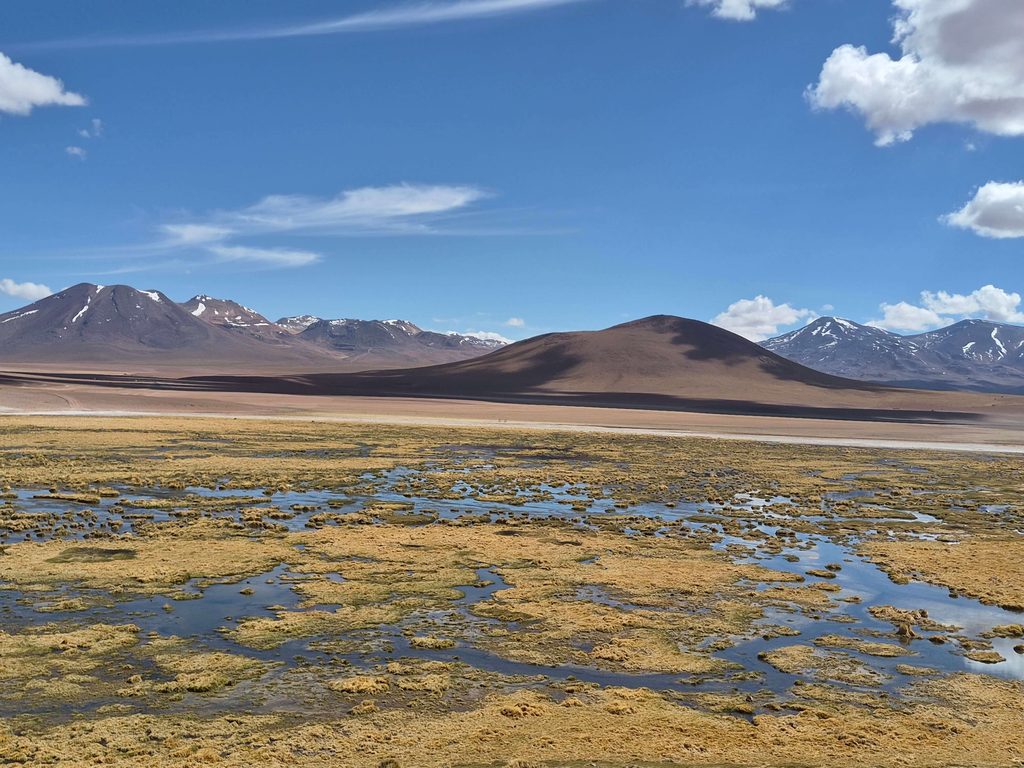
On the tallest mountain on the right you can see the small plume of smoke from an active volcano.
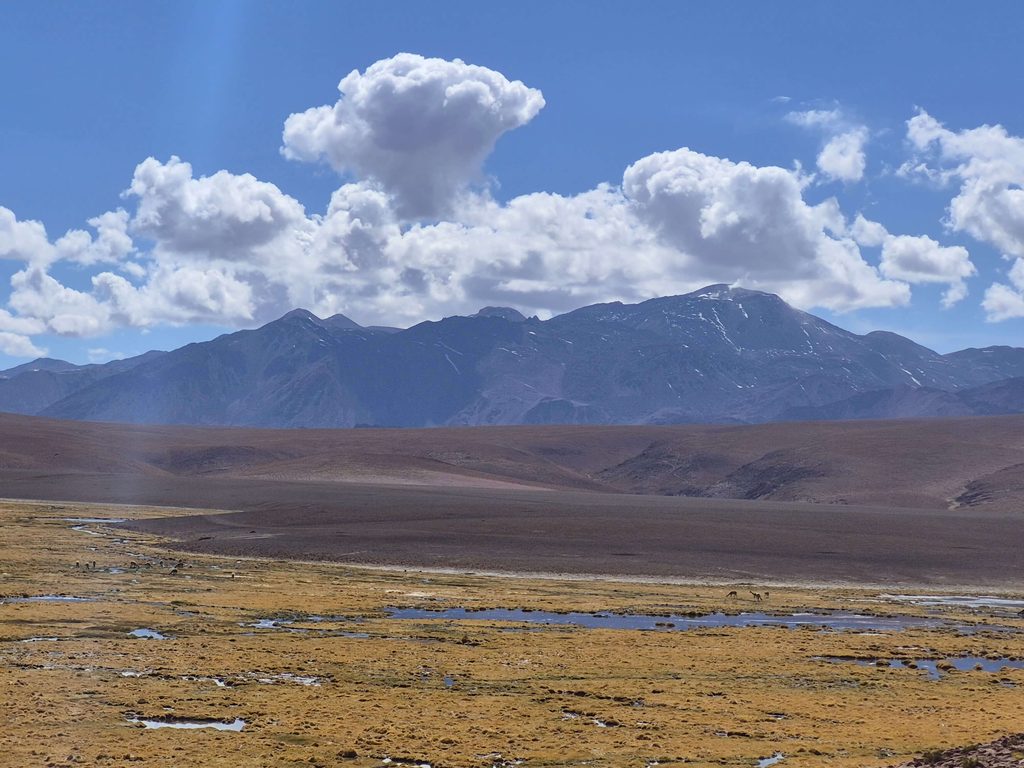

There was even a long lagoon with some Chilean Flamingos wading across and feeding.
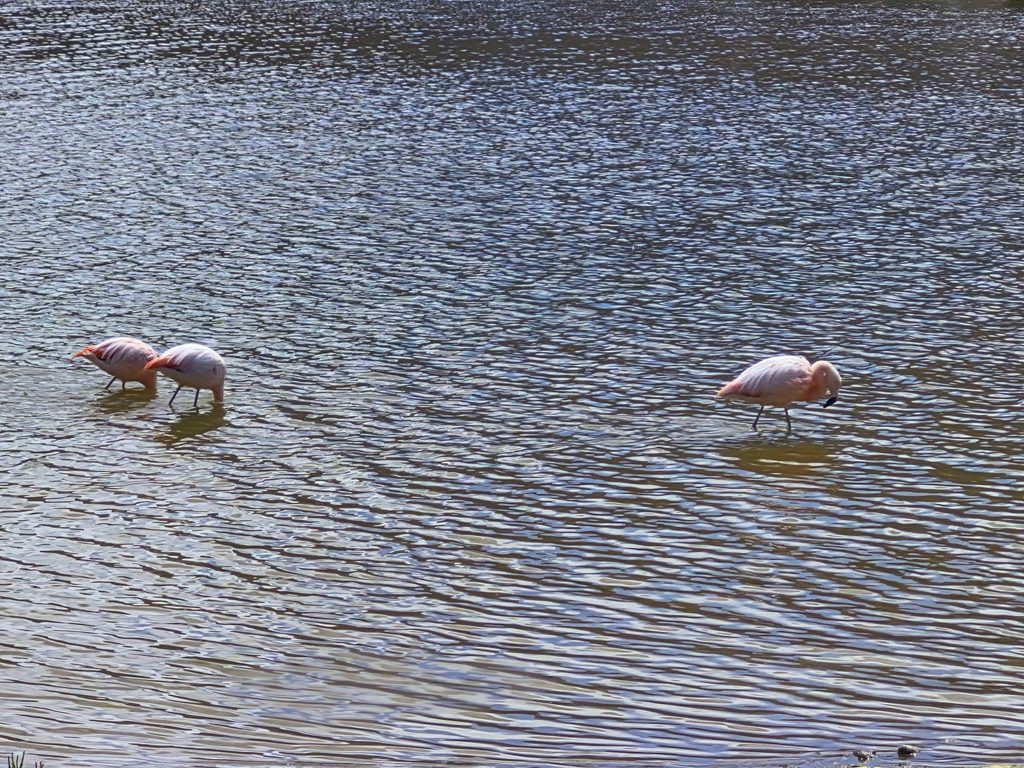
The Flamingos of Laguna Chaxa
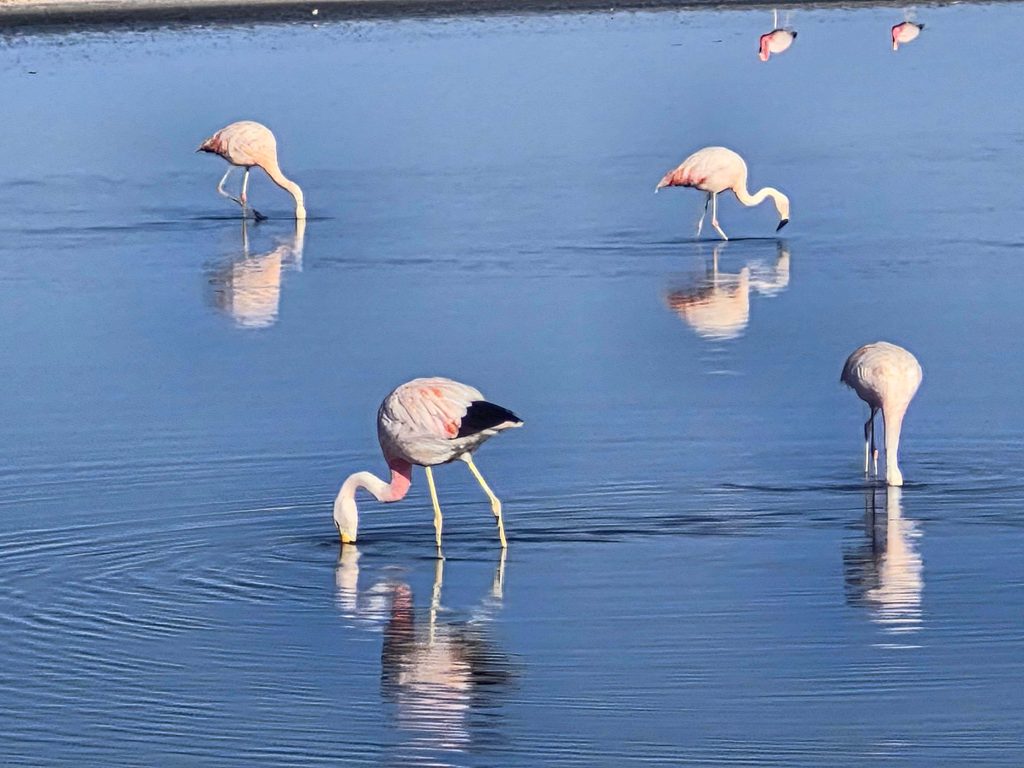
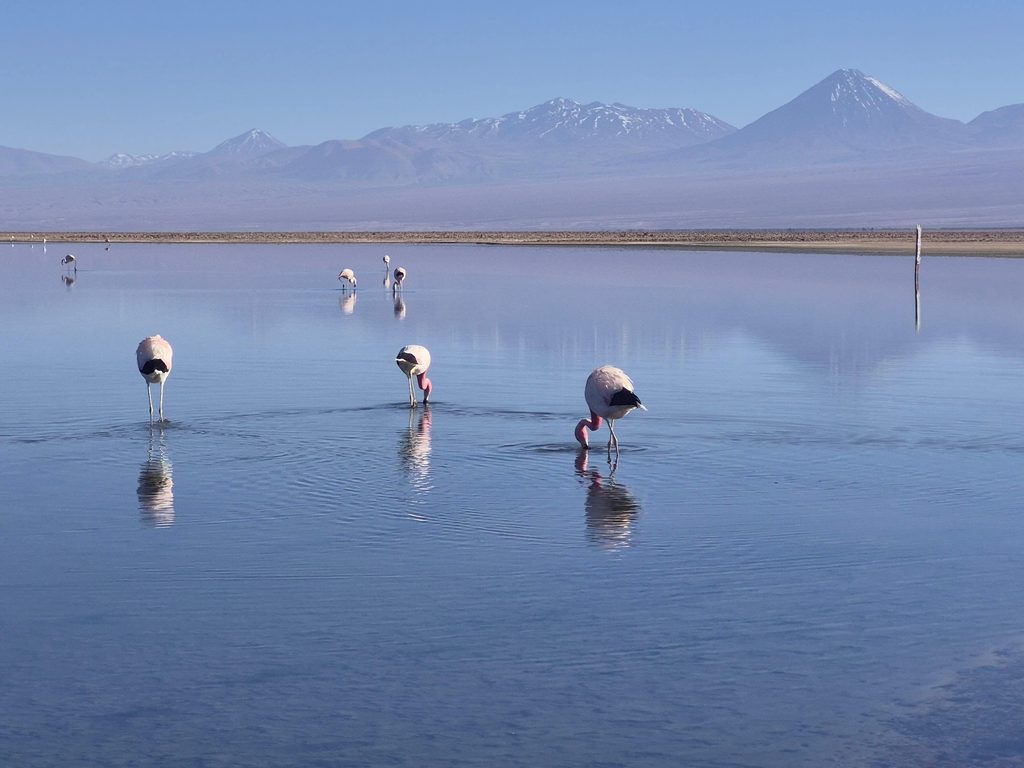
One of more relaxing trips was visiting the flamingos at Laguna Chaxa. Located at 2,300 meters (7,500 feet) above sea level, it’s a beautiful setting where the lagoon is divided into several lakes surrounded by salt crusts and hosting abundant and diverse communities of flamingos.
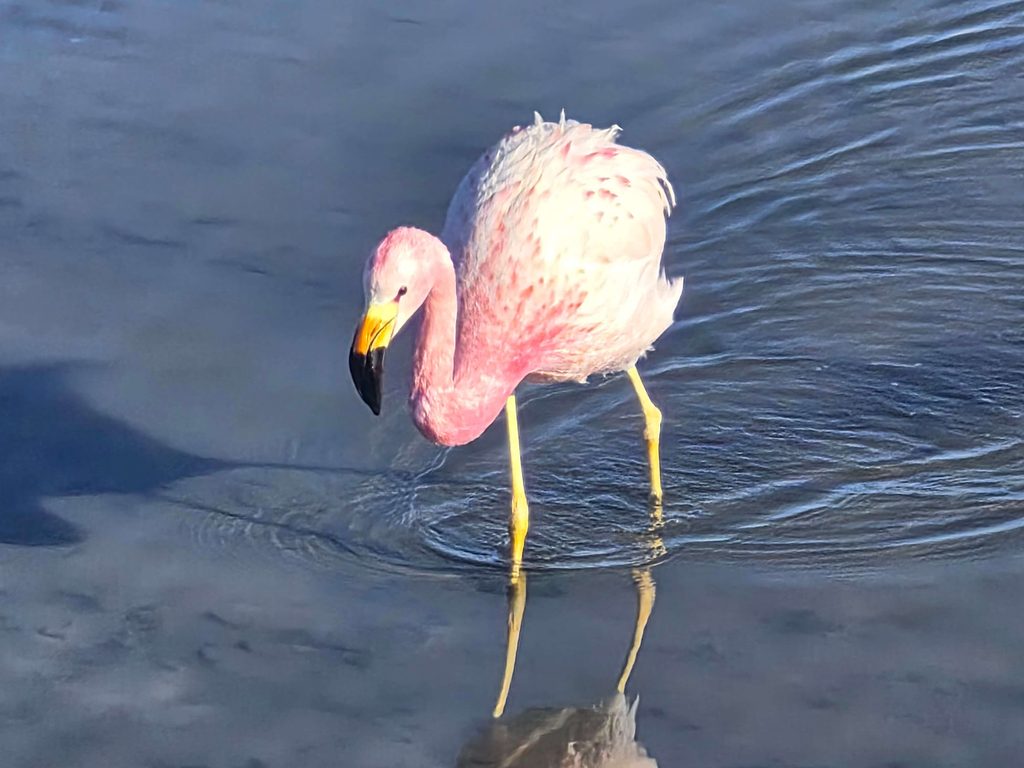
There are six species of flamingos in the world. Three of them – the Andean Flamingo, the Chilean Flamingo and the Jame’s Flamingo – can be found here. The Andean Flamingos have black tails, the Chilean Flamingos have pink tales and the Jame’s Flamingos have black and pink tails. While they all feed together, they don’t interbreed.
A mix of Andean and Chilean Flamingos feed in the tranquil surroundings.
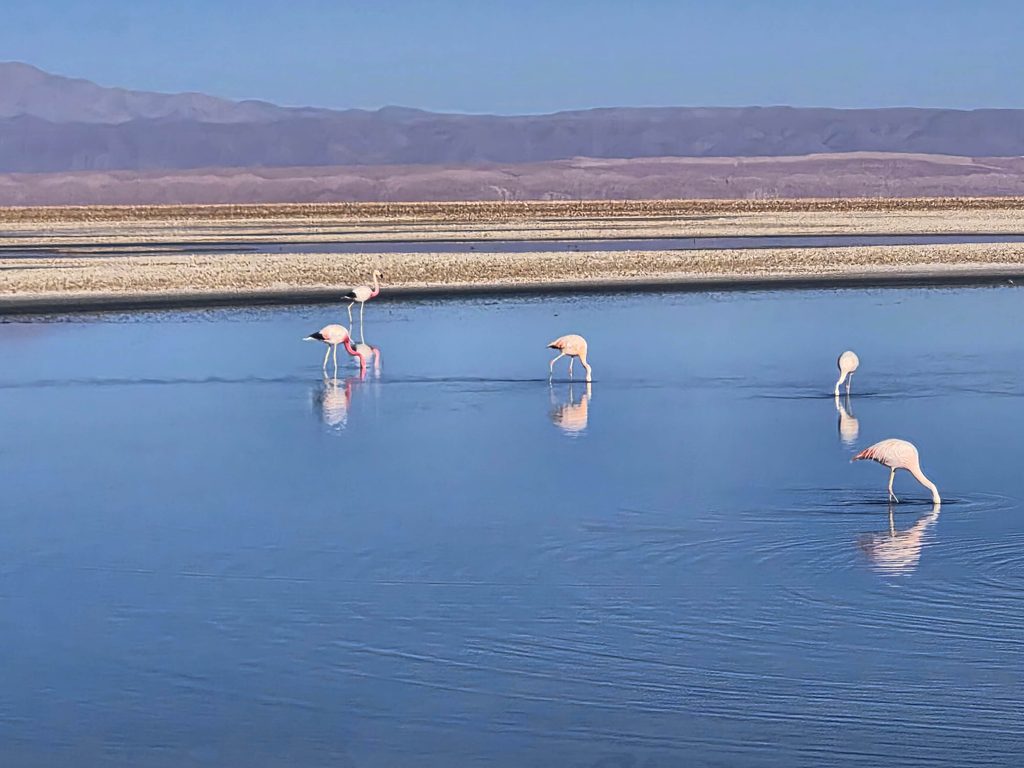
A closer view of these flamingos.
And one decided to walk right up to us.
A view with a different background of the snow capped volcano mountains reflected in the water.
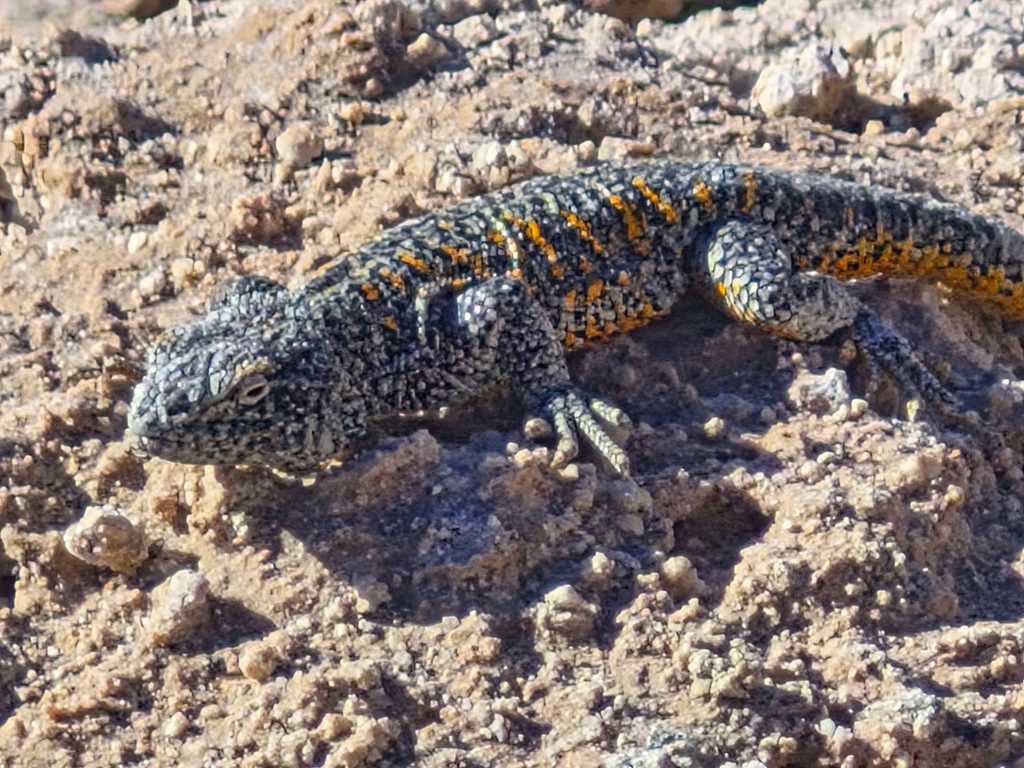
There were even these cool looking lizards roaming among the salt flats next to the water.
Salar de Talar
One this same group tour we visited the 46 square kilometer Salar de Talar salt flat. It features brilliant white polygonal salt crusts, deep blue high-altitude lagoons, and intense red volcanic rock lobes.

This large salt flat has stunning views of the surrounding volcanos.
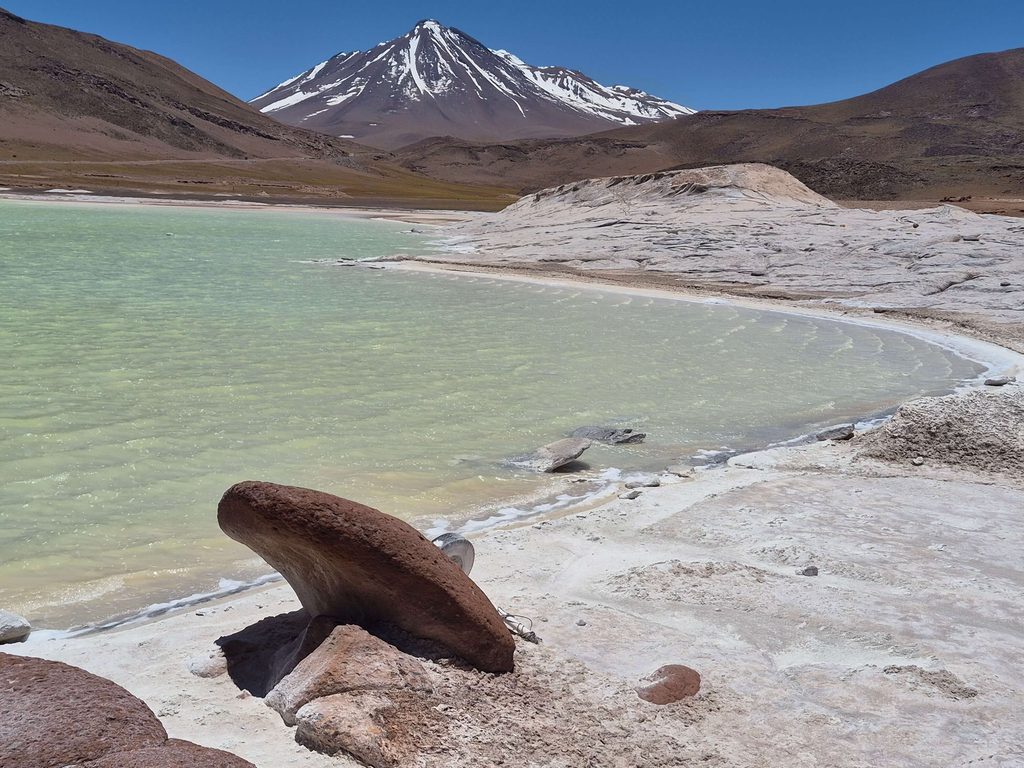
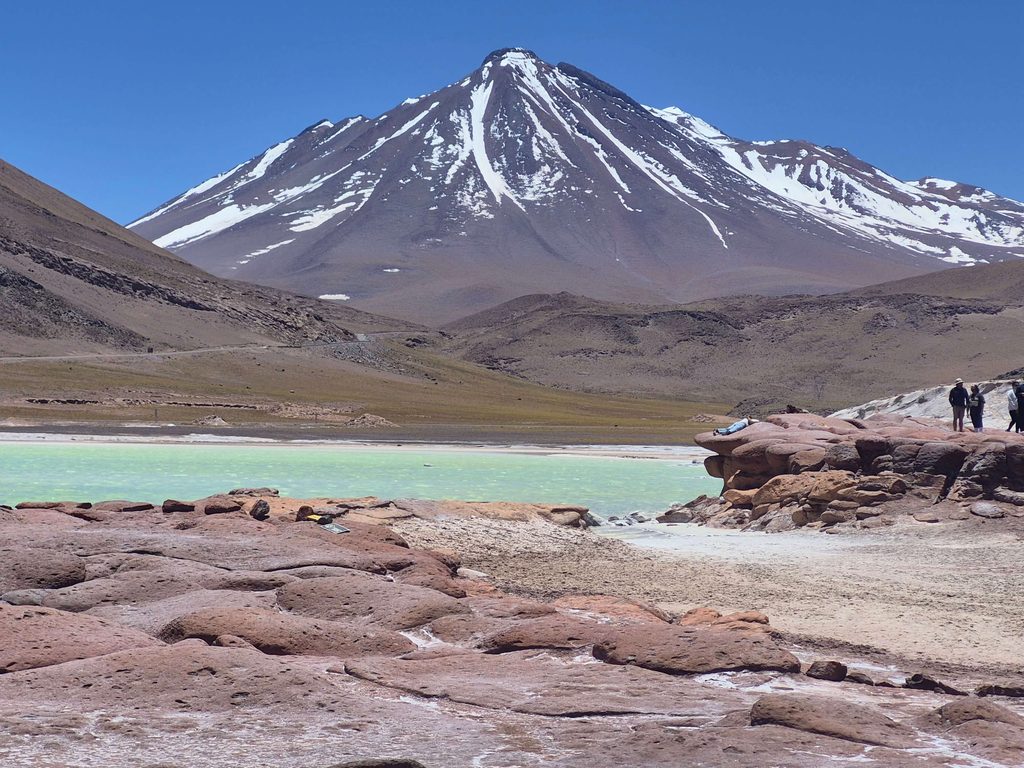

The distinct red volcanic rock lobe are the reason this area is also called Piedras Rojas (Red Stones).
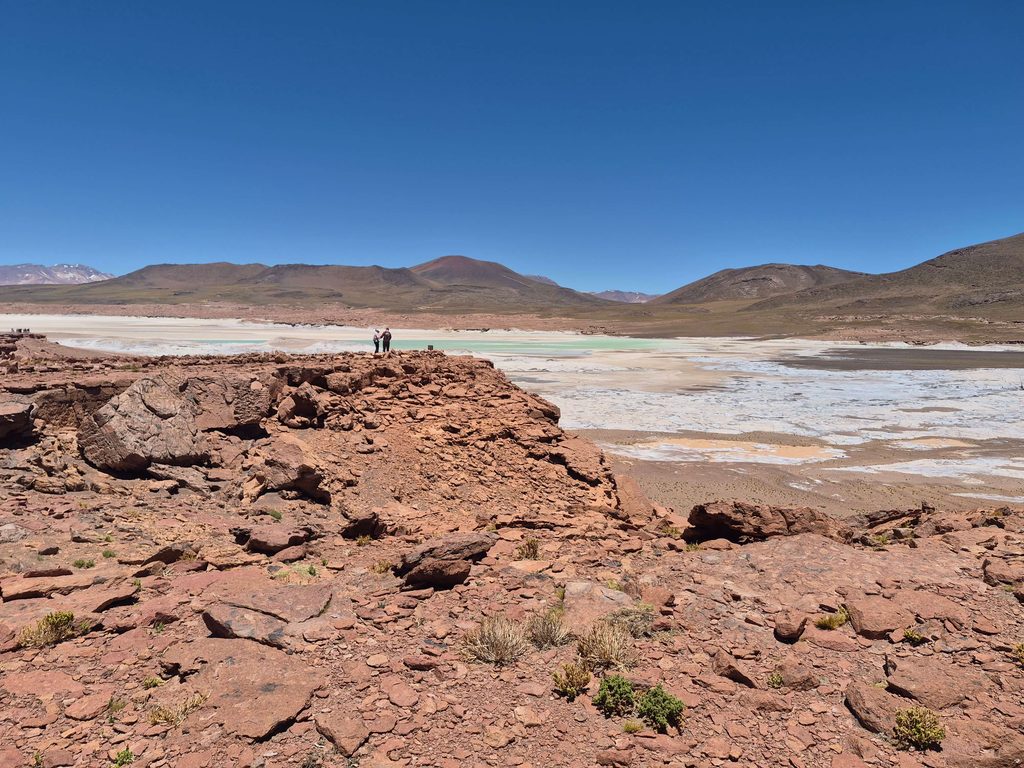
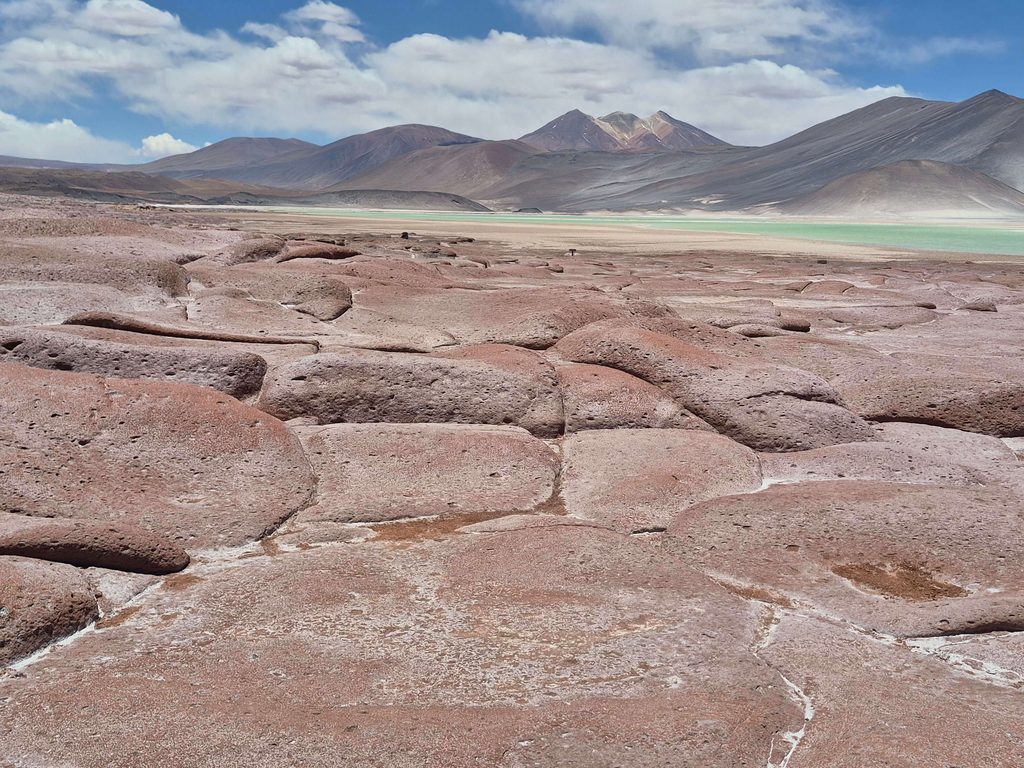
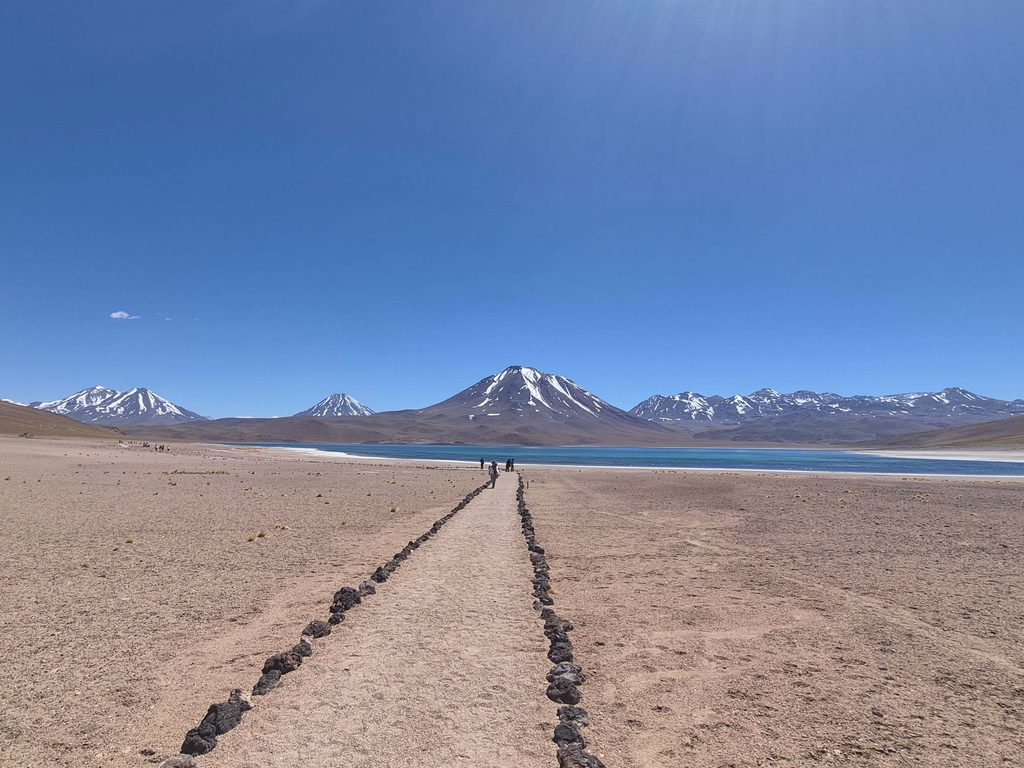
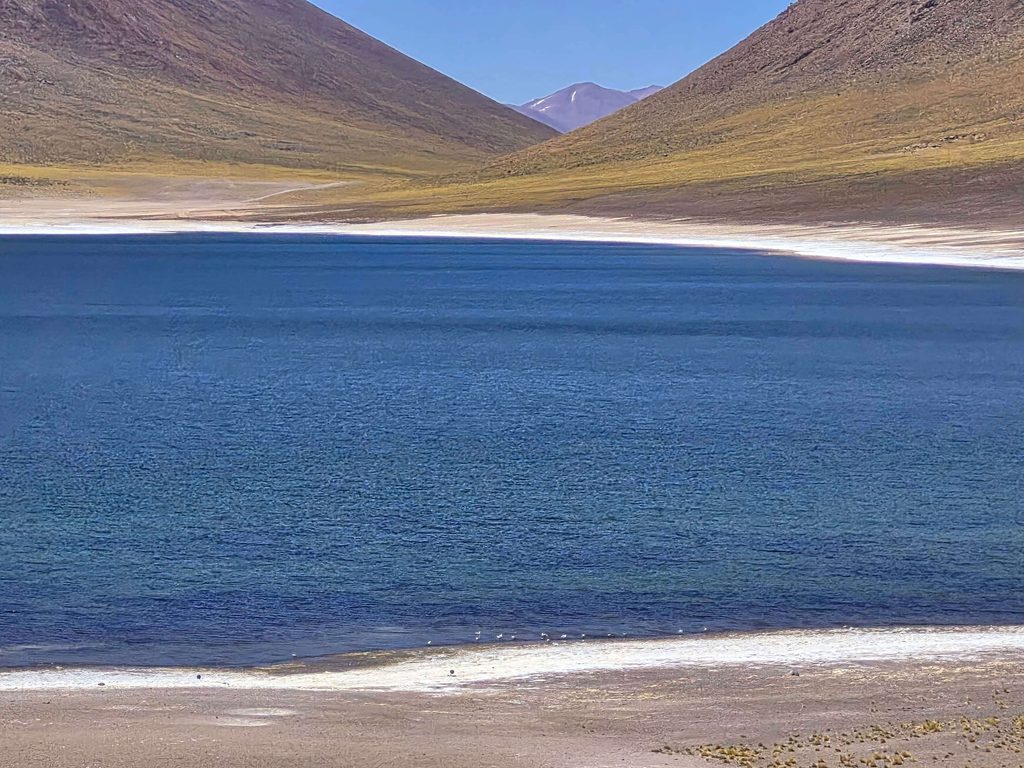
On this same tour we also visited the Miscanti and Miniques Lagoons. They are at 4,200 meters (13,800 feet) above sea level, cover an area of 13 square kilometers (5 square miles) and are separated by an ancient lava flow. Miscanti is particularly beautiful with it’s deep blue water surrounded by a range of volcanos.
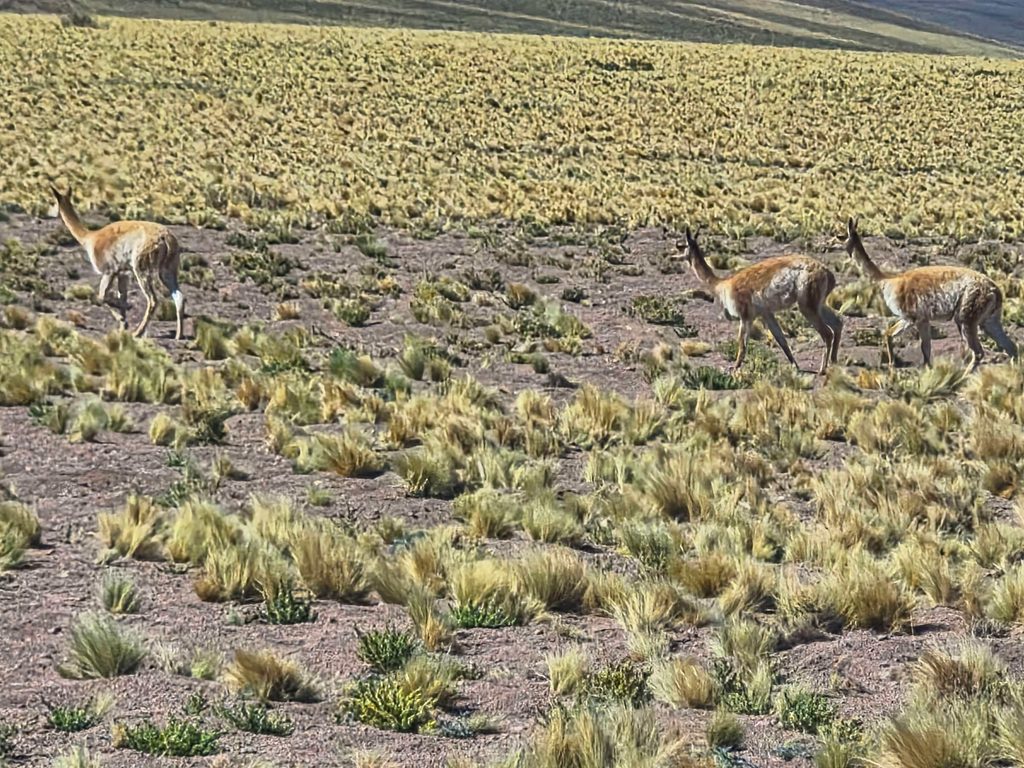
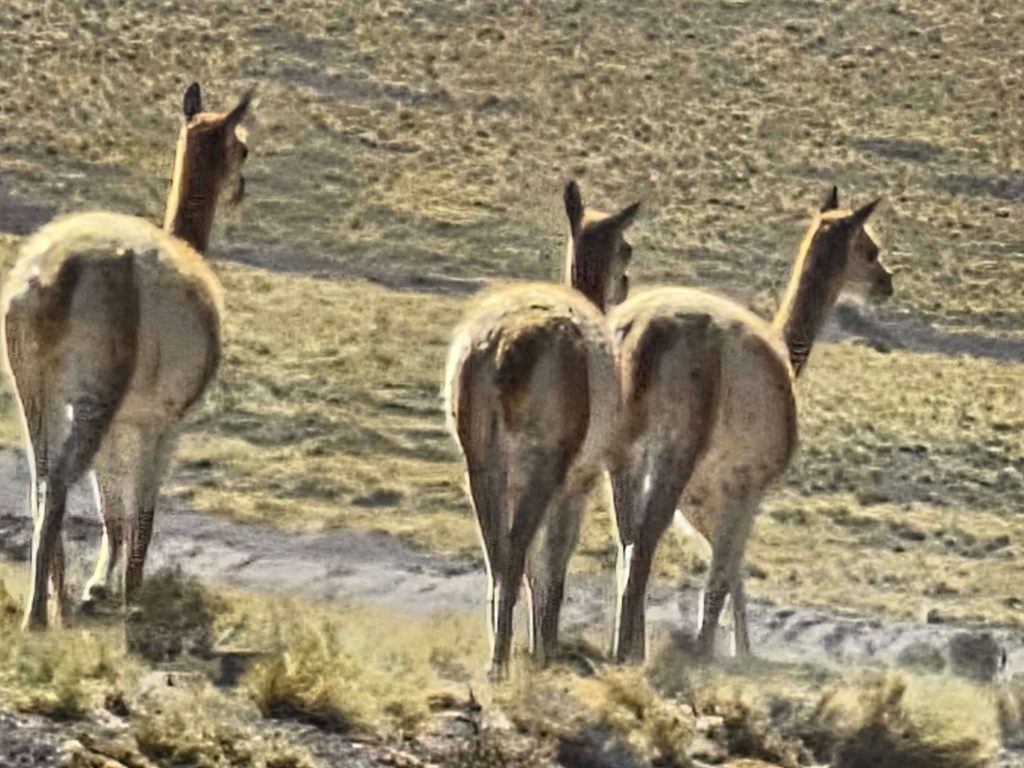
While we were driving in the area we saw some elegant vicunas. The vicuna is believed to be the ancestor of domesticated alpaca. The vicuna produces small amounts of extremely fine wool, which is very expensive because the animal has to be caught from the wild to be fleeced and can only be shorn every three years.
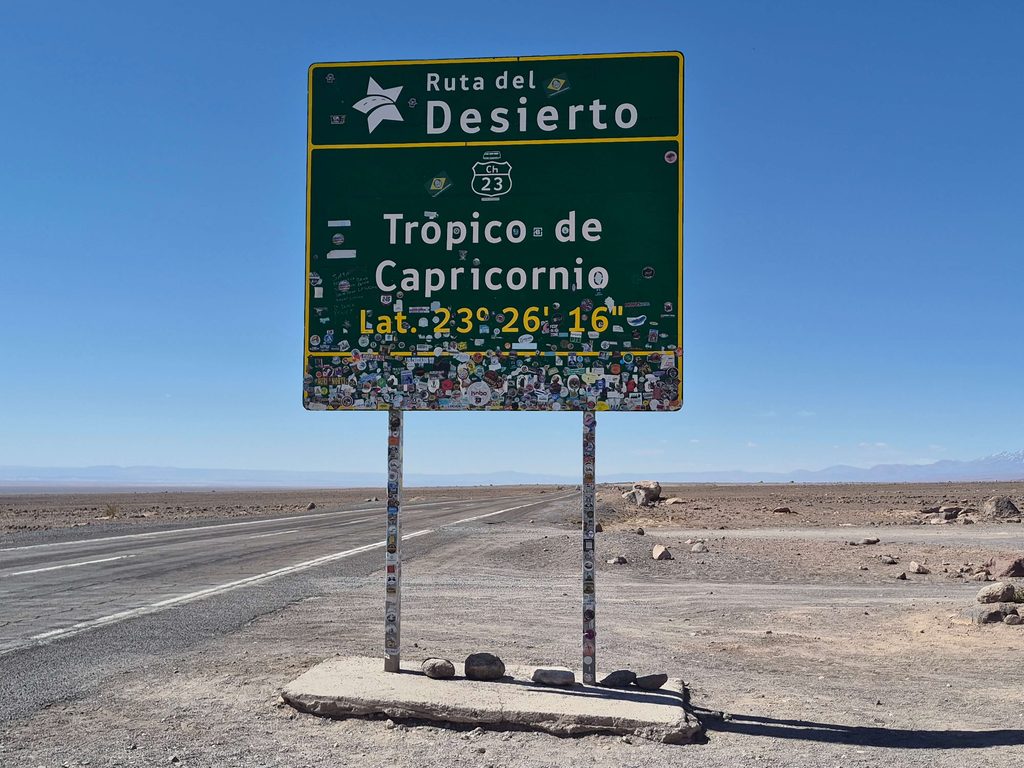
We also crossed the Tropic of Capricorn. It marks the southernmost point on Earth where the Sun can appear directly overhead at noon, which happens during the December solstice.
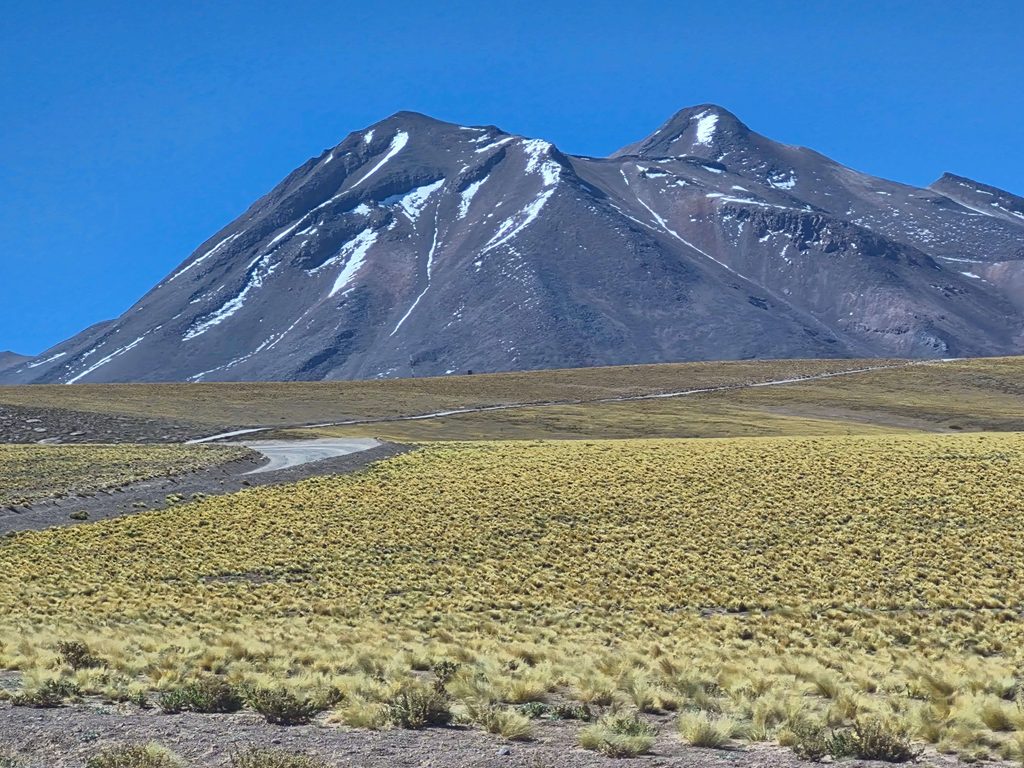
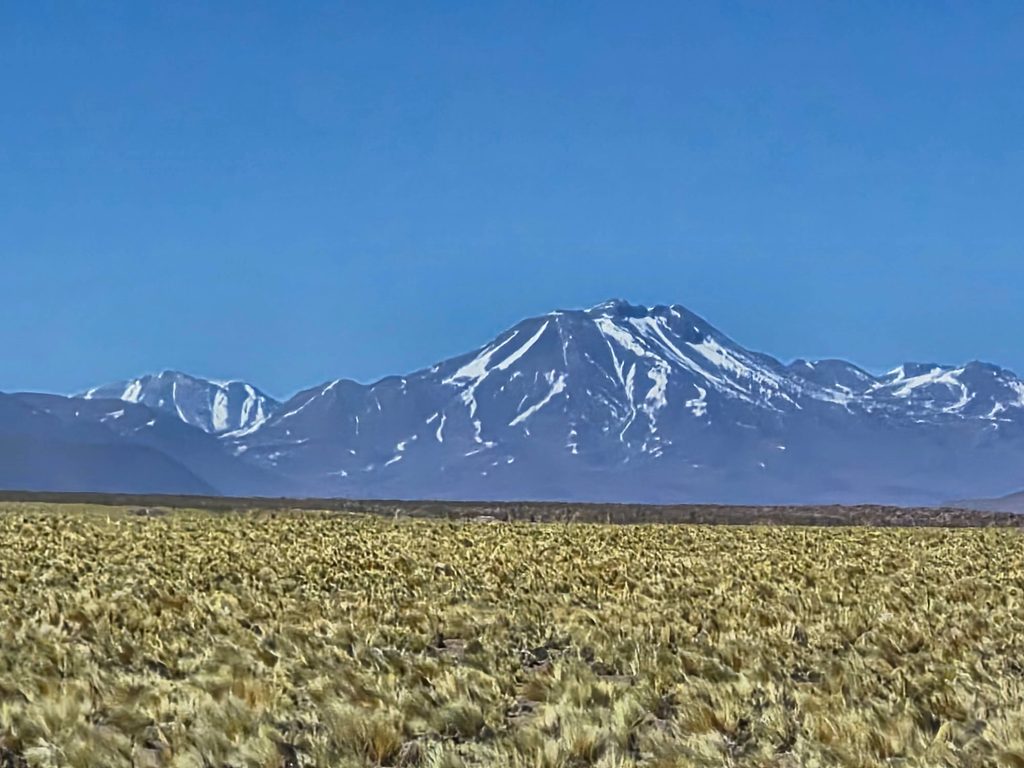
And saw some amazing scenery.
Stargazing
The Atacama Desert is widely considered the premier stargazing destination on Earth thanks to its high altitude (averaging 2,400 meters above sea level), over 300 to 330 clear nights a year, ultra-low humidity, and dark skies completely free of light pollution.
So I went on an evening star gazing tour. Fifteen of us surrounded three 3 meter long telescopes and our guide found different items for us to take turns viewing. It was a spectacular evening. The pictures we took weren’t that great, but they still provided nice memories of what we saw.
One of our group took this through the telescope. The little reddish dot in the middle is Saturn. In the telescope you could very clearly see its rings.
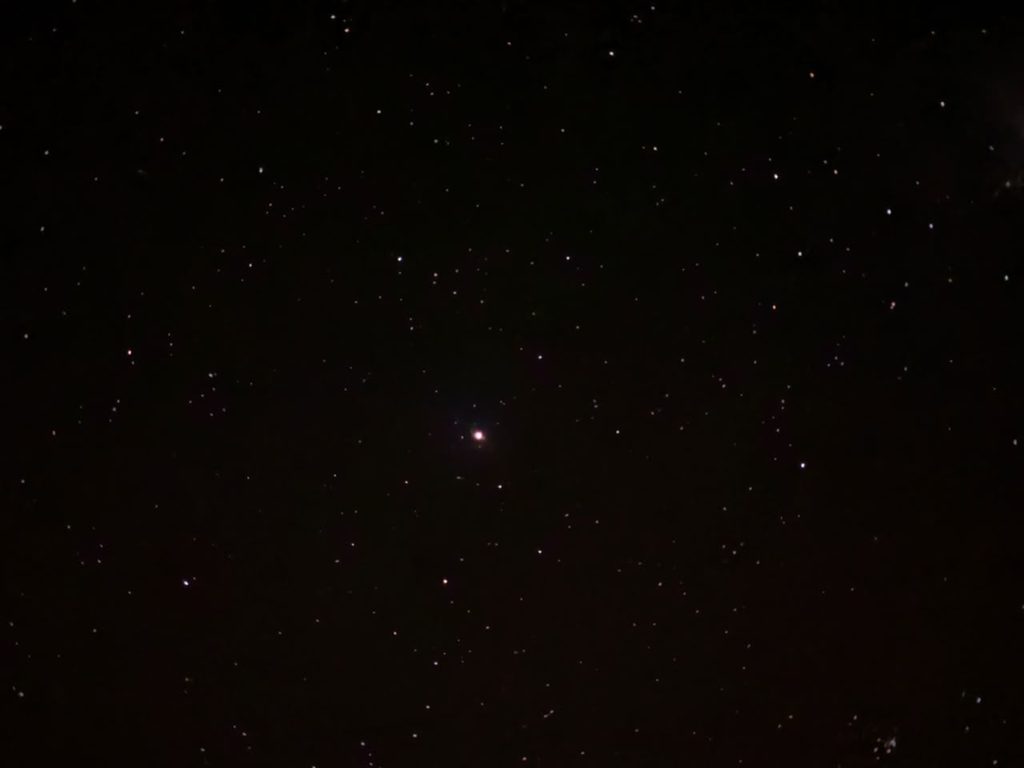
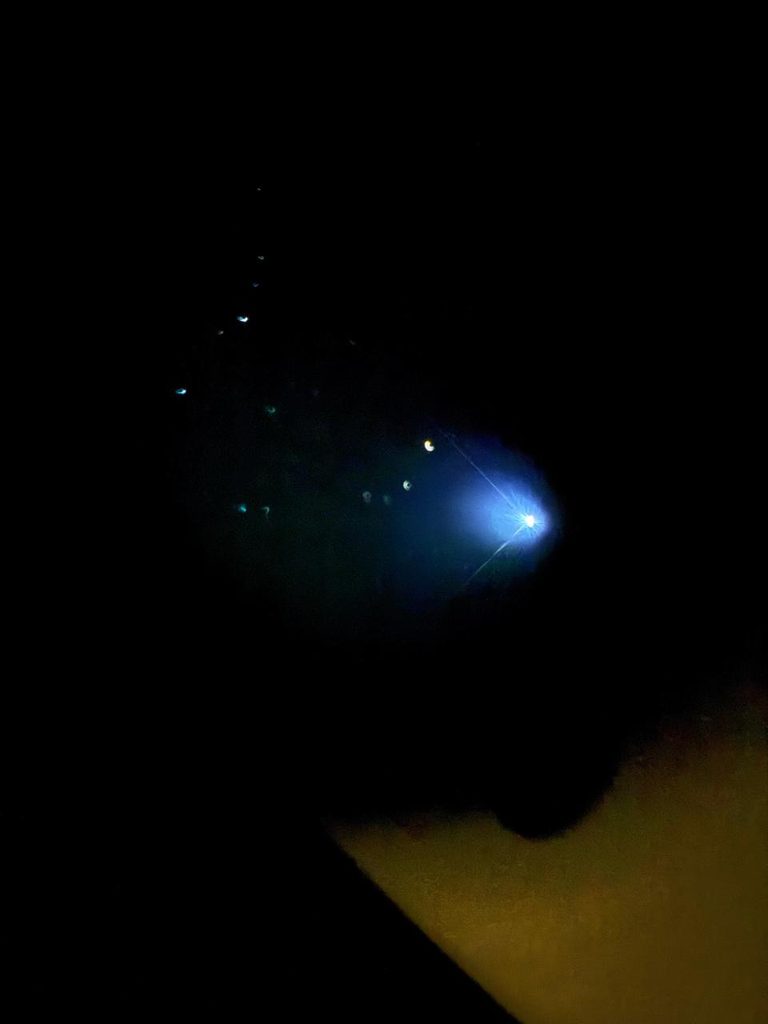
Another attempted picture through the telescope. This time the wonderful blue star of Achernar. It anchors the southern tip of the constellation Eridanus and is considered the hottest and bluest star among the top ten brightest stars in the night sky.
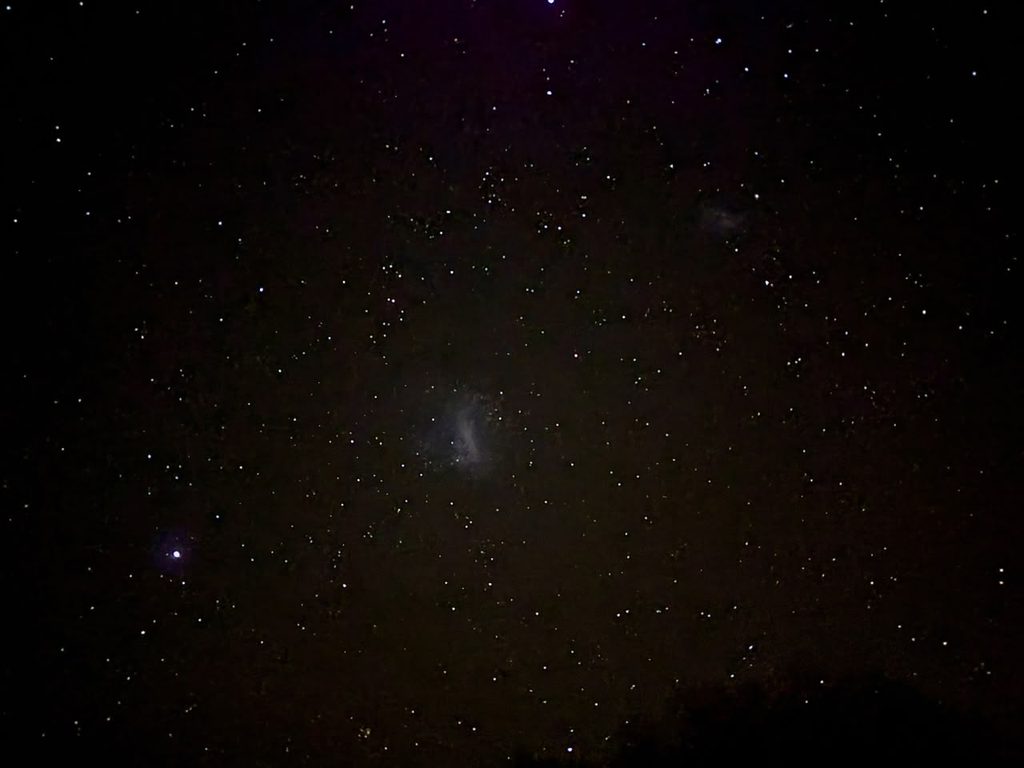
This is a picture from my phone. The little blob in the middle is the Large Magellanic Cloud, which is an irregular dwarf galaxy orbiting near the Milky Way. Through the telescope you can see some of the cluster of stars that make up this galaxy. Unfortunately the Milky Way set a few weeks before my visit in November and won’t be seen again in Atacama until May.
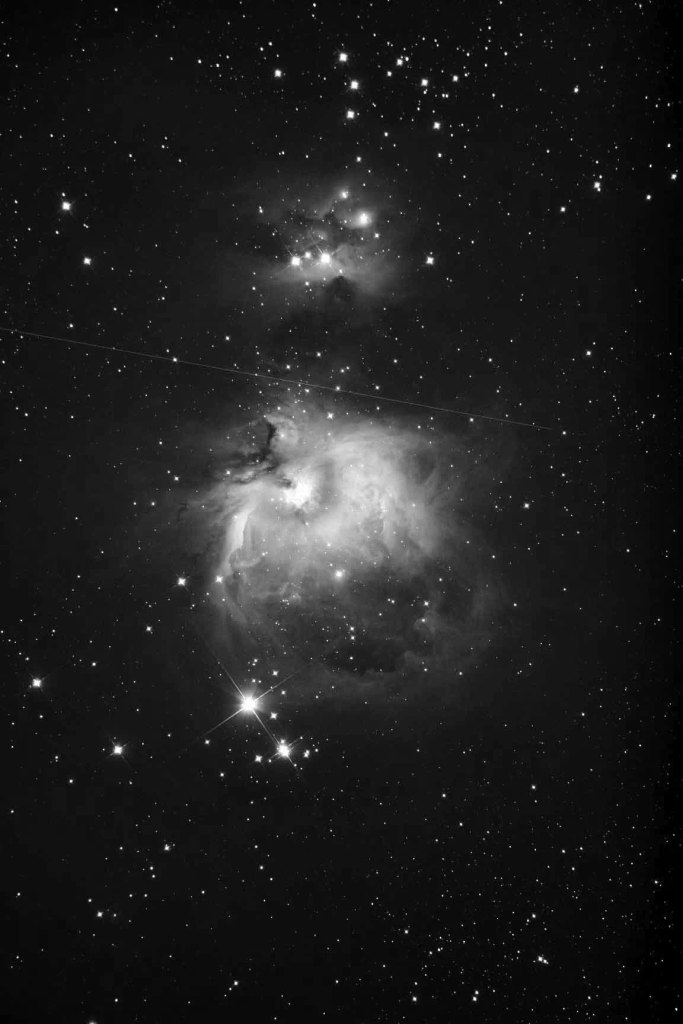
One of the coolest things we saw through the telescope was the Orion Nebula. Unfortunately none of us got any good pictures of it, so I included below a stock photo I found online that can at least remind me of what I saw through the telescope.
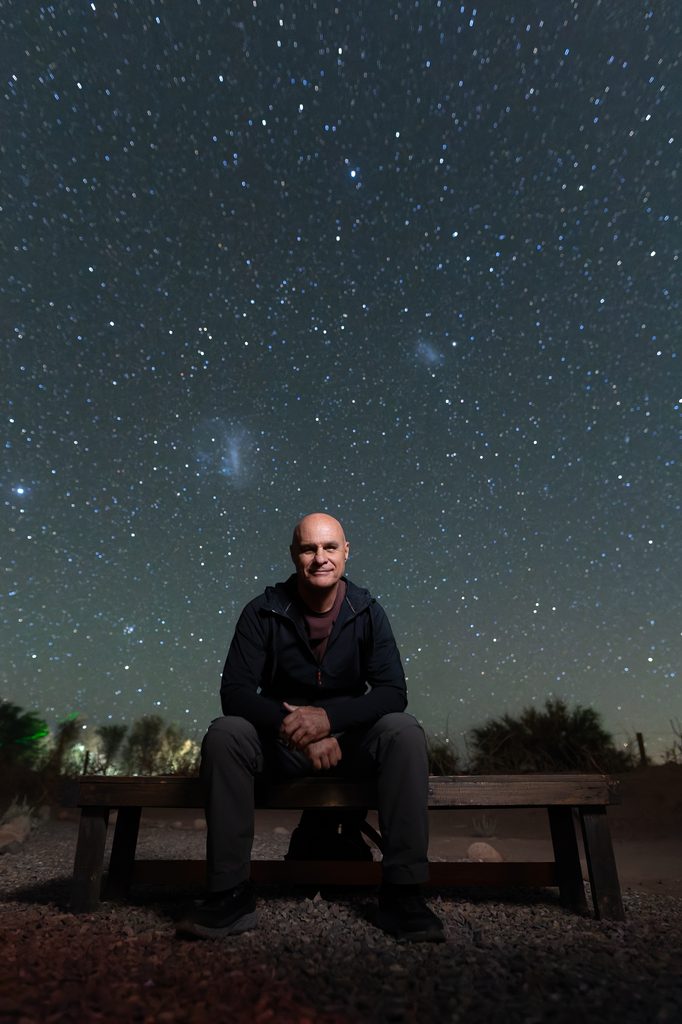
After we looked through the telescopes we went over to another area where a professional photographer took some amazing pictures of each of us surrounded by the night sky. You can even see both the the Large Magellanic Cloud and the Small Magellanic Cloud dwarf galaxies as the two blobs of light just above my head.
San Pedro de Atacama
Ground zero for all this activity is the dusty, delightful town of San Pedro de Atacama. It’s 2,400 meters (8,000 feet) above sea level with a population of around 5,000. And it seems like there’s an equal number of tourists wondering around.
With its narrow dirt roads and mostly one story mud adobe buildings, it’s unlike anyplace I’ve ever visited.
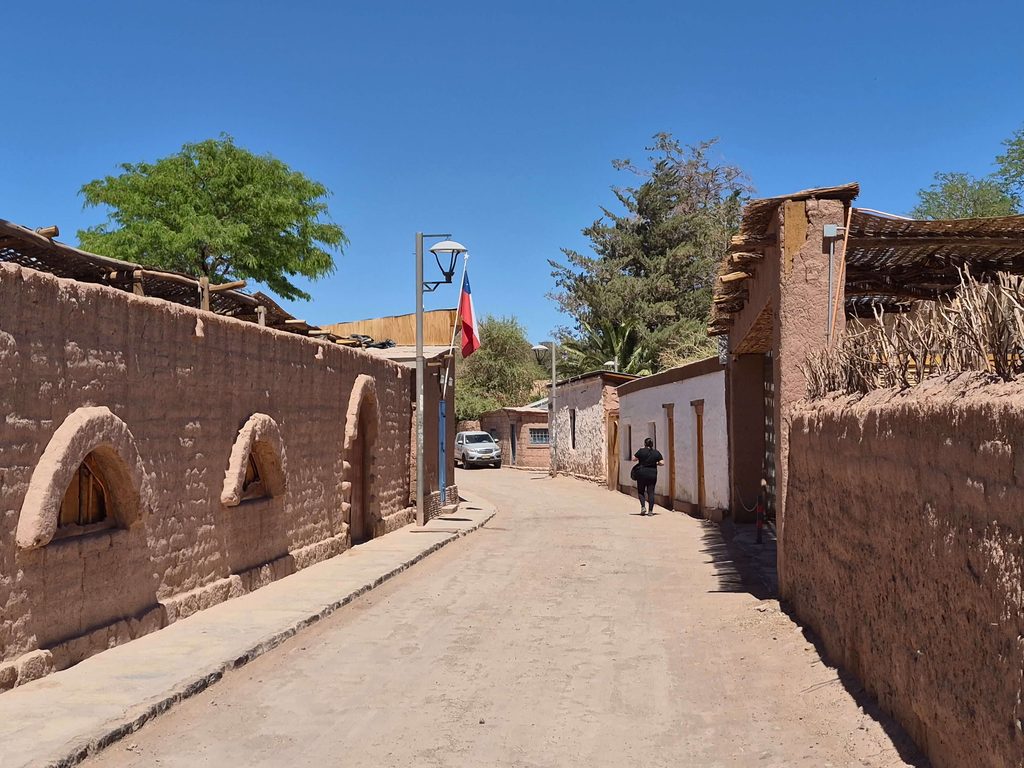

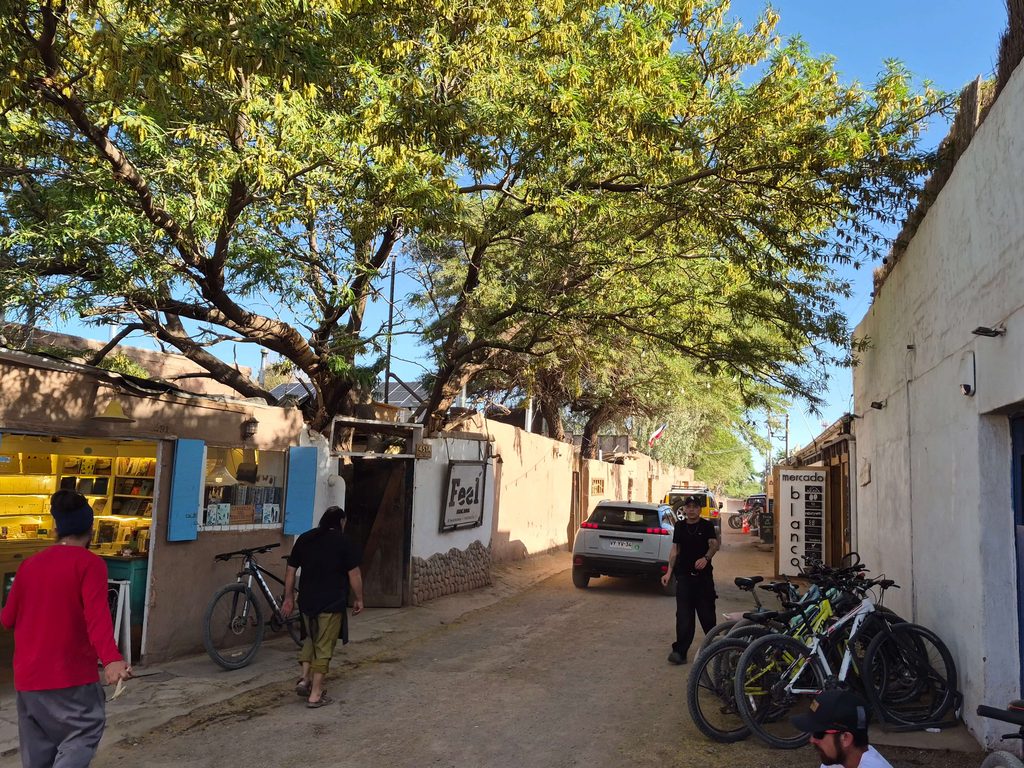
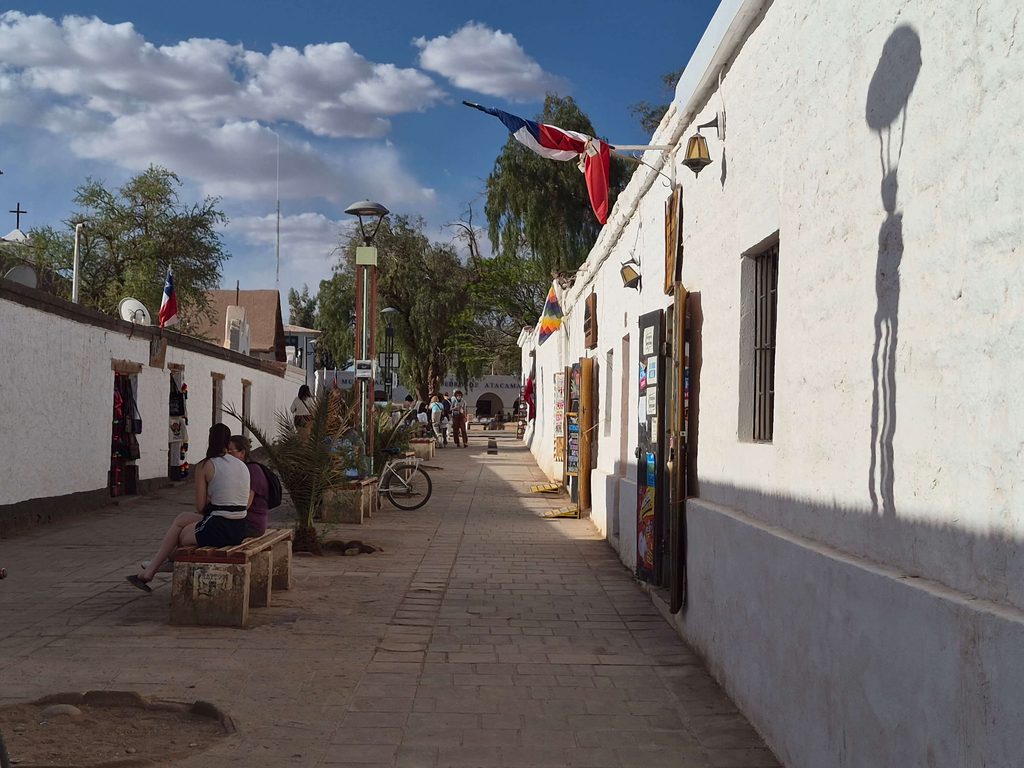
The mostly pedestrian main street has a ton of tourist offices, shops and restaurants.
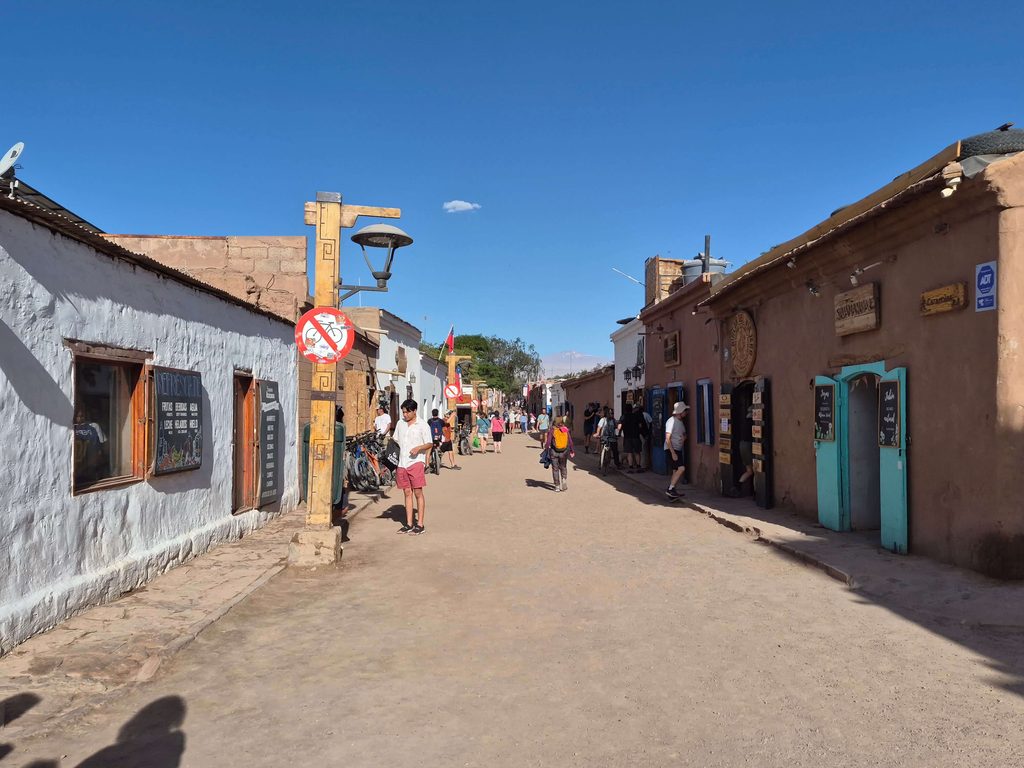
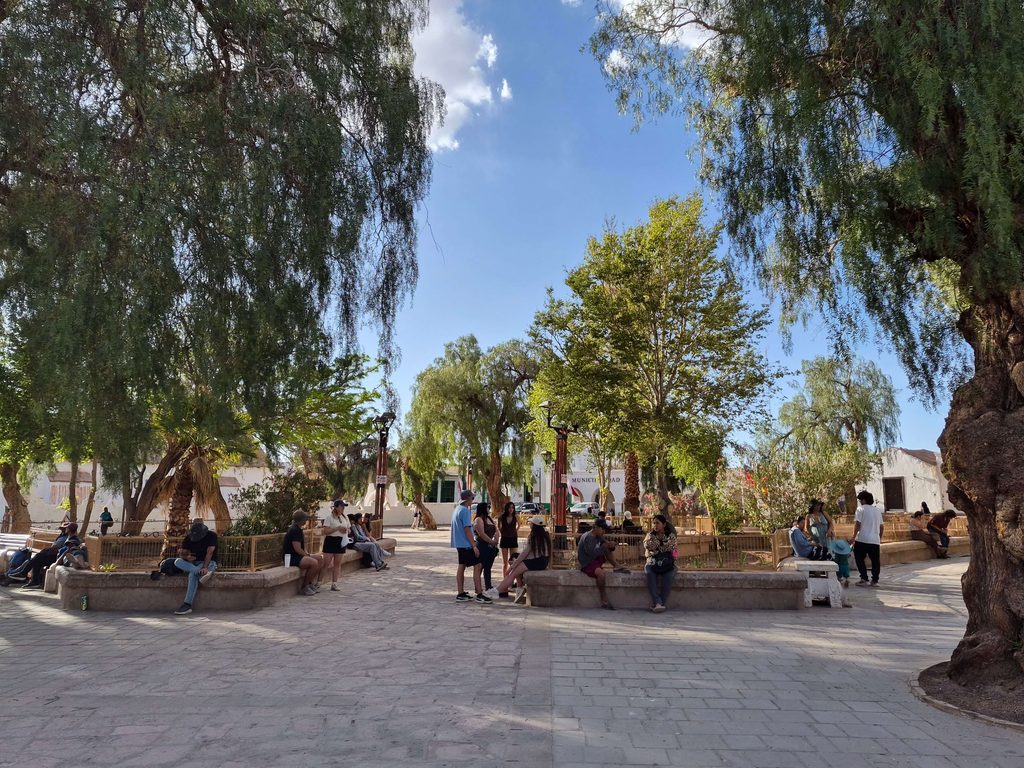
There’s even a nice town square near the main administration buildings.
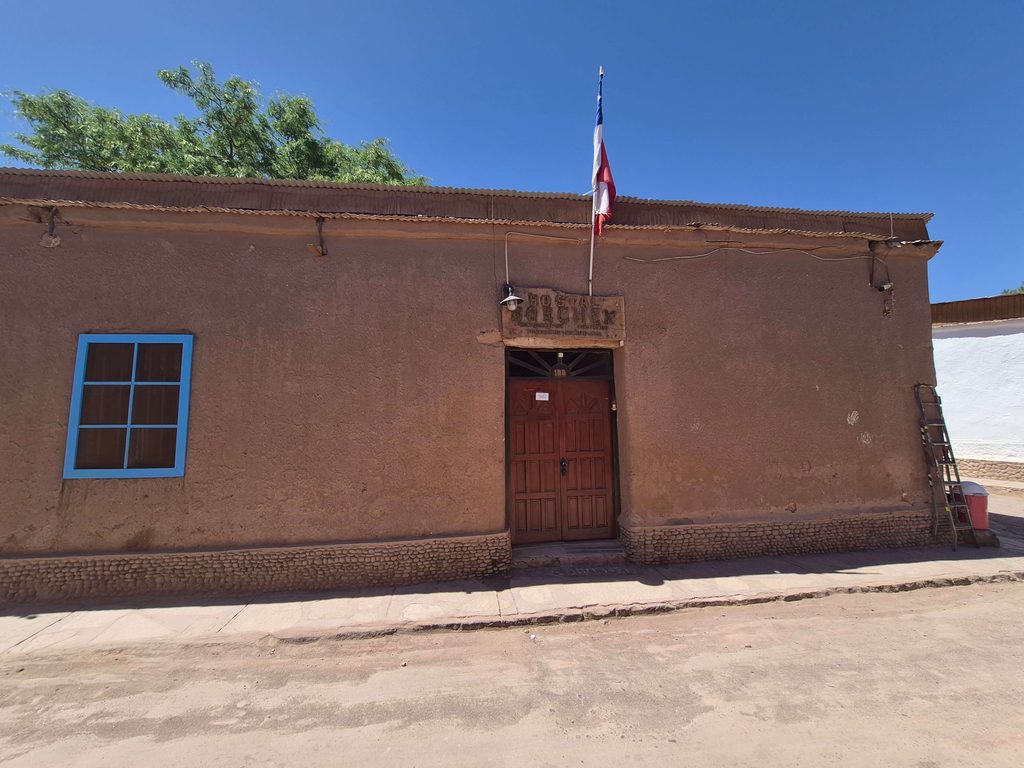
The front of the guesthouse I stayed at.
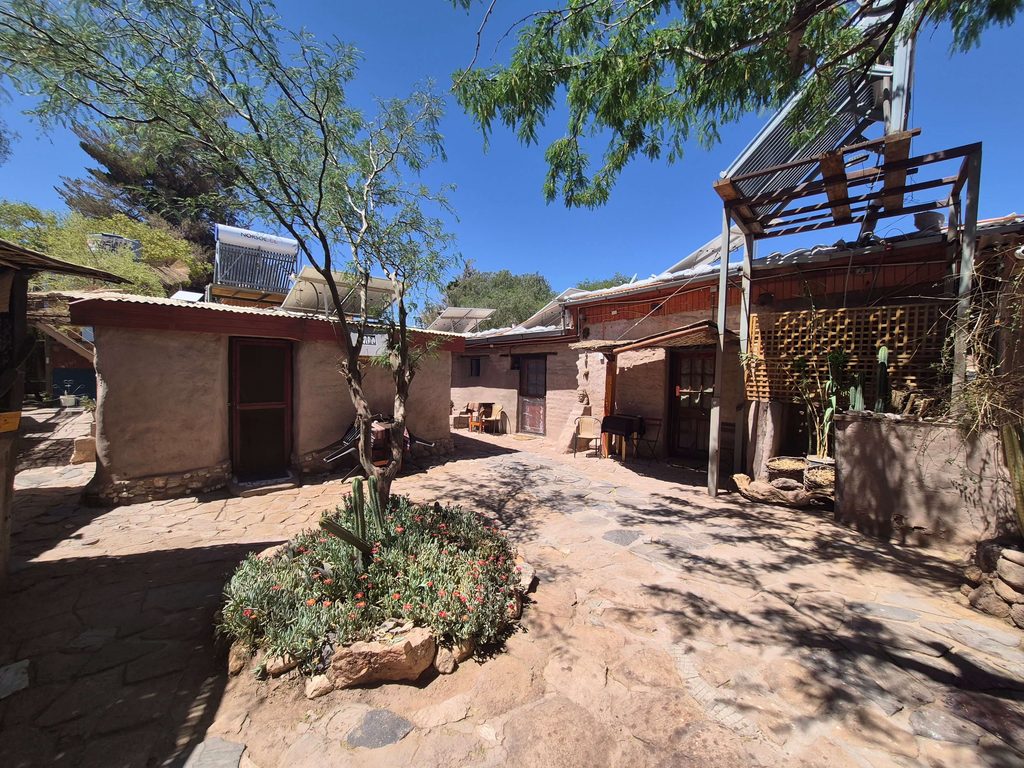
The main courtyard of the guesthouse.
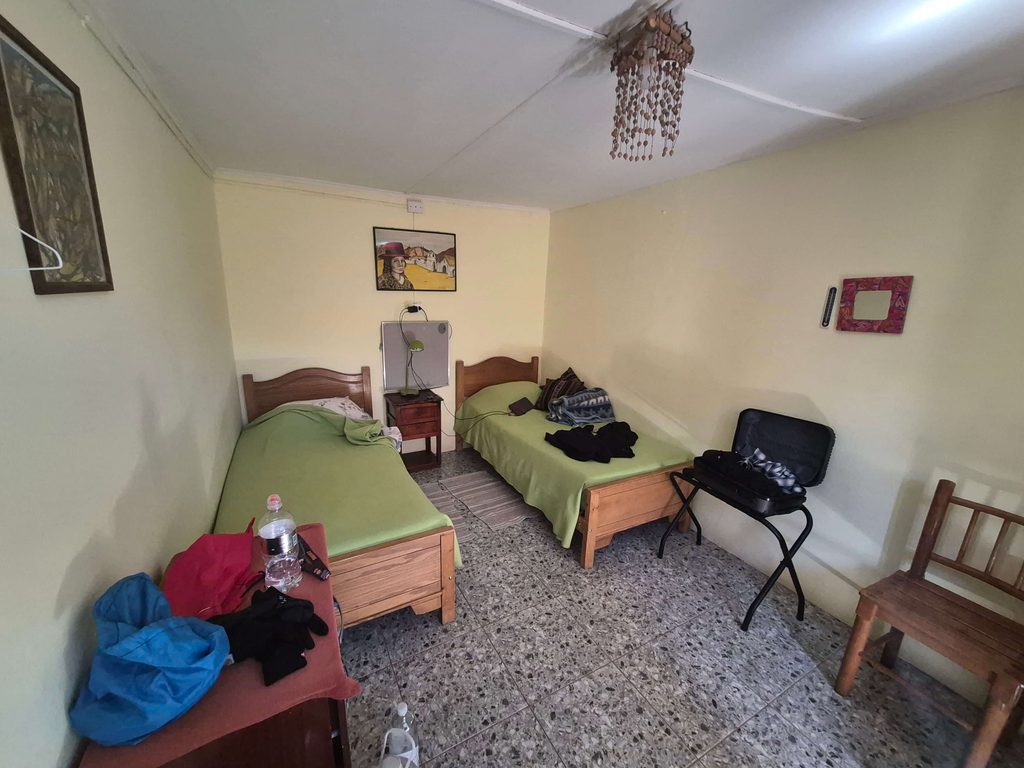
My simple, but very comfortable room.
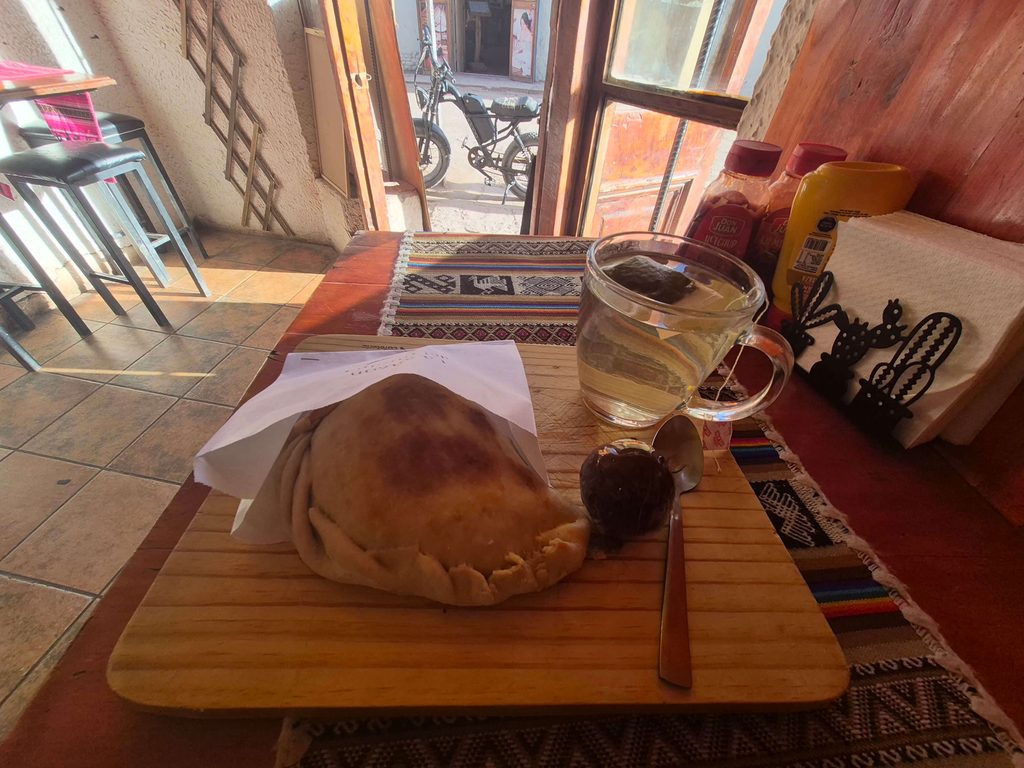
While I was there I had to try some coco tea with an empanada. I also had this chocolate, peanut butter coco ball with it. The combination was pretty strong and I got intense, but smooth caffeine type lift from it.
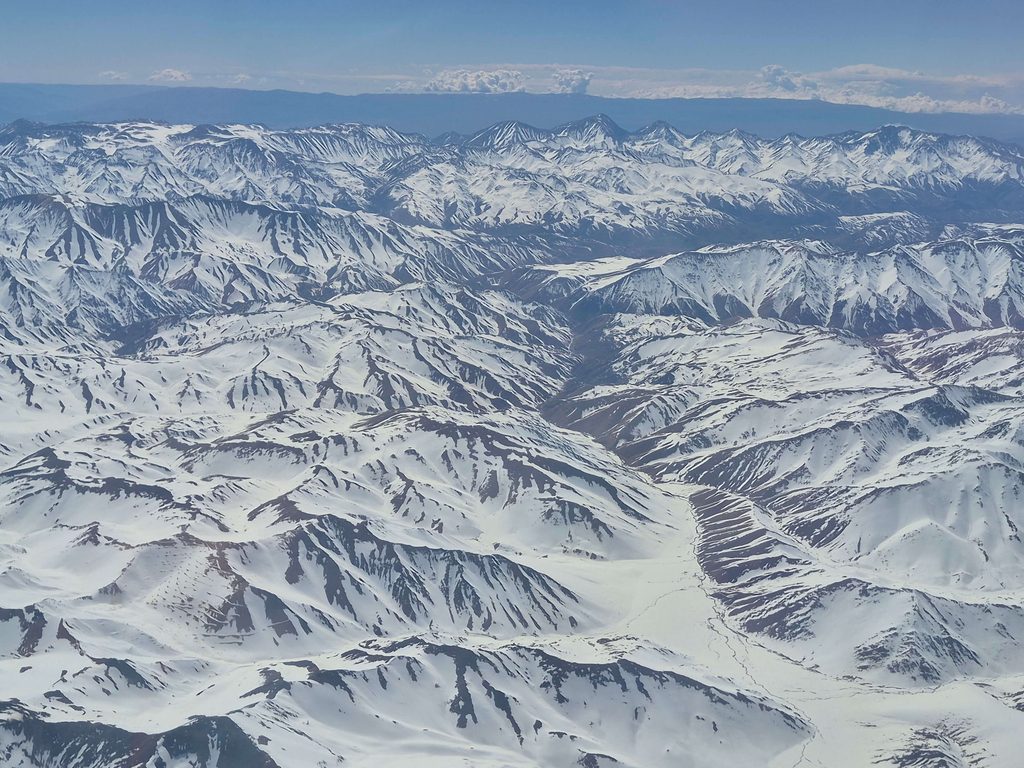
Finally, on the flight up, there were some nice views of the majestic Andes.